Castle of Soure
The Castle of Soure is a significant medieval fortress located in the municipality of Soure, within Portugal’s district of Coimbra. Positioned strategically on a low hill formed by river deposits at the confluence of the Arunca and Anços rivers, the castle’s location was chosen for its natural defensive advantages and control over important routes. This site has a long history of occupation, with evidence of Roman, Suevic, Visigothic, Muslim, and Christian influences shaping its development across centuries.
Its origins trace back to the Roman period when a military detachment was stationed here to guard the route to Coimbra. The castle’s construction incorporated stones and materials from earlier Roman installations, as well as from Suevic and Visigothic structures, reflecting a continuity of military importance. The exact date of the castle’s foundation remains debated among historians. Some suggest that the first fortifications were erected by Muslim builders in the 9th century, while others attribute its initial construction to the late 10th or early 11th centuries, linking it to prominent figures such as Count Sesnando Davides and Count Henry of Burgundy.
Medieval origins and early history
The Castle of Soure was initially constructed rapidly using materials from previous buildings to establish a defensive stronghold during a period of frequent conflict. The region experienced numerous Muslim attacks until Christian forces consolidated control following the 1147 conquest of Santarém by King Afonso I of Portugal. In 1116, a major Muslim assault forced the local population to flee, with the village being burned as inhabitants sought refuge within Coimbra’s fortifications.
After this evacuation, the area experienced a temporary abandonment, with local tradition recounting that wild animals roamed the deserted site. Resettlement efforts began under Countess Teresa of León, widow of Count Henry, who in 1122 exchanged several castle holdings and entrusted the defense of Soure to the nobleman Gonçalo Gonçalves, noted for his role in the capture of Santarém. The castle then came under the stewardship of the Knights Templar in 1128, following a donation by Countess Teresa, confirmed by her son, the future King Afonso I, in 1129. Soure became the second seat of the Templar Order in Portugal, after Fonte da Arcada.
Military significance and later medieval developments
The Templars’ control was interrupted in 1144 when a Muslim counteroffensive recaptured the castle and took many inhabitants prisoner, transferring them to Santarém. Despite this setback, the castle’s strategic importance persisted. After the dissolution of the Knights Templar in the early 14th century, their properties, including Soure, were transferred to the Order of Christ by papal decree in 1319.
During the Portuguese 1383-1385 crisis, the castle supported the claim of King John I to the throne. Defensive upgrades were implemented through the 15th and 16th centuries, including the addition of battlements and a second level on the south tower, reflecting evolving military architecture and the need for enhanced fortifications.
Architectural features and current condition
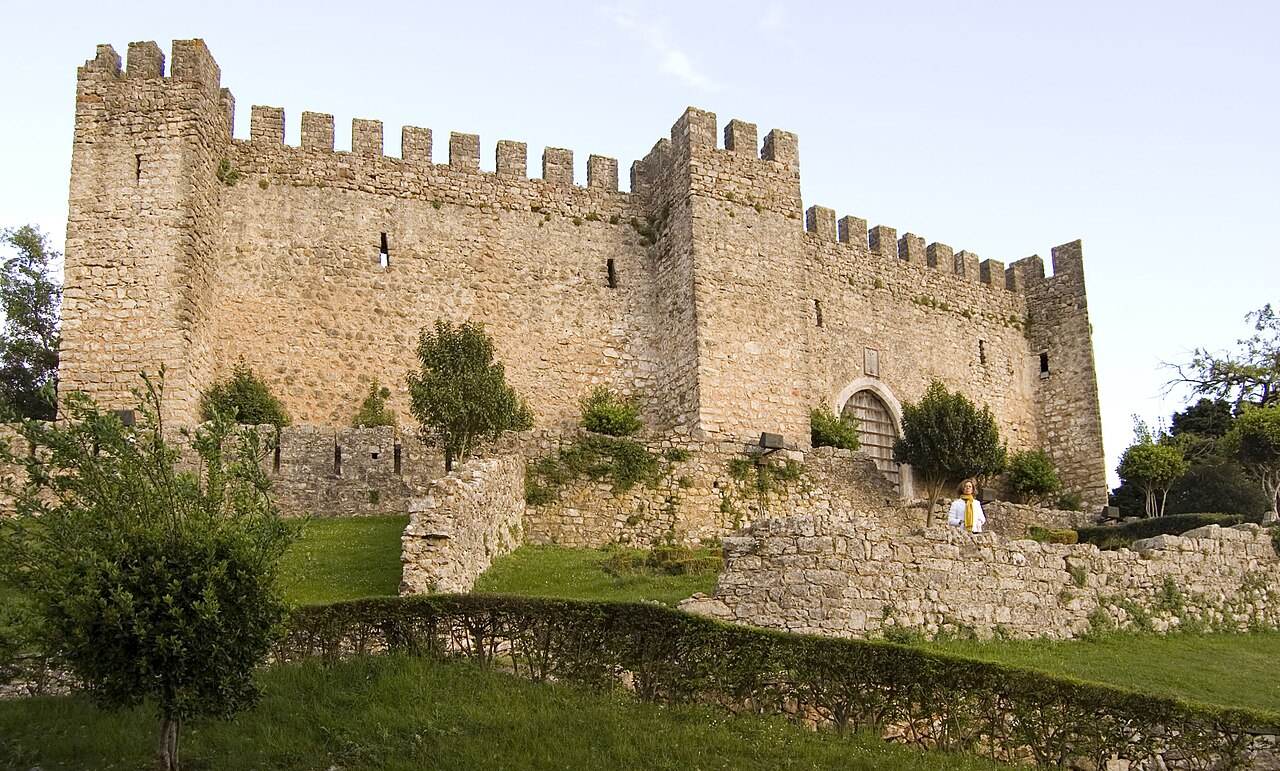
The Castle of Soure is a compact rectangular structure primarily designed as a noble residence or alcazaba, a type of fortified dwelling. It was constructed using roughly shaped stone blocks, characteristic of an early medieval military style known as proto-Romanesque, with later adaptations incorporating Gothic and Manueline architectural elements.
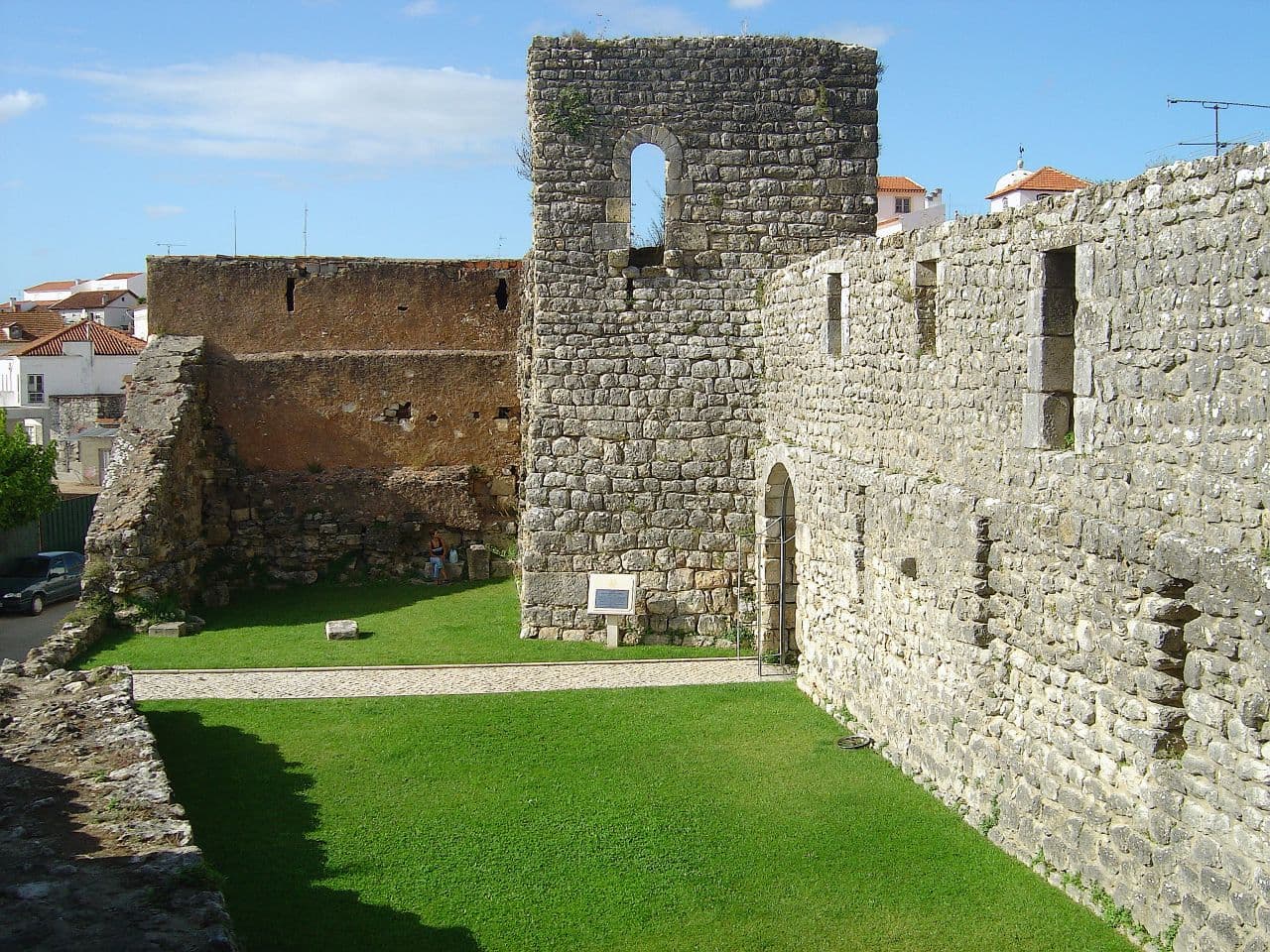
Originally, the castle featured four towers positioned at its corners. Today, only the southwestern tower remains partially intact, although it was partially dismantled in the late 19th century due to structural instability. The most robust tower, located at the northeast corner, likely served as the keep or central stronghold. This tower included a second-story window topped by a semicircular arch, dating from renovations in the 15th or 16th century, as suggested by the style of its defensive battlements.
Access to the courtyard (pátio de armas) was provided by an arched gateway near the northwest tower. This section of the wall contains narrow vertical slits or arrow loops on two levels, designed to allow archers to defend the castle with a wide range of sightlines.
The southwestern tower exhibits a variety of openings including two arched windows on its northern face. On the southern side, it has defensive features such as arrow slits, one arched window that is now sealed, and a square-cut window. Over time, as military needs diminished, the castle lost much of its purely defensive role and became integrated with surrounding buildings, which has obscured its original form and historic ambiance.
Associated religious structures
East of the castle lie the ruins of the Church of Our Lady of Finisterra (Igreja da Nossa Senhora da Finisterra). This small religious building consisted of a single nave supported by four columns that upheld the roof structure. It offers valuable insight into the spiritual life connected to the castle community during its period of occupation.
Modern history and heritage status
Ownership of the castle changed multiple times in the 19th and 20th centuries. In the 19th century, parts of the castle, including two towers, were sold to João Lobo Santiago Gouveia, Count of Verride. Structural decay led to partial demolition of the southwest tower in 1880. In the early 20th century, the castle was owned by the poet Santiago Presado, who offered it to the local municipality in the 1940s, though the transfer was never formalized.
The Castle of Soure was officially declared a National Monument in 1949, recognizing its historical and cultural significance. Despite attempts to auction the property in 1973, the Portuguese state did not complete the purchase, leaving the castle in a state of partial preservation.
Frequently asked questions (FAQ)
- What are the opening hours for visiting the Castle of Soure?
- The Castle of Soure does not have regular public visiting hours. Visitors should check with the local municipality or tourism office for any special events or guided tours.
- What is the historical significance of the Castle of Soure?
- The Castle of Soure played a key role in medieval Portugal, serving as a strategic military site during the Christian reconquest and later as the second seat of the Knights Templar in Portugal.
- Can I visit the ruins of the Church of Our Lady of Finisterra near the castle?
- Yes, the ruins of the Church of Our Lady of Finisterra are located just east of the castle and can be viewed by visitors interested in the religious history connected to the site.
- Is the Castle of Soure accessible for people with limited mobility?
- Due to its partial preservation and historic structure, accessibility may be limited. Visitors with mobility concerns should inquire locally before planning their visit.
- When was the castle declared a National Monument?
- The Castle of Soure was declared a National Monument in 1949, highlighting its cultural and historical importance in Portugal.

Information
Current owner
Unknown
Loading map...
Visitor reviews
No reviews yet. Been here? Write the first review and help other travelers!
Write the first reviewVisited this castle? Share your experience
Your review helps other travelers and adds first-hand knowledge to our encyclopedia.