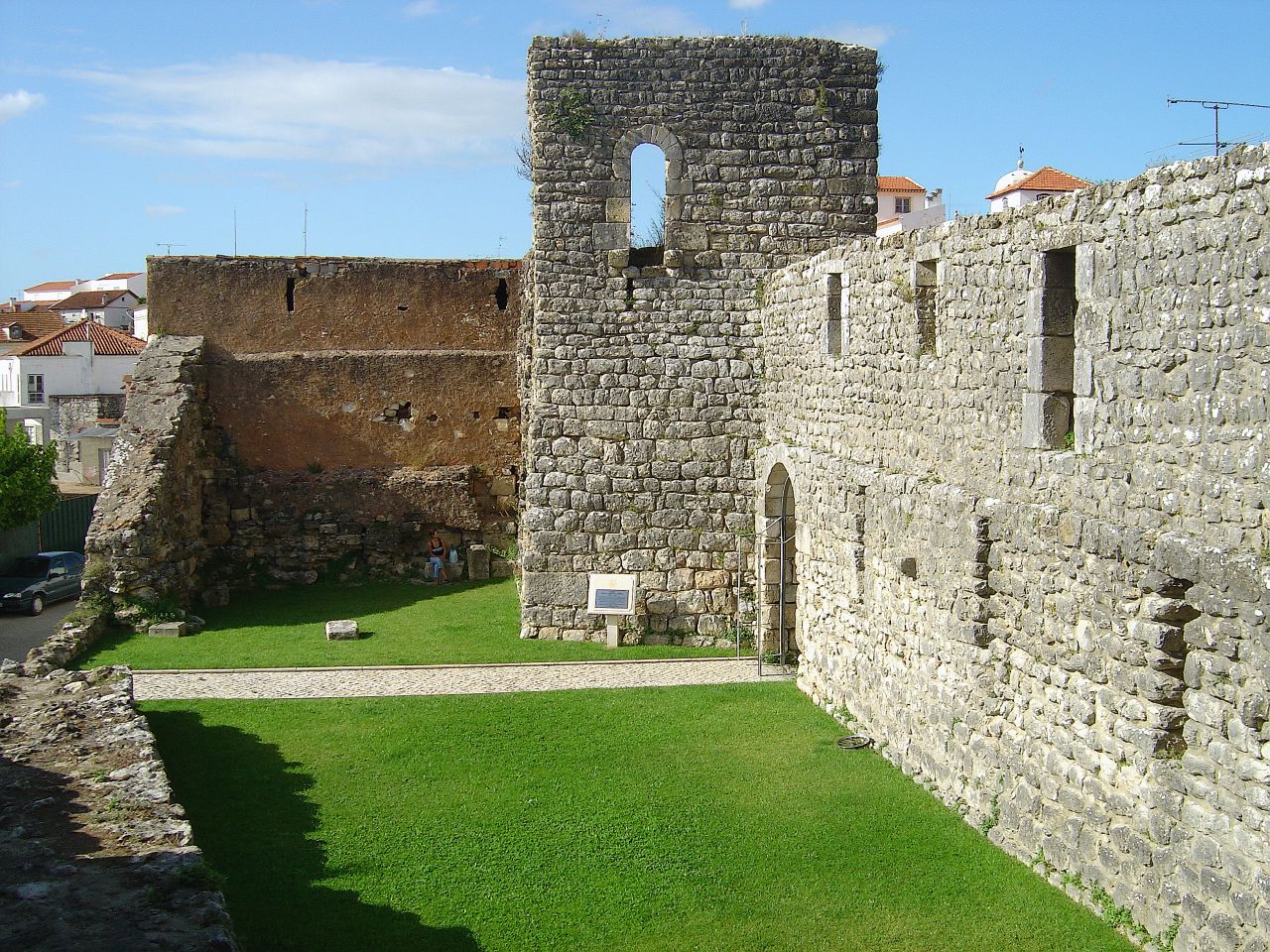
Castle of Montemor-o-Velho
The Castle of Montemor-o-Velho stands majestically over the fertile valley of the Mondego River in the Coimbra district of Portugal. This hill castle is a prominent medieval fortress that played a crucial role in the defense and control of the Low Mondego region during the High Medieval period. Its strategic position overlooking the river and surrounding rice fields has made it a significant landmark for centuries.
The site of Montemor-o-Velho has been occupied since prehistoric times and bears the marks of successive civilizations, including Roman, Visigothic, and Muslim presence before the establishment of the medieval fortress. The incorporation of Roman stone blocks into the base of the castle’s keep tower attests to the long history of settlement and fortification at this location.
Throughout its history, the castle has witnessed numerous battles and sieges, reflecting the turbulent dynamics of Christian-Muslim conflicts in the Iberian Peninsula. The earliest recorded mention dates back to 848 AD, when the fortress was captured by Ramiro I of Asturias and Abbot João of Lorvão Monastery, who was tasked with its defense. Control of the castle oscillated between Muslim and Christian forces during the 10th and 11th centuries, with the Muslim leader Almanzor notably rebuilding the fortress in 990. The final Christian conquest was achieved by King Ferdinand I after the capture of Coimbra in 1064.
Medieval significance and royal connections
Following the Christian reconquest, the castle came under the military command of Count Sesnando Davides, who initiated significant construction and reinforcement efforts. Later, King Afonso VI continued these repairs between 1088 and 1091, strengthening the fortress's defenses. In 1095, the castle and its church received a foral (royal charter), granting administrative privileges and marking its importance in the region. This charter was reaffirmed by Count Henry before 1111, with further building activities noted around 1109.
During the medieval era, Montemor-o-Velho was a royal infantado, a territory granted to members of the Portuguese royal family. It was successively owned by Infanta Teresa from 1211, King Afonso IV in 1322, and Duke Pedro of Coimbra in 1416. The castle was a focal point of political intrigue and conflict, including loyalty disputes in the early 13th century. In 1216, papal intervention transferred control of the castle to the Knights Templar, who played a key role in its defense and administration.
Architectural developments in the 14th century
The 14th century saw major renovations that likely included the construction of the barbican and the northern curtain wall, enhancing the castle’s defensive capabilities. The fortress's expansive size allowed it to accommodate up to 5,000 armed men, underscoring its strategic military importance. The command of the castle was held by prominent nobles, including the Marquis of Montemor from 1472. During the 1580 succession crisis, the castle served as a temporary refuge for D. António, Prior of Crato, who organized defense efforts there.
Role during the peninsular war and later history
In the early 19th century, the Castle of Montemor-o-Velho was occupied by French troops under General Junot during the Peninsular War from 1807 to 1808. It later suffered looting in 1811 during the retreat of Marshal Masséna’s forces. After the dissolution of religious orders in 1834, the castle's courtyard was repurposed as a cemetery, and many stones from the walls were taken by local residents for other uses. In 1877, one of the castle’s towers was converted into a clock tower, marking a shift in its function from purely military to civic use.
A private restoration campaign began in 1929, aimed at preserving the castle’s structure and historical legacy. Since 1910, the castle and the Church of Santa Maria da Alcáçova within its walls have been classified as National Monuments, recognizing their cultural and architectural significance. Local legends, such as the 9th-century siege led by Abbot João where defenders chose death over capture, enrich the castle’s historical narrative. An 18th-century story of resurrection is commemorated by an image of Our Lady of Victory in the nearby church, reflecting the deep cultural roots of the site.
Architectural features and remaining structures
The castle occupies an irregular plan atop a hill 56 meters above sea level, primarily constructed of stone masonry. The main enclosure, known as the castelejo, is surrounded by a curtain wall, a crenellated barbican, a northern enclosure, and a lower eastern redoubt. The castelejo lies between the square keep tower to the southeast and the northern curtain wall, which is reinforced by four towers of both square and semicircular shapes. Two of these towers feature pointed arch openings, characteristic of medieval military architecture.
The barbican includes two main gates: the Porta da Peste on the southeast side near the keep tower, which replaced an earlier main gate, and the Porta da Nossa Senhora do Rosário on the south side, later remodeled. The curtain walls descend from the barbican along the northwest slope, ending in strong square towers that provided additional defense.
Lordly palace and ecclesiastical buildings
In the southwest sector lie the ruins of the former lordly palace, initially begun in the 11th century by D. Urraca and later remodeled by the daughters of King Sancho I into a noble residence typical of the medieval period. Within the castle walls stands the Church of Santa Maria da Alcáçova, originally constructed in the 11th century but rebuilt in the early 16th century in the Manueline style. This reconstruction is attributed to architect Francisco Pires under the direction of Bishop-Count Jorge de Almeida.
The church features a simple façade with a pointed arch portal topped by the bishop’s coat of arms, a triangular gable, and a bell tower on the right side. A lateral entrance showcases a polylobed arch typical of Manueline architecture. Inside, the church has three naves with pointed arches resting on spiral-shafted columns, ending in chapels. Notable sculptural works include 14th-century statues of Our Lady of the O and the Angel of the Annunciation by Mestre Pero.
Other intramural structures include the Chapel of Saint Anthony, located parallel to the barbican, and the Church of the Magdalene, whose current form dates to the 15th and 16th centuries. The newer curtain wall preserves the ruins of the Chapel of Saint John. The 1877 adaptation of one tower into a clock tower reflects the castle’s evolving role over time.
Cultural significance and preservation efforts
The Castle of Montemor-o-Velho is not only a monument of military architecture but also a symbol of the region's rich history and cultural heritage. Its layered history from prehistoric times through Roman, Muslim, and Christian periods illustrates the complex tapestry of Iberian history. The castle’s preservation as a National Monument ensures that it remains a vital link to Portugal’s medieval past.
Visitors today can explore the extensive fortifications, the imposing keep, and the ecclesiastical buildings that reflect various architectural styles and historical phases. The castle's commanding views of the Mondego valley and its rice fields provide a tangible connection to the landscape that shaped its strategic importance.
Ongoing conservation efforts and archaeological research continue to reveal new insights into the castle’s construction phases and historical uses. The site remains a popular destination for those interested in medieval military architecture, Portuguese history, and cultural tourism.
Frequently asked questions (FAQ)
- How do I get to the Castle of Montemor-o-Velho?
- The Castle of Montemor-o-Velho is easily accessible by car, located just off the A1 motorway. Public transport options include regional buses from nearby cities, making it convenient for visitors to reach this historic site.
- What is the historical significance of the Castle of Montemor-o-Velho?
- The Castle of Montemor-o-Velho dates back to the 11th century and played a crucial role in the Reconquista. It served as a strategic military stronghold and has witnessed many historical events, reflecting Portugal's rich medieval history.
- When was the Castle of Montemor-o-Velho built?
- Construction of the castle began in the 11th century, with significant expansions and renovations occurring over the centuries. Its architecture showcases a blend of Romanesque and Gothic styles, highlighting the evolution of fortification techniques in Portugal.
- Can I visit the castle with children?
- Yes, the Castle of Montemor-o-Velho is a family-friendly destination, offering plenty of space for children to explore. The castle grounds provide a safe environment for kids to learn about history while enjoying the scenic views.
- Why is the architecture of the Castle of Montemor-o-Velho unique?
- The architecture of the castle reflects a mix of military and residential features, with robust walls and intricate stonework. Its unique design includes a keep, towers, and remnants of the original defensive structures, showcasing the adaptability of medieval architecture.
- Is it possible to have guided tours at the castle?
- Yes, guided tours are available at the Castle of Montemor-o-Velho, offering insights into its history and architecture. These tours are led by knowledgeable guides who can enhance your understanding of the castle's significance.
- What are the opening hours for the Castle of Montemor-o-Velho?
- The castle is open to visitors year-round, with hours typically from 9 AM to 6 PM. However, it's advisable to check the official website for any seasonal changes or special events that may affect visiting hours.
- What are the ticket prices for visiting the castle?
- Admission to the Castle of Montemor-o-Velho is generally affordable, with reduced prices for students and seniors. Children under a certain age may enter for free, making it an economical choice for family outings.
- When is the best time to visit the Castle of Montemor-o-Velho?
- The best time to visit the castle is during the spring and fall when the weather is mild and pleasant. These seasons offer a beautiful backdrop for exploring the grounds and enjoying panoramic views of the surrounding landscape.
- Are there any nearby attractions to visit after the castle?
- Yes, nearby attractions include the picturesque town of Montemor-o-Velho, where you can explore local shops and cafes. Additionally, the beautiful River Mondego and other historical sites in the area provide great opportunities for further exploration.
Information
Website
Visit websiteSources & official resources
Verify the information above using these authoritative references.
Loading map...
Visitor reviews
No reviews yet. Been here? Write the first review and help other travelers!
Write the first reviewVisited this castle? Share your experience
Your review helps other travelers and adds first-hand knowledge to our encyclopedia.