The Castle of Pombal stands as a remarkable example of Romanesque military architecture in Portugal, perched strategically on a rocky hill in the Leiria district. This hill castle was originally constructed in the 12th century on a site with a layered history, including a former Roman castro and an Arab fortress. Its location was pivotal for controlling the surrounding territory and defending the important city of Coimbra during the turbulent period of the Christian Reconquista.
The castle's foundation was laid following the donation of the site by King Afonso Henriques to the Knights Templar around 1128. This military order was charged with fortifying the region and repopulating the area, which was critical for consolidating Christian rule. Construction began in the mid-12th century, around 1155-1156, and extended into the late 1100s, culminating in a fortress featuring robust defensive walls, multiple towers, and a commanding keep completed near 1171.
Historical context and construction
The castle was built during the high medieval period, a time marked by the expansion of Christian kingdoms in the Iberian Peninsula. The Romanesque style is evident in the fortress's thick stone walls, semicircular arches, and the solid, austere design of its towers and keep. The Templar Master Gualdim Pais played a significant role in enhancing the castle's defenses and promoting inscriptions that underscored its importance.
Following the suppression of the Knights Templar in 1312, the castle was transferred to the Order of Christ, which preserved many Templar properties. During the 1383-1385 Portuguese crisis, the Castle of Pombal supported the Master of Avis in his claim to the throne. The castle also witnessed military activity during the Battle of Aljubarrota, as Castilian troops camped there in 1385 before their defeat.
Architectural features and layout
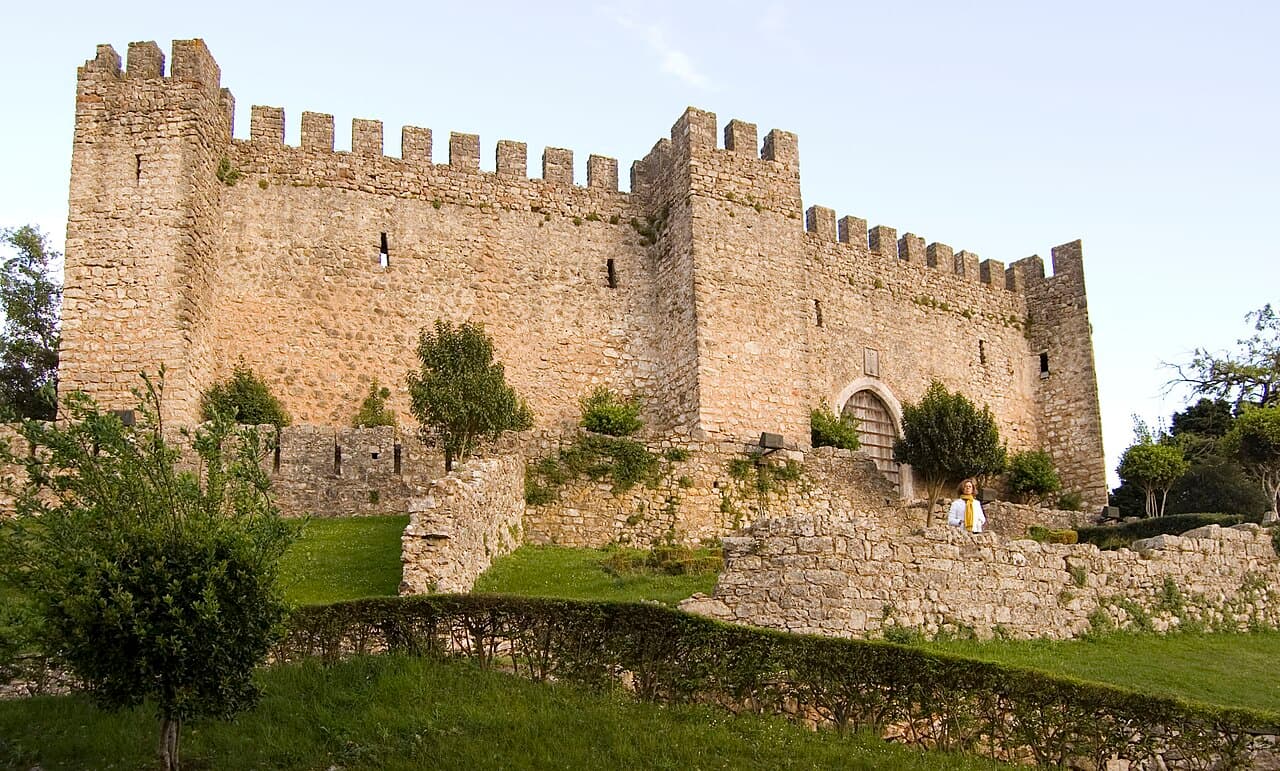
The castle's shield-shaped layout covers approximately 300 square meters and is strategically positioned to overlook the town of Pombal and the River Arunca. Its crenellated walls feature a chemin de ronde, a walkway that allowed defenders to patrol and defend the perimeter effectively. The walls are reinforced with rectangular towers at intervals, topped with distinctive prismatic merlons that provided cover for archers and soldiers.
Two main gates provide access: the southeast gate, flanked by towers, and the larger northwest gate, which is adorned with a royal coat of arms flanked by an armillary sphere and a Christian cross. These gates were vital defensive points and symbolized royal authority.
The keep is a rectangular, two-story tower near the southeast gate with a sloping base designed for defense and stability. Originally serving as a dungeon and lordly residence, it has been repurposed as an exhibition space since 2005. The keep is supported by two wedge-shaped towers that enhance its defensive capabilities.
Courtyard and ancillary structures
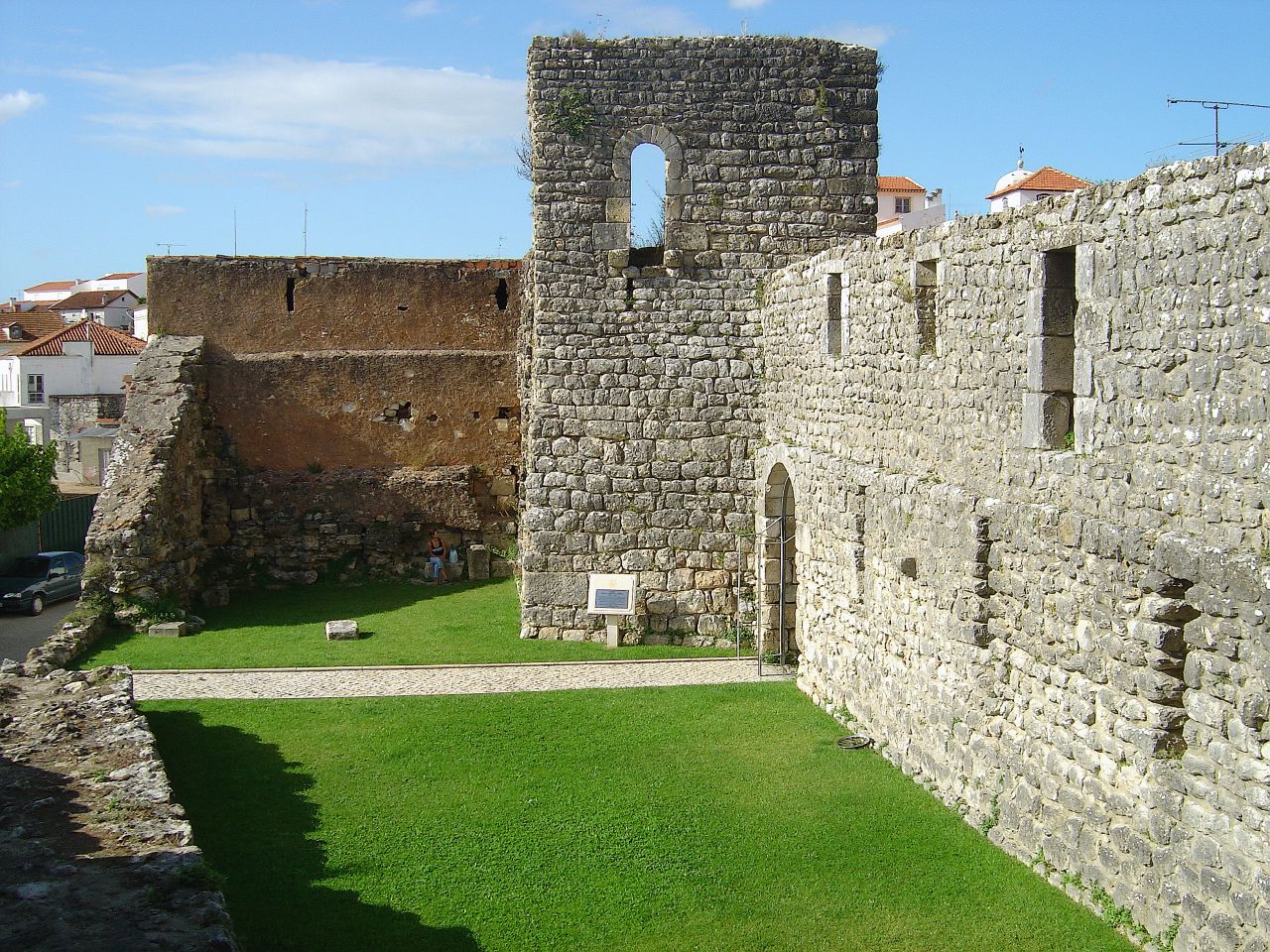
Within the castle's courtyard, visitors can observe the foundations of former ancillary buildings and the remains of a cistern that once supplied water during sieges. Northwest of the southeast gate lie the remains of a barbican, an outer defensive structure that provided an additional layer of protection.
Outside the main walls, on a lower terrace, are the ruins of a second defensive wall with three rectangular towers, indicating the castle's extensive fortifications. Nearby stands the Renaissance-style Church of Santa Maria do Castelo, rebuilt around 1560 with square stone blocks. This church contains a notable limestone grave inscription dedicated to Sebastião de Almeida.
Later history and military significance
By the modern era, the Castle of Pombal had lost much of its military importance. However, it remained strategically significant during the Napoleonic Peninsular War, when French forces under General Ney attacked and caused severe damage in 1811. This assault marked one of the last military engagements involving the castle.
In the 20th century, the castle was recognized for its cultural and historical value, being declared a National Monument in 1910. Restoration efforts in the 1930s and 1940s sought to preserve the castle's medieval character, including the reconstruction of walls, battlements, parapets, vaulted arches, roof framing, pavements, staircases, and gates. Further conservation work took place in 1975 and again between 2000 and 2001.
In 2004, the Municipal Council of Pombal initiated a project to requalify and revalorize the castle and its grounds, culminating in the conversion of the main keep into a museum in 2005. This adaptive reuse has helped to preserve the castle's legacy and make its history accessible to the public.
Cultural heritage and inscriptions
The castle's walls bear several inscriptions that highlight its historical significance. A 20th-century plaque commemorates the castle's history since 1940, while a state patrimony plaque is located at the military square. A limestone slab honoring the Templars, dated 2004, is displayed, though some scholars suggest it may have originated from Almourol Castle.
A distinctive double window on the southwest wall features the coat of arms of the Sousa Ribeiro family, who historically served as alcaldes, or castle governors. The castle's exterior also includes remains of the medieval Church of São Pedro, now demolished, and the Romanesque Church of São Miguel within the courtyard.
Restoration and preservation efforts
Throughout the 20th and early 21st centuries, the Castle of Pombal has undergone various restoration and preservation initiatives to maintain its structural integrity and historical authenticity. These efforts have included careful reconstruction of architectural elements such as battlements, parapets, vaulted arches, and staircases to reflect the castle's medieval origins.
The castle is currently well preserved and operates as a museum and cultural site, attracting visitors interested in medieval history, military architecture, and Portuguese heritage. Its commanding position and well-maintained fortifications make it a significant landmark within the Leiria region.
Frequently asked questions (FAQ)
- What is the historical significance of the Castle of Pombal?
- The Castle of Pombal is a notable medieval fortress that dates back to the 12th century. It played a crucial role in the defense against Moorish invasions and later served as a royal residence, reflecting the rich history of the region.
- When was the Castle of Pombal built?
- Construction of the Castle of Pombal began in the early 12th century, around the time of Portugal's Reconquista. The castle has undergone various renovations and restorations over the centuries, preserving its historical essence.
- Can I visit the Castle of Pombal year-round?
- Yes, visitors can explore the Castle of Pombal throughout the year. However, it is advisable to check for any special events or maintenance closures before planning your visit.
- What are the opening hours for the Castle of Pombal?
- The Castle of Pombal is typically open to visitors from 9:00 AM to 6:00 PM. During the summer months, the hours may be extended, so it's best to verify the current schedule on their official website.
- Is it possible to access the castle with mobility aids?
- The Castle of Pombal has some accessibility features, but due to its historic nature, certain areas may be challenging to navigate with mobility aids. Visitors are encouraged to contact the site in advance for detailed accessibility information.
- What are the ticket prices for the Castle of Pombal?
- Admission to the Castle of Pombal is generally affordable, with reduced rates for children, seniors, and students. Check the official website for the latest pricing and any applicable discounts.
- When is the best time to visit the Castle of Pombal?
- The best time to visit the Castle of Pombal is during the spring and fall when the weather is mild and crowds are smaller. This allows for a more enjoyable experience while exploring the castle and its surroundings.
- Are there nearby attractions to visit after exploring the castle?
- Yes, visitors can explore several nearby attractions, including the charming town of Pombal and its local museums. Additionally, the beautiful natural landscapes of the region offer opportunities for hiking and outdoor activities.
Photo gallery

Photo by MarioM•Public domain
Information
Website
Visit websiteSources & official resources
Verify the information above using these authoritative references.
Loading map...
Visitor reviews
No reviews yet. Been here? Write the first review and help other travelers!
Write the first reviewVisited this castle? Share your experience
Your review helps other travelers and adds first-hand knowledge to our encyclopedia.