Castle of Sant'Aniceto
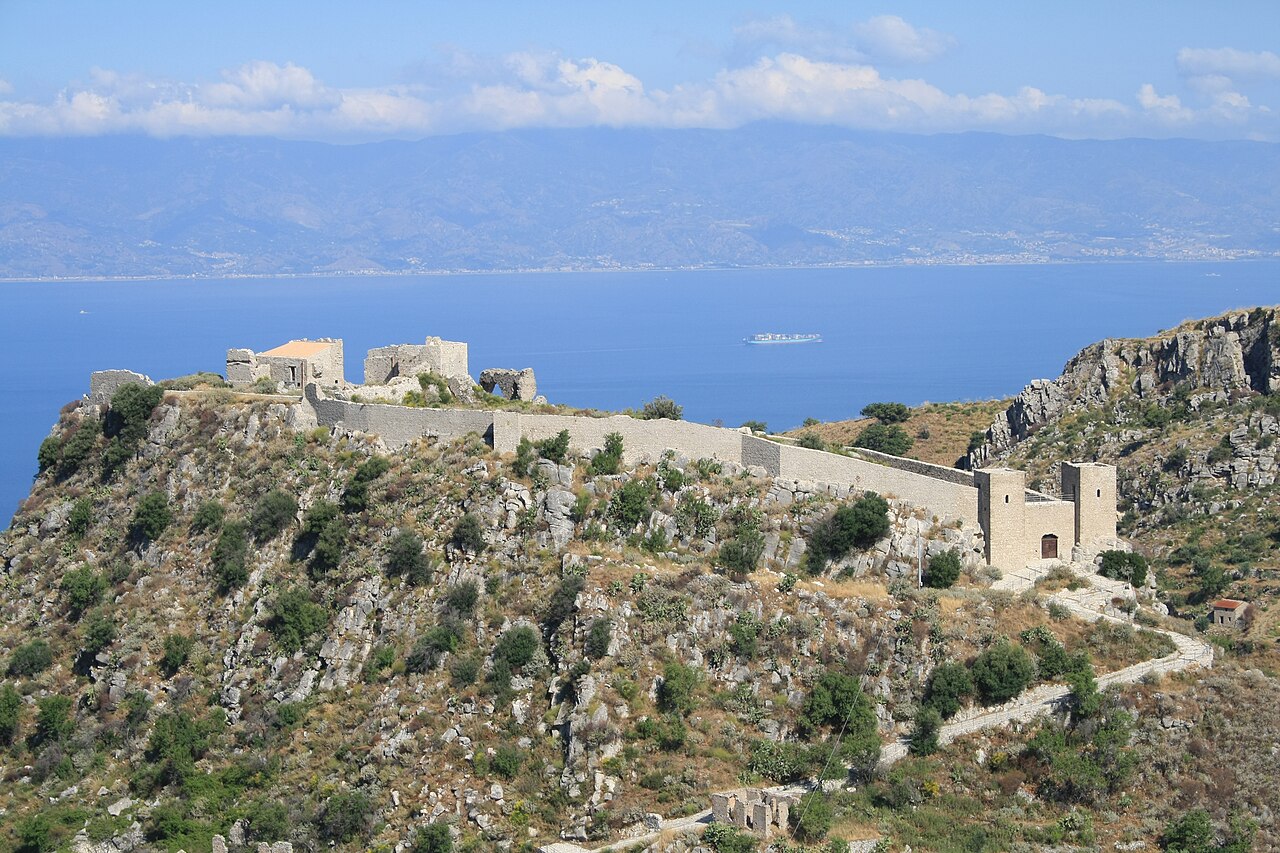
The Castle of Sant'Aniceto stands as a remarkable example of Byzantine military architecture from the early 11th century, located on a commanding hilltop in Motta San Giovanni, Calabria. This hill castle is one of the few surviving High Medieval fortifications in southern Italy, showcasing the strategic and cultural significance of the Byzantine presence in the region during that era. Its enduring walls and distinctive layout provide invaluable insight into medieval defensive construction and the historical turbulence of Calabria.
Historical context and strategic importance
Constructed as a Byzantine kastron, the castle was primarily designed to serve as a fortified refuge protecting the local population and safeguarding valuable regional assets, notably the thriving silk production industry. Its location on a rocky promontory overlooking the city of Reggio Calabria and the surrounding landscape was chosen for optimal surveillance and defense against frequent coastal raids, particularly from Saracen forces.
Following the Norman conquest of Calabria around 1060, the castle retained its defensive role, adapting to the evolving military threats of the period. The transition from Byzantine to Norman control marked a shift in architectural enhancements, including the addition or expansion of square towers at the entrance to bolster fortifications.
During the 13th century, the castle became the administrative center of the feudal domain known as Santo Niceto. This territory was a focal point of conflict between the Angevin and Aragonese dynasties, reflecting the broader political struggles that shaped southern Italy in the Middle Ages. By 1321, the castle and its lands were firmly under Angevin control.
The establishment of Santo Niceto as a barony in 1434 expanded its governance over nearby settlements including Motta San Giovanni, Montebello, and Paterriti. However, the castle's military significance declined after its capture and destruction in 1459 by forces from Reggio Calabria, aided by Duke Alfonso of Calabria. The attackers famously used a cunning tactic involving goats with torches tied to their horns to infiltrate the fortress, exemplifying the ingenuity of siege warfare in the period.
Architectural features and layout
The castle's irregular layout is uniquely shaped somewhat like a ship, with its front oriented toward the mountains and the rear facing the sea, reflecting a design adapted to the natural topography. The entrance is fortified by two prominent square towers, which exemplify the Norman influence on the original Byzantine structure.
The defensive walls are remarkably well preserved, standing between three and three and a half meters tall and approximately one meter thick. These walls are constructed from a combination of squared stone blocks, bricks, and a robust mortar mixture, which has contributed to their longevity and structural integrity over the centuries.
At the base of the steep path descending from the castle lies a small chapel crowned with a dome featuring a fresco of Christ Pantocrator. This fresco is a significant example of Byzantine religious art in Calabria, symbolizing Christ as the sovereign ruler of the universe and reflecting the spiritual dimension of the castle complex.
The castle’s elevated position offers commanding views of the surrounding landscape, underscoring its role in both defense and regional control. The combination of natural and man-made defenses made it a formidable stronghold during its operational period.
Preservation and cultural significance
After centuries of abandonment following its destruction in the 15th century, the Castle of Sant'Aniceto has undergone careful restoration efforts to preserve its historical and architectural legacy. The restoration has focused on stabilizing the walls and towers, as well as conserving the chapel and its precious fresco, ensuring that these elements remain accessible and informative for visitors and scholars alike.
Today, the castle is recognized as one of the few surviving examples of Byzantine fortifications in the world, particularly in the context of the High Middle Ages. Its preservation offers a unique window into the military, cultural, and religious history of Calabria, reflecting the region’s complex past under Byzantine, Norman, Angevin, and Aragonese influences.
The site attracts historians, architects, and tourists interested in medieval fortifications, Byzantine art, and southern Italian heritage. Its strategic location and well-preserved structures provide an evocative experience of medieval life and defense mechanisms.
Architectural influences and construction techniques
The castle’s construction techniques reveal a blend of Byzantine and Norman architectural traditions. The use of squared stone blocks combined with brickwork and strong mortar is characteristic of Byzantine military engineering, designed for durability and resistance to siege tactics.
The addition of square towers during the Norman period reflects the evolving needs for enhanced defense and control of access points. These towers allowed defenders to better monitor and repel attackers, integrating new military architectural concepts with the existing Byzantine framework.
Historical anecdotes and legends
The story of the castle’s capture in 1459 remains a notable episode in its history. The attackers’ use of goats with torches tied to their horns to deceive the defenders is a striking example of medieval subterfuge and ingenuity in siege warfare. This event highlights the castle’s strategic importance and the lengths to which opposing forces went to control it.
The castle’s name, derived from Saint Nicetas, a Byzantine admiral from the 7th or 8th century, reflects the deep Byzantine roots of the region and honors the legacy of the empire’s military leaders who influenced Calabria’s development during the early medieval period.
Visitor experience and accessibility
Visitors to the Castle of Sant'Aniceto can explore the well-preserved defensive walls and towers, gaining insight into medieval fortification design. The chapel with its Byzantine fresco offers a rare glimpse into the religious art of the period. The hilltop location provides panoramic views of the surrounding Calabrian landscape, enriching the historical experience with natural beauty.
While the site is partially restored, pathways and access points have been improved to facilitate safe visitation. Interpretive signage and guided tours help contextualize the castle’s historical significance and architectural features for a diverse audience.
Frequently asked questions (FAQ)
- How do I get to the Castle of Sant'Aniceto?
- The Castle of Sant'Aniceto is located in Motta San Giovanni, Italy, easily accessible by car or public transport from nearby cities. If traveling by car, follow the A3 motorway, taking the exit for Motta San Giovanni. Public transport options include local buses that connect to the castle.
- What is the historical significance of the Castle of Sant'Aniceto?
- The Castle of Sant'Aniceto dates back to the Middle Ages and played a crucial role in the defense of the region. It is a symbol of the historical struggles and conflicts in Calabria, showcasing the architectural styles of its time. The castle offers a glimpse into the feudal past of the area, making it a significant site for history enthusiasts.
- When was the Castle of Sant'Aniceto built?
- Construction of the Castle of Sant'Aniceto began in the 11th century, with various modifications and expansions occurring over the centuries. Its strategic location was chosen for both defensive purposes and to oversee the surrounding territory. Today, it stands as a testament to the architectural evolution of castles in Southern Italy.
- Can I visit the Castle of Sant'Aniceto year-round?
- Yes, the Castle of Sant'Aniceto is open to visitors year-round, but it's advisable to check for any seasonal hours or special events that may affect access. Visiting during the warmer months often provides the best experience, as guided tours are frequently available. Always verify the schedule before planning your visit.
- Why is the architecture of the Castle of Sant'Aniceto unique?
- The architecture of the Castle of Sant'Aniceto is unique due to its blend of Romanesque and Gothic styles, reflecting the various periods of construction it underwent. The castle features thick stone walls, narrow windows, and a commanding view of the surrounding landscape, designed for both defense and aesthetics. This architectural diversity makes it an interesting study for visitors.
- Is it possible to take guided tours of the castle?
- Yes, guided tours of the Castle of Sant'Aniceto are available and highly recommended for those interested in learning more about its history and architecture. These tours are typically led by knowledgeable guides who provide in-depth information about the castle's significance. It's best to book in advance, especially during peak tourist seasons.
- What are the opening hours for the Castle of Sant'Aniceto?
- The opening hours for the Castle of Sant'Aniceto vary by season, but it generally opens from 9 AM to 6 PM. During the summer months, the hours may extend later into the evening. Always check the official website or contact the castle for the most current information before your visit.
- What are the ticket prices for visiting the Castle of Sant'Aniceto?
- Ticket prices for the Castle of Sant'Aniceto are typically affordable, with discounts available for children, students, and seniors. A standard adult ticket usually costs around €5, while family packages may offer additional savings. Be sure to check for any special promotions or free entry days throughout the year.
- What are some nearby attractions to visit after the castle?
- After visiting the Castle of Sant'Aniceto, you may want to explore nearby attractions such as the historic town of Motta San Giovanni and its charming streets. The region is also known for its beautiful coastlines and natural parks, perfect for a scenic day trip. Additionally, local restaurants and markets offer a taste of Calabrian culture and cuisine.
Information
Website
Visit websiteSources & official resources
Verify the information above using these authoritative references.
Loading map...
Visitor reviews
No reviews yet. Been here? Write the first review and help other travelers!
Write the first reviewVisited this castle? Share your experience
Your review helps other travelers and adds first-hand knowledge to our encyclopedia.