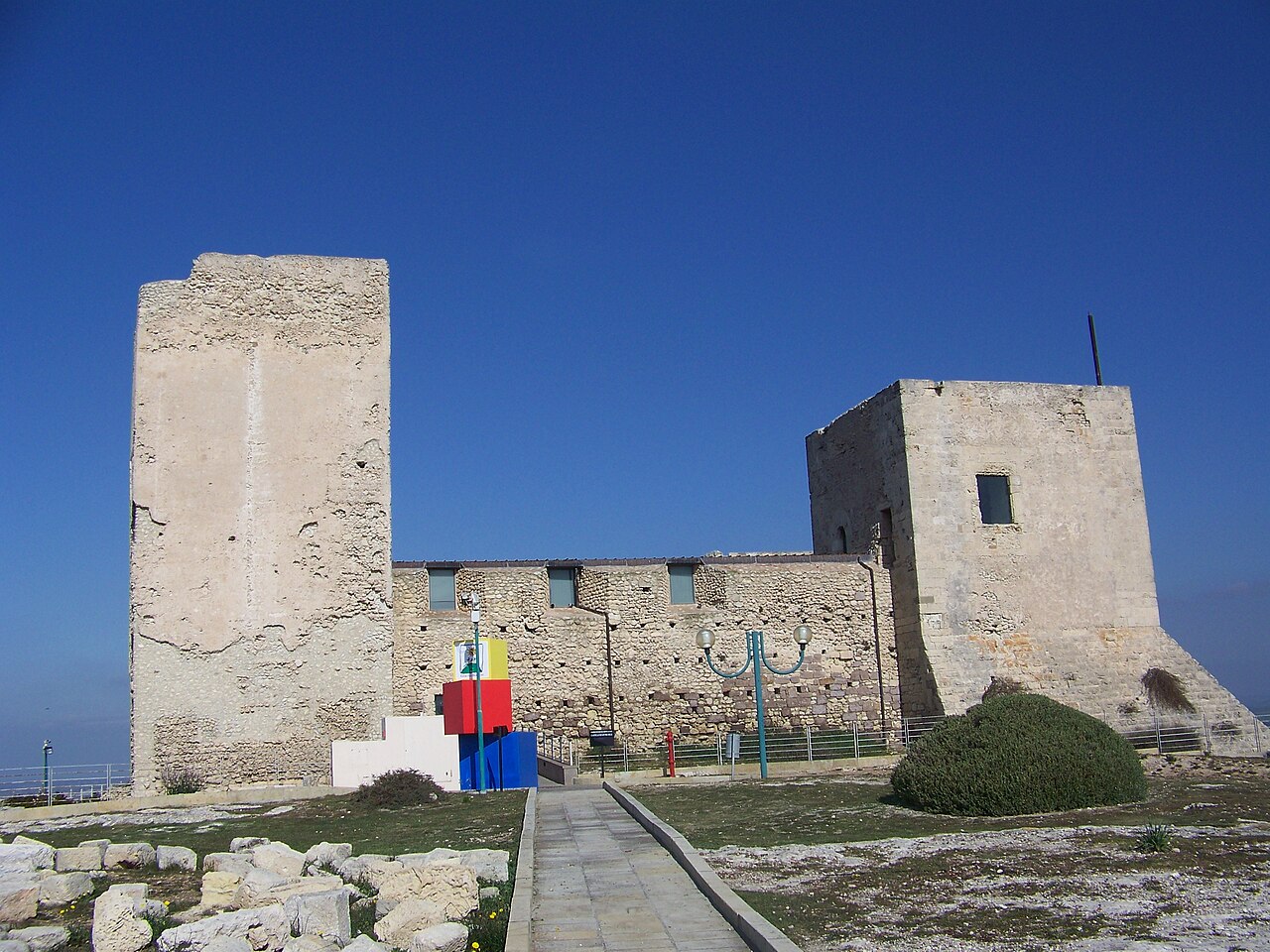
Castle of Acquafredda
The Castle of Acquafredda stands as a prominent example of medieval fortification in Sardinia, Italy. Perched atop a volcanic hill at 256 meters above sea level, this hill castle commands sweeping views over the surrounding valley, reflecting its strategic importance during the Middle Ages. The castle's origins trace back to the early 13th century or possibly earlier, with the first documented mention appearing in a papal bull dated either 1215 or 1238. This early reference confirms the fortress's existence during the high medieval period, establishing its role as a significant defensive and residential site in Sardinia.
Throughout its history, the Castle of Acquafredda witnessed a succession of influential owners and political shifts that shaped its development. In the mid-13th century, it came under the control of Count Ugolino della Gherardesca, a notable nobleman who acquired the castle after 1257 or 1258. Ugolino is credited with reinforcing and expanding the fortress, enhancing its defensive capabilities and adapting the complex to the turbulent political climate of the time. After his death, the castle passed to his heirs, including his son Guelfo, maintaining its status as a family stronghold for some years.
Historical context and ownership transitions
Following the della Gherardesca tenure, the castle transferred to the Republic of Pisa, a maritime power that controlled parts of Sardinia until 1324. This period saw the castle integrated into Pisa's defensive network, underscoring its military value. The year 1324 marked a pivotal moment when the Aragonese conquest of Sardinia brought Acquafredda under new rule. The Aragonese maintained control for nearly a century, but by the early 15th century, the castle was abandoned, likely due to changing military technologies and political priorities that rendered such hilltop fortresses less critical.
In subsequent centuries, the castle's function shifted from a military bastion to a feudal estate. During the 1500s, it became the center of a barony and changed hands among various noble figures, including Pietro Otger. Despite these transitions, the fortress gradually fell into disuse and decline. By the late 18th century, contemporary accounts described the castle as ruined and definitively deserted. It was then sold to King Victor Amadeus III of Sardinia, marking its incorporation into royal holdings but not its restoration.
Architectural features and layout
The Castle of Acquafredda exhibits a complex architectural design adapted to its rugged volcanic hill setting. The fortress is structured on three distinct levels arranged in a U-shaped plan, constructed primarily from locally quarried stone. Originally, the castle rose over three floors, combining residential, military, and utilitarian functions.
Lower level: fortified village and service quarters
The lowest tier of the castle enclosed a fortified village surrounded by battlemented walls. This area accommodated the living quarters of service personnel and soldiers, as well as stables and storage facilities. The presence of these structures illustrates the castle's dual role as both a military fortress and a self-sustaining community hub.
Middle level: cistern tower and water management
Above the village lies the middle level, featuring a notable cistern tower. This tower comprises three barrel-vaulted chambers designed to collect and store water, a critical resource during sieges or droughts. The integration of such a sophisticated water management system highlights the castle's preparedness for prolonged defense and its architectural ingenuity.
Upper level: watchtower and defensive elements
The uppermost section preserves the remains of a large watchtower, which provided extensive surveillance capabilities over the surrounding terrain. Despite the ruinous state of the fortress, the tower's walls still display battlements and arrow slits, key defensive features that allowed defenders to observe and repel attackers effectively.
Cultural significance and archaeological findings
Historical records from 1355 during the Aragonese period mention a "Sardinian chest," a wooden storage chest crafted by local artisans, linking the castle to Sardinian material culture and craftsmanship traditions. This detail enriches understanding of daily life and the cultural milieu within the fortress.
In 2005, archaeological excavations uncovered the remains of three adult men buried within the castle courtyard. These skeletons, aged between 34 and 45 years, provide a poignant human connection to the castle's past inhabitants, offering insights into the lives and deaths of those associated with the fortress.
Today, the ruins of the Castle of Acquafredda stand as one of the largest medieval fortified sites in Sardinia. The visible remains serve as a testament to centuries of military strategy, feudal power, and architectural adaptation. The site continues to attract interest from historians, archaeologists, and visitors drawn to its commanding presence and rich heritage.
Preservation and current status
Although the castle is in a ruined condition, significant portions of its walls, towers, and battlements remain intact, allowing for detailed study and appreciation of medieval military architecture. Efforts to preserve the site focus on maintaining its structural remnants while facilitating public access and educational opportunities. The castle's location and historical importance make it a valuable cultural landmark within Sardinia's landscape.
Frequently asked questions (FAQ)
- When was the Castle of Acquafredda built?
- The Castle of Acquafredda dates back to the early 13th century, with its first documented mention in a papal bull from either 1215 or 1238.
- Who was Count Ugolino della Gherardesca and what was his role?
- Count Ugolino della Gherardesca was a nobleman who acquired the castle after 1257 and is believed to have strengthened and expanded the fortress during his ownership.
- What architectural features are notable at the Castle of Acquafredda?
- The castle features a U-shaped layout on three levels, including a fortified village with battlemented walls, a cistern tower with barrel-vaulted chambers, and a large watchtower with battlements and arrow slits.
- Is the Castle of Acquafredda accessible to visitors?
- While the castle is in ruins, it remains accessible to visitors interested in medieval architecture and Sardinian history, although specific visiting hours and ticket information may vary.
- What archaeological discoveries have been made at the castle?
- In 2005, archaeologists discovered the remains of three adult men buried in the castle courtyard, providing insights into the human history of the site.
Information
Website
Visit websiteSources & official resources
Verify the information above using these authoritative references.
Loading map...
Visitor reviews
No reviews yet. Been here? Write the first review and help other travelers!
Write the first reviewVisited this castle? Share your experience
Your review helps other travelers and adds first-hand knowledge to our encyclopedia.