Castle of San Servando
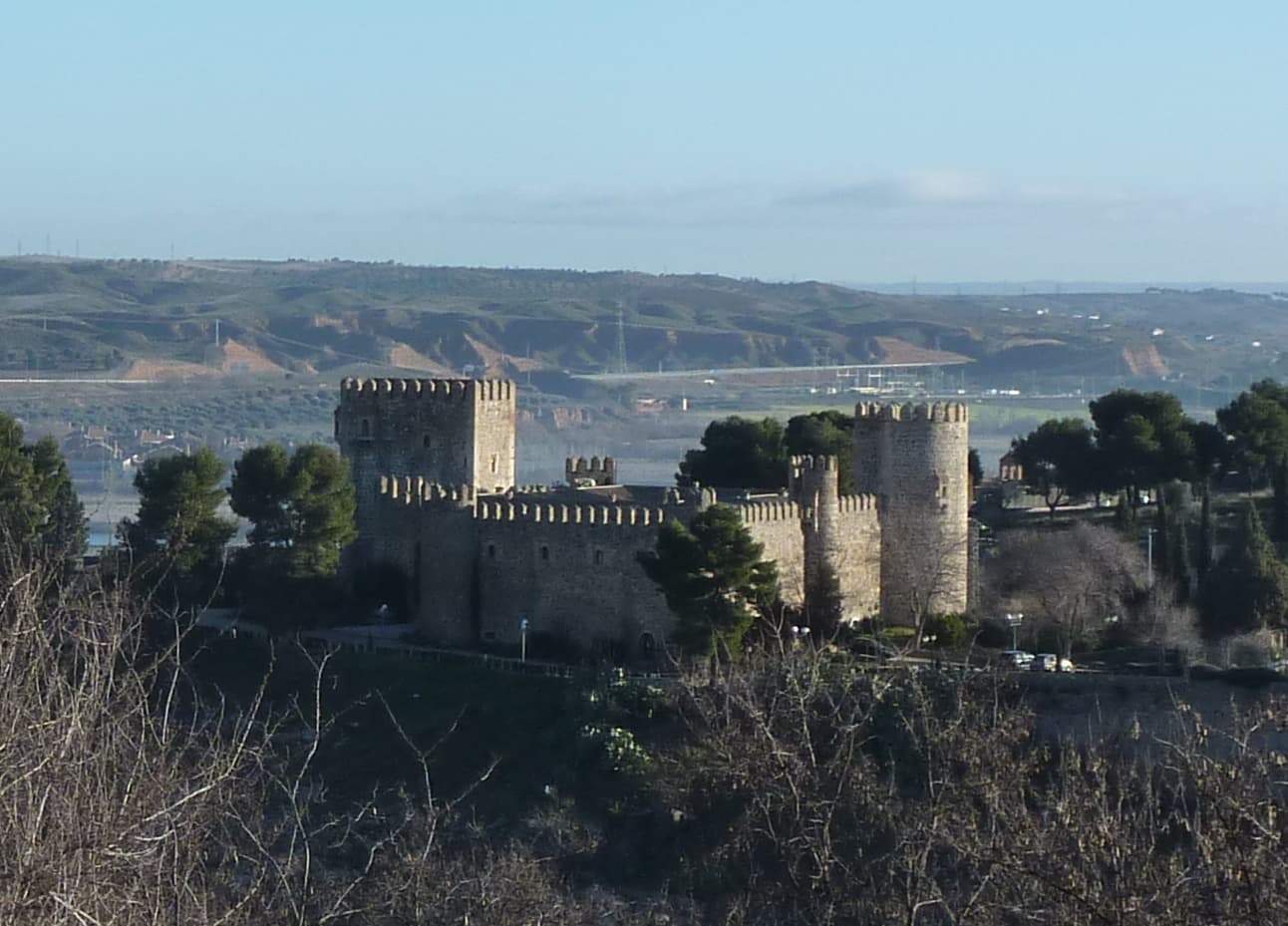
The Castle of San Servando stands as a prominent medieval hill castle located in the historic city of Toledo, Spain, overlooking the eastern bank of the Tagus River. This fortress embodies centuries of layered history, having evolved from a Roman fortress site to a Visigothic church, an Arab fortress, and finally a fortified monastery and castle under Christian rule. Its strategic position facing the Alcázar of Toledo highlights its military importance in protecting the city and its vital access points.
Originally begun as a monastery in the 11th century, the site was restored and fortified by King Alfonso VI after his 1085 conquest of Toledo from Muslim control. Dedicated to Saints Servando and German, the monastery was initially occupied by monks and later entrusted to the Knights Templar in the early 12th century. The Templars transformed the religious complex into a formidable fortress designed to guard the nearby Puente de Alcántara bridge from Muslim attacks, marking the castle's transition from a purely religious site to a military stronghold.
Historical evolution and significance
Early origins and religious foundations
The site of the Castle of San Servando has a rich history predating the medieval castle. Archaeological evidence reveals that a Roman fortress originally occupied the location, followed by a Visigothic church and subsequently an Arab fortress. These successive layers of occupation reflect the turbulent history of Toledo as a city of cultural and military significance in the Iberian Peninsula.
After the Christian reconquest of Toledo in 1085, King Alfonso VI restored the monastery on this site, which had been destroyed by Saracen forces in 1110. The king fortified the complex and dedicated it to the saints, expressing gratitude for surviving the Battle of Sagrajas. The monastery was managed initially under papal authority by Cardinal Richard of the Abbey of Saint Victor and later by French monks, emphasizing its religious importance during this period.
The knights templar and military transformation
In the early 12th century, the Knights Templar took control of the site, converting the monastery into a castle with defensive features tailored to protect the city and its critical infrastructure. The castle's primary military role was to guard the Puente de Alcántara, a key bridge over the Tagus River, from Muslim incursions. This strategic function underscored the castle's importance during the High Medieval period when Christian-Muslim conflicts shaped the region's political landscape.
Following the dissolution of the Templar order in 1312 and the decline of the Muslim threat, the castle's military significance waned, leading to periods of abandonment. However, the castle regained importance during the 14th century civil war between King Pedro I and Enrique of Trastámara. Under the supervision of Archbishop Tenorio, the castle was reconstructed and fortified in 1386 to serve defensive purposes during this turbulent era in Castilian history.
Architectural features and construction details
Layout and defensive structures
The Castle of San Servando exhibits a rectangular layout encompassing four towers positioned at its corners and along the southern wall. Notably, three of these towers are round, while the fourth, located on the southern side, protects a small gate, emphasizing the castle's defensive orientation towards the city. The main entrances face Toledo, underscoring its role in city defense.
The largest tower, the Torre del Homenaje or Tower of Homage, is situated on the eastern side and features an elongated oval base. This tower includes three projecting arrow slits, narrow vertical openings designed for archers to defend the castle effectively. Similar arrow slits are present on the southeast tower, enhancing the fortress's defensive capabilities.
The towers are crowned with rectangular crenellations, battlement features covered with lead to protect defenders from enemy projectiles. The walls incorporate ornamental dentils, small tooth-like stone projections, and decorative brickwork around windows, which also feature relief sculptures, showcasing the castle's aesthetic elements alongside its military function.
Materials and construction techniques
The castle is primarily constructed from stone, with walls bonded using a lime mortar mixed with iron oxide residue, a technique characteristic of Arab architecture. This construction method reflects the influence of earlier Muslim builders whose fortress foundations lie beneath the current structure. The use of durable materials and skilled masonry has contributed to the castle's well-preserved condition today.
Although the original moat and rampart surrounding the castle no longer survive, the main structure remains intact and robust. Restoration efforts in 1959 added a new tower and a new entrance from the highway, adapting the castle for contemporary use while respecting its medieval character.
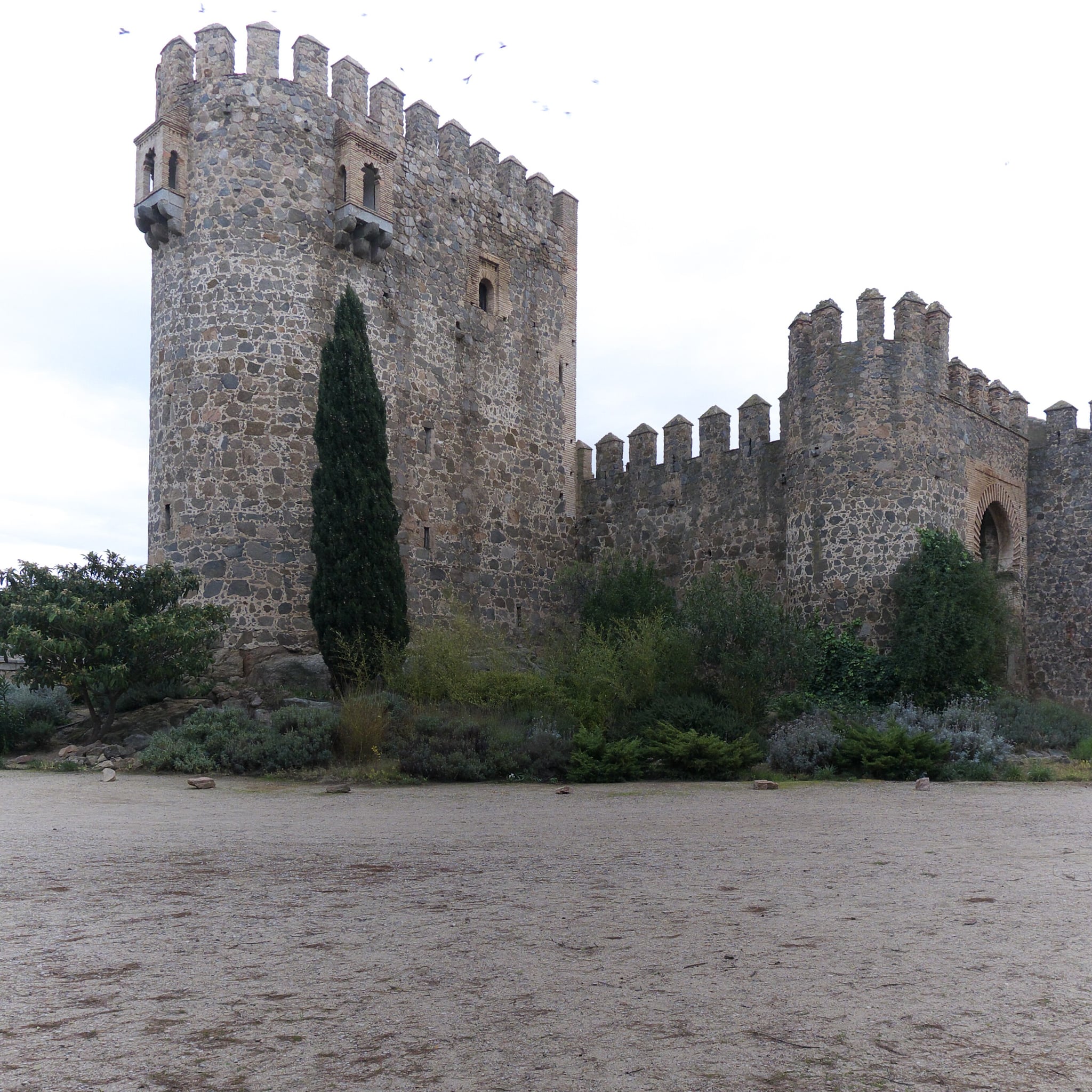
Photo by José Luis Filpo Cabana • CC BY 3.0
Later history and preservation
Decline and 19th-century changes
By the 19th century, the castle's military role had diminished significantly. In 1857, a gunpowder magazine was installed within the castle, marking a shift in its function. The castle was sold in 1873 for 3,000 pesetas and faced potential demolition. However, its historical and architectural value was recognized, and in 1874 it became the first castle in Spain to be declared a national historic-artistic monument, ensuring its protection and preservation.
Modern uses and cultural significance
Following restoration efforts in the mid-20th century, including the addition of a new tower and entrance, the Castle of San Servando has served various educational and hospitality purposes. It currently operates as a youth hostel, welcoming visitors who wish to experience its historic ambiance firsthand.
The castle also holds a place in local legend, notably the tale of the knight Don Nuño Alvear, whose story is recounted during guided tours, linking the fortress to the chivalric traditions of medieval Spain. Furthermore, the castle was immortalized in the famous El Greco painting "View of Toledo", highlighting its cultural and artistic significance.
Archaeological importance and surrounding context
Archaeological excavations have confirmed the presence of earlier fortifications from the Roman, Visigothic, and Arab periods beneath the current castle structure. The foundations of the Muslim fortress, once visible with rectangular towers, remain buried, linking the site to a continuous history of military occupation and architectural evolution.
The castle's location opposite the Alcázar of Toledo situates it within a critical defensive network that has protected the city through various historical phases. Its enduring presence offers valuable insight into the military, religious, and cultural transformations that have shaped Toledo over the centuries.
Frequently asked questions (FAQ)
- What is the historical significance of the Castle of San Servando?
- The Castle of San Servando is historically significant as a medieval fortress originally built as a monastery, later fortified by the Knights Templar to protect Toledo and its vital bridge during the High Medieval period.
- Can I visit the Castle of San Servando today?
- Yes, the Castle of San Servando is currently used as a youth hostel and is open to visitors who want to explore its medieval architecture and historic ambiance.
- What architectural features make the Castle of San Servando unique?
- The castle features a rectangular layout with four towers, including the prominent Torre del Homenaje with arrow slits and crenellations, built using stone and lime mortar characteristic of Arab construction techniques.
- When was the Castle of San Servando declared a national monument?
- The castle was declared a national historic-artistic monument in 1874, making it the first castle in Spain to receive this designation.
- How does the Castle of San Servando relate to the Alcázar of Toledo?
- The Castle of San Servando faces the Alcázar of Toledo across the Tagus River, forming part of the city's historic defensive network.
Photo gallery


Information
Website
Visit websiteSources & official resources
Verify the information above using these authoritative references.
Loading map...
Visitor reviews
No reviews yet. Been here? Write the first review and help other travelers!
Write the first reviewVisited this castle? Share your experience
Your review helps other travelers and adds first-hand knowledge to our encyclopedia.