Puerta Bab al-Mardum
The Puerta Bab al-Mardum, also known as Puerta de Valmardón, is a significant historical city gate located in Toledo, Spain. Constructed in the 10th century during the Early Medieval period, it stands as one of the oldest surviving gates of Toledo's ancient city walls. The gate's name originates from the Arabic word "mardum," meaning "blocked up," which likely refers to the gate's eventual closure when its role was supplanted by the nearby Puerta del Sol. The Spanish name "Valmardón" is a phonetic adaptation of the original Arabic term. Adjacent to the gate is the Mezquita Bab al-Mardum, also known as the Mosque of Cristo de la Luz, an important example of Islamic architecture in the city.
Historical context and significance
The Puerta Bab al-Mardum was built during the period of Islamic rule in Toledo, when the city was a key cultural and military center in the Iberian Peninsula. Toledo was under Muslim control from the early 8th century until the Christian Reconquista in the 11th century. The gate formed part of the city's defensive system, serving both military and administrative functions. Its construction reflects the fortification techniques of the time, designed to protect the city from external threats.
Architectural features and design
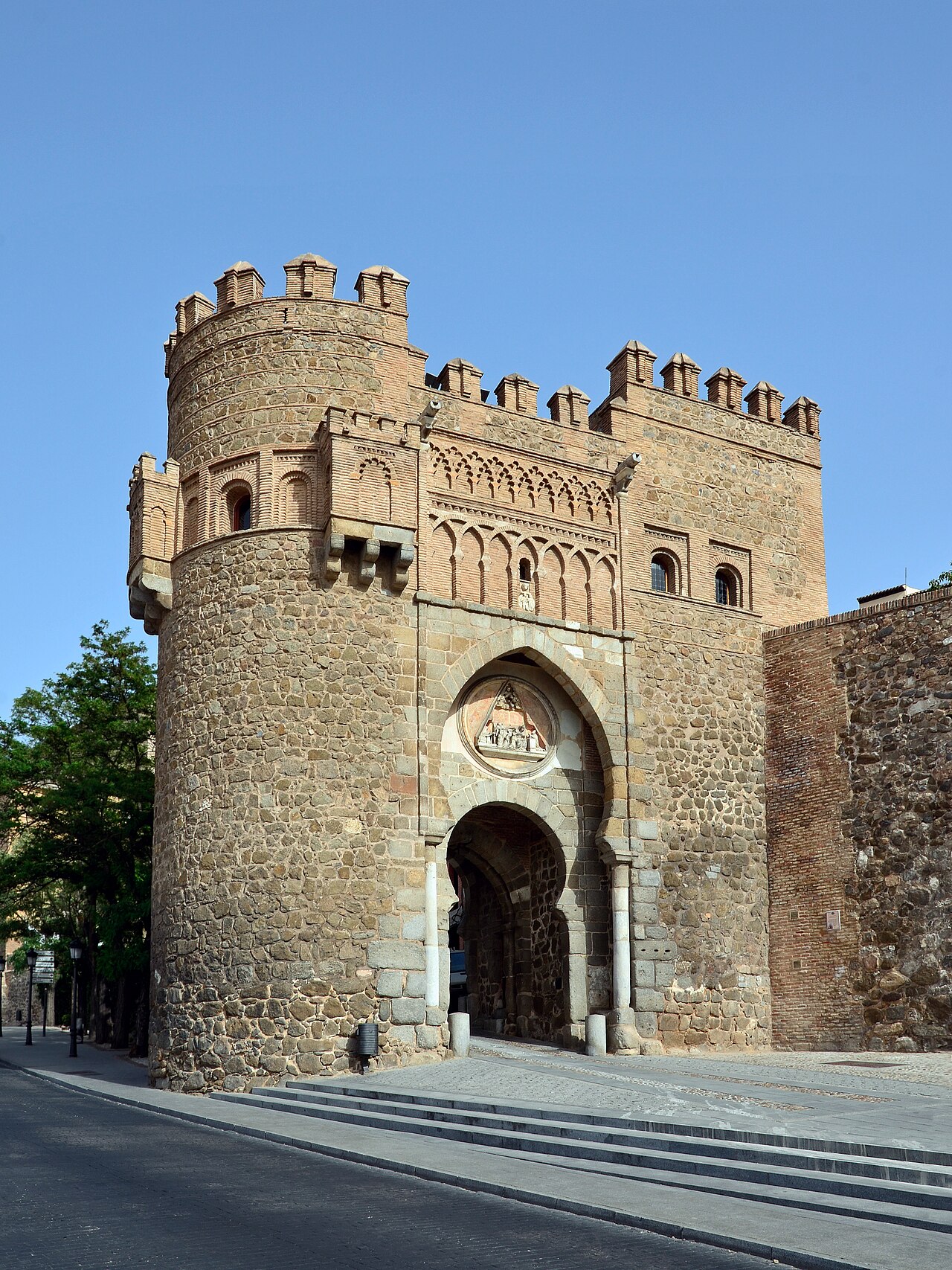
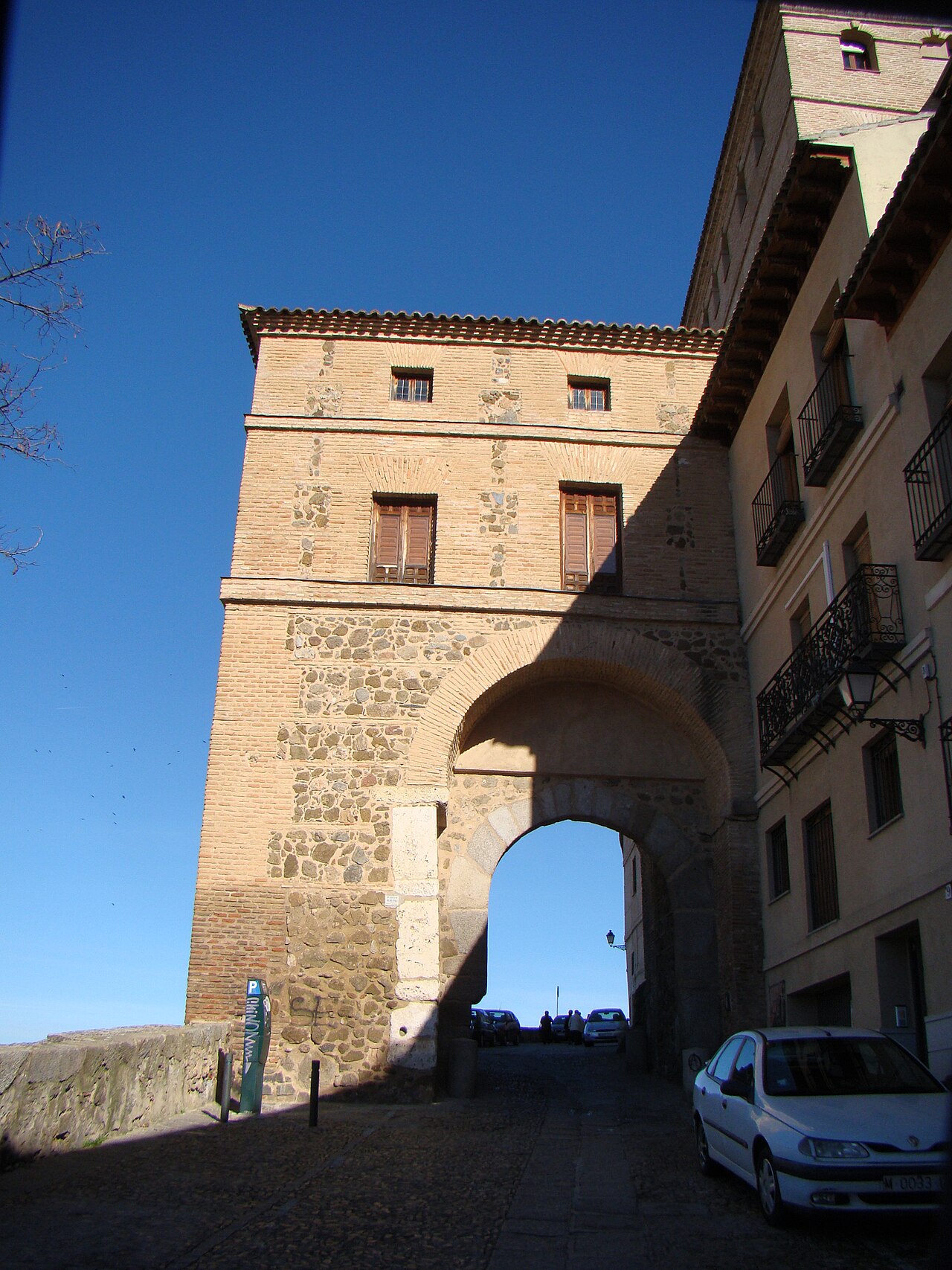
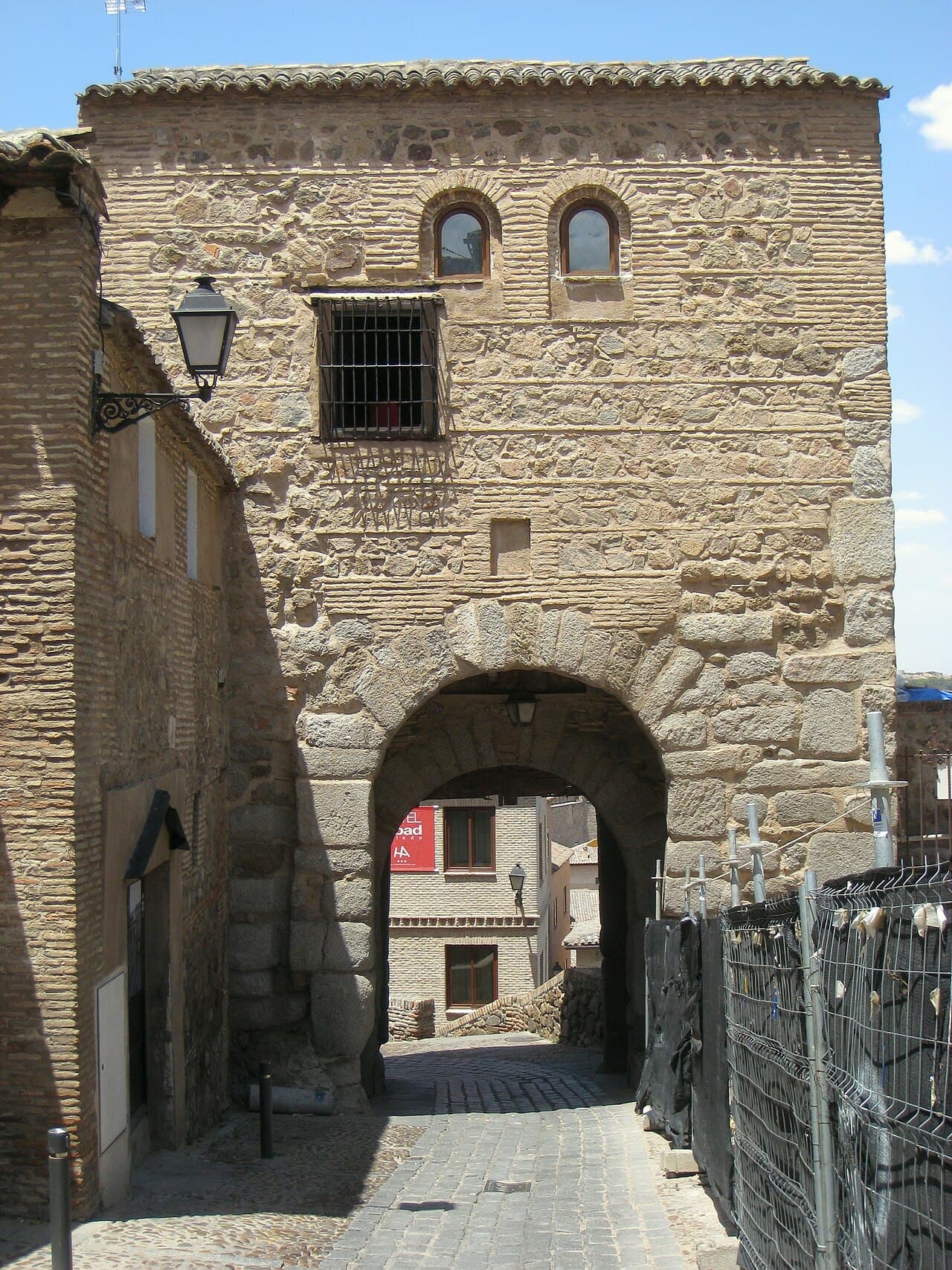
The gate exemplifies the characteristics of a bastioned fortress, a type of fortification that includes projecting structures to allow defensive fire in multiple directions. The Puerta Bab al-Mardum features thick stone walls and a robust, rectangular layout typical of early medieval military architecture. The gate's design includes a narrow passageway that would have been easily defensible against invaders. Although much of the original gate remains intact, some parts have been modified or restored over the centuries.
Materials and construction techniques
The gate was primarily constructed using local stone, a common material in Toledo's fortifications. The masonry work demonstrates the skilled craftsmanship of the era, with carefully fitted stones forming the strong walls. The use of stone not only provided durability but also resistance to siege weaponry common in medieval warfare.
Relation to surrounding structures
The Puerta Bab al-Mardum is part of the larger defensive wall system that encircled Toledo. Its proximity to the Mosque of Cristo de la Luz underscores the Islamic cultural influence in the area during the 10th century. The mosque, originally built as a place of worship, now serves as an important historical monument adjacent to the gate. The gate's closure and replacement by the Puerta del Sol reflect the evolving urban development and defense strategies of Toledo over time.
The gate's role through the centuries
Following the Christian Reconquista of Toledo in 1085, the Puerta Bab al-Mardum continued to be an important part of the city's fortifications. However, as the city's defensive needs changed, the gate's military significance diminished. The gate was eventually blocked up, hence the Arabic name "mardum," indicating it was no longer in active use. Despite this, it remains a valuable architectural and historical relic, illustrating the city's layered past.
Preservation and current condition
Today, the Puerta Bab al-Mardum is well preserved as a historical monument. It attracts visitors interested in Toledo's medieval heritage and Islamic architectural legacy. The gate's preservation allows for the study of early medieval fortification methods and offers insight into the cultural transitions experienced by Toledo over centuries.
Visiting Puerta Bab al-Mardum
The gate is accessible to the public and forms part of Toledo's rich historical landscape. Visitors can explore the surrounding area, including the nearby Mosque of Cristo de la Luz, which provides additional context to the Islamic period of Toledo. The site is a popular destination for those interested in medieval architecture, history, and the cultural fusion characteristic of Spain's past.
Nearby attractions and cultural significance
Toledo itself is a UNESCO World Heritage Site, renowned for its diverse architectural styles and historical layers. The Puerta Bab al-Mardum contributes to this heritage as a tangible link to the city's Islamic era. Nearby, visitors can also explore other gates, churches, and monuments that together tell the story of Toledo's complex history.
Frequently asked questions (FAQ)
- What is the historical significance of Puerta Bab al-Mardum?
- Puerta Bab al-Mardum is one of Toledo's oldest gates, built in the 10th century during Islamic rule, serving as a key part of the city's defensive system.
- Can I visit Puerta Bab al-Mardum and the nearby Mosque of Cristo de la Luz?
- Yes, both the gate and the nearby Mosque of Cristo de la Luz are accessible to the public and are popular tourist attractions in Toledo.
- When was Puerta Bab al-Mardum constructed?
- The gate was constructed in the 10th century, reflecting early medieval Islamic military architecture in Toledo.
- Why is the gate called Bab al-Mardum?
- The name 'Bab al-Mardum' means 'blocked up' in Arabic, referring to the gate's closure when it was replaced by the Puerta del Sol.
- What architectural style characterizes Puerta Bab al-Mardum?
- The gate features characteristics of bastioned fortress design typical of early medieval Islamic fortifications.
Photo gallery

Photo by Daderot•Public domain
Information
Current owner
Municipality of Toledo
Loading map...
Visitor reviews
No reviews yet. Been here? Write the first review and help other travelers!
Write the first reviewVisited this castle? Share your experience
Your review helps other travelers and adds first-hand knowledge to our encyclopedia.