Camponeschi Castle
Camponeschi Castle stands as a significant example of a Renaissance hill castle located in the village of Prata d’Ansidonia, within the Province of L’Aquila in Abruzzo, Italy. Originating from a fortified medieval settlement, the castle reflects centuries of architectural evolution and historical developments tied to local noble families and regional politics. Its enduring structures and layout provide valuable insight into fortified village design and feudal life in central Italy.
Historical background and origins
The site of Camponeschi Castle was initially established in the 13th century as a fortified settlement or castrum, built by the local population to offer defense and habitation within protective walls. The earliest documented mention dates to 1508, when it was referred to as "Castrum S. Petri Camponeschi". The castle's foundation is traditionally linked to the nearby San Paolo di Peltuinum church, suggesting a combined strategic and religious significance in the region.
Throughout its history, the castle was governed by the Camponeschi family, a noble lineage from L’Aquila, until the 17th century. During the period of Spanish dominance in Italy, ownership shifted among various feudal lords before the Nardis family acquired it in 1634. The Nardis family maintained possession until the abolition of feudal rights in 1806. Despite changes in governance, the castle remained continuously inhabited until the mid-20th century, with the last residents relocating in 1963.
Architectural features and layout
Fortifications and defensive structures
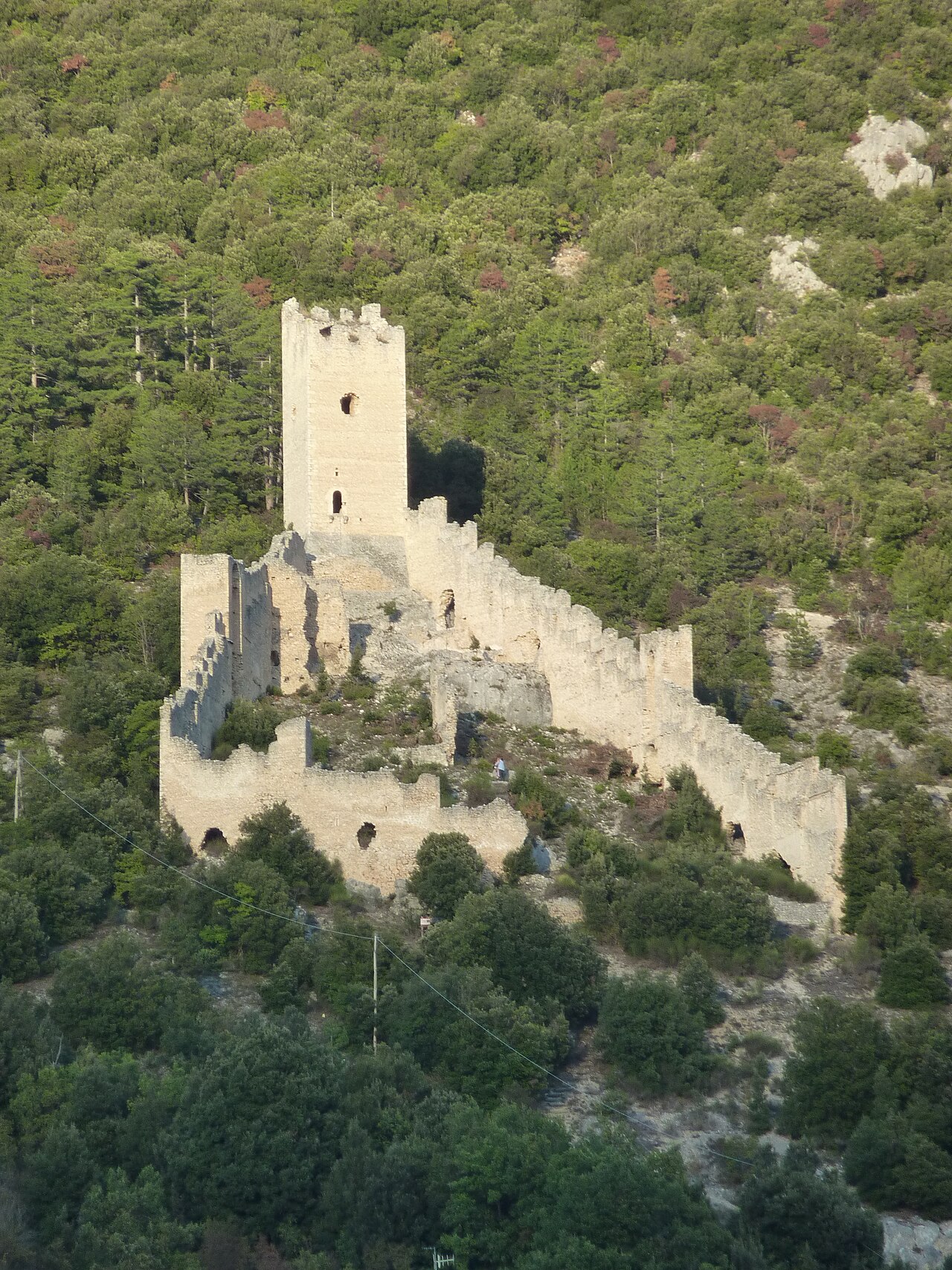
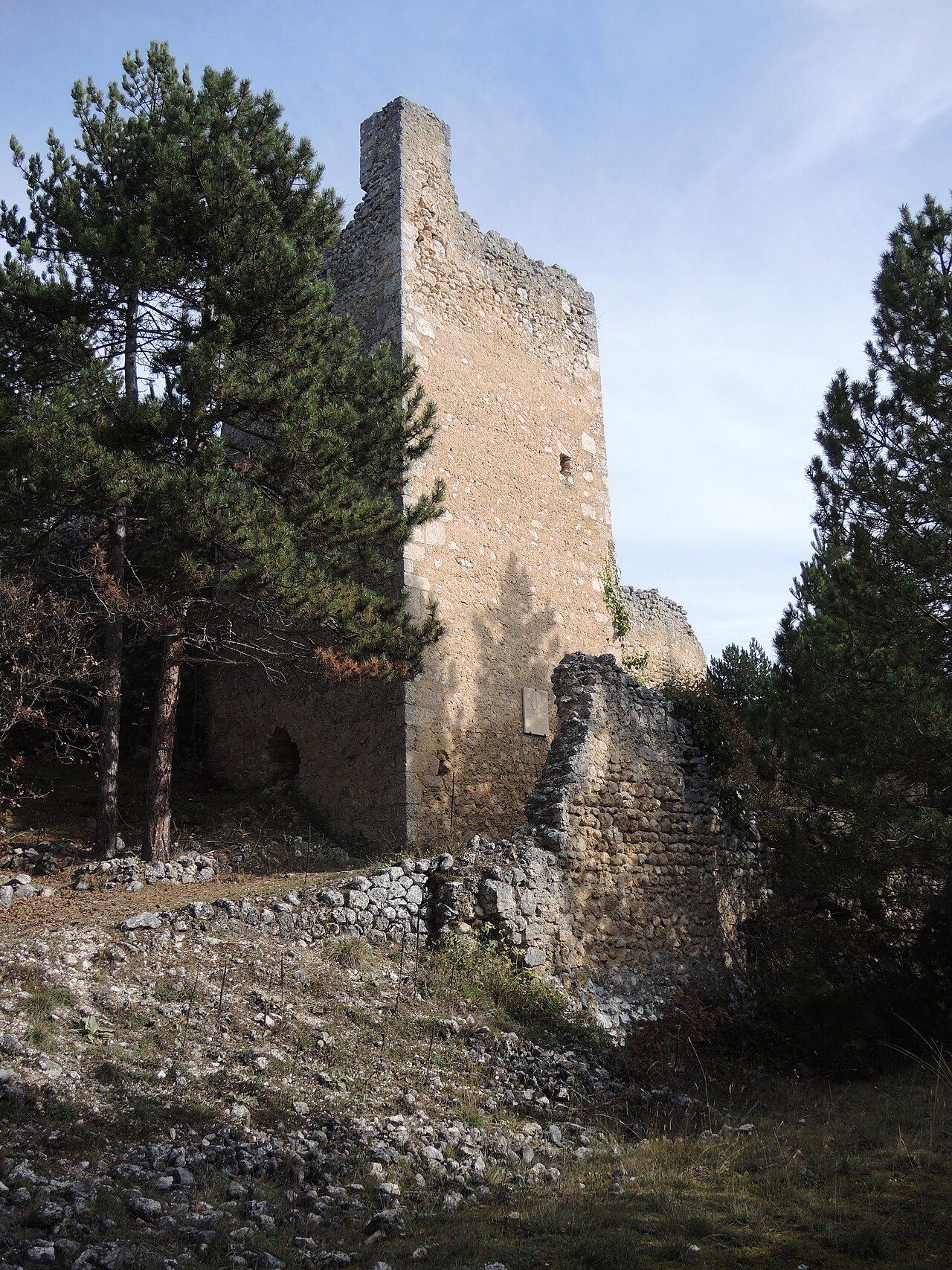
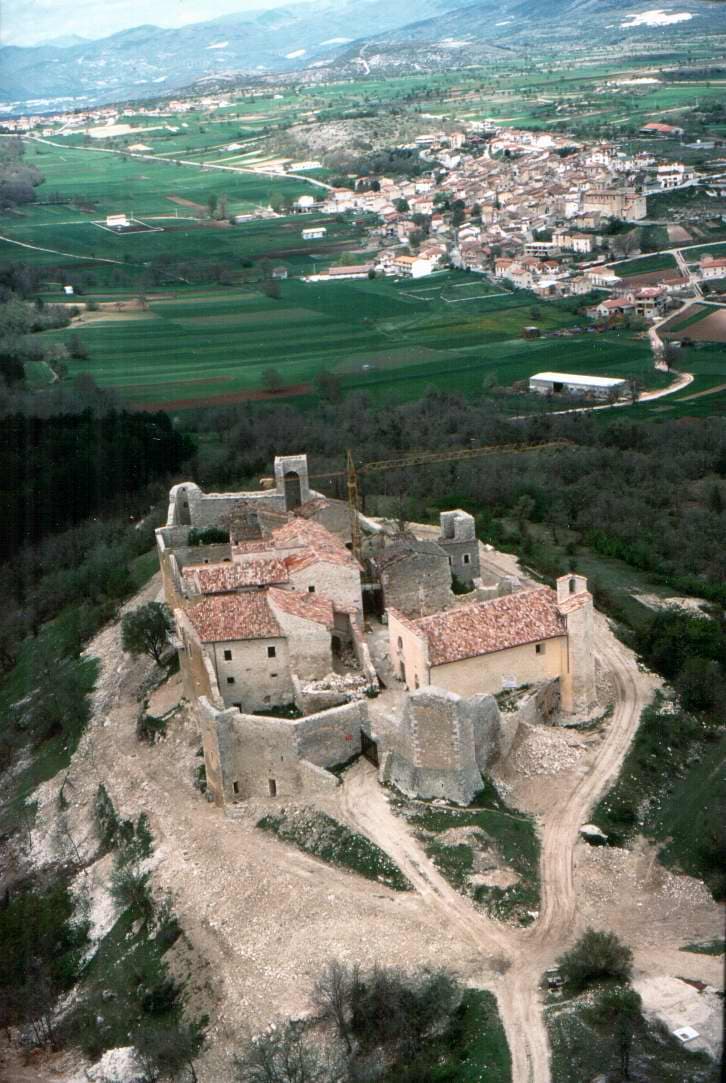
The castle is enclosed by a roughly rectangular defensive wall that delineates the perimeter of the old village. This wall is reinforced by six surviving square towers, strategically positioned to serve as watchpoints and defensive bastions. These towers were constructed using traditional medieval masonry techniques, highlighting the craftsmanship of the era. The towers and walls have been partially preserved, with some integrated into later residential buildings.
Two main medieval gates provide access to the village, aligned with the historic cardo (north-south street) and decumanus (east-west street), following the Roman urban planning model. The western gate is particularly notable for its Gothic pointed arch, flanked by an irregular five-sided tower, a distinctive defensive feature.
Religious architecture and church details
Adjacent to the western gate stands the now deconsecrated church of Saint Peter, which exhibits a late Romanesque stone façade characterized by a horizontally aligned top and a square form typical of L’Aquila architectural style. The church has two portals, one reflecting Renaissance influence with a stone lintel and triangular pediment, topped by a small circular oculus.
Inside, the church is divided into two naves separated by rows of robust stone pillars supporting rounded arches. The chapels contain altars designed in a Mannerist style, incorporating classical Greek tabernacle motifs. A bell tower, integrated into one of the defensive towers, ends in a clocher-mur (gabled wall belfry), indicating later reconstruction phases.
Village and residential structures
The castle’s internal layout resembles the Tuscan fortified village model exemplified by Monteriggioni, where residential buildings stand independently from the defensive walls rather than abutting them directly. The village comprises mostly simple, single-room rural homes built with masonry and connected by stone arches, reflecting the modest living conditions of its inhabitants.
Within the enclosure, two more elaborate medieval palaces showcase 15th-century architectural styles and likely belonged to the noble families residing in the castle. A cobbled street named via Camponeschi runs from the western gate through the village, passing by the church square, which is buttressed by the defensive wall behind it.
Restoration efforts and current condition
Restoration initiatives began in the early 21st century, specifically between 2003 and 2008, aiming to preserve the castle’s historical and architectural heritage. However, the 2009 L’Aquila earthquake caused significant damage, halting restoration activities and leaving parts of the village in ruins.
Efforts resumed in January 2023, supported by the National Recovery and Resilience Plan and coordinated by the local municipality and the Abruzzo regional government. The ongoing conservation aims to stabilize and restore the castle’s structures, enabling future public access and appreciation of this historic site.
Significance and cultural heritage
Camponeschi Castle represents an important example of a fortified medieval village that evolved through the Renaissance period, reflecting the social, military, and architectural changes over several centuries. Its preservation offers valuable insights into the feudal systems of central Italy, the defensive strategies employed in hill castles, and the integration of religious and residential architecture within fortified settlements.
The castle’s location in Prata d’Ansidonia places it within a rich historical landscape of Abruzzo, surrounded by other medieval sites and natural landmarks. As restoration progresses, Camponeschi Castle is poised to become a key cultural and tourist destination, highlighting the heritage of the region and the legacy of its noble families.
Frequently asked questions (FAQ)
- How do I get to Camponeschi Castle?
- Camponeschi Castle is located in Prata d’Ansidonia, Italy, and can be reached by car or public transportation from nearby towns. The nearest major city is L'Aquila, from which you can take a bus or drive for about 30 minutes. It's recommended to check local transit schedules for the most convenient options.
- What is the historical significance of Camponeschi Castle?
- Camponeschi Castle dates back to the 13th century and played a crucial role in the defense of the region during medieval times. It is associated with the noble Camponeschi family, known for their influence in the area. Today, the castle stands as a testament to the architectural and historical heritage of Abruzzo.
- When was Camponeschi Castle built?
- Camponeschi Castle was constructed in the 1200s, showcasing the military architecture of the medieval period. It has undergone various restorations over the centuries, helping preserve its historical features. The castle's enduring presence highlights its significance in the region's history.
- Can I visit Camponeschi Castle year-round?
- Yes, Camponeschi Castle is open to visitors throughout the year, although specific opening hours may vary by season. It's advisable to check the official website or local tourist information for the most current visiting hours. Guided tours are also available to enhance your experience.
- Why is Camponeschi Castle a popular tourist attraction?
- Camponeschi Castle attracts visitors due to its rich history, stunning architecture, and beautiful surrounding landscapes. The castle offers a glimpse into medieval life and defense strategies, making it a fascinating destination. Additionally, its scenic location provides excellent photo opportunities and a chance to explore the picturesque village of Prata d’Ansidonia.
- Is it possible to access all areas of the castle?
- While some areas of Camponeschi Castle are accessible to visitors, certain sections may be restricted for preservation purposes. Guided tours typically include the most significant areas, allowing guests to explore the castle's history and architecture. For those with mobility concerns, it's best to inquire about accessibility options in advance.
- What are the ticket prices for visiting Camponeschi Castle?
- Ticket prices for Camponeschi Castle vary depending on age and group size, with discounts often available for children and seniors. Typically, the entrance fee is reasonable, making it accessible for most visitors. It's a good idea to confirm the latest pricing on the official website before your visit.
- What is the best time to visit Camponeschi Castle?
- The best time to visit Camponeschi Castle is during the spring and early autumn months when the weather is mild and pleasant. This allows for comfortable exploration of the castle and its surroundings. Additionally, visiting during these times may offer fewer crowds, enhancing your experience.
- Are there nearby attractions to visit after Camponeschi Castle?
- Yes, there are several nearby attractions worth exploring after your visit to Camponeschi Castle. The region is rich in natural beauty, with opportunities for hiking and enjoying the scenic landscapes of Abruzzo. Additionally, the historic town of L'Aquila is just a short drive away, offering cultural sites, dining, and shopping experiences.
Photo gallery

Information
Loading map...
Visitor reviews
No reviews yet. Been here? Write the first review and help other travelers!
Write the first reviewVisited this castle? Share your experience
Your review helps other travelers and adds first-hand knowledge to our encyclopedia.