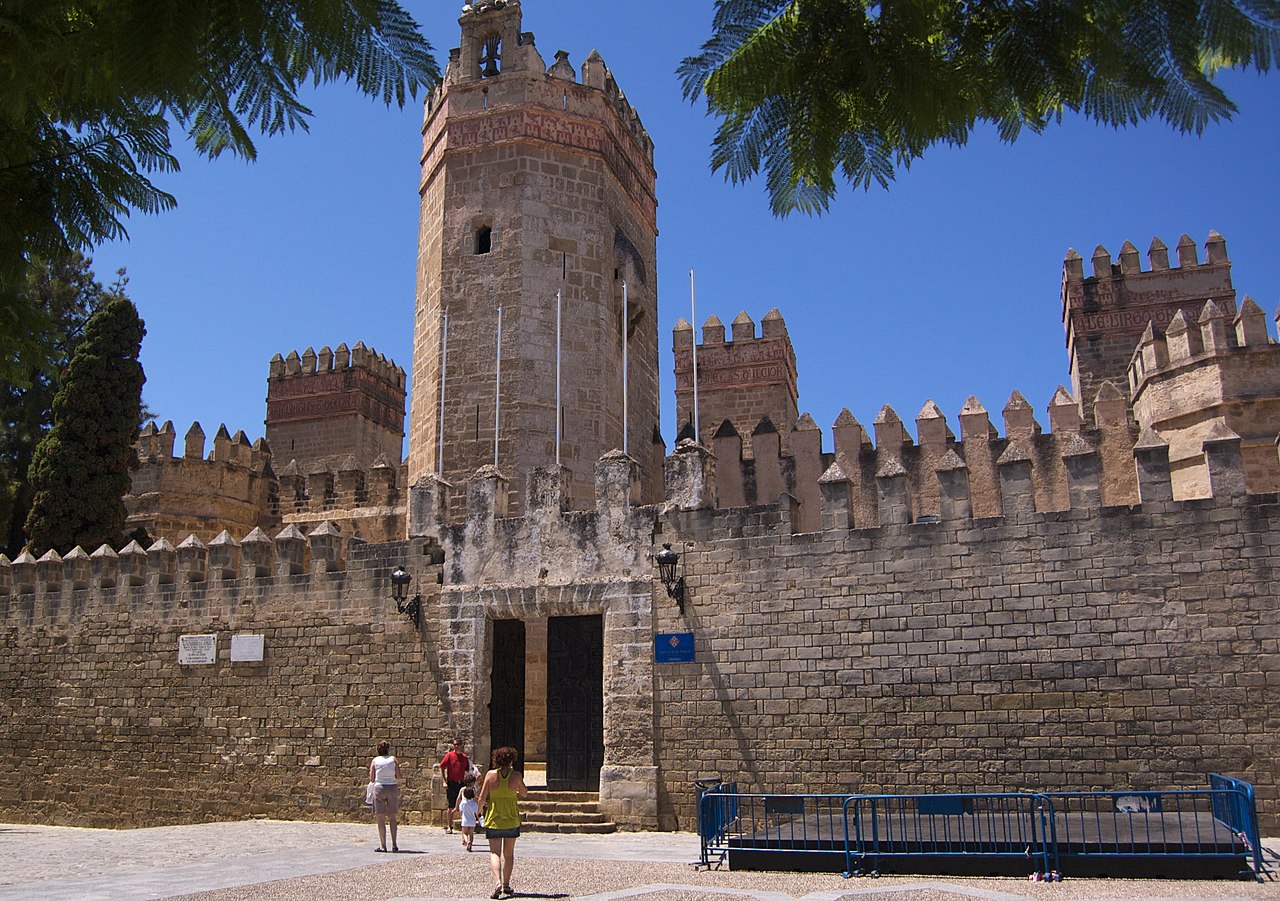
Castle of San Marcos

Castle of san marcos in el puerto de santa maria
El Puerto de Santa Maria, Spain
High Medieval (11th–13th c.)
Well Preserved

The Castle of San Marcos in El Puerto de Santa Maria, Spain, stands as a remarkable example of medieval military architecture with deep historical roots dating back to the 13th century. Originally constructed as a fortified church under the reign of King Alfonso X of Castile, the castle was strategically built on the site of a former mosque, whose ancient walls were incorporated into the new structure. This fusion of Islamic and Christian architectural elements reflects the complex cultural and religious history of the region during the High Medieval period.

Historical context and origins

The construction of the Castle of San Marcos was part of King Alfonso X's efforts to consolidate Christian control over Andalusia during the Reconquista. The castle's location in El Puerto de Santa Maria, a vital port city on the Bay of Cadiz, made it an important defensive and administrative center. The castle's foundation on the remnants of a mosque highlights the transitional period in Spanish history when Islamic rule was giving way to Christian monarchies.

Architectural features and design

Fortified church structure

The castle is unique in that it was designed primarily as a fortified church, combining religious and military functions. Its robust stone walls and defensive features were intended to protect the local population and assert Christian dominance. The surviving mosque walls were integrated into the castle's fabric, showcasing the reuse of earlier materials and the layered history of the site.

Defensive elements

The castle incorporates typical High Medieval defensive architecture, including thick curtain walls, battlements, and towers designed to withstand sieges. Its position near the coast allowed it to serve as a lookout and defensive point against potential maritime threats. The castle's compact layout reflects its dual purpose as a place of worship and a military stronghold.

Cultural significance and nearby attractions

Close to the castle, visitors can find a replica of the map of Juan de la Cosa, a renowned Spanish navigator and cartographer who created the earliest European world map to include the newly discovered Americas in the late 15th century. This monument celebrates the maritime heritage of El Puerto de Santa Maria and its historical role in the Age of Discovery.

Additionally, a small fountain near the castle adds to the charm of the historic site, offering a peaceful spot for visitors to reflect on the rich tapestry of history embedded in the castle's walls.

Preservation and current status

Today, the Castle of San Marcos remains a significant cultural landmark in El Puerto de Santa Maria. While its original function as a fortified church has long passed, the castle's well-preserved structure continues to attract historians, architects, and tourists interested in medieval Spanish history and architectural heritage. Its enduring presence provides valuable insights into the military and religious strategies of the High Medieval period in southern Spain.

Visiting the castle

Visitors to the Castle of San Marcos can explore the castle grounds and appreciate the blend of architectural styles that tell the story of its complex past. The nearby replica of Juan de la Cosa's map enriches the visit by connecting the castle's history to Spain's broader maritime exploration legacy. The castle's location in the historic city of El Puerto de Santa Maria makes it accessible for day trips and cultural tourism.

Frequently asked questions (FAQ)

What is the historical significance of the Castle of San Marcos?
The Castle of San Marcos, built in the 15th century, served as a defensive stronghold against invasions and played a crucial role during the Spanish Reconquista. Its strategic location allowed it to control maritime traffic in the Bay of Cádiz, making it an important military site throughout its history.
When was the Castle of San Marcos built?
Construction of the Castle of San Marcos began in 1430 and was completed in 1450. The castle has undergone various renovations over the centuries, reflecting the architectural styles and military needs of different historical periods.
How do I get to the Castle of San Marcos?
The Castle of San Marcos is easily accessible by public transport, including buses and trains that connect El Puerto de Santa Maria with nearby cities. Visitors can also reach the castle by car, with parking available nearby for those driving.
What are the opening hours for the Castle of San Marcos?
The Castle of San Marcos is open to visitors from Tuesday to Sunday, typically from 10 AM to 6 PM. It's advisable to check the official website for any seasonal variations in hours or special closures.
Can I buy tickets in advance for the Castle of San Marcos?
Yes, tickets for the Castle of San Marcos can be purchased in advance online through the official website. This is recommended, especially during peak tourist seasons, to avoid long lines and ensure entry.
Is the Castle of San Marcos accessible for visitors with disabilities?
The Castle of San Marcos has made efforts to be more accessible for visitors with disabilities, including ramps and designated pathways. However, some areas may still present challenges due to the castle's historical architecture.
What is the best time to visit the Castle of San Marcos?
The best time to visit the Castle of San Marcos is during the spring or fall when the weather is mild and pleasant. Visiting early in the morning or later in the afternoon can also help you avoid crowds and enjoy a more serene experience.
Are there any nearby attractions to the Castle of San Marcos?
Yes, nearby attractions include the beautiful beaches of El Puerto de Santa Maria, the picturesque old town, and the famous wineries of the region. A visit to these sites can enhance your experience and provide a deeper understanding of the local culture.
What are the ticket prices for the Castle of San Marcos?
Ticket prices for the Castle of San Marcos vary, with discounts available for students and seniors. It's best to check the official website for the most current pricing information and any special offers.

Information

Hill Castle

Sources & official resources

Verify the information above using these authoritative references.

Loading map...

Visitor reviews

No reviews yet. Been here? Write the first review and help other travelers!

Write the first review

Visited this castle? Share your experience

Your review helps other travelers and adds first-hand knowledge to our encyclopedia.
Write a review

(5/5)

0/2000 characters

Your review will be visible after admin approval

Nearby castles

0.5 km
San Marcos Castle — Spain castle

San Marcos Castle

El Puerto de Santa María, Spain

San Marcos Castle stands as a remarkable example of medieval military architecture in El Puerto de Santa María, Spain. Founded in the 12th century and commissioned by King Alfonso X 'The Wise', the fortress was built upon the remains of a Moorish mosque on the banks of the Guadalete River. This strategic location near the southwestern coast of Spain allowed the castle to serve as both a defensive stronghold and a symbol of the shifting religious and political powers during the High Medieval period. The castle’s architecture reflects a unique blend of cultural influences. Incorporating elements from the original Almohad mosque, such as the qibla wall and the mihrab niche, the fortress preserves traces of Islamic religious architecture alongside its later Christian fortifications. The castle’s four towers, two with hexagonal bases and two with square foundations, were constructed using Roman masonry salvaged from nearby ruins, illustrating the reuse of materials and the layering of history within the structure. The historical foundation and construction The origins of San Marcos Castle are closely tied to the Christian reconquest of southern Spain. Following the capture of El Puerto de Santa María in the mid-13th century, King Alfonso X ordered the construction of the fortress around 1264. The castle was erected on the site of a former mosque, symbolizing the transition from Islamic to Christian dominance in the region. This transformation was not only military but also religious, as the fortress was dedicated to the Virgin Mary and incorporated chapels within the towers honoring the Virgin of the Miracles. Alfonso X also founded the military Order of Santa María de España within the castle, an order intended to defend Christian territories against North African incursions. This order was later merged with the Order of Santiago, reflecting the complex military and religious alliances of medieval Spain. The castle’s strategic importance was underscored by its role in guarding the town and controlling access to the Guadalete River. Architectural features and expansions Medieval military design The fortress is characterized by its robust defensive elements typical of High Medieval military architecture. The four towers provided vantage points for surveillance and defense, with the hexagonal towers uniquely designed to house chapels on their ground floors. The castle’s walls and battlements were constructed to withstand sieges and attacks, reflecting the turbulent nature of the period. 15th-century Gothic additions During the 15th century, the castle underwent significant expansions under the ownership of the House of Medinaceli. A notable addition was the sacristy with three bays, each covered by Gothic vaults featuring pointed arches and ribbed stonework. Above the church vaults, new rooms were constructed accessible from the patio de armas, or courtyard of arms, emphasizing the castle’s dual role as a military fortress and noble residence. Notable historical figures and ownership The castle passed through the hands of several prominent figures. Admiral Benedetto Zaccaria, a Genoese noble, once held the fortress, followed by Alonso Pérez de Guzmán El Bueno, who in 1306 donated it to his daughter Leonor de Guzmán. This donation marked the beginning of the House of Medinaceli's long association with the castle and the town. During the late medieval period, the castle was frequented by notable mariners such as Christopher Columbus and Juan de la Cosa. Juan de la Cosa, famed for his cartographic work during the Age of Exploration, is commemorated within the castle by a bust and a replica of his 1500 nautical map, linking the fortress to Spain’s maritime heritage. Decline and restoration As El Puerto de Santa María expanded and newer religious buildings were constructed, the castle’s role as a sanctuary and defensive bastion diminished. The fortress was eventually closed in 1868 and left abandoned for several decades. Restoration efforts in the 1940s helped preserve the castle’s structure and historical significance, allowing it to survive into the modern era in a well-preserved state. Current use and cultural significance Today, San Marcos Castle is not only a historical monument but also a vibrant cultural venue. Its well-maintained interiors and gardens host conferences, cultural events, and private functions for up to 300 people. The preserved mosque interior offers a unique atmosphere for gatherings, while the surrounding gardens provide an exceptional open-air setting during the summer months. The castle’s layered history, architectural diversity, and connection to significant historical figures make it a valuable heritage site. It embodies the complex cultural and religious transformations of medieval Spain and serves as a testament to the enduring legacy of Alfonso X and the military orders that shaped the region.

High Medieval (11th–13th c.)
Details
4.2 km
Castillo de Santa Catalina — Spain castle

Castillo de Santa Catalina

El Puerto de Santa María, Spain

The Castillo de Santa Catalina stands as a significant historic fortress in El Puerto de Santa María, Spain, embodying centuries of coastal defense evolution along the strategic Bay of Cádiz. Constructed initially in the 16th century, this hill castle was part of a broader network of fortifications designed to protect one of Spain's vital maritime gateways during an era marked by naval conflicts and territorial threats. The origins of the castle trace back to an order from Emperor Charles V in 1540, who commanded the erection of a tower dedicated to Santa Catalina, named after a nearby hermitage. Although this directive preceded actual construction, building activities likely commenced around 1585, coinciding with the development of the nearby Castillo de Puntales. The strategic importance of the site was underscored in 1586, when the city of Cádiz petitioned King Philip II to incorporate the tower into the region’s coastal defense system. The fortress was tasked with overseeing and controlling access to the bay, thereby safeguarding the port town of El Puerto de Santa María from maritime incursions. Architectural design and early construction The initial structure was a truncated cone-shaped tower featuring two vaulted chambers designed to mount multiple artillery pieces. These chambers provided protected spaces for gunners and storage of munitions, reflecting advanced military architectural concepts of the late Renaissance period. Positioned directly opposite the San Felipe bastion, the tower formed part of a defensive line guarding the entrance to the bay. However, the considerable distance between these two fortifications limited their combined effectiveness during attacks in 1587 and 1596. Expansion into a modern fortification Over time, the original tower was incorporated into a larger fortification complex known as the Castillo de Santa Catalina. This expansion marked one of the earliest examples of modern fortifications beyond the main island defenses of Cádiz. Prior to the 1625 attack, the castle was strengthened to facilitate the safe transfer of supplies to Cádiz during sieges. Further enlargements likely brought the fortress to its near-final form before the significant military events of 1702. The 1702 siege and reconstruction In 1702, the castle fell to an allied landing force, followed by a sack and deliberate demolition via explosion. The subsequent reconstruction introduced a new design featuring a sea-facing front with an almost semicircular shape, enhancing its defensive capabilities against naval assaults. The land-facing front was fortified with a hornwork, a projecting defensive structure accompanied by a moat and a covered walkway leading to the parade ground. This design aimed to delay and expose attackers while protecting the defenders within. Later modifications and military use During the mid-18th century, the architect Sala contributed to further expansions, adapting the castle to evolving military technologies and threats. The fortress was again destroyed in 1810 during the Napoleonic Wars to prevent its capture by French forces. It was rebuilt and occupied in 1824 by the troops known as the "Cien Mil Hijos de San Luis", underscoring its continued military relevance. In the 20th century, the Castillo de Santa Catalina served within the Spanish military defenses during World War II. After the war, the castle was abandoned, leading to the collapse of much of its sea-facing structures and historic tower. However, the land front and moat remain largely intact, preserving key elements of its defensive architecture. Architectural features and materials The castle’s construction showcases the use of cyclopean masonry, characterized by large, irregular stone blocks tightly fitted together, a technique that provided strength and durability. These walls were then covered with ashlar blocks of ostionera stone, a local shell limestone valued for its resilience and regional significance. This combination of materials reflects both practical and aesthetic considerations in fortification construction during the Renaissance and later periods. The original truncated conical tower, central to the fortress, contained two vaulted chambers that housed artillery and garrison facilities. Though the tower has partially collapsed and leans toward the sea today, its foundations and lower sections remain visible within the parade ground, offering insight into the castle’s original defensive layout. The semicircular sea-facing front and the hornwork with moat on the land side illustrate the castle’s adaptation to contemporary military engineering principles. The hornwork, designed to protect the main entrance, combined with the covered walkway, created a layered defense system that slowed enemy advances and provided strategic firing positions. Historical significance and legacy The Castillo de Santa Catalina is a testament to the evolving nature of coastal defense in Spain from the 16th century through the 20th century. Its repeated destruction and reconstruction reflect the turbulent military history of the Bay of Cádiz region, including conflicts such as the Anglo-Spanish wars, the Napoleonic Wars, and World War II. Today, the castle’s remains provide valuable archaeological and architectural insights into the design and construction of Renaissance and post-Renaissance fortifications. The site stands as a cultural heritage landmark, illustrating how military architecture adapted to changing technologies and geopolitical threats over several centuries. Visitors to El Puerto de Santa María can explore the castle’s surviving land front and moat, gaining an understanding of its strategic importance and architectural evolution. Despite the loss of much of its sea-facing structures, the castle’s enduring presence continues to symbolize the historical significance of Spain’s coastal defenses.

Post-Renaissance (17th–18th c.)
Details
6.4 km
Doña Blanca Castle — Spain castle

Doña Blanca Castle

El Puerto de Santa María, Spain

Doña Blanca Castle, located in El Puerto de Santa María, Spain, is a historic hill castle dating back to the 15th century. This castle was primarily constructed as a watchtower to oversee the strategic Cádiz bay, playing a defensive role during the Late Medieval period. It is named after Lady Blanca de Borbón, a notable figure who was imprisoned within its walls, lending the castle both historical and cultural significance. Historical background and significance The site of Doña Blanca Castle is layered with a rich history that predates the castle itself. Archaeological excavations have revealed that the area was once home to a significant Phoenician settlement. The remains of walls, necropolises, and housing structures date from between the 8th and 3rd centuries BC, indicating a well-developed urban center with sophisticated urban planning. This ancient city was a powerful port, underscoring the long-standing strategic importance of the location. The earliest traces of human occupation in the surrounding mountains and plains date back to the Copper Age, showing continuous settlement and use of the region over millennia. The castle itself was built in the 15th century, during a period of increased fortification in Spain, when controlling access to important maritime routes was essential. Architectural features and construction Doña Blanca Castle is characterized by its robust tower structure, which was designed primarily for surveillance and defense. The tower overlooks the bay, providing a vantage point to monitor naval activity and potential threats. The castle's construction reflects typical Late Medieval military architecture, with thick stone walls and limited openings to withstand attacks. The castle is integrated into an archaeological site that includes the ancient Phoenician remains, making it a unique blend of medieval and ancient heritage. The castle's walls and foundations may incorporate or overlay earlier structures, reflecting the continuous strategic use of the site. Archaeological importance and preservation The area surrounding Doña Blanca Castle is of considerable archaeological importance. Excavations have uncovered Phoenician necropolises and residential areas, which have provided valuable insights into the region's ancient history and its role as a thriving port city in antiquity. These findings highlight the continuity of settlement from the Copper Age through to the medieval period. Declared a Bien de Interés Cultural in 1993, the castle and its surrounding archaeological site are protected under Spanish heritage laws. Preservation efforts focus on maintaining both the medieval castle and the ancient ruins, ensuring that visitors can appreciate the full historical context of the site. Visitor information and cultural context Today, Doña Blanca Castle is accessible to visitors interested in both medieval fortifications and ancient archaeology. The castle's location in El Puerto de Santa María places it within a region rich in historical landmarks and cultural heritage, making it a valuable destination for those exploring Andalusia's past. The castle's association with Lady Blanca de Borbón adds a layer of historical narrative, connecting the physical structure to notable figures and events in Spanish history. This connection enhances the castle's appeal as a site of both architectural and historical interest.

Late Medieval (14th–15th c.)
Details