The Castle of Penela stands as a remarkable example of medieval military architecture in Portugal, strategically perched on a limestone hill overlooking the surrounding landscape. Its history is deeply intertwined with the Reconquista, the centuries-long series of campaigns by Christian kingdoms to reclaim Iberian territories from Muslim rule. This hill castle not only served as a defensive fortress but also as a center of local governance and community life, reflecting the complex socio-political dynamics of medieval Portugal.
Located in the municipality of Penela, the castle's origins likely predate the medieval period, with archaeological suggestions of pre-Roman occupation and possible Roman military presence due to its commanding view over an important ancient route connecting Mérida, Conímbriga, and Braga. Although no physical Roman remains have been conclusively identified, the site's strategic importance was recognized early on. During the Muslim occupation of the Iberian Peninsula, the area was likely fortified, laying the groundwork for the castle's later development as a Christian stronghold.
The castle was probably captured by Ferdinand I of León in 1064, marking its transition into Christian hands. By 1065, a charter granted to the settlement indicates an established fortified community. Count Sesnando Davides played a key role in repopulating the region by 1087, evidenced by archaeological finds such as anthropomorphic tombs within the castle walls that date from this early medieval period. These tombs attest to a settled population living within the fortress, emphasizing its role beyond mere military defense.
Medieval military significance and royal patronage
The early 12th century was turbulent for Penela, with Muslim offensives in 1116 and 1117 threatening its security and destroying neighboring fortresses. Although tradition credits Afonso Henriques, the first king of Portugal, with conquering the castle in 1129, documentary evidence confirms Christian control by 1137 through charters and donation documents. This suggests the castle was a firmly established Christian fortress well before 1148, the commonly cited date of its conquest.
Under the reigns of Afonso Henriques and his successors, Sancho I and Dinis I, the castle was extensively rebuilt and fortified to meet evolving military needs. King Dinis I, ruling in the early 14th century, is credited with constructing the keep tower and reinforcing the town walls, enhancing the castle's defensive capabilities. The castle also holds historical significance as the birthplace and final residence of Infante Afonso, who later became King Afonso IV (1325–1357), linking it closely to Portuguese royal history.
Political turmoil and architectural evolution
During the 1383-1385 crisis, a period of civil war and political instability in Portugal, the castle's commander initially sided with Castile. However, the local population resisted this allegiance, killing the commander and reaffirming loyalty to Portugal. This episode highlights the castle's role not only as a military bastion but also as a focal point of local political identity and resistance.
The 15th century brought significant architectural and civic developments under Duke Pedro of Coimbra. He oversaw the construction of the ducal palace, the Church of São Miguel, and renovations to the keep tower and main town gate. In 1433, Penela was granted a fair charter, fostering economic growth, and by 1465 it was elevated to a county, with Afonso Vasconcelos e Meneses as its first count. Ownership eventually passed to the influential House of Aveiro, marking a period of noble patronage and architectural refinement.
Architectural features and fortifications
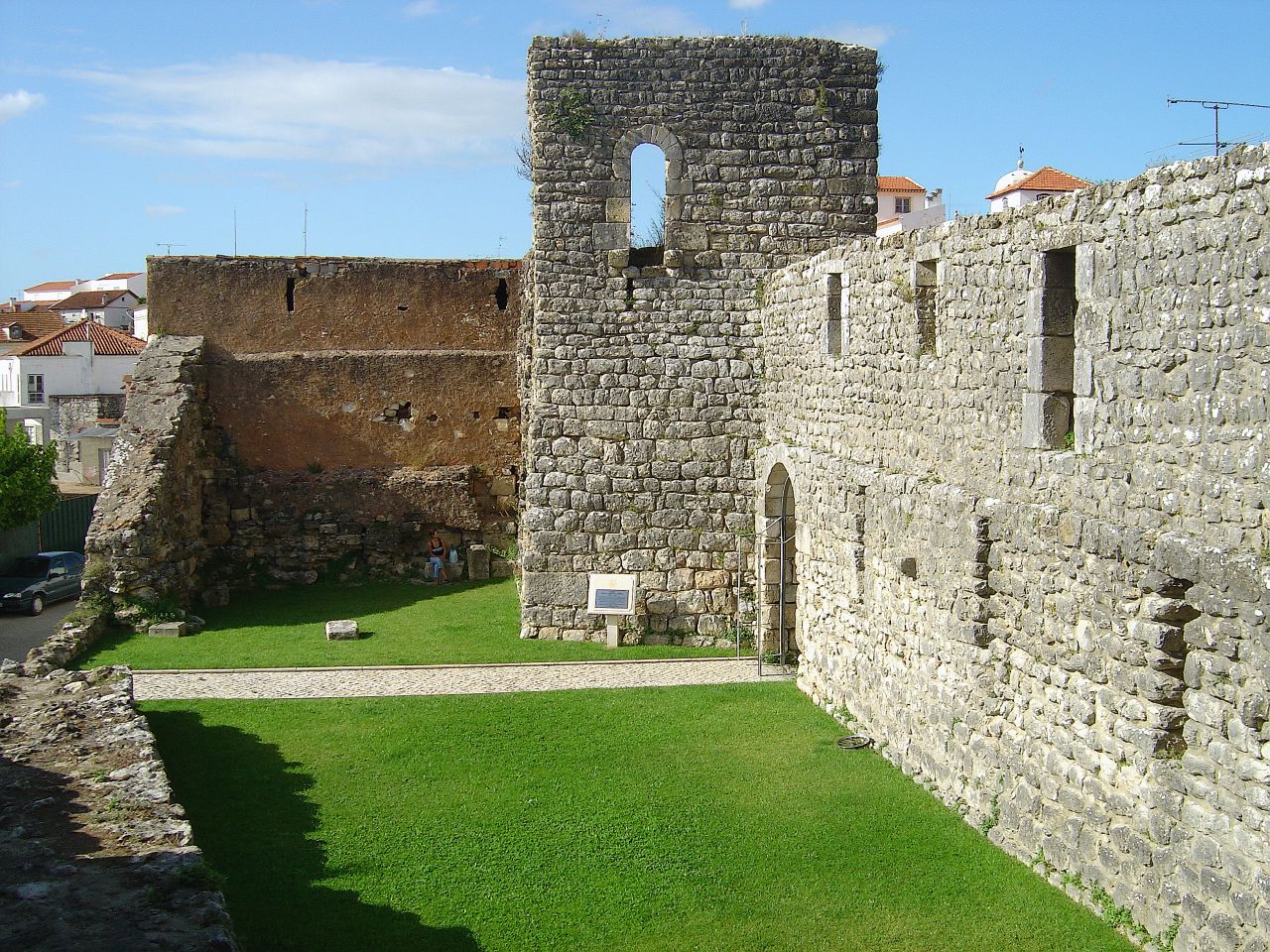
The Castle of Penela is constructed primarily of granite and occupies approximately half a hectare, adapting its irregular polygonal layout to the natural contours of the hill. Its architecture is a palimpsest of styles, incorporating Romanesque, Gothic, and Manueline elements that reflect its long history and continuous evolution.
The curtain walls, mainly built in the 14th century, originally featured twelve towers, of which four remain today. These walls rise between seven and nineteen meters high, emphasizing their defensive purpose. Notable additions from the 15th century include the Porta da Vila (also known as Porta do Cruzeiro), a rounded arched gate on the southwest side, and the castelejo, a small secondary keep that evolved from the original keep tower.
The keep tower, dating from around 1300, survives today primarily as an entrance doorway with a round arch and two artillery openings designed for early cannon known as bombards. This tower was part of the castelejo, which was remodeled and reinforced during the 15th and 16th centuries to accommodate advances in military technology, including artillery.
Gates and defensive structures
The castle's medieval walls are pierced by two main gates. The Porta da Vila on the southwest side provided access to the town's suburb, a peaceful settlement outside the main fortress. On the northeast wall stands the Porta da Traição or Gate of Treason, also known as the Fields Gate. This gate is distinguished by its double bent opening within a quadrangular tower and preserves elements of Muslim architectural tradition, demonstrating the cultural interplay in the region.
Local legend recounts that Afonso Henriques captured the castle by surprising defenders at the Porta da Traição as they opened it to let their cattle drink. Today, this gate leads to a narrow battlement path along a sheer ninety-meter cliff, offering commanding views of the surrounding countryside.
The most accessible entrance currently is the Brecha das Desaparecidas or Breach of the Disappeared, located in the southern walls. This site was once the location of a third southern gate, protected by a distinctive five-sided tower known as a torre quinária. This gate connected the suburb directly to the Church of São Miguel inside the castle walls.
Water supply and internal structures
Within the castle grounds, a square cistern carved directly into the rock served as a vital water reservoir, enabling the fortress to endure prolonged sieges. This cistern is a testament to the castle's thoughtful design, ensuring sustainability in times of conflict.
The church of são miguel and cultural heritage
The Church of São Miguel is the principal religious building within the castle. First documented in 1137, it was rebuilt in 1420 under Duke Pedro of Coimbra and remodeled in the late 16th century. Its architecture is characterized by a simple Renaissance style, featuring three naves separated by two arcades supported on octagonal columns with Renaissance capitals.
The church's chancel contains exquisite Baroque woodwork from the 17th and 18th centuries, including two side altars with gilded woodwork dating from the reign of King Pedro II. Among its notable artworks is a sculpture of the Madonna and Child carved from local Ançã stone by the renowned sculptor João de Ruão around 1530, displayed on the left altar.
Two vaulted chapels with Renaissance arches flank the interior, adding to the architectural richness of this historic site. The church remains a vital link to the castle's religious and cultural past, serving both as a place of worship and a repository of artistic heritage.
Modern preservation and visitor experience
By the 18th century, the military importance of the Castle of Penela had declined. The catastrophic 1755 Lisbon earthquake severely damaged the castle, destroying the original keep tower, known as the Clock Tower, and one of the gates. The tower was rebuilt in 1760 using stone from a third gate, reflecting the adaptive reuse of materials.
After falling into ruin by the early 20th century, the castle was declared a National Monument in 1910, recognizing its historical and architectural significance. Restoration efforts began in the 1940s, focusing on stabilizing walls and battlements, reconstructing damaged sections, and removing houses built on the castle walls. An 18th-century bell tower that was part of the complex was dismantled during these works.
More recent conservation projects initiated in 1992 under the guidance of the Portuguese Institute of Architectural Heritage have improved visitor access and structural integrity. These efforts include paving pathways, cleaning and consolidating walls, and enhancing the battlement walks, allowing visitors to experience the castle's commanding views and architectural features safely.
Today, occupation within the castle is limited to the Church of São Miguel and a parish house that serves as a museum space, preserving the castle's rich historical narrative. Visitors can explore the fortress's walls, towers, and gates, gaining insight into Portugal's medieval past and the castle's role in shaping regional history.
Frequently asked questions (FAQ)
- How do I get to the Castle of Penela?
- The Castle of Penela is situated in the town of Penela, Portugal, and can be easily accessed by car or public transportation. If you're driving, it is conveniently located near the A13 motorway, making it a straightforward journey from larger cities like Coimbra.
- What is the historical significance of the Castle of Penela?
- The Castle of Penela dates back to the 12th century and played a crucial role during the Reconquista. It served as a defensive stronghold and is an important symbol of the region's medieval history and architectural heritage.
- When was the Castle of Penela built?
- Construction of the Castle of Penela began in the early 12th century and it was completed shortly after the establishment of Portuguese independence. Over the years, it has undergone several renovations, reflecting the architectural styles of different eras.
- Can I visit the Castle of Penela year-round?
- Yes, the Castle of Penela is open to visitors throughout the year. However, it's advisable to check for any special events or maintenance closures that may affect access during your planned visit.
- Why is the Castle of Penela a popular tourist attraction?
- The Castle of Penela attracts visitors due to its stunning views, rich history, and unique architectural features. It is a great place for photography enthusiasts and history buffs alike, offering a glimpse into Portugal's medieval past.
- Is it possible to access the castle with a wheelchair?
- The Castle of Penela has some uneven terrain and steep paths, which may present challenges for visitors with mobility issues. However, the main areas of interest are accessible, and staff are available to assist where needed.
- What are the best times to visit the Castle of Penela?
- The best times to visit the Castle of Penela are during the spring and fall when the weather is mild, and the landscapes are particularly beautiful. Weekdays are generally less crowded compared to weekends, providing a more peaceful experience.
- What are the ticket prices for the Castle of Penela?
- Admission to the Castle of Penela is typically free, making it an affordable destination for travelers. However, it is always a good idea to check local resources for any changes or special exhibitions that may have associated fees.
- What are the opening hours for the Castle of Penela?
- The Castle of Penela is generally open to visitors from 9 AM to 6 PM, but these hours may vary seasonally. Visiting during the day allows you to fully appreciate the site and enjoy the surrounding views.
- Are there nearby attractions to visit while in Penela?
- Yes, the area around Penela is rich in attractions, including beautiful natural parks and charming villages. Visitors can explore the nearby Monastery of Santa Maria de Seiça and enjoy the scenic landscapes of the region.
Information
Website
Visit websiteSources & official resources
Verify the information above using these authoritative references.
Loading map...
Visitor reviews
No reviews yet. Been here? Write the first review and help other travelers!
Write the first reviewVisited this castle? Share your experience
Your review helps other travelers and adds first-hand knowledge to our encyclopedia.