Castle of Pinhel
The Castle of Pinhel is a significant medieval fortress located in the municipality of Pinhel, in the central-eastern district of Guarda, Portugal. Perched at approximately 600 meters above sea level, it commands a strategic vantage point overlooking the Côa River valley and the Serra da Marofa. This hilltop stronghold is a remarkable example of defensive architecture evolving from prehistoric times through the medieval and early modern periods.
The site originally hosted a prehistoric fortified settlement, known as a castro, which is believed to have been occupied by the Turduli people around 500 BCE or possibly the Lusitanians. Subsequently, the area came under Roman control, serving as a strategic outpost overseeing a vital crossing on a Roman road. Following the decline of Roman authority, the site’s importance waned until the foundation of Portugal.
Medieval origins and royal patronage
The castle’s medieval history begins with the Christian Reconquest and the reign of King Afonso I (1112–1185), who initiated the repopulation of Pinhel and fortified its position. His son, Sancho I, granted a royal charter to Pinhel between 1189 and 1209, laying the groundwork for the castle’s construction. The major building phase occurred under King Afonso II, who issued a new charter in 1217, further establishing the town’s legal and administrative framework.
Throughout the 13th century, the castle’s location near the border with the Kingdom of León made it a contested site. The 1297 Treaty of Alcañices definitively confirmed Pinhel as Portuguese territory. Around 1282, King Denis I undertook substantial fortifications, adding six square towers and encircling walls to strengthen the defenses.
Strategic role during conflicts and subsequent renovations
During the Portuguese succession crisis (1383–1385), Pinhel sided with the Master of Aviz, leading to attacks by Castilian forces that resulted in the castle’s partial pillaging in 1385. The castle remained a key defensive point during further Castilian incursions in 1396 and 1398.
The 15th century brought economic difficulties and military challenges, including assaults by figures such as Dom Gonçalo Coutinho. Despite this, under King Manuel I (1495–1521), the castle was remodeled to update its defenses and aesthetics, coinciding with a new royal charter granted in 1510.
In the 17th century, during the Restoration War aimed at regaining independence from Spain, the castle’s fortifications were modernized to accommodate artillery. A new redoubt was added, and Pinhel became a regional military center overseeing nearby forts.
Architectural features and layout
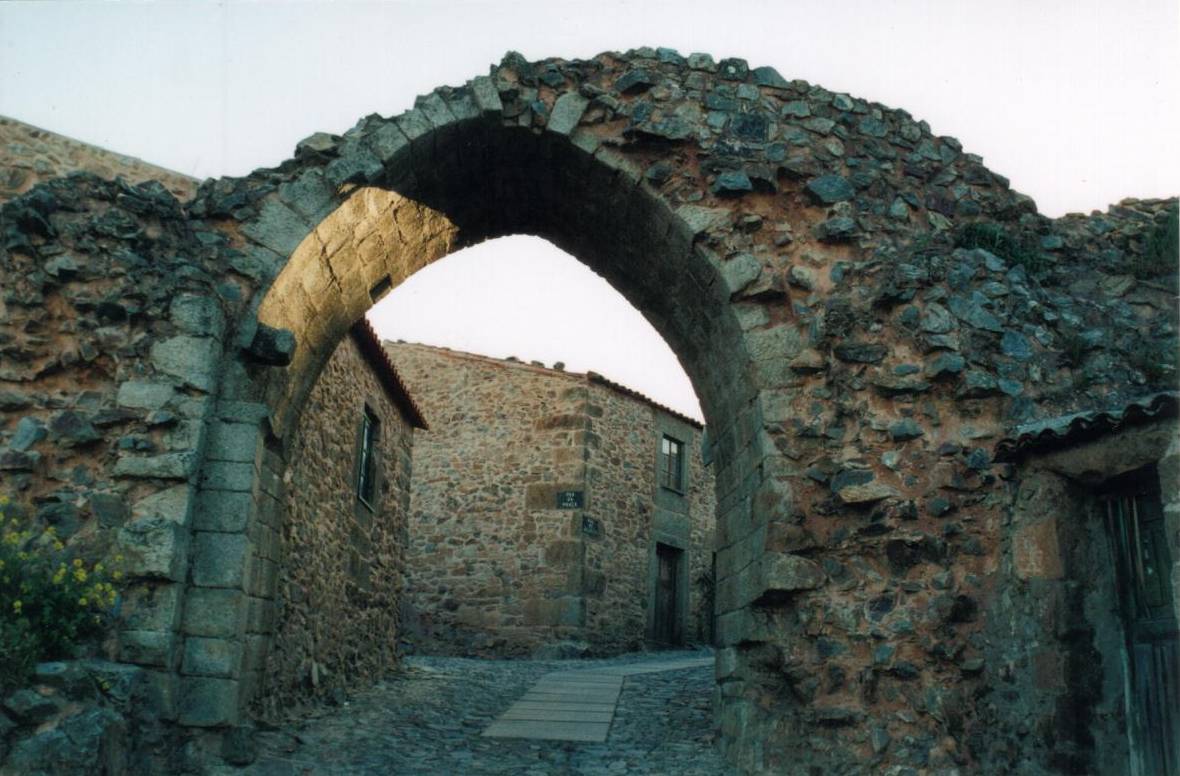
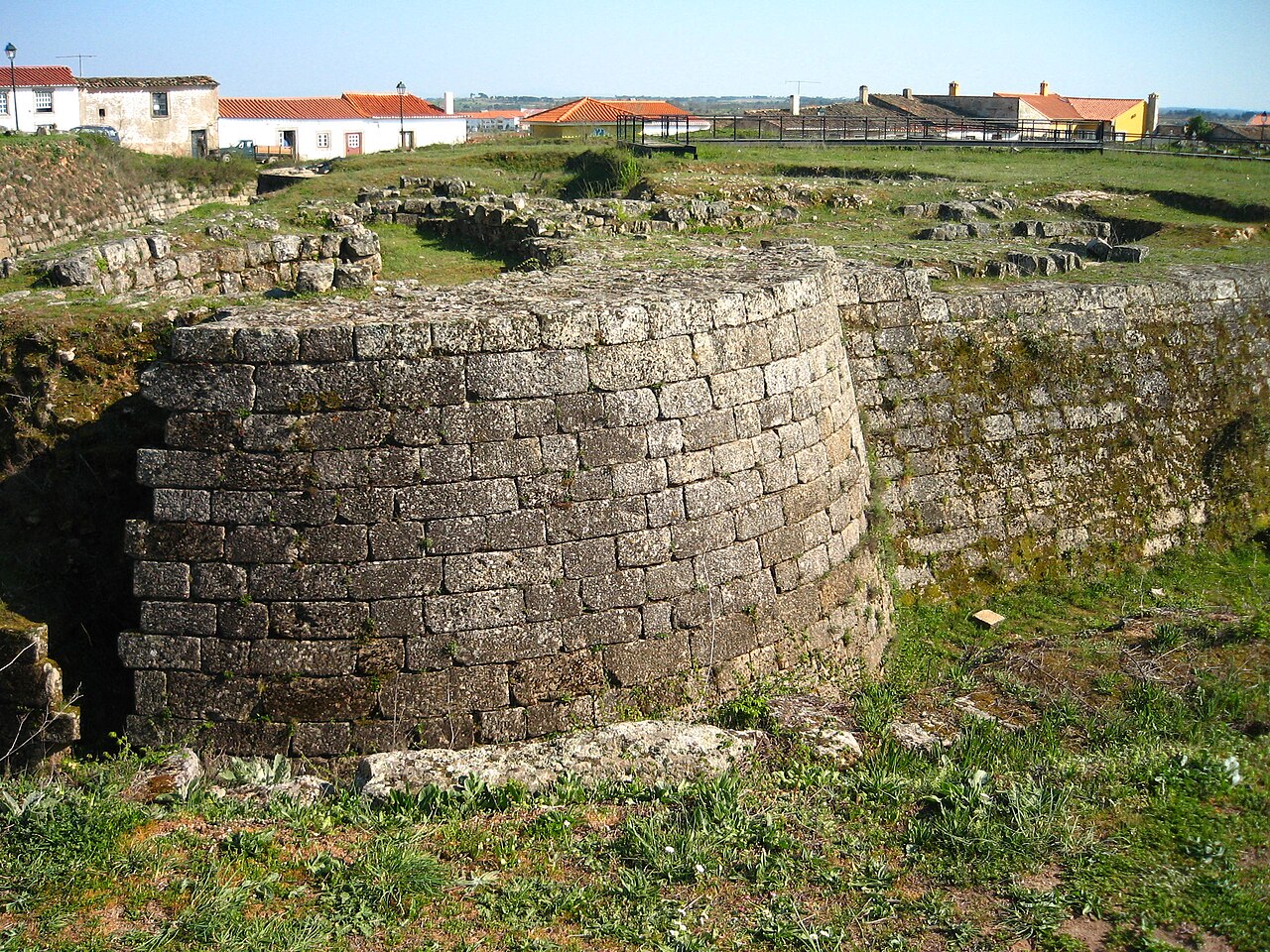
The Castle of Pinhel follows an oval plan with defensive walls built from local granite stone enclosing the historic town center on the hilltop. Originally, the curtain wall was reinforced by six square towers, each near one of six main gates: Porta de Santiago, Porta da Vila, Porta de São João, Porta de Marrocos, Porta de Alvacar, and Porta de Marialva. Only two of these towers remain visible today, with Porta de Santiago notable for its distinctive round arch contrasting with the otherwise square gateways.
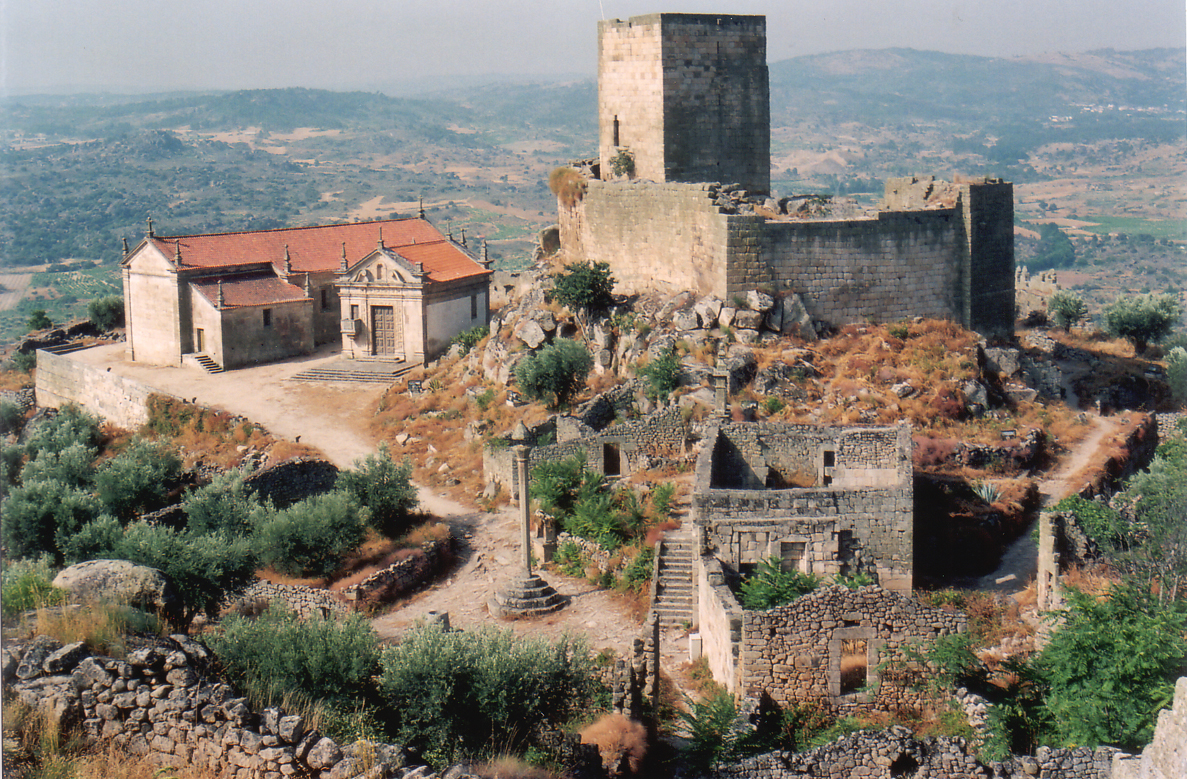
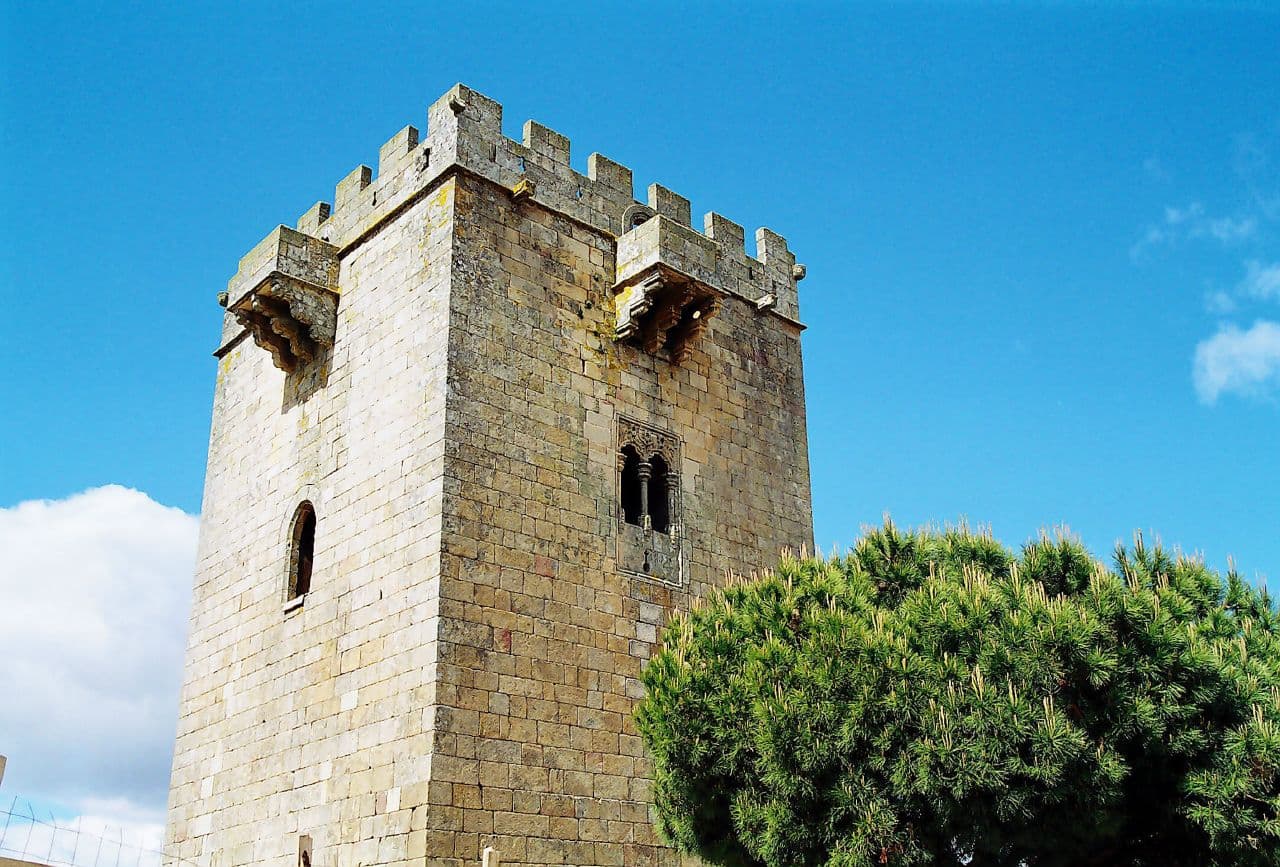
Inside the castle's courtyard stand two crenellated towers. The taller eastern tower, known as the keep, dates from the late 13th century and was constructed during King Denis I’s reign. It was later renovated under King Manuel I, incorporating Manueline style decorative elements. The keep features stone gargoyles designed to channel rainwater away from the walls, balconies supported by corbels, and a machicolation system—openings between the corbels allowing defenders to drop projectiles on attackers below. The entrance is framed by pointed arch doors typical of medieval architecture, flanked by narrow cross-shaped arrow slits for defense. The battlements are rectangular and solid, providing effective cover. Below the battlements, a set of windows includes a twin window with intricately engraved lintels in the Manueline style.
Within the keep, a large hall features ribbed vaulting, an architectural advancement from King Manuel I’s period, enhancing both structural strength and interior aesthetics.
The western tower, square in shape, served historically as a prison. It retains a pointed-arch window characteristic of its penal function, highlighting the castle’s role beyond military defense.
Water supply was critical for sustaining the castle during sieges. Three cisterns, located near Porta da Vila and Porta de Santiago, provided a reliable source of potable water, demonstrating the foresight in the castle’s design for prolonged defense.
Modern history and preservation efforts
Pinhel was elevated to city status in 1770 during the reign of King Joseph I. The castle endured occupation by Napoleonic forces during the Peninsular War in 1810, reflecting its continued strategic importance.
Recognizing its cultural and historical value, the Castle of Pinhel was declared a National Monument in 1950. Conservation efforts began in 1999 under the National Institute for Architectural and Archaeological Heritage (IPPAR), driven by concerns over water damage threatening the integrity of the castle’s towers by 2002.
Restoration has focused on preserving the granite walls, towers, and key defensive features, ensuring the castle remains a vital link to Portugal’s medieval and early modern military architecture. Today, the castle stands as a well-preserved example of a hill castle that has adapted through centuries of political and military change.
Frequently asked questions (FAQ)
- How do I get to the Castle of Pinhel?
- The Castle of Pinhel is located in the town of Pinhel in the Guarda district of Portugal. It is accessible by car and local roads from nearby cities such as Guarda. Parking is available near the castle.
- What are the opening hours for visiting the castle?
- The castle is open daily from 9:00 AM to 5:00 PM, allowing visitors to explore the historic site throughout the week.
- Is there an admission fee to enter the Castle of Pinhel?
- Yes, admission costs €3 for adults and €1.5 for children, helping support the preservation of this historic monument.
- What architectural styles are visible at the Castle of Pinhel?
- The castle displays a mix of architectural styles including medieval defensive structures with later Manueline style renovations, evident in its decorative windows and stonework.
- Can I explore the towers and keep inside the castle?
- Visitors can access the castle courtyard and view the exterior of the towers and keep. Some interior areas may be restricted for preservation reasons, but guided tours often provide detailed insights.
- Why is the Castle of Pinhel historically significant?
- The castle played a key role in border defense during medieval conflicts between Portugal and the Kingdom of León, and later during the Restoration War and Peninsular War, marking it as a site of military importance.
Photo gallery

Information
Opening hours
9:00-17:00, daily
Ticket prices
€3 adult, €1.5 child
Current owner
State museum
Website
Visit websiteSources & official resources
Verify the information above using these authoritative references.
Loading map...
Visitor reviews
No reviews yet. Been here? Write the first review and help other travelers!
Write the first reviewVisited this castle? Share your experience
Your review helps other travelers and adds first-hand knowledge to our encyclopedia.