Castle of Almeida
The Castle of Almeida stands as a remarkable example of military architecture in Portugal, strategically located near the border with Spain. This fortress has a rich history spanning from prehistoric times through the modern era, serving as a key defensive stronghold on the frontier. Its evolution reflects the changing nature of warfare and fortification design over centuries.
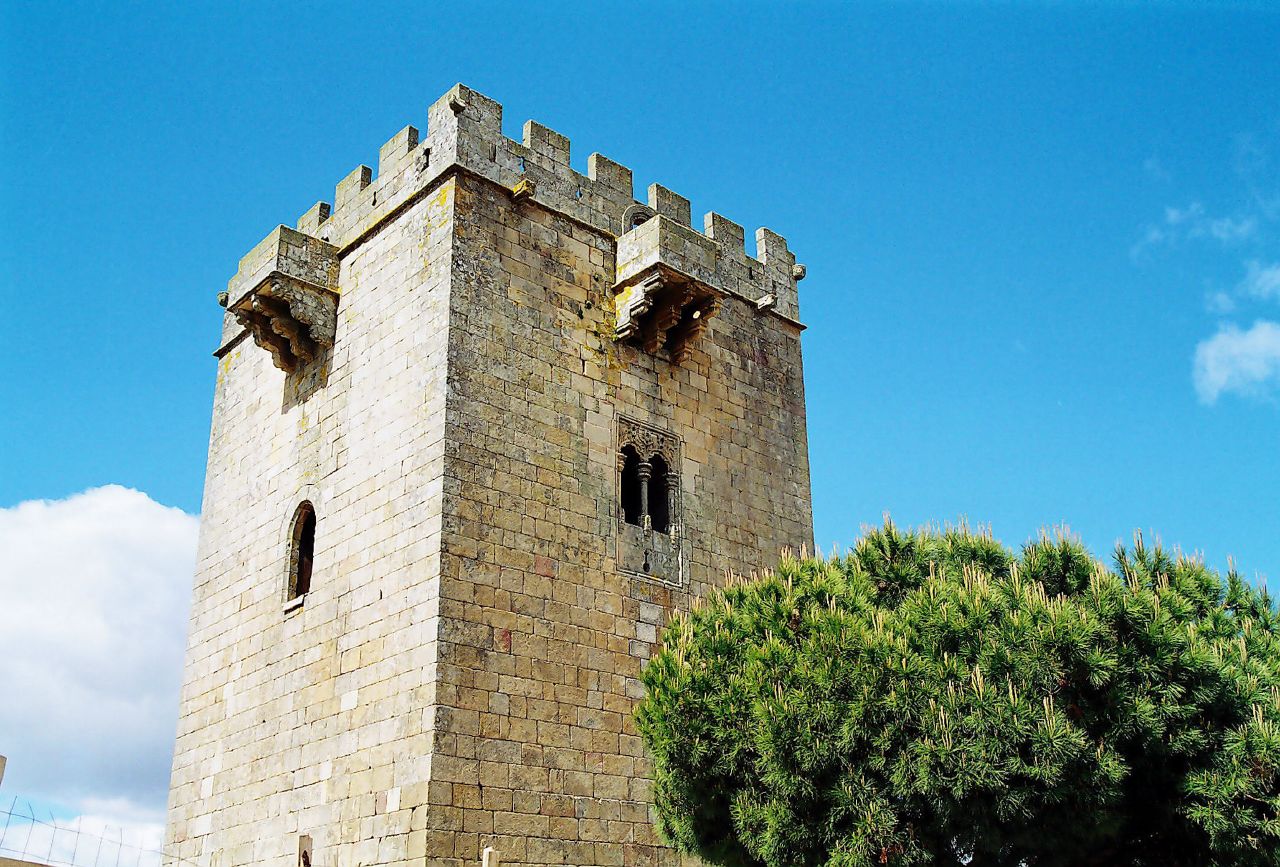
Originally, the site hosted a castro, a fortified settlement typical of the region, before successive occupations by the Romans, Suevi, Visigoths, and later the Moors. The first medieval castle was built by the Moors, who named the settlement Talmeyda, meaning "table" in Arabic, a reference to the flat terrain on which it was constructed.
Medieval origins and early history
During the 11th and 12th centuries, the castle was contested by the Kingdom of León, the Moors, and the emerging Portuguese kingdom. The territory was reclaimed by Portuguese forces under Pio Guterres in 1190, establishing Christian control. By the early 13th century, documents from 1217 describe Almeida as a frontier village under León's authority, guarding the important Côa valley.
In 1296, King Dinis of Portugal ordered the reconstruction of the castle and walls to reinforce border defenses. Further enhancements were made under King Ferdinand in 1369. By the late 13th century, Almeida was part of the Linha do Tejo, a defensive network along the Tagus River. During the Portuguese succession crisis of 1383–1385, Almeida initially sided with Castile but was captured by King John I of Portugal in 1386, confirming Portuguese sovereignty.
Renaissance fortifications and architectural evolution
King Manuel I (reigned 1495–1521) initiated major upgrades to Almeida's fortifications, completed in 1508 under architect Mateus Fernandes. These improvements reflected Renaissance military architectural principles and were documented in the early 16th-century Book of Fortresses by Duarte D’Armas, highlighting Almeida's strategic importance.
Star-shaped fortress and military significance
With the Restoration War of 1640, aiming to end Spanish rule, Almeida was transformed into a modern star-shaped fortress. Influenced by the French engineer Vauban and designed by architects including David Álvares, the fortress featured an irregular hexagonal core with a twelve-pointed star layout. This design included six polygonal bastions named São Francisco, São João de Deus, Santa Bárbara, Nossa Senhora das Brotas (also called do Trem), Santo António, and São Pedro, linked by extensive curtain walls totaling nearly 2.4 kilometers.
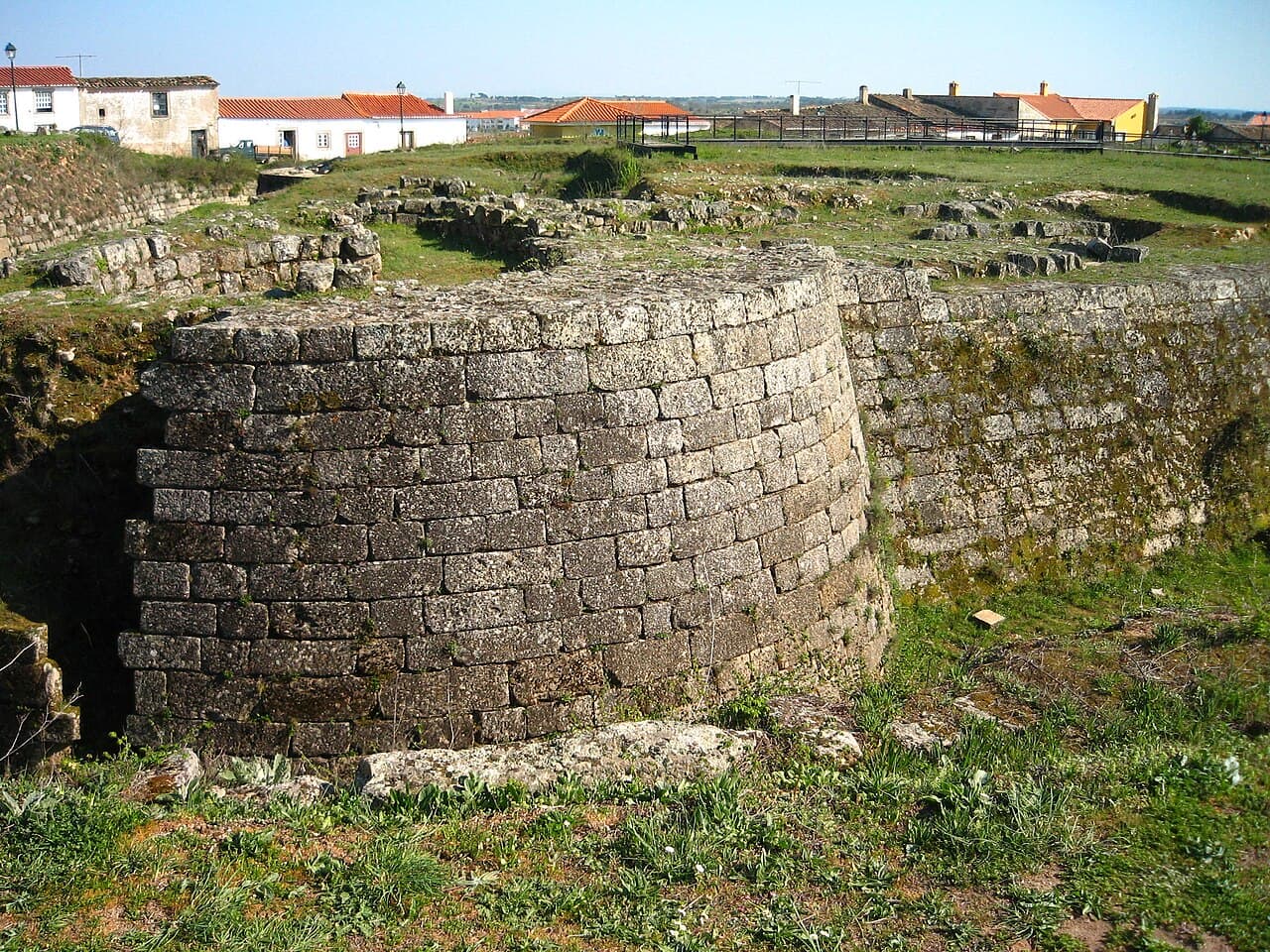
The fortress was further protected by six triangular ravelins, three on the northern side with flat masonry parapets and cylindrical watchtowers, and three on the southern side topped with earth ramparts designed for artillery deployment. The bastion of São João de Deus incorporated substantial bunkers providing shelter. A moat and a covered terrace road encircle the fortress, enhancing defense and troop movement.
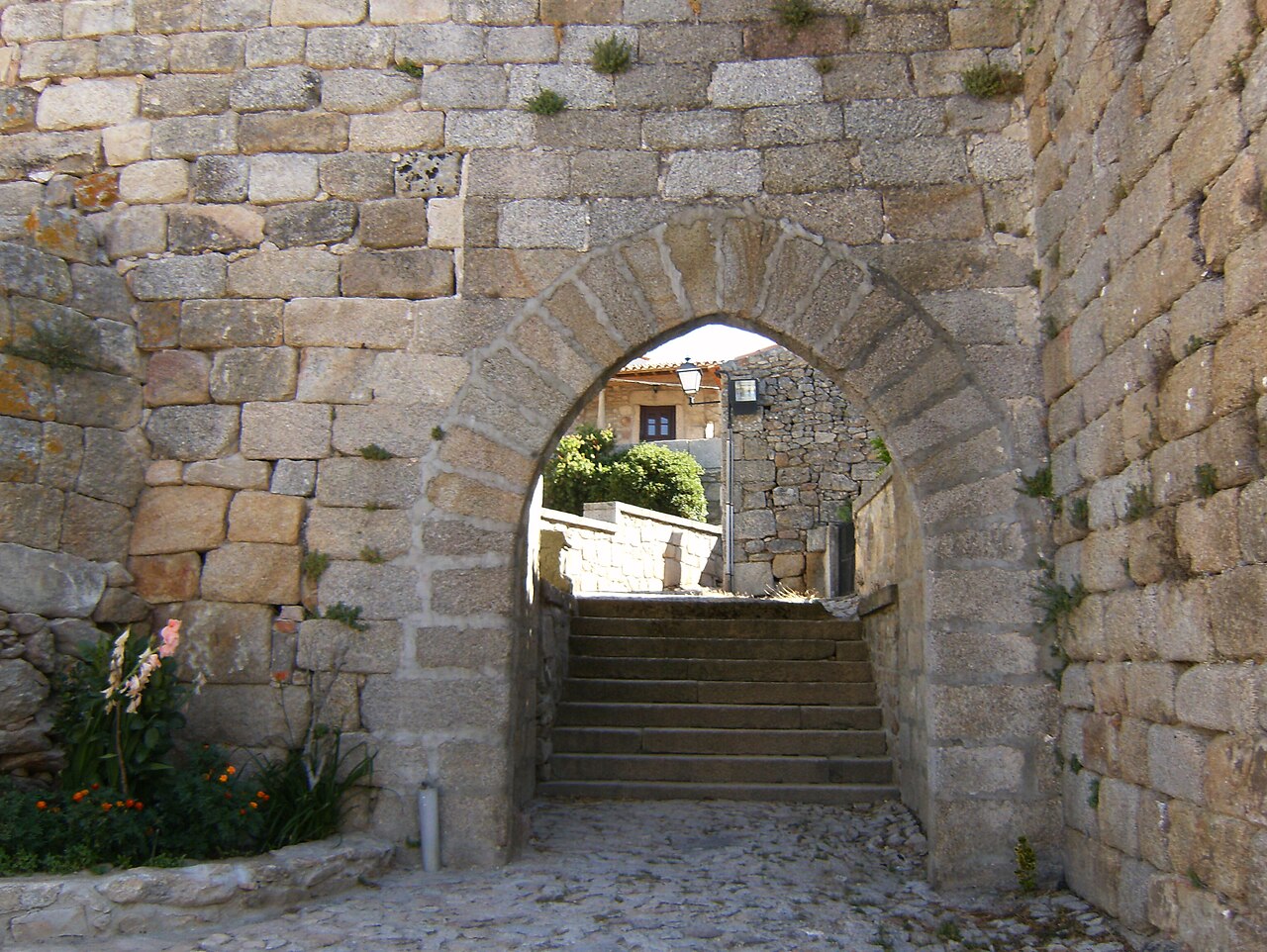
Access is gained through a grand entrance on the southeast curtain wall, featuring two tunnel gateways separated by a bridge over the dry moat. The outer gate, Porta da Muralha, and the inner tunnel, Porta São Francisco, are adorned with an elegant arched facade, Doric columns, and a heraldic crest, symbolizing the fortress's prestige.
Military history from 17th to 19th centuries
Throughout the 17th and 18th centuries, Almeida played a vital role in regional conflicts. It withstood Spanish attacks during the Restoration Wars and served as a military base in the War of Spanish Succession (1702–1714). The fortress suffered accidental explosions in 1695 and 1736, which caused damage and led to structural adaptations.
During the Seven Years’ War, Spanish forces captured Almeida in 1762, but it was returned to Portugal the following year. In the Napoleonic Wars, Almeida was occupied by French troops in 1807 and again in 1808. The fortress endured a devastating bombardment in 1810 during the Peninsular War, culminating in a catastrophic explosion in the powder magazine that destroyed much of the medieval castle and killed about 600 defenders. This event forced the fortress's surrender, and the French later demolished it in 1811 to prevent its reuse.
Almeida also played a role in the Liberal Wars (1828–1834), changing hands between factions until peace was restored. By the late 19th century, the fortress was decommissioned as a military installation and partially repaired.
Architectural remains and preservation
The fortress sits on a commanding hilltop at 763 meters above the River Côa valley, overlooking the Castela-León plateau. Its star-shaped design is a prime example of early modern military engineering, with well-preserved bastions, ravelins, curtain walls, and defensive moats.
Within the fortress, several historic buildings survive, including the infantry barracks of Terreiro das Freiras, the Church and Hospital of Misericórdia, and the Pousada de Nossa Senhora das Neves near the São João de Deus bastion. The former artillery train building, Trem de Artilharia or Picadeiro Real, remains on one bastion's embankment.
Archaeological excavations have revealed remnants of the original medieval castle walls and moat, though much was destroyed in the 1810 explosion. These ruins are partially covered by vegetation but accessible from the military square, with foundations visible on an elevated platform.
Additional defensive works such as trenches, redoubts, and bomb-proof barracks were constructed or planned during the 17th and 18th centuries, reflecting continuous adaptation to evolving military technology. Despite damage from explosions and warfare, the fortress's outer structures remain remarkably intact, preserving its historical and architectural significance.
Cultural importance and modern role
Declared a National Monument in 1928, the Castle of Almeida has transitioned from a military bastion to a site of cultural heritage and historical education. It housed a military museum from 1980 and later became the Centre for Studies into Military Architecture, underscoring its enduring value to Portuguese history and military architecture scholarship.
Today, the fortress attracts visitors interested in military history, architecture, and the complex history of the Portuguese-Spanish border. Its well-preserved star fort design offers insight into the defensive strategies of the early modern period and the turbulent history of the region.
Frequently asked questions (FAQ)
- How do I visit the Castle of Almeida?
- The Castle of Almeida is open to the public as a cultural and historical site. Visitors can explore the fortress and its bastions, although opening hours may vary seasonally. It is advisable to check with local tourism offices for the latest visiting information.
- What is the historical significance of the Castle of Almeida?
- The Castle of Almeida played a crucial role in the defense of Portugal's border with Spain, especially during the Restoration War, the Napoleonic Wars, and the Liberal Wars. Its star-shaped design exemplifies early modern military engineering influenced by Vauban.
- When was the Castle of Almeida built?
- The original medieval castle dates back to the 13th century, with significant fortification upgrades in the late 15th and 17th centuries, reflecting changing military technologies.
- Can I explore the star-shaped fortress layout?
- Yes, visitors can walk along the curtain walls and bastions of the star-shaped fortress, experiencing firsthand the defensive features such as ravelins, moats, and tunnels that characterize the site.
- Why is the Castle of Almeida important architecturally?
- The fortress is a prime example of a star-shaped bastion fort, combining medieval and early modern military architectural styles. It showcases the evolution of fortification design from medieval walls to Vauban-inspired bastions and ravelins.
Photo gallery

Information
Current owner
State museum
Loading map...
Visitor reviews
No reviews yet. Been here? Write the first review and help other travelers!
Write the first reviewVisited this castle? Share your experience
Your review helps other travelers and adds first-hand knowledge to our encyclopedia.