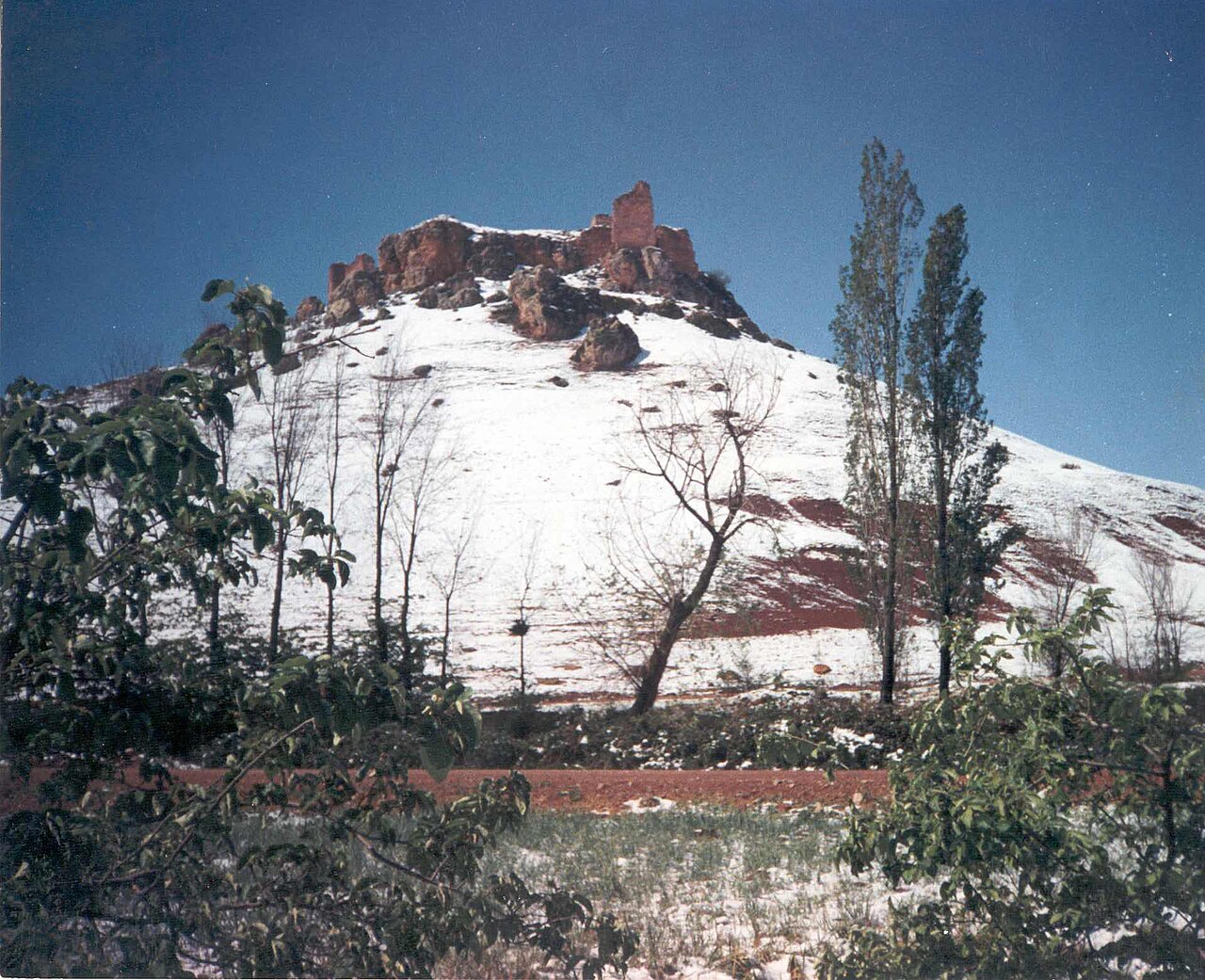
Castle of Peñarroya
The Castle of Peñarroya stands as a remarkable example of medieval fortification in central Spain, nestled within the municipality of Argamasilla de Alba. Its origins date back to the Islamic period of the Iberian Peninsula, when Muslim rulers constructed the fortress atop a strategic rocky promontory overlooking the Guadiana River. This location provided commanding views and control over vital access routes, underscoring the castle's military and administrative significance.
During the late 12th century, the castle remained under Muslim control until it was seized by Christian forces in 1198. The conquest, led by Captain Alonso Pérez de Sanabria on September 8th, marked a pivotal moment in the Reconquista efforts to reclaim territory from Islamic rule. Following the capture, an image of Nuestra Señora de Peñarroya was discovered within the fortress, elevating the site to a place of religious reverence and establishing the castle as a spiritual center for the local communities of Argamasilla de Alba and La Solana.
Medieval military and religious significance
After its integration into Christian domains, the castle became part of the holdings of the Military Order of Saint John (also known as the Order of San Juan) in 1215. Throughout the 14th century, it served as an important encomienda, a territorial and administrative unit managed by the Order. The castle's role extended beyond military defense to include economic functions such as pasture leasing and tax collection. It also provided protection for the local population and safeguarded the Order's assets, functioning as a secure storage site for goods and valuables.
Archaeological insights
Recent archaeological excavations near the castle have uncovered an Islamic ritual necropolis, confirming the area's historical Muslim occupation. Additionally, a field of silos—underground grain storage structures—has been discovered, though their exact dating remains uncertain. These findings enrich our understanding of the varied uses of the landscape surrounding the castle across different historical periods.
Architectural features and layout
The Castle of Peñarroya is primarily constructed from masonry and ashlar stone, chosen for their durability and strength. The fortress features a medieval access road leading visitors through a defensive moat, designed to impede attackers. Beyond the moat, entry is gained through a portico that opens onto the inner courtyard, or patio de armas, which measures approximately 67 by 43 meters. This courtyard serves as the central open space surrounded by various annexed rooms, including a 12th-century church and a cistern (aljibe) essential for water storage during sieges.
Defensive walls and towers
The castle's defensive architecture is distinguished by a main wall divided by an interior passage called the liza, separating a taller principal wall from an outer defensive wall known as the antemuro. This outer wall extends about 70 meters and is reinforced by three strategically placed towers along the curtain walls. Among these is a notable rectangular albarrana tower with a rounded front, an outlying defensive structure connected to the main walls but set apart to better control the surrounding terrain and deflect attacks.
The keep and religious spaces
The castle's square keep, or torre del homenaje, covers roughly 113 square meters across three floors. Historically, this tower likely housed the castle's lord or governor and served as the last refuge during attacks. Today, it accommodates the facilities of the Cofradía de Nuestra Señora de Peñarroya, a religious brotherhood devoted to the patron saint discovered within the fortress. Access to the keep's terrace is provided via the adarve (wall walk) and a dedicated door.
Facing the dam side of the castle stands a Baroque-style hermitage constructed in the 17th century. This hermitage retains rich interior decorations, including paintings flanking the main altar and a churrigueresque altarpiece, a hallmark of Spanish Baroque art. It also houses a virgin's chamber (camarín), choir stalls, and a notable 17th-century sculpture originally from the Mercedarian convent of Argamasilla de Alba. The hermitage was an integral part of the fortress, providing a sanctuary for worship and prayer overlooking the ravine within the courtyard.
Preservation and cultural importance
Over the centuries, the Castle of Peñarroya has undergone various restoration efforts aimed at preserving its structure and historical integrity. Its robust construction and thoughtful defensive layout have ensured that it remains in an acceptable state of preservation. The castle continues to dominate the landscape above the reservoir and surrounding waters, offering visitors a tangible connection to the region's complex history of Christian-Muslim interactions and religious traditions.
Today, the castle stands not only as a military relic but also as a cultural emblem reflecting the layered history of central Spain. It attracts historians, archaeologists, and tourists interested in medieval architecture, military history, and religious heritage. The site’s combination of defensive features, religious spaces, and archaeological remains provides a comprehensive glimpse into the multifaceted roles this fortress played throughout its existence.
Frequently asked questions (FAQ)
- When was the Castle of Peñarroya built?
- The Castle of Peñarroya dates back to the medieval period during Islamic rule, with significant developments occurring in the late 12th century.
- What is the architectural style of the Castle of Peñarroya?
- The castle features a mixed architectural style, combining medieval Islamic military design with later Christian and Baroque elements, including a 17th-century hermitage.
- Can visitors access the keep of the castle?
- Yes, visitors can access the keep, which now houses the facilities of the Cofradía de Nuestra Señora de Peñarroya, through the wall walk and a dedicated entrance.
- What archaeological discoveries have been made near the castle?
- Archaeological excavations have uncovered an Islamic ritual necropolis and a field of silos near the castle, providing insight into its historical occupation and use.
- Why is the Castle of Peñarroya historically significant?
- The castle played a crucial role during the Reconquista, was held by the Military Order of Saint John, and became a religious and administrative center in the region.
Information
Website
Visit websiteSources & official resources
Verify the information above using these authoritative references.
Loading map...
Visitor reviews
No reviews yet. Been here? Write the first review and help other travelers!
Write the first reviewVisited this castle? Share your experience
Your review helps other travelers and adds first-hand knowledge to our encyclopedia.