Szerencs Castle
Szerencs Castle stands as a remarkable historical monument in the town of Szerencs, Hungary, embodying centuries of architectural evolution and regional history. Originally established in the 13th century by the Bogát-Radvány clan, the site began as a Benedictine monastery set upon an elevated, marshy landscape. The earliest recorded mention of the monastery dates to 1247, highlighting its initial role as a religious center before its transformation into a military fortress.
From monastery to military fortress
By the mid-16th century, the strategic importance of Szerencs Castle grew amid the turbulent conflicts of the region. In 1556, Ferenc Németi, a captain aligned with the Transylvanian principality, seized the monastery and converted it into a fortified position. This marked a pivotal shift from a spiritual institution to a defensive stronghold aimed at resisting the expanding influence of the Habsburg dynasty.
The castle's military significance was underscored following the fall of nearby Tokaj Castle, when in 1565 imperial troops under General Schwendi captured Szerencs Castle without resistance. This event precipitated a change in ownership and architectural style when Emperor Rudolf II mortgaged the fortress to Zsigmond Rákóczi. Rákóczi initiated extensive renovations, transforming the structure into a Renaissance-style fortress that skillfully combined residential comfort with defensive capabilities.
Architectural transformation and fortifications
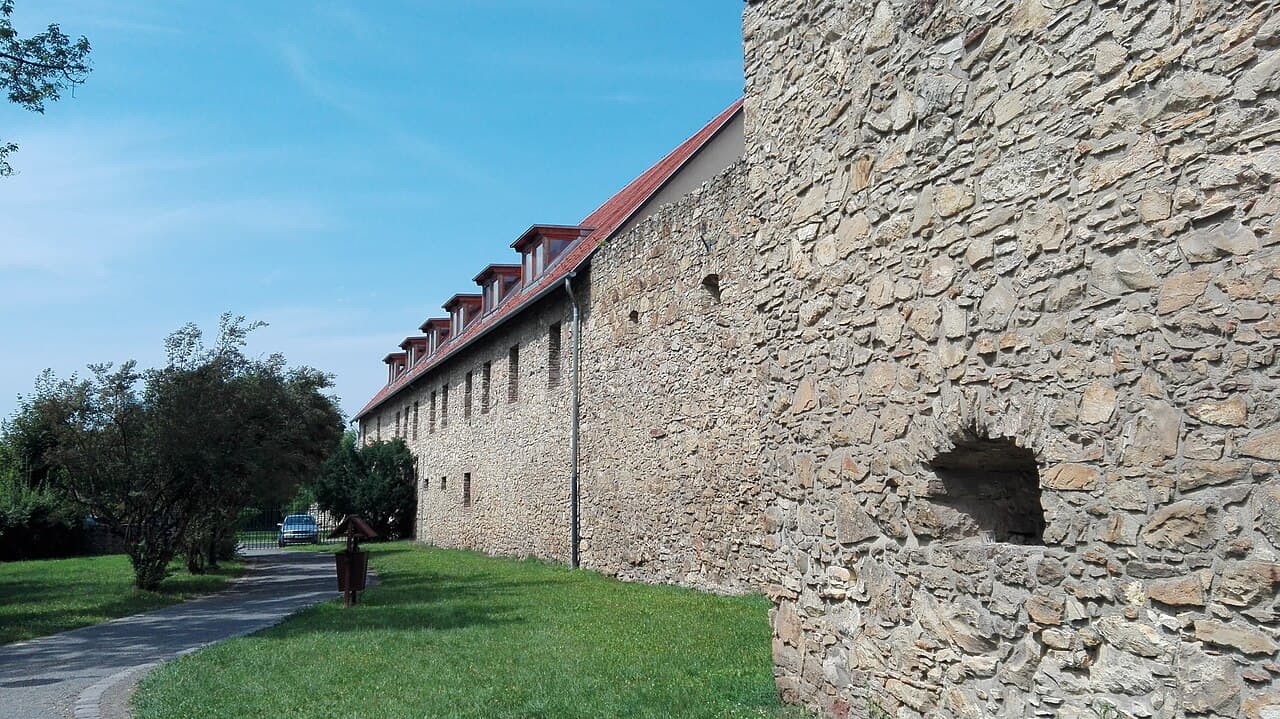
The castle's layout evolved into a complex arrangement featuring two main sections: an outer ward and an inner ward. The outer ward was fortified with polygonal bastions designed to support artillery, enabling cannon fire coverage across multiple angles. These bastions were constructed from stone and incorporated elements of the original monastery walls, demonstrating a practical reuse of existing materials.
The inner ward was organized as a closed, three-winged building surrounding a central courtyard. Historically, three towers punctuated this inner enclosure, providing both architectural character and defensive strength. However, during the 18th century, three of these towers were dismantled, leaving only the southern tower intact today. This surviving tower offers valuable insight into the castle's earlier fortified design.
Military armament and historical conflicts
Records from 1635 reveal that Szerencs Castle was well-armed, housing an armory stocked with 50 muskets and 11 smaller cannons, alongside larger artillery pieces mounted on the outer bastions. This inventory reflects the castle's readiness for military engagement during a period marked by frequent conflicts.
Despite its defenses, the castle and town experienced assault and looting in 1644 by forces led by Miklós Esterházy. The castle's strategic importance waned after the failed Wesselényi conspiracy in 1670, when imperial mercenary troops assumed control. Over time, the fortress transitioned from a frontline military installation to a noble residence.
Ownership and residential adaptation
Throughout its history, Szerencs Castle passed through the hands of several prominent noble families, including the Illésházy, Grassalkovich, and Szirmay lineages. These owners adapted the fortress to suit more peaceful times, particularly following the kuruc uprisings led by Rákóczi Ferenc. The castle's transformation into a comfortable residence reflected changing social and political conditions.
Modern restoration and current use
In the 20th century, significant restoration efforts were undertaken from 1959 to 1991 under the guidance of architect Ferenc Erdei. These works aimed to preserve the castle's layered heritage, encompassing elements from both the Renaissance and later Baroque periods.
Today, Szerencs Castle functions partially as a museum, housing collections such as the Zemplén Museum's postcard archive. Additionally, some sections serve as a hotel, demonstrating adaptive reuse that respects the historic fabric while providing contemporary amenities.
Architectural significance and heritage value
Szerencs Castle exemplifies a unique architectural evolution from a medieval monastic site to a Renaissance fortress and ultimately a noble residence. Its complex layout, featuring an outer ward with artillery bastions and an inner three-winged structure with a central courtyard, reflects changing defensive needs and residential preferences over centuries.
The castle's preservation and restoration highlight its importance as a cultural and historical landmark in Hungary. Its surviving southern tower and the integration of original monastery walls within the fortifications provide tangible connections to its multifaceted past.
Visiting Szerencs Castle
Visitors to Szerencs Castle can explore its well-preserved architectural features and learn about its rich history through museum exhibits. The site's combination of military and residential elements offers a comprehensive glimpse into the region's historical conflicts and noble life.
The castle's location in the town of Szerencs makes it accessible for cultural tourism, and its use as a hotel allows guests to experience the ambiance of a historic fortress firsthand.
Frequently asked questions (FAQ)
- How do I get to Szerencs Castle?
- Szerencs Castle is located in the town of Szerencs in Borsod-Abaúj-Zemplén County, Hungary. It is accessible by car and public transport from nearby cities such as Miskolc and Tokaj.
- What is the historical significance of Szerencs Castle?
- Szerencs Castle evolved from a 13th-century Benedictine monastery into a Renaissance fortress and noble residence, playing a key role in regional conflicts and noble life.
- When was Szerencs Castle built?
- The site was originally established as a Benedictine monastery in the 13th century, with significant Renaissance-era fortifications added in the 16th century.
- Can I visit the museum inside Szerencs Castle?
- Yes, parts of Szerencs Castle have been restored and now function as a museum, including the Zemplén Museum's postcard archive, open daily during visiting hours.
- Is Szerencs Castle accessible for visitors with mobility issues?
- While the castle has some restored areas, certain parts may have limited accessibility due to historic architecture. Visitors with mobility issues are advised to check in advance.
- What are the opening hours and ticket prices for Szerencs Castle?
- The castle is open daily from 10:00 to 18:00, with ticket prices at €5 for adults and €3 for children.
Photo gallery

Information
Opening hours
10:00-18:00, daily
Ticket prices
€5 adult, €3 child
Current owner
Municipality
Website
Visit websiteSources & official resources
Verify the information above using these authoritative references.
Loading map...
Visitor reviews
No reviews yet. Been here? Write the first review and help other travelers!
Write the first reviewVisited this castle? Share your experience
Your review helps other travelers and adds first-hand knowledge to our encyclopedia.