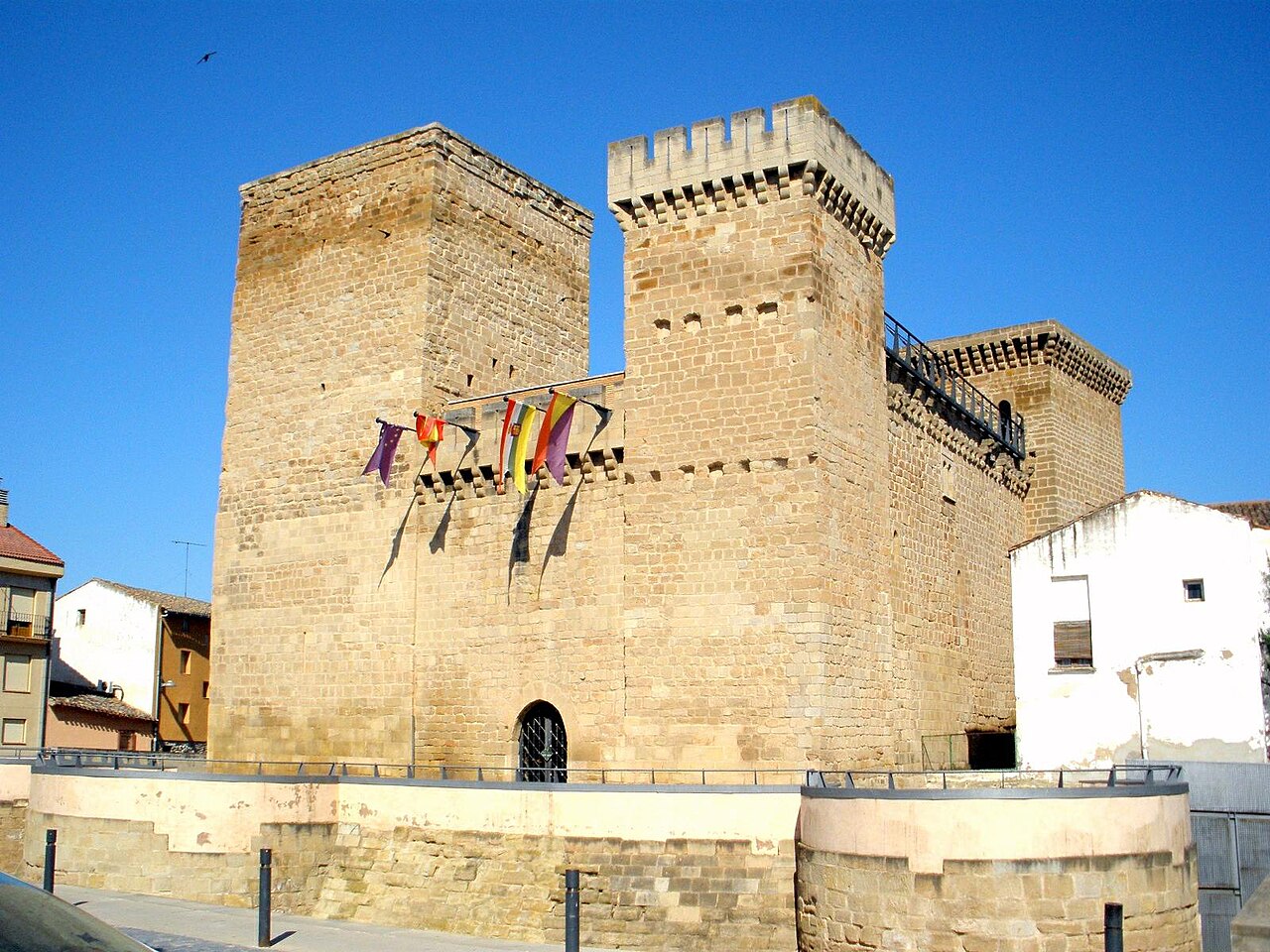
The Castle of Nalda is a notable hill castle situated in the municipality of Nalda, Spain. Its origins trace back to the medieval period, specifically the 12th century, when it was established by Christian forces during the Reconquista, the gradual Christian reclamation of the Iberian Peninsula from Muslim rule. Strategically positioned to control the Iregua valley, the castle played a crucial role in the defense network that included nearby fortifications such as those at Viguera and Clavijo, which declined as Nalda rose in prominence.
Medieval origins and early history
The earliest documented mention of the castle dates to 1299, when it served as a prison for Juan Núñez II de Lara following his attack on the bishopric of Calahorra. This event highlights the fortress's early military and political importance. Throughout the 14th century, the castle became the administrative and military center for the Lordship of Cameros, governed by the powerful Ramírez de Arellano family. Their territory extended from northern Soria to the Ebro River valley, marking the castle as a significant stronghold in the region.
14th-century expansions and architectural developments
During this period, Juan Ramírez de Arellano undertook major construction works that significantly enhanced the castle's defenses. The keep tower was enlarged, and a new defensive wall was built to encircle the fortress, reflecting advancements in medieval military architecture and the need to bolster protection against evolving siege tactics. The castle's masonry, primarily composed of local stone, demonstrates typical medieval construction techniques adapted to the natural contours of the hill, optimizing its defensive capabilities.
Historical significance and legends
The castle is also entwined with a dramatic historical legend involving the dagger used by King Henry II of Castile to assassinate his brother, Pedro I, after the Battle of Montiel in 1369. According to local tradition, this weapon was kept at the Castle of Nalda for many decades, adding a layer of intrigue and cultural importance to the site’s history.
Decline and transformation in the early modern period
From the mid-16th century onward, the castle experienced a gradual decline in military relevance. By 1652, Juan Domingo Ramírez de Arellano, Count of Aguilar, had adapted the fortress for administrative purposes rather than purely defensive ones. This shift reflected broader changes in the political and social landscape of Spain, as feudal lordships evolved and the need for fortified castles diminished.
Abandonment and effects of the peninsular war
Following the abolition of feudal lordships in the early 19th century, the castle was abandoned and fell into ruin. Its stones were quarried for local construction, contributing to the deterioration of the structure. During the Peninsular War (1808–1814), the castle's military significance was briefly renewed when four culverins, early long-barreled cannons originally stationed at the castle, were removed to reinforce the defenses of nearby Logroño. Despite this, the fortress continued to decline, and much of its structure was lost or repurposed.
Post-medieval usage and archaeological revival
In the years after its military abandonment, the hilltop was repurposed for agricultural activities. It served as a threshing floor, a flat surface used for separating grain from chaff, and small stone wine cellars were carved into the hillside. These adaptations reflect the rural lifestyle and economic practices of the local community in subsequent centuries.
Archaeological excavations and preservation efforts
Renewed interest in the Castle of Nalda began with archaeological excavations and restoration projects initiated by the local town hall in 2012. These efforts aimed to uncover and study the remaining structures, preserve the ruins, and adapt the site for public access. Excavations revealed the layout of the original medieval defenses, including the remnants of the enlarged keep and the 14th-century defensive walls. Conservation measures have stabilized the ruins and transformed the hilltop into a viewpoint, allowing visitors to appreciate both the castle's historical significance and the surrounding landscape.
Architectural features and layout
The castle's design reflects its dual phases of construction, combining 12th-century foundations with later 14th-century enhancements. The surviving portions of the keep tower stand as a testament to the castle's military importance during the medieval period. The defensive walls, built to adapt to the hill's natural contours, exhibit robust masonry work characteristic of medieval fortifications. The site’s strategic location atop the hill provided commanding views over the Iregua valley, enabling effective surveillance and defense against potential attackers.
Although centuries of neglect and quarrying have reduced much of the fortress to rubble, the archaeological work has helped reconstruct the castle's original form and understand its evolution. The presence of early artillery, such as the culverins, indicates the castle's adaptation to changing military technologies over time.
Visiting the castle today
Today, the Castle of Nalda stands as a partially preserved historic site open to visitors interested in medieval military architecture and Spanish history. The archaeological excavations and conservation efforts have made it possible to explore the ruins safely and appreciate their historical context. The site offers panoramic views of the surrounding landscape, making it a valuable cultural and heritage destination within the region.
Frequently asked questions (FAQ)
- How do I get to the Castle of Nalda?
- The Castle of Nalda is located in the town of Nalda, La Rioja, Spain. It is accessible by car, with parking available nearby. Visitors can also reach the site by local bus services connecting to nearby towns.
- What is the best time to visit the Castle of Nalda?
- The castle is open daily from 10:00 to 18:00. Spring and autumn offer pleasant weather and fewer crowds, making these seasons ideal for visiting the site and exploring the surrounding landscape.
- Is the Castle of Nalda suitable for families?
- Yes, the castle ruins are suitable for families. The site features safe walking paths and open spaces for children to explore, though parental supervision is recommended due to uneven terrain and partial ruins.
- Are there guided tours available at the Castle of Nalda?
- Guided tours are occasionally offered by the local municipality, especially during cultural events and weekends. Visitors can check the official website or local tourist information for schedules and availability.
- Can I learn about the castle's history on-site?
- Information panels and signage at the Castle of Nalda provide historical context about the castle's construction, its role in the Reconquista, and its later adaptations. These educational materials enhance the visitor experience.
Information
Opening hours
10:00-18:00, daily
Ticket prices
Free
Current owner
Municipality of Nalda
Website
Visit websiteSources & official resources
Verify the information above using these authoritative references.
Loading map...
Visitor reviews
No reviews yet. Been here? Write the first review and help other travelers!
Write the first reviewVisited this castle? Share your experience
Your review helps other travelers and adds first-hand knowledge to our encyclopedia.