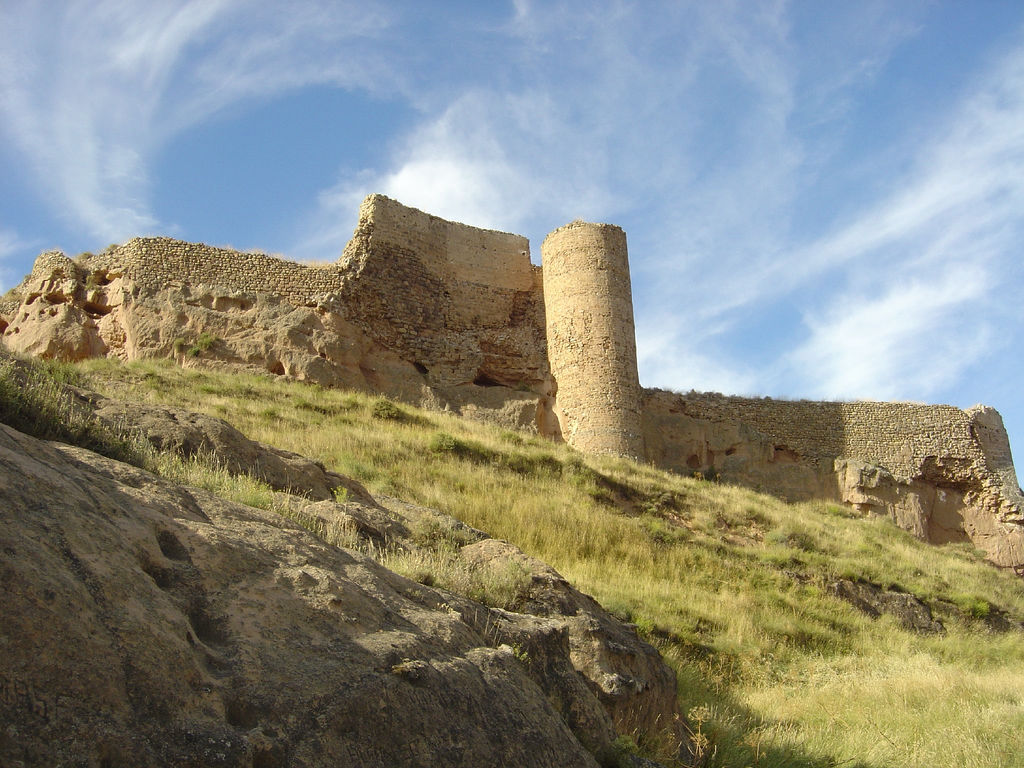
Castle of Arnedillo
The Castle of Arnedillo is a historic hill castle located in the municipality of Arnedillo, Spain. Built during the 10th century in the early medieval period, this fortress was strategically positioned on a rocky outcrop approximately 654 meters above sea level to oversee a key passageway before the region was fully under Christian control. Its primary function was military surveillance and defense, reflecting the turbulent times of the Iberian Peninsula during the Reconquista.
Historical significance and ownership
The earliest documented mention of the castle dates back to 1170, when King Alfonso VIII granted the village of Arnedillo and its fortress to Rodrigo de Cascante, the Bishop of Calahorra. From this point onward, the castle symbolized the bishop’s authority in the region. The bishops exercised their lordship through appointed castellans, officials who managed the castle and governed the local settlement.
Throughout the 12th and 13th centuries, the castle was a focal point of power struggles and local unrest. In 1232, the inhabitants revolted against ecclesiastical control, illustrating the tensions between local communities and church authorities. Later, in 1328, a dispute over the castle's custody involved Don Pedro Ochoa de Ciuvarri and the bishop’s archdeacon, highlighting ongoing conflicts for control of this strategic fortress.
By the 16th century, the castle's role shifted from military to judicial, serving as a prison primarily for monks accused of rebellion against church authorities. Records from 1545 show that castellans swore formal oaths and were ceremonially granted symbols of judicial authority, underscoring the castle’s importance as a seat of episcopal jurisdiction.
The bishop’s dominion over the castle lasted until the 19th century, when the Cortes of Cádiz abolished episcopal lordships. Subsequently, the castle became known as Castillo Lombera, and its surrounding grounds were repurposed as a cemetery. Alongside the fortress stood a noble palace, dating from at least the 13th century until the 17th century, which served as a temporary residence for bishops and dignitaries but fell into ruin by the mid-18th century.
Architectural features and construction
The Castle of Arnedillo is constructed primarily of ashlar stone blocks combined with rubble masonry, a typical medieval method that balanced durability with available materials. The fortress is perched on a rocky hilltop, using the natural terrain as a defensive advantage.
The central surviving structure is a square-plan tower with an irregular interior shaped by thick stone walls and internal compartments. Originally, the tower had four floors: a ground level and three upper stories. The presence of rows of beam holes in the walls indicates where wooden floorboards were supported. Narrow arrow slits provided light and defensive firing positions, except on the third floor, which featured a larger square window with a wooden lintel overlooking a now-lost wooden balcony supported by embedded beams.
Access to the tower was through a west-facing doorway framed by a rare monolithic mitred arch formed by two large stone slabs joined at an angle. This architectural element is uncommon on the Iberian Peninsula and is believed to date from a later remodeling phase. The tower’s uppermost section no longer survives, giving it a truncated appearance today.
Surrounding the tower are remnants of curtain walls that follow the contours of the rocky hilltop. These walls, like the tower, combine ashlar and rubble stonework. The longest curtain wall extends along the slope, while a shorter segment adjoins the tower’s southern side, forming a strong defensive enclosure.
No decorative carvings, inscriptions, or artifacts such as pottery or tools have been found at the site, preserving the fortress’s austere military character. The castle’s design emphasizes functionality, surveillance, and control rather than comfort or ornamentation.
The castle’s role through time
Initially built during the early medieval period, the castle played a crucial role in controlling a strategic passage during a time when Christian rule was not yet established in the region. Its military purpose was to monitor and defend the area against opposing forces.
As political and religious power consolidated, the castle transitioned into a symbol of ecclesiastical authority under the bishops of Calahorra. Its use as a prison in the 16th century reflects changing functions aligned with judicial control rather than purely military defense.
The abolition of episcopal lordships in the 19th century marked the end of the castle’s role as a seat of church power. The transformation of surrounding lands into a cemetery and the decline of the associated noble palace reflect broader social and political shifts in Spain during this period.
Modern restoration and preservation
By the 20th century, the Castle of Arnedillo had fallen into a state of disrepair. Recognizing its historical and architectural value, restoration efforts began in 2020 and were completed in late 2021. These efforts aimed to stabilize the remaining structures, preserve the medieval stonework, and enhance public access to the site.
Today, the castle stands as a well-preserved example of an early medieval hill castle in Spain, offering insight into the military, religious, and judicial history of the region. Its austere design and strategic location continue to attract visitors interested in medieval fortifications and Spanish heritage.
Frequently asked questions (FAQ)
- What is the historical significance of the Castle of Arnedillo?
- The Castle of Arnedillo is a remarkable example of medieval architecture in Spain, dating back to the 11th century. It served as a strategic military stronghold during the Reconquista, playing a crucial role in the defense against invading forces. Today, it stands as a testament to the region's rich history and cultural heritage.
- When was the Castle of Arnedillo built?
- Construction of the Castle of Arnedillo began in the 11th century, with various modifications and expansions occurring over the following centuries. The castle reflects the architectural styles of the time, showcasing both military functionality and artistic elements. Its enduring presence offers visitors a glimpse into the past.
- What are the opening hours of the Castle of Arnedillo?
- The Castle of Arnedillo is typically open to visitors from 10 AM to 6 PM from Tuesday to Sunday. However, it is advisable to check the official website for any seasonal changes or special closures. This ensures that you plan your visit at the best time.
- Can I visit the Castle of Arnedillo year-round?
- Yes, the Castle of Arnedillo is open to visitors throughout the year, although specific opening hours may vary by season. The best time to visit is during the spring and fall when the weather is mild and pleasant. Be sure to check local guidelines for any travel restrictions before your visit.
- Is it possible to access the Castle of Arnedillo with mobility challenges?
- The Castle of Arnedillo has some accessibility options, but visitors with mobility challenges should be prepared for uneven terrain and steep pathways. It is recommended to contact the castle's administration in advance to inquire about specific accommodations available. This will help ensure a more comfortable visit.
- What are the ticket prices for visiting the Castle of Arnedillo?
- Tickets to the Castle of Arnedillo are generally affordable, with prices typically around €5 for adults and discounted rates for children and seniors. Group discounts may also be available, making it an excellent destination for school trips and family outings. Check the official website for current pricing and any special offers.
- What nearby attractions can I visit after exploring the Castle of Arnedillo?
- After visiting the Castle of Arnedillo, you can explore the beautiful natural landscapes of the surrounding region, including hiking trails and thermal baths. The nearby town of Arnedillo offers charming local shops and restaurants, perfect for a leisurely afternoon. Additionally, the nearby Sierra de Cebollera Natural Park provides stunning scenery and outdoor activities.
- How do I get to the Castle of Arnedillo?
- The Castle of Arnedillo is easily accessible by car, located just off the main roads connecting major towns in the La Rioja region. Public transportation options are limited, so driving is the most convenient way to reach the castle. Ample parking is available nearby for visitors.
Information
Loading map...
Visitor reviews
No reviews yet. Been here? Write the first review and help other travelers!
Write the first reviewVisited this castle? Share your experience
Your review helps other travelers and adds first-hand knowledge to our encyclopedia.