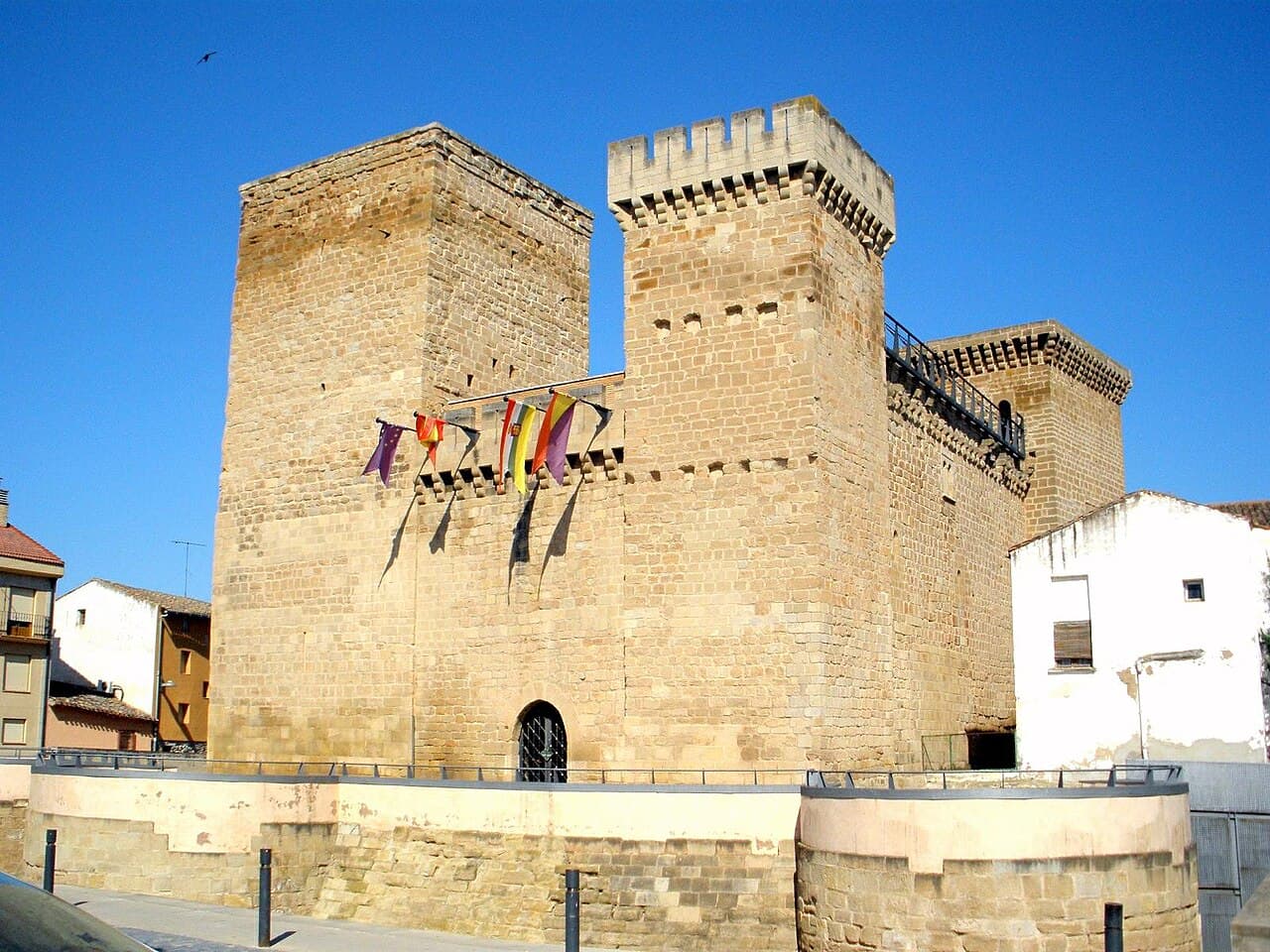
The Castle of Aguas Mansas stands as a remarkable example of medieval military architecture in the municipality of Agoncillo, Spain. This hill castle was strategically constructed during the medieval period by Christian forces amid the turbulent Reconquista era, when Christian and Muslim rulers contested control over the Iberian Peninsula. Its location atop a hill provided commanding views and defensive advantages, making it a key stronghold in the region.
Historical records trace the castle's origins back to the 10th century, when Sancho Garcés, king of Pamplona, captured a Muslim-held fortress nearby. This early conquest marked the beginning of the castle's long-standing military significance. Throughout the 11th and 12th centuries, documents reference a defensive structure known as Aguas Mansas or Aguas Muertas, underscoring its ongoing role in regional defense. The castle's importance was further solidified in 1191 when Alfonso VIII of Castile formalized control over the castle and its lands through an agreement with local nobles Pedro and Gómez García.
Medrano family and the castle's medieval legacy
The Medrano family emerged as the castle's prominent proprietors in the early 13th century. Their influence was intertwined with a notable event around 1211, when Saint Francis of Assisi is said to have healed the son of a Medrano lord, a story that enhanced the family's prestige. The family's coat of arms, featuring a distinctive cross flory with fleur-de-lis ends, is prominently displayed above the castle's eastern entrance, symbolizing their long-term ownership and connection to the fortress.
This emblem also commemorates the Medrano ancestors' participation in the pivotal Battle of Las Navas de Tolosa in 1212, a decisive Christian victory that marked a turning point in the Reconquista. The family's stewardship of the castle continued through the centuries, with Rodrigo Alfonso de Medrano acquiring the castle and village in 1337. His will from 1345 documents significant investments in reconstruction and enhancement of the fortress, reflecting its ongoing strategic and residential importance.
Architectural features and fortifications
The Castle of Aguas Mansas exhibits a nearly rectangular plan anchored by four corner towers, each rising as prism-shaped sentinels. These towers retain their original machicolations, which are openings between the corbels of battlements used for defensive purposes, such as dropping projectiles on attackers. The fortress is primarily constructed from finely cut ashlar stone, demonstrating skilled medieval masonry.
The castle's eastern façade serves as the main entrance and is marked by the Medrano family coat of arms, reinforcing the castle's identity and heritage. The most imposing tower, often referred to as the keep or tower of homage, rises four stories high and features pointed barrel vaults—a hallmark of Gothic architectural design. Access to this tower is via a pointed arch doorway, emphasizing its defensive and symbolic prominence within the castle complex.
Among the smaller towers is the "de las palomas" ("of the doves") tower, notable for its well-preserved modillions, small corbels that support the machicolations above. Inside, the tower contains wooden floors supported by beams resting on stone corbels embedded in the walls, reflecting medieval construction techniques. Surrounding the fortress is an impressive moat, which served as a formidable barrier against invaders.
Courtyard and interior spaces
Within the castle walls lies the parade ground or patio de armas, which underwent restoration in the 16th century. This courtyard acquired a cloister-like appearance with two levels. The main gallery on the ground floor is supported by elegant semicircular arches, creating a rhythmic architectural feature that blends aesthetic appeal with functional use during military and administrative activities.
The castle's interior spaces reflect its dual role as a defensive fortress and noble residence. Over the centuries, adaptations were made to accommodate changing needs, including the addition of residential quarters, storage areas, and administrative offices. The balance between military functionality and domestic comfort is evident in the castle's layout and preserved features.
Historical transitions and restorations
During the 14th century, the castle was caught in the civil conflict between Peter the Cruel and Henry of Trastámara, briefly coming under the control of Charles II of Navarre. It was restored to the Medrano family in 1392 when Rodrigo Alfonso de Medrano bequeathed it to his nephew Diego López de Medrano and his descendants, who later became the Counts of Siruela. This lineage maintained residence in the castle until the 19th century, ensuring its preservation and continued use.
Recognizing its cultural and historical significance, the castle was declared a National Historic Artistic Monument in 1983. A major restoration project began in 1989, led by local authorities to halt deterioration and restore the castle's medieval character. This restoration removed later additions from the 18th and 19th centuries, returning the fortress closer to its original form. The work culminated in the 1990s with the preservation of key architectural elements and the castle's adaptation for modern civic use.
Modern usage and cultural significance
Today, the Castle of Aguas Mansas serves as a vibrant civic center, housing municipal offices including the town hall and library. This adaptive reuse respects the castle's historical fabric while ensuring its relevance to the community. In 2024, a cultural initiative linked to local medieval-themed festivities saw the addition of a mural depicting a 16th-century armored knight on a wall facing the castle, reinforcing its role as a symbol of Agoncillo's heritage.
The castle's well-preserved state, combined with its rich history and architectural features, makes it an important destination for visitors interested in medieval fortifications, Spanish history, and heritage conservation. Its blend of military architecture and noble residence elements offers insights into the evolution of castle design and function over several centuries.
Frequently asked questions (FAQ)
- How do I get to the Castle of Aguas Mansas?
- The Castle of Aguas Mansas is located in the picturesque region of Spain. Visitors can reach the castle by car, with ample parking available nearby, or by using public transportation options that connect to the nearest town. Local buses frequently run from major cities, making it accessible for day trips.
- What is the historical significance of the Castle of Aguas Mansas?
- The Castle of Aguas Mansas dates back to the 12th century and is a prime example of medieval military architecture in Spain. It played a crucial role in the region's defense during various conflicts and has been a witness to significant historical events over the centuries. Its preservation allows visitors to glimpse the past and understand the tumultuous history of the area.
- When was the Castle of Aguas Mansas built?
- The construction of the Castle of Aguas Mansas began in the early 1100s, during the period of the Reconquista. It was strategically built to protect the surrounding lands and has undergone several renovations and restorations throughout its history. The architectural styles reflect the evolving military needs and artistic influences of the time.
- Can I take guided tours of the castle?
- Yes, guided tours are available at the Castle of Aguas Mansas, providing visitors with in-depth knowledge about its history and architecture. These tours are typically offered in multiple languages and include access to areas not usually open to the public. It's advisable to book in advance, especially during peak tourist seasons.
- Why is the architecture of the Castle of Aguas Mansas unique?
- The architecture of the Castle of Aguas Mansas features a blend of Romanesque and Gothic styles, showcasing the evolution of military architecture over centuries. Its robust stone walls, towers, and battlements were designed for defense, while intricate details reveal the artistic trends of the era. The castle's design also reflects its strategic location, offering panoramic views of the surrounding landscape.
- Is it possible to visit the Castle of Aguas Mansas year-round?
- Yes, the Castle of Aguas Mansas is open to visitors throughout the year, although opening hours may vary by season. It’s best to check the official website or contact the management for specific times and any seasonal events. Visiting during the shoulder seasons of spring and fall may provide a more pleasant experience with fewer crowds.
- What are the ticket prices for the Castle of Aguas Mansas?
- Ticket prices for the Castle of Aguas Mansas are generally affordable, with discounts available for students, seniors, and children. Family passes are also offered, making it a budget-friendly option for group visits. Check the official website for the most current pricing and any special promotions.
- What is the best time to visit the Castle of Aguas Mansas?
- The best time to visit the Castle of Aguas Mansas is during the spring and fall months when the weather is mild and the crowds are smaller. Summer can be quite hot, while winter may bring chilly temperatures. Visiting during off-peak times allows for a more relaxed exploration of the castle and its surroundings.
- Are there any nearby attractions to visit along with the castle?
- Yes, there are several attractions near the Castle of Aguas Mansas, including stunning natural parks, charming villages, and other historic sites. The nearby town offers local dining and shopping experiences, enriching your visit. Exploring the surrounding area can provide a fuller understanding of the region's culture and history.

Information
Website
Visit websiteSources & official resources
Verify the information above using these authoritative references.
Loading map...
Visitor reviews
No reviews yet. Been here? Write the first review and help other travelers!
Write the first reviewVisited this castle? Share your experience
Your review helps other travelers and adds first-hand knowledge to our encyclopedia.



