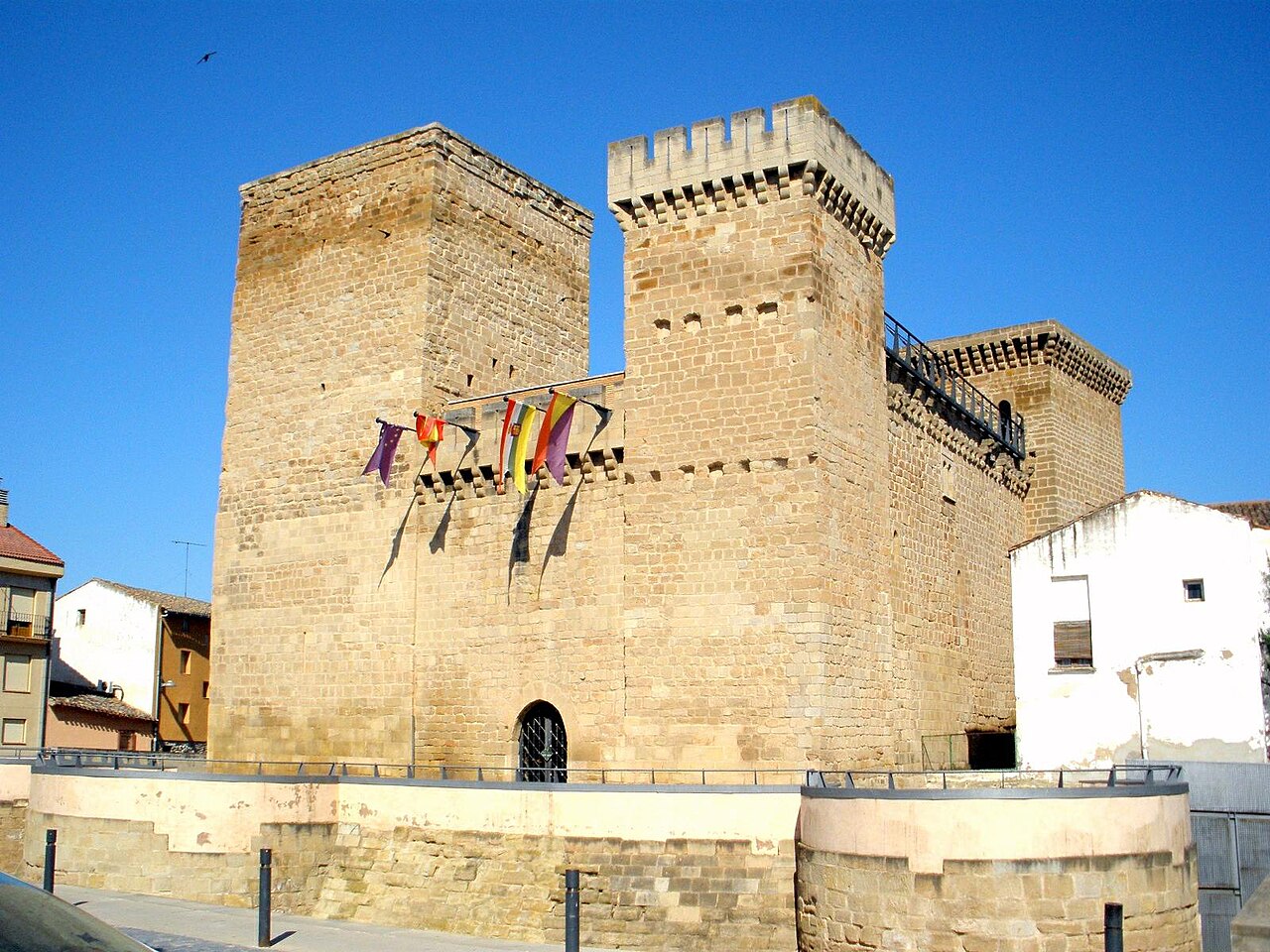
Castle of Clavijo
The Castle of Clavijo is a remarkable example of a hill castle situated in the municipality of Clavijo, within the autonomous community of La Rioja, Spain. Its strategic location atop a rocky hill provided commanding views over the surrounding landscape, making it a vital military and political stronghold throughout the early medieval and high medieval periods. The castle's layered history reflects the cultural and military interplay between Muslim and Christian forces during the turbulent Reconquista era.
Early origins and strategic significance
The origins of the Castle of Clavijo likely date back to the 9th century, a period marked by the expansion of Muslim control in the Iberian Peninsula. Archaeological evidence suggests that the initial construction focused on the main tower, or keep (torre del homenaje), which was built using locally sourced roughly hewn stones. This tower served as the core defensive structure, strategically positioned on the rocky escarpment to maximize natural defenses.
Its early Muslim builders incorporated architectural elements such as the horseshoe arch at the entrance gate, a hallmark of Islamic military architecture. The castle's elevated position allowed for surveillance and control over the surrounding territory, which was crucial during the frequent skirmishes and raids that characterized the frontier region between Muslim and Christian domains.
Christian reconquest and architectural evolution
By the early 10th century, the castle underwent significant modifications as Christian forces gained ground in northern Spain. The construction of defensive walls enclosing the fortress was undertaken to enhance its protective capabilities. These walls followed the natural contours of the rocky hill, creating an elongated layout that harmonized with the terrain.
The castle's fortifications were adapted to accommodate the evolving military technologies and tactics of the time. The integration of the rocky outcrop into the defensive system exemplifies the medieval practice of exploiting natural features to strengthen fortifications. The steep access path and limited entry point further increased the castle's defensibility.
Historical importance and legendary associations
The Castle of Clavijo holds a prominent place in Spanish medieval history, partly due to its association with the legendary Battle of Clavijo. According to tradition, this battle took place in the 9th century between Christian forces led by Sancho Fernández de Tejada and the Muslim emir Abderramán II, under the reign of Ramiro I of Asturias. The battle is famously linked to the miraculous appearance of the apostle Santiago (St. James), who is said to have intervened to aid the Christians, a legend that contributed to the rise of the cult of Santiago and the symbolic importance of the Camino de Santiago pilgrimage route.
Documentary evidence first mentions the castle in the year 960, highlighting its use as a prison for Fernán González, a significant noble figure of the time. Subsequently, the castle came under the ownership of Sancho el Mayor of Navarra, who transferred it to the nearby Albelda monastery, underscoring its role within ecclesiastical and secular power structures.
By 1177, the castle was under royal possession, marking its integration into the Crown's domain. In the 14th century, it was owned by Don Diego López de Zúñiga, who passed it to his son as part of a marriage dowry, illustrating the castle's continued significance as a hereditary noble stronghold.
Architectural features and current condition
The Castle of Clavijo exhibits an elongated plan that closely follows the natural shape of the rocky hill on which it stands. The fortress is primarily constructed from locally quarried stones, assembled with masonry techniques that respond to the uneven terrain. This close integration with the landscape is a defining characteristic of the site.
The defensive curtain walls encircle the hilltop, adapting to the contours to maximize protection. The main entrance is accessed via a steep path from the village side and is marked by a distinctive horseshoe arch gateway, reflecting the castle's Islamic architectural heritage. This feature is not only functional but also culturally significant, symbolizing the castle's historical transitions.
The keep (torre del homenaje) remains the most prominent surviving structure, although it is in a state of advanced deterioration. The tower's weathered stonework reveals the passage of centuries, with fragments of the original masonry still visible. Adjacent to the keep are ruins of a courtyard and small chambers, which provide insight into the castle's internal spatial organization and daily functions during its occupation.
All structures are built directly onto the steep rock face, demonstrating the medieval builders' skill in adapting construction to challenging topography. The castle's ruins today offer a tangible connection to its multifaceted past and serve as a cultural landmark within the region.
Preservation and cultural significance
Currently maintained by the Government of La Rioja, the Castle of Clavijo is recognized for its historical and architectural value. Although the site is largely in ruins, ongoing conservation efforts aim to stabilize the remaining structures and preserve the fortress as a symbol of the region's medieval heritage.
The castle attracts visitors interested in medieval history, military architecture, and Spanish cultural traditions. Its connection to the legendary Battle of Clavijo and the cult of Santiago enhances its appeal, linking it to broader narratives of the Reconquista and Christian pilgrimage routes.
Visitors can explore the rugged terrain and remnants of the castle, gaining insight into the strategic importance of hilltop fortifications in medieval Spain. The site also offers panoramic views of the surrounding landscape, further emphasizing its historical role as a sentinel over the region.
Frequently asked questions (FAQ)
- When was the Castle of Clavijo originally built?
- The Castle of Clavijo was originally constructed in the 9th century, with its main tower or keep dating from this early medieval period.
- What is the historical significance of the Battle of Clavijo?
- The Battle of Clavijo, linked to the castle, is a legendary 9th-century battle where Christian forces reportedly received miraculous aid from the apostle Santiago, marking an important event in the Reconquista.
- How can visitors access the castle?
- Access to the Castle of Clavijo is via a steep path from the village side, leading to the main entrance marked by a horseshoe arch, reflecting its Islamic architectural heritage.
- What remains can visitors see at the castle today?
- Visitors can see the ruins of the keep, defensive walls, a courtyard, and chambers, all built on the rocky hill, showcasing medieval masonry adapted to the terrain.
- Who currently manages the Castle of Clavijo?
- The Castle of Clavijo is currently maintained by the Government of La Rioja, which oversees its preservation and public access.
Information
Current owner
Government of La Rioja
Loading map...
Visitor reviews
No reviews yet. Been here? Write the first review and help other travelers!
Write the first reviewVisited this castle? Share your experience
Your review helps other travelers and adds first-hand knowledge to our encyclopedia.