Castle of Najac

Castle of Najac: a high medieval fortress in southern France
Najac, Occitanie, France
High Medieval (11th–13th c.)
Well Preserved

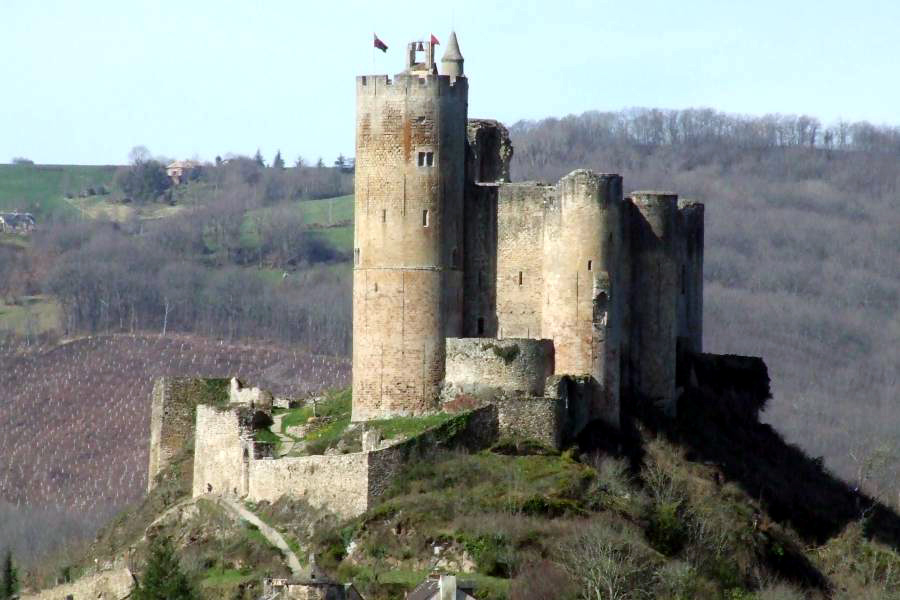
The Castle of Najac stands as a remarkable example of high medieval military architecture in the Occitanie region of southern France. Constructed in 1253 by the villagers under the orders of Alphonse de Poitiers, brother of Saint Louis (King Louis IX), this fortress was strategically positioned on a rocky outcrop approximately 200 meters above the Aveyron River. Its commanding location was crucial for controlling the surrounding territory and overseeing key routes through the region.

The castle was built on the site of an earlier fortification, indicating the long-standing military significance of Najac. The imposing structure was designed to serve both as a defensive stronghold and a symbol of feudal authority during the 13th century. Its construction reflects the architectural innovations of the high medieval period, combining robust stone masonry with advanced defensive features.

Architectural highlights and defensive features

One of the most striking features of the Castle of Najac is its extraordinary archeres—narrow vertical slits in the walls used by archers for defense. The castle holds a world record for the height of these openings, measuring an impressive 6.80 meters. This unusually tall design allowed for the simultaneous use of three archers within a single aperture, significantly enhancing the castle's defensive capabilities.

The fortress includes a prominent Romanesque tower that serves as a keep, the last refuge during sieges. This tower is connected to the chapel of the keep by a secret corridor concealed within the thick walls. This hidden passage would have enabled defenders to move discreetly between key parts of the castle during times of attack or siege, demonstrating the sophisticated military planning of the era.

Structural layout and materials

The castle’s construction features thick stone walls, battlements, and fortified gates typical of high medieval fortresses. The use of local limestone contributed to the durability and imposing appearance of the structure. The layout includes multiple defensive layers, with curtain walls enclosing a central courtyard and the keep rising prominently above.

Historical significance and role in the region

The Castle of Najac played a pivotal role in the control of the Aveyron valley and the surrounding territories during the turbulent 13th century. Its possession was key for regional lords due to its strategic vantage point and its ability to monitor and control trade and military movements along the river.

Commissioned by Alphonse de Poitiers, who was appointed Count of Toulouse, the castle was part of a broader effort to consolidate royal authority in the south of France following the Albigensian Crusade. The fortress thus embodies the political and military strategies of the Capetian monarchy during this period.

Later history and preservation

Throughout the centuries, the castle witnessed various conflicts and changes in ownership but remained a symbol of feudal power. Its well-preserved state today allows visitors to appreciate the ingenuity of medieval military architecture and the historical context of the region.

Today, the Castle of Najac is recognized for its exceptional preservation and unique architectural features, attracting historians, architects, and tourists interested in medieval fortifications. Its combination of strategic location, innovative defensive design, and historical significance makes it a valuable cultural heritage site in France.

Visiting the castle

Visitors to the castle can explore its extensive defensive walls, the imposing Romanesque tower, and the chapel connected by the secret corridor. The panoramic views from the castle’s elevated position provide a stunning perspective of the Aveyron River valley and the surrounding landscape.

The castle is accessible from the village of Najac, which retains its medieval charm and offers amenities for tourists. Guided tours and informational displays help visitors understand the architectural and historical importance of this remarkable fortress.

Frequently asked questions (FAQ)

How do I get to the Castle of Najac?
The Castle of Najac is located in the heart of the village of Najac, France. You can reach it by car or public transportation, with ample parking available nearby. If you're traveling from larger cities like Toulouse or Albi, consider taking a train to Najac followed by a short walk to the castle.
What is the historical significance of the Castle of Najac?
The Castle of Najac dates back to the 12th century and played a crucial role during the Albigensian Crusade. It served as a strategic stronghold controlling the passage through the Aveyron Valley and was a symbol of the power of the Counts of Toulouse.
When was the Castle of Najac built?
Construction of the Castle of Najac began in 1253 under the direction of the Count of Toulouse. Throughout the centuries, it underwent various modifications, reflecting the architectural styles of different periods, particularly in the 14th and 15th centuries.
Can I visit the Castle of Najac year-round?
Yes, the Castle of Najac is open to visitors year-round, though specific opening hours may vary seasonally. It is advisable to check the official website for the most current information on visiting hours and any holiday closures.
Why is the architecture of the Castle of Najac unique?
The architecture of the Castle of Najac is notable for its impressive fortifications and the use of local limestone, giving it a distinctive appearance. The castle features a blend of medieval design elements, including a keep, ramparts, and a drawbridge, which allow visitors to appreciate its historical military significance.
Is it possible to explore the interior of the Castle of Najac?
Yes, visitors can explore the interior of the Castle of Najac, which includes a series of rooms and exhibits detailing its history. Guided tours are available, providing insights into the castle's past and its role in regional history.
What are the ticket prices for the Castle of Najac?
Ticket prices for the Castle of Najac are generally affordable, with discounts available for students, seniors, and children. Family tickets are also offered, making it a cost-effective outing for those visiting with children.
When is the best time to visit the Castle of Najac?
The best time to visit the Castle of Najac is during the spring and fall when the weather is mild and the crowds are smaller. However, summer months are also popular due to the vibrant local festivals and events that take place in Najac.
Are there nearby attractions to visit along with the Castle of Najac?
Yes, there are several nearby attractions, including the charming village of Najac itself, which boasts beautiful medieval architecture and stunning views. Additionally, the surrounding Aveyron region offers opportunities for hiking, exploring other historic sites, and enjoying local cuisine.

Information

Hill Castle

Sources & official resources

Verify the information above using these authoritative references.

Loading map...

Visitor reviews

No reviews yet. Been here? Write the first review and help other travelers!

Write the first review

Visited this castle? Share your experience

Your review helps other travelers and adds first-hand knowledge to our encyclopedia.
Write a review

(5/5)

0/2000 characters

Your review will be visible after admin approval

Nearby castles

0.6 km
Najac Castle — France castle

Najac Castle

Najac, France

Najac Castle, perched dramatically on a rocky spur overlooking the Aveyron River in southern France, stands as a remarkable example of medieval military architecture. Constructed in 1253 under the direction of Alphonse de Poitiers, brother of King Louis IX, the castle was built atop the remains of an earlier 12th-century fortification. Its strategic location, about 200 meters above the river, afforded commanding views and control over the surrounding region, making it a vital stronghold in the turbulent history of the Midi-Pyrénées region, now part of Occitanie. The castle’s design reflects the height of 13th-century Gothic military engineering, combining robust defensive features with architectural innovation. Najac’s imposing curtain walls rise approximately 25 meters, making them nearly impregnable to scaling attempts. The fortress is renowned worldwide for its 6.80-meter-high archères, the tallest arrow slits known, which could accommodate three archers firing simultaneously. This feature exemplifies the castle’s emphasis on defense and strategic combat capabilities. Historical context and significance The origins of Najac Castle trace back to around 1100 when Bertrand de Saint-Gilles, son of Raymond IV, Count of Toulouse, established a Romanesque square tower on the site. This early fortification laid the groundwork for the later expansive Gothic fortress. The castle’s pivotal transformation occurred in the mid-13th century when Alphonse de Poitiers undertook a major reconstruction between 1253 and 1266, expanding the castle into a formidable royal fortress. Alphonse’s marriage to Jeanne de Toulouse linked the castle to the legacy of the last Count of Toulouse, Raymond VII, cementing royal authority in the region. Najac served as the seat of a royal viguerie, an administrative and judicial district, marking the western edge of Rouergue and acting as a bulwark against the influence of powerful neighboring lords such as the Trencavel family and the Counts of Barcelona. The castle’s military importance was repeatedly demonstrated during key historical conflicts including the Albigensian Crusade, the Hundred Years’ War, and the French Wars of Religion. It endured English occupation in the late 14th century and was a focal point during peasant revolts such as the 1643 uprising led by Bernard Calmels. Architectural features and defensive innovations Layout and fortifications The castle’s inner bailey forms a roughly rectangular enclosure approximately 40 meters in length. The perimeter is fortified with curtain walls and multiple towers projecting from the north and south walls, including the original Romanesque square tower and a massive round donjon nearly 40 meters high. This donjon served as the command center for the castle’s defenses and symbolized the power of Alphonse de Poitiers over the County of Toulouse. The entrance is heavily fortified with a barbican and a single narrow approach protected by a drawbridge, limiting access and creating a formidable obstacle for attackers. The castle’s walls are founded directly on the bedrock, a design choice that discouraged undermining attempts, a common siege tactic of the era. Unique defensive elements Najac Castle is famous for its extraordinarily tall archères, measuring 6.80 meters high, believed to be the tallest in the world. These narrow vertical slits allowed multiple archers to fire simultaneously from staggered platforms within, covering all directions of attack. This innovation greatly enhanced the castle’s defensive capabilities. A secret corridor hidden within the walls connects the Romanesque tower to the chapel located inside the donjon. This passage was likely used for discreet movement during sieges or emergencies. The castle also features a dungeon within one of its towers, underscoring its role in regional justice and imprisonment. Rainwater management was ingeniously handled by channeling runoff from the roofs into a cistern via a stone conduit, ensuring a reliable water supply during prolonged sieges. The castle’s masonry is of exceptional quality, with subtle architectural details and carvings that reveal the skill of medieval craftsmen. Later history and preservation Following its active military use, Najac Castle experienced decline, particularly after the French Revolution, when it was sold as national property and partially dismantled for building materials. In the 19th century, it was used as a stone quarry, accelerating its deterioration. Fortunately, the castle was purchased in 1906 by the Cibiel family, who have since preserved and restored the fortress, opening it to the public. Najac Castle is now a protected monument historique, recognized for its outstanding architectural and historical value. It forms part of the Route des Seigneurs du Rouergue, a tourist itinerary linking 23 castles in the Aveyron département, promoting the region’s rich medieval heritage. Cultural and touristic importance Today, Najac Castle is a major attraction in Occitanie, drawing visitors interested in medieval history, architecture, and panoramic views of the Aveyron valley. Its well-preserved structures, including the donjon, curtain walls, towers, and chapel, offer a vivid glimpse into the military and feudal life of the Middle Ages. The castle’s combination of Romanesque and Gothic elements exemplifies the evolution of fortification techniques and aristocratic power in southern France. Visitors can explore the secret passageways, admire the frescoes in the chapel, and appreciate the castle’s strategic design that made it "the impregnable fortress" of its time. Najac’s enduring presence and historical significance make it an essential site for understanding the complex history of the Rouergue region and the broader narrative of medieval France.

High Medieval (11th–13th c.)
Details
8.7 km

Château de Saint-Martin-Laguépie

Laguépie, France

Château de Saint-Martin-Laguépie stands as a notable example of a feudal castle that underwent significant transformation during the 16th century Renaissance period. Located in the commune of Laguépie, France, this castle occupies a strategic position overlooking the confluence of the Viaur and Aveyron rivers, commanding views over the adjacent villages of Saint-Martin and Laguépie. Historical context and significance The castle's origins trace back to the medieval era, originally constructed as a defensive stronghold during the feudal period. Its location was chosen for its natural defensive advantages, with the rivers providing natural barriers against invaders. During the Renaissance, the castle was extensively rebuilt, reflecting the architectural and cultural shifts of the time. This period saw the introduction of more refined residential features alongside its military functions. Despite its Renaissance enhancements, the castle retained many of its feudal characteristics, including fortified walls and defensive towers. Its abandonment during the French Revolution led to its decline, leaving it in a state of ruin that persists today. Architectural features and layout The castle ruins reveal remnants of a complex structure that combined both military and residential elements. The site likely included a main keep or donjon, surrounded by curtain walls and defensive towers. The Renaissance rebuilding introduced larger windows and more ornate stonework, indicative of the era's aesthetic preferences. The castle's elevated position provided excellent visibility over the surrounding landscape, crucial for early warning and defense. The confluence of the Viaur and Aveyron rivers not only enhanced its defensive capabilities but also contributed to the castle's control over river traffic and local trade routes. The castle's decline and present condition Following its abandonment in the late 18th century, the castle fell into disrepair. The upheavals of the French Revolution led to the neglect and partial destruction of many such feudal structures, including Château de Saint-Martin-Laguépie. Today, it remains a ruin, with portions of walls and foundational structures still visible. Despite its ruined state, the site attracts visitors interested in medieval and Renaissance history, as well as those who appreciate the dramatic setting overlooking two rivers. The ruins offer insight into the architectural evolution from feudal fortress to Renaissance residence. Geographical and cultural importance The castle's location at the junction of two rivers emphasizes its historical role in regional defense and control. It served as a sentinel over the villages of Saint-Martin and Laguépie, influencing local governance and security. The site remains a cultural landmark within the region, symbolizing the layered history of southern France's medieval and Renaissance periods. Visiting Château de Saint-Martin-Laguépie Visitors to the castle can explore the ruins and enjoy panoramic views of the surrounding river valleys. While the castle is not fully restored, its evocative remains provide a tangible connection to France's feudal past and Renaissance transformations. The site is accessible from the nearby villages and offers a unique glimpse into the architectural and historical heritage of the region.

Renaissance (15th–17th c.)
Details
10.9 km

Château de Cornusson

Parisot, France

Château de Cornusson is a historic castle located in the commune of Parisot in southern France. Originally constructed in the 12th century, it was first documented in 1157, marking it as a significant high medieval fortress with origins deeply rooted in medieval feudal society. The castle's strategic position and defensive architecture reflected the turbulent times of the Middle Ages, designed to withstand sieges and protect its noble inhabitants. Medieval origins and architectural evolution The initial construction of Château de Cornusson was typical of high medieval castles with robust stone walls, a fortified keep, and defensive towers. These elements were intended to provide security against both military assaults and local unrest. Over time, the castle underwent significant architectural transformations, particularly during the 16th and 17th centuries when it was extensively rebuilt by the La Valette-Parisot family. This renovation introduced elements of the Renaissance architectural style, blending fortified medieval features with more refined residential comforts and aesthetic details. Renaissance rebuilding and stylistic features The Renaissance period brought a shift from purely defensive architecture to a more palatial style. Château de Cornusson's reconstruction included enlarged windows, decorative stonework, and more spacious living quarters. While the castle retained its formidable walls and defensive towers, these were complemented by elegant facades and interior enhancements that reflected the changing tastes and social status of its owners. This blend of medieval fortification and Renaissance elegance makes the château architecturally significant. Historical significance and wartime role During the Wars of Religion in France (1562–1598), Château de Cornusson played a notable role as a stronghold. The castle successfully resisted several attacks by Protestant forces, demonstrating its strategic importance and the strength of its fortifications. The owners at the time, the La Valette-Parisot family, were staunch defenders of the Catholic cause, which positioned the château as a key site in the religious conflicts that shaped France's history. Ownership transitions and revolutionary impact In the late 17th century, ownership of Château de Cornusson passed to the Vignes family from Puylaroque through marriage. The castle remained a noble residence until the upheavals of the French Revolution, when it was reportedly pillaged and left in a state of disrepair. The revolution's impact on the château reflects the widespread destruction and redistribution of aristocratic properties during this period. Post-revolutionary decline and current status Following the revolution, Château de Cornusson changed hands multiple times and gradually sank into obscurity, typical of many rural French castles that lost their strategic and residential importance. Today, the château stands as a testament to its layered history, although it has suffered from neglect and deterioration. Despite this, it remains a site of cultural heritage, illustrating the evolution of French castle architecture from the medieval to the Renaissance period and the social upheavals that influenced its fate. Architectural elements and preservation challenges The castle's surviving structures include portions of its medieval stone walls, Renaissance-era residential wings, and defensive towers. Preservation efforts face challenges due to the château's rural location and the extent of damage sustained over centuries. However, its historical and architectural value continues to attract interest from historians, conservationists, and visitors intrigued by France's feudal and early modern past. Visiting château de cornusson While not as widely known as some of France's grander castles, Château de Cornusson offers a unique glimpse into the region's medieval and Renaissance history. Visitors interested in castle architecture and French history may find the site rewarding, though access and visitor facilities may be limited due to its private ownership and preservation status. Exploring the château and its surroundings provides insight into the lifestyle and defensive needs of French nobility across centuries.

High Medieval (11th–13th c.)
Details
