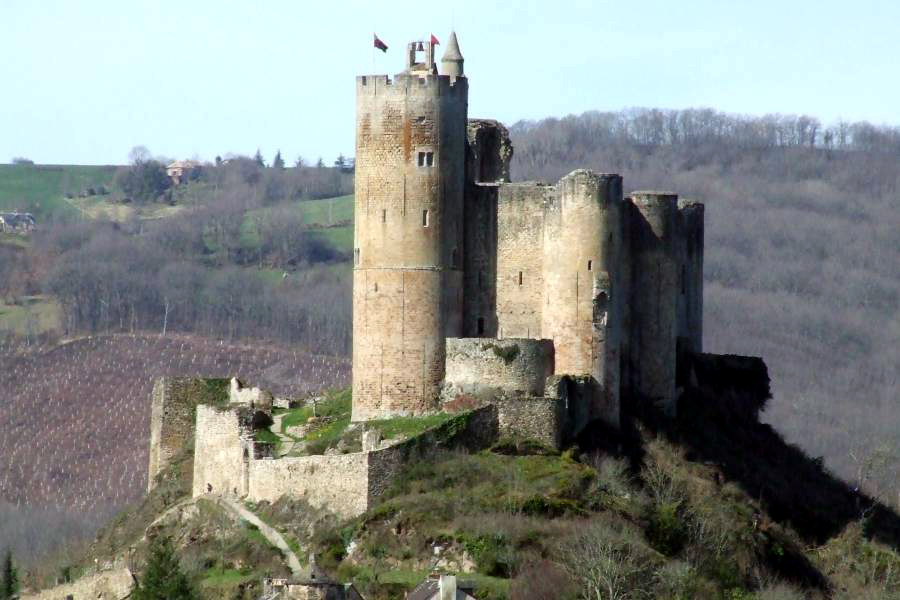
Château de Saint-Martin-Laguépie
Château de Saint-Martin-Laguépie stands as a notable example of a feudal castle that underwent significant transformation during the 16th century Renaissance period. Located in the commune of Laguépie, France, this castle occupies a strategic position overlooking the confluence of the Viaur and Aveyron rivers, commanding views over the adjacent villages of Saint-Martin and Laguépie.
Historical context and significance
The castle's origins trace back to the medieval era, originally constructed as a defensive stronghold during the feudal period. Its location was chosen for its natural defensive advantages, with the rivers providing natural barriers against invaders. During the Renaissance, the castle was extensively rebuilt, reflecting the architectural and cultural shifts of the time. This period saw the introduction of more refined residential features alongside its military functions.
Despite its Renaissance enhancements, the castle retained many of its feudal characteristics, including fortified walls and defensive towers. Its abandonment during the French Revolution led to its decline, leaving it in a state of ruin that persists today.
Architectural features and layout
The castle ruins reveal remnants of a complex structure that combined both military and residential elements. The site likely included a main keep or donjon, surrounded by curtain walls and defensive towers. The Renaissance rebuilding introduced larger windows and more ornate stonework, indicative of the era's aesthetic preferences.
The castle's elevated position provided excellent visibility over the surrounding landscape, crucial for early warning and defense. The confluence of the Viaur and Aveyron rivers not only enhanced its defensive capabilities but also contributed to the castle's control over river traffic and local trade routes.
The castle's decline and present condition
Following its abandonment in the late 18th century, the castle fell into disrepair. The upheavals of the French Revolution led to the neglect and partial destruction of many such feudal structures, including Château de Saint-Martin-Laguépie. Today, it remains a ruin, with portions of walls and foundational structures still visible.
Despite its ruined state, the site attracts visitors interested in medieval and Renaissance history, as well as those who appreciate the dramatic setting overlooking two rivers. The ruins offer insight into the architectural evolution from feudal fortress to Renaissance residence.
Geographical and cultural importance
The castle's location at the junction of two rivers emphasizes its historical role in regional defense and control. It served as a sentinel over the villages of Saint-Martin and Laguépie, influencing local governance and security. The site remains a cultural landmark within the region, symbolizing the layered history of southern France's medieval and Renaissance periods.
Visiting Château de Saint-Martin-Laguépie
Visitors to the castle can explore the ruins and enjoy panoramic views of the surrounding river valleys. While the castle is not fully restored, its evocative remains provide a tangible connection to France's feudal past and Renaissance transformations. The site is accessible from the nearby villages and offers a unique glimpse into the architectural and historical heritage of the region.
Frequently asked questions (FAQ)
- When was Château de Saint-Martin-Laguépie built and rebuilt?
- The castle was originally built during the medieval period and extensively rebuilt in the 16th century during the Renaissance.
- What is the current condition of Château de Saint-Martin-Laguépie?
- Today, the castle remains a ruin, with visible remnants of walls and foundational structures.
- Where is Château de Saint-Martin-Laguépie located?
- It is located in Laguépie, France, overlooking the confluence of the Viaur and Aveyron rivers.
- Can visitors access the castle ruins?
- Yes, visitors can explore the ruins and enjoy panoramic views of the river valleys, though the castle is not fully restored.
- Why was the castle abandoned?
- The castle was abandoned during the French Revolution, which led to its decline and partial destruction.
Information
Loading map...
Visitor reviews
No reviews yet. Been here? Write the first review and help other travelers!
Write the first reviewVisited this castle? Share your experience
Your review helps other travelers and adds first-hand knowledge to our encyclopedia.