Castle of Mourao
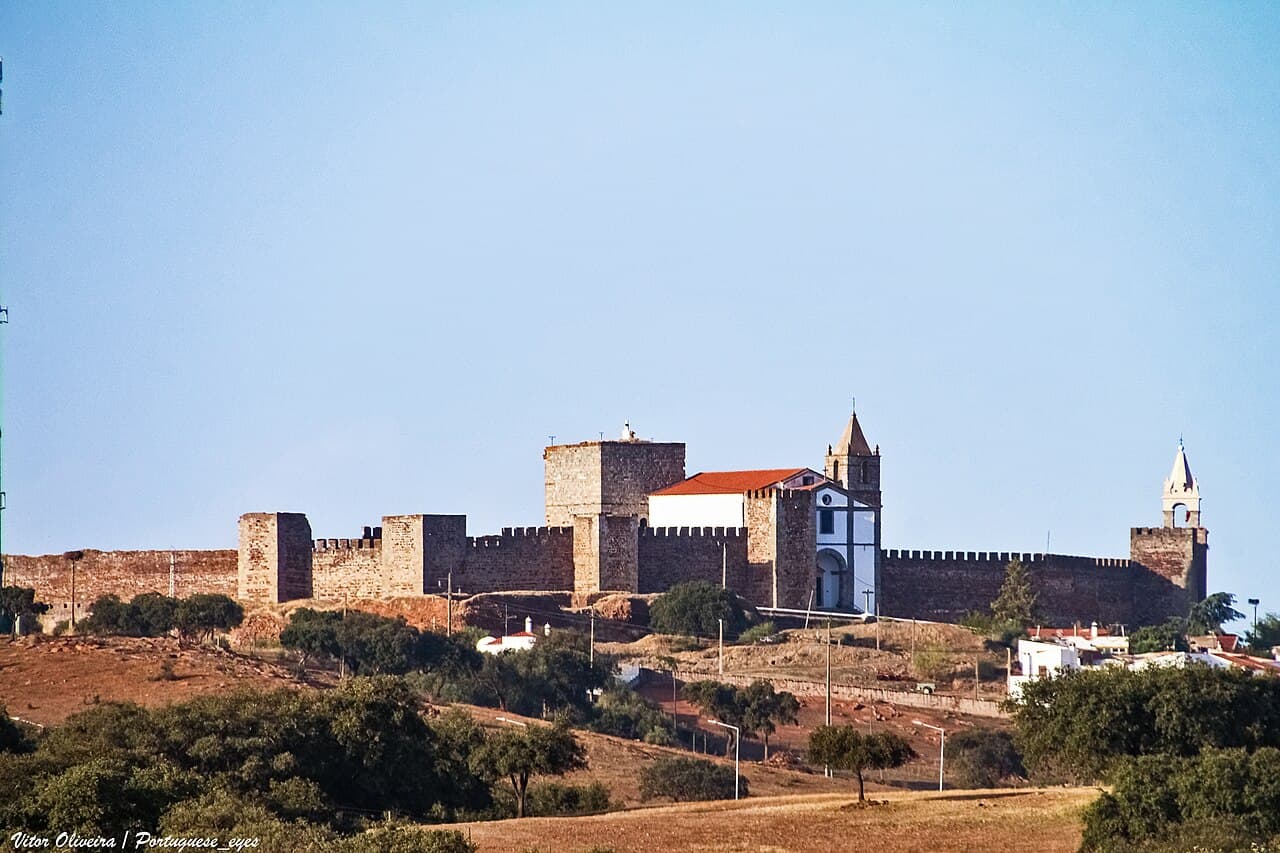
The Castle of Mourão is a remarkable example of medieval military architecture located in the town of Mourão within the Évora district of Portugal. This hill castle commands a strategic position on the left bank of the Guadiana River, offering commanding views over the surrounding plains and the nearby Castle of Monsaraz as well as the Spanish border. Its long history reflects the turbulent periods of the Christian reconquest of the Iberian Peninsula, the rise of Portuguese sovereignty, and adaptations to evolving military technology through the centuries.
During the Reconquista, the site of the castle witnessed clashes between Muslim and Christian forces. Control of the area shifted multiple times, leading to temporary abandonment before the Portuguese conquest established a more permanent presence. The lands were granted to the Knights Hospitaller, with Gonçalo Egas, the Prior of the order, receiving the first Foral charter in 1226 to encourage settlement and defense. The castle was likely built or rebuilt during the reign of King Sancho II (1223–1248), marking the beginning of its documented medieval fortifications.
Medieval origins and royal charters
Throughout the 13th century, the castle and village of Mourão received several important royal charters that shaped its development. King Afonso III issued a charter in 1254, followed by King Dinis granting a new charter in 1296 and confirming it in 1298. Under King Dinis, the castle underwent significant renovations, including the addition of three towers that enhanced its defensive capabilities. The castle's role during the 1383–1385 crisis, a period of civil war and political upheaval in Portugal, was notable as it supported the faction of the Master of Aviz, who later became King João I.
Renaissance enhancements and architectural significance
In the early 16th century, under the reign of King Manuel I (1495–1521), the castle and town were documented by military engineer Duarte de Armas around 1509. This period saw further renovations led by the renowned military architects Diogo and Francisco de Arruda. Their work included strengthening the fortifications to adapt to the evolving demands of warfare, particularly the increasing use of artillery. Additionally, the construction of the main church within the castle walls reflected the growing religious and communal importance of Mourão.
Early modern military redesign and the iberian union
Following Portugal's incorporation into the Iberian Union in 1580 under Philip II of Spain, the castle came under Spanish control. After Portugal regained its independence in 1640, Pedro de Mendonça Furtado was among the first to raise the banner of King João IV at Mourão. In the 17th century, the castle underwent a comprehensive military redesign by the French engineer Nicolau de Langres. This redesign introduced four bastions at the corners of the walls, ravelins positioned before the curtain walls, and a moat, transforming the medieval fortress into an early modern bastioned fortress. These adaptations were critical in responding to the advancements in siege warfare and artillery technology of the time.
Architectural features and current state
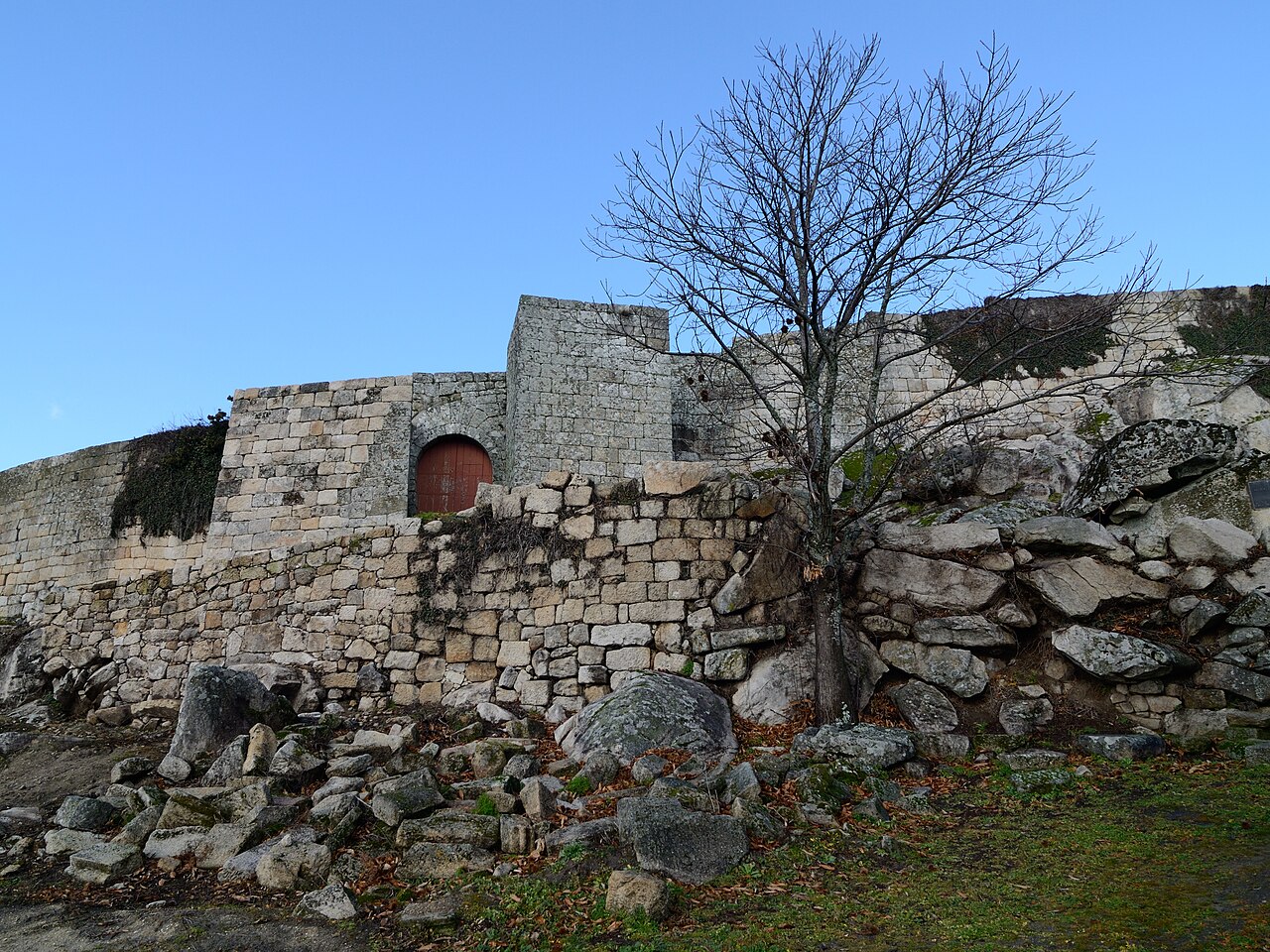
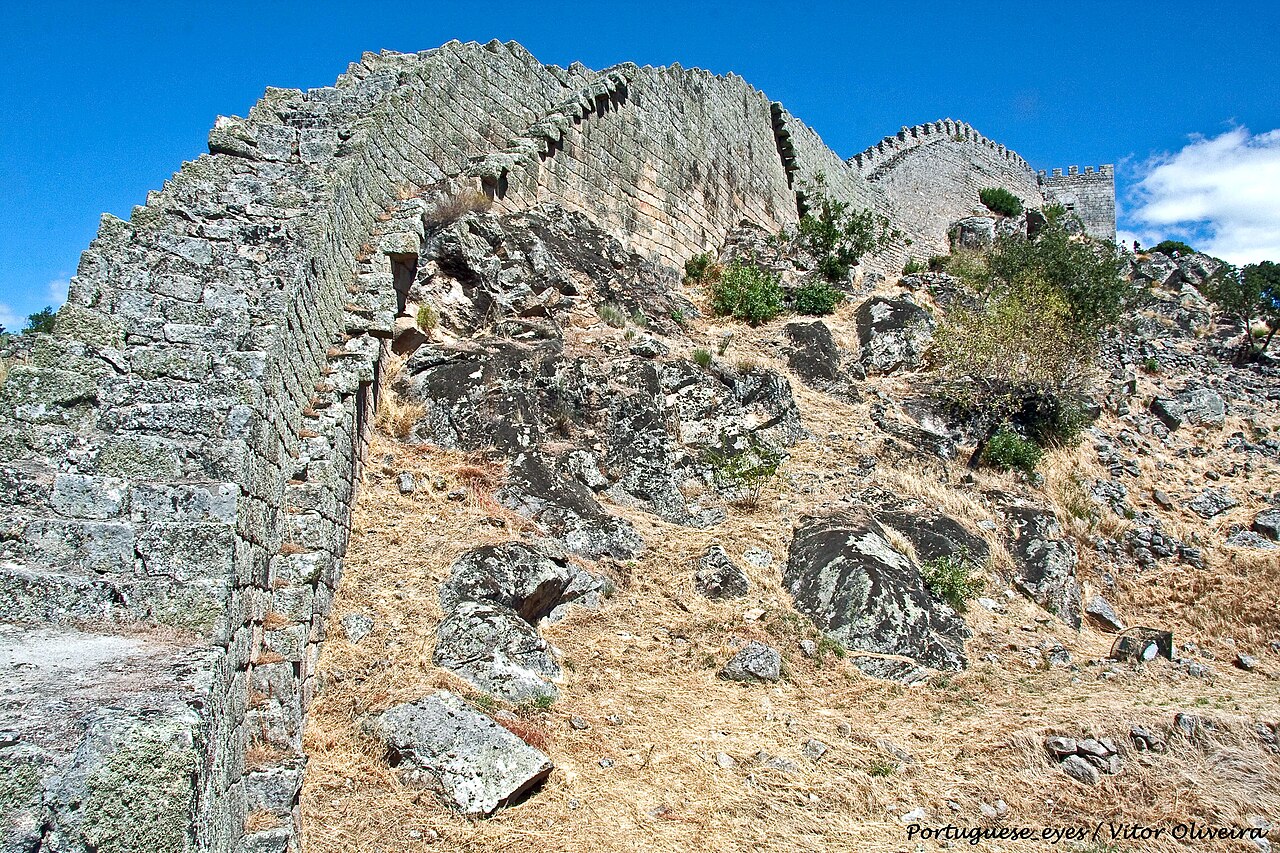
The Castle of Mourão is constructed from a combination of shale, marble, and granite stones, materials typical of the region. Its medieval walls are reinforced by six square-shaped towers, which provide strong defensive points along the enclosure. The walls contain several gates, some framed by towers and featuring characteristic pointed Gothic arches, a hallmark of medieval military architecture.
The castle's keep tower, the main stronghold, is notable for its Gothic design and features a door opening onto the main courtyard, known as the praça de armas. Within the walls, visitors can find the remains of the Guardhouse (Casa da Guarda), where soldiers were stationed, and the former Town Hall (Paços do Concelho), indicating the castle's administrative role in the past.
The 17th-century military enhancements are still partially visible today. Although only fragments of the bastions and ravelins remain, they testify to the castle's adaptation to the changing nature of warfare. The moat, once a critical defensive feature, also survives in parts.
Cultural significance and preservation
Recognized officially as a Property of Public Interest in 1957, the Castle of Mourão holds significant cultural and historical value. Its well-preserved state makes it an important tourist attraction and a symbol of the region's medieval heritage. The castle's combination of medieval and early modern military architecture provides valuable insights into the evolution of fortress design in Portugal.
Today, the castle stands as a testament to the region's complex history, from the struggles of the Reconquista through the political crises of medieval Portugal to the military innovations of the early modern period. Its commanding location overlooking the Guadiana River continues to draw visitors interested in history, architecture, and the scenic beauty of the Alentejo region.
Frequently asked questions (FAQ)
- What is the historical significance of the Castle of Mourao?
- The Castle of Mourao, dating back to the 13th century, played a crucial role in the defense against the Moors during the Reconquista. It is a remarkable example of medieval military architecture, showcasing the strategic importance of the region in Portugal's history.
- When was the Castle of Mourao built?
- Construction of the Castle of Mourao began in the early 13th century, with significant modifications occurring over the years. Its enduring structure reflects the architectural styles and defensive needs of various periods, making it a fascinating site for history enthusiasts.
- Can I visit the Castle of Mourao?
- Yes, the Castle of Mourao is open to visitors. You can explore its impressive walls, towers, and panoramic views of the surrounding countryside, making it a perfect destination for history lovers and photographers alike.
- What are the opening hours for the Castle of Mourao?
- The Castle of Mourao typically opens to visitors from 9 AM to 6 PM daily, although hours may vary by season. It is advisable to check the official website or local information for any updates before planning your visit.
- Is it possible to access the Castle of Mourao with a wheelchair?
- While the Castle of Mourao has some accessibility features, the uneven terrain and steep pathways may pose challenges for wheelchair users. It is recommended to contact the castle administration in advance to inquire about specific accessibility options.
- What is the best time to visit the Castle of Mourao?
- The best time to visit the Castle of Mourao is during the spring or fall when the weather is mild and ideal for outdoor exploration. Summer can be quite hot, while winter may bring cooler temperatures, so plan accordingly for a comfortable experience.
- Are there any nearby attractions to visit?
- Yes, nearby attractions include the picturesque village of Mourao, as well as the beautiful Alqueva Lake, perfect for outdoor activities. The region is rich in history, making it an excellent area for exploring additional historical sites and enjoying local cuisine.
- What are the ticket prices for the Castle of Mourao?
- Entrance to the Castle of Mourao is generally affordable, with tickets typically priced around €2 for adults and reduced rates for children and seniors. Special discounts may apply for groups or special events, so it’s wise to check before your visit.
Photo gallery

Information
Website
Visit websiteSources & official resources
Verify the information above using these authoritative references.
Loading map...
Visitor reviews
No reviews yet. Been here? Write the first review and help other travelers!
Write the first reviewVisited this castle? Share your experience
Your review helps other travelers and adds first-hand knowledge to our encyclopedia.