Castle of Carrazeda
The Castle of Carrazeda stands as a remarkable historical monument in the municipality of Carrazeda de Ansiães in northern Portugal. This hill castle occupies a strategic granite plateau near the Serra da Vila mountains, offering commanding views over the fertile valley of the Douro River. The site’s history spans thousands of years, beginning with human activity during the Chalcolithic era around 3000 BCE, making it a location of continuous settlement and strategic importance through numerous historical periods.
Archaeological evidence reveals that the area developed into a significant Roman settlement, thriving until its destruction by northern barbarian groups circa 409 CE. The Roman influence is still visible in the ruins, including the remains of a convent dedicated to São João dating from this period. Following the Roman decline, the region was conquered by Muslim forces in 711 CE, who established early fortifications that laid the groundwork for the castle’s defensive structures.
Medieval origins and historical significance
By the mid-11th century, the territory came under the control of the Christian Kingdom of León. During this time, King Ferdinand I granted a Foral Charter between 1055 and 1065, marking a pivotal transition from Moorish to Christian governance and establishing the legal and administrative framework for the settlement. This charter was reaffirmed multiple times by successive Portuguese monarchs after the formation of the Kingdom of Portugal in the 12th century, including King Afonso Henriques in 1160, Sancho I in 1198, Afonso II in 1219, and Manuel I in 1510. These confirmations underscore the enduring administrative and strategic importance of Carrazeda throughout the medieval period.
The castle and its settlement flourished economically and militarily during the Middle Ages. In 1277, King Afonso III granted a charter authorizing a market fair, which stimulated local commerce and trade. The prosperity of the settlement is reflected in the funding of various building projects through customs and church taxes. Notable repair works on the castle were recorded in 1443 and again between 1580 and 1591, indicating ongoing efforts to maintain and improve the fortifications.
Architectural features and fortifications
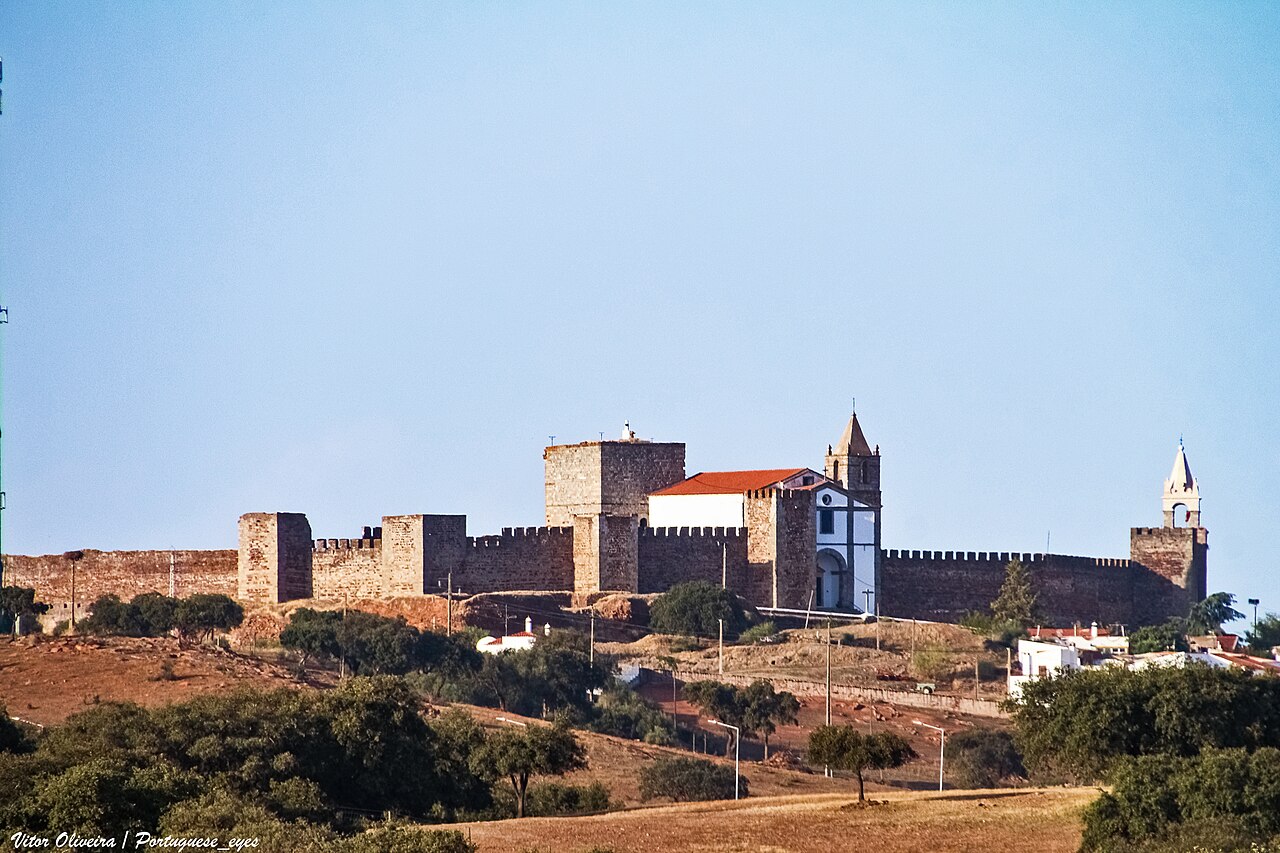
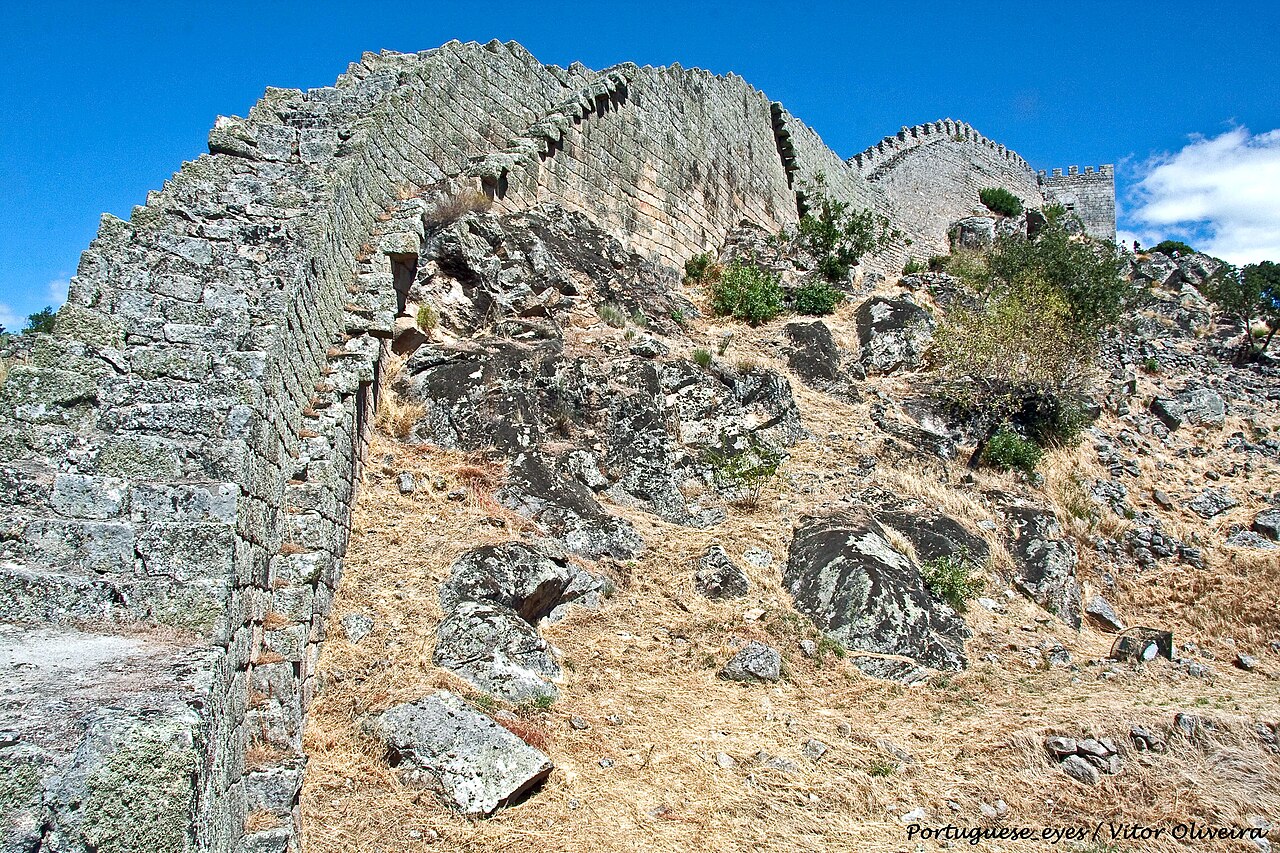
The Castle of Carrazeda features an irregular oval-shaped defensive perimeter constructed primarily of granite blocks bonded with mortar. The walls are formidable, reaching heights of up to 6.6 meters and thicknesses of approximately 2.65 meters, designed to withstand sieges and assaults. The fortification is reinforced by five rectangular towers, including a prominent square keep tower with two floors that served as the castle’s stronghold and command center.
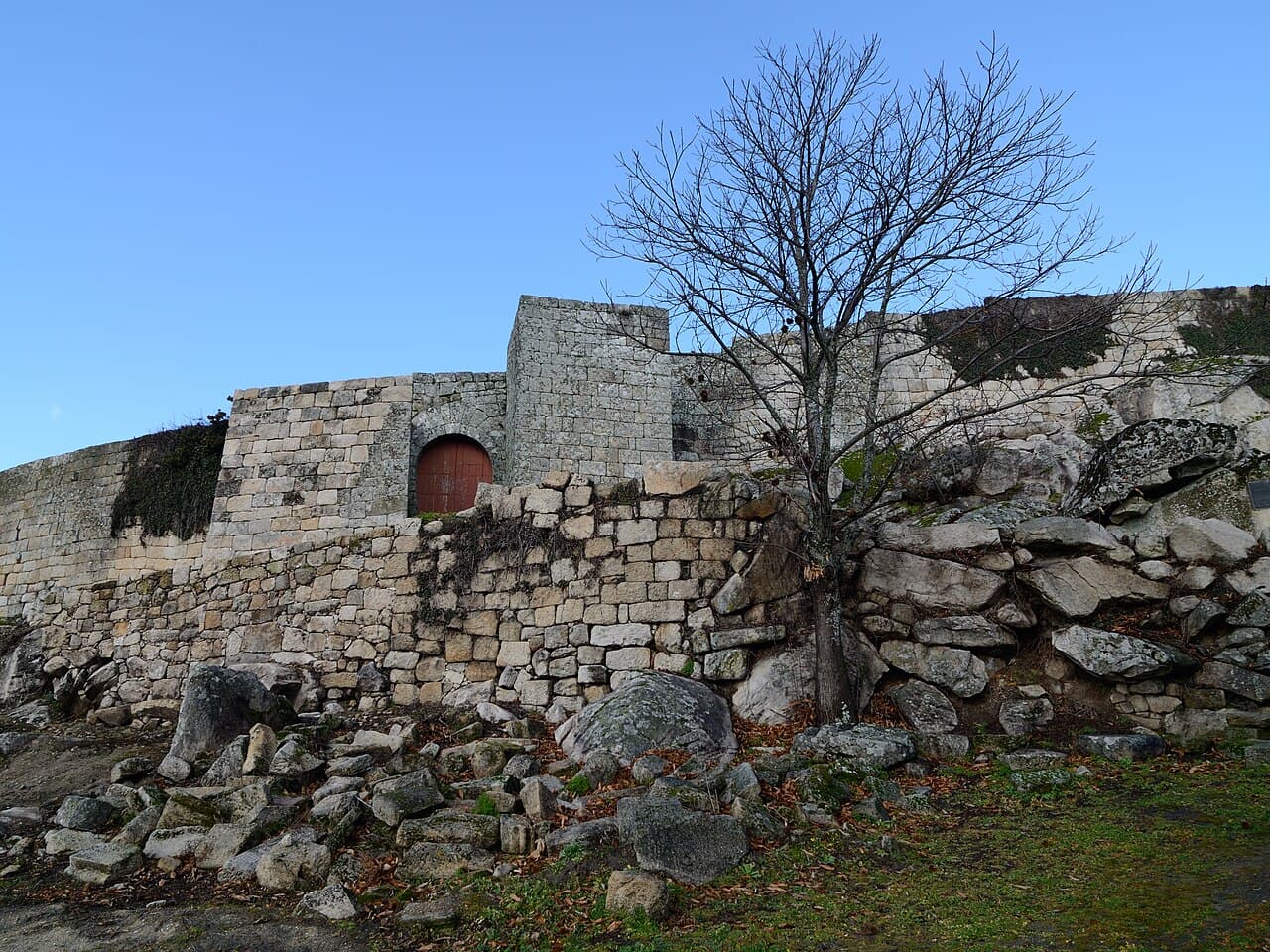
The main entrance on the southern side, known as the São Salvador Gate, is architecturally significant with its Roman arch flanked by two rectangular towers, reflecting influences from earlier construction phases. On the northern side, near the keep, lies the smaller Traitors’ Gate, likely used for discreet access or sorties during conflicts.
Within the castle walls, visitors can find the remains of vaulted granite cisterns used for water storage, essential for sustaining the inhabitants during sieges. Although one cistern has been obstructed and another dismantled, these features highlight the advanced planning of medieval military architecture. The foundations of houses and small cubical compartments suggest a well-organized urban layout within the fortification walls. Remnants of barbicans—external defensive outworks—are also visible, adding layers of protection.
Outer defensive walls and town layout
Encircling the castle is a second, larger defensive wall approximately 600 meters in length, fortified by three rectangular towers. This outer enclosure defined the medieval town’s limits and included intersecting streets and several neighborhoods, illustrating the castle’s role as a center of both defense and community life.
The outer wall features multiple gates with distinct names and functions: the Fonte Vedra Gate to the south, the Porta da Vila Gate to the east providing access to the main road towards Lavandeira, and the São João and São Francisco Gates on the western side. These gates connected the town to surrounding regions and facilitated trade and movement.
Religious structures and auxiliary fortifications
Within the inner walls stands a small Romanesque church dedicated to São Salvador, reflecting the spiritual life of the medieval inhabitants. Nearby, about 40 meters outside the castle walls, are the ruins of a Roman-era convent dedicated to São João, indicating a continuous religious presence from antiquity through the medieval period.
Additional military structures include the Fortim do Cubo, a square-shaped fortification located near the castle, and the now-destroyed Torre dos Lameiros, which once contributed to the defensive network of the settlement.
Decline, restoration, and heritage status
From the 15th century onward, the castle gradually lost its military and administrative prominence. By 1734, the municipal seat moved to the nearby town of Carrazeda, and the fortified settlement was largely abandoned by the 19th century. Despite this decline, the castle’s historical and cultural significance was recognized early in the 20th century.
In 1910, the Castle of Carrazeda was declared a National Monument, ensuring its protection and preservation. Restoration efforts were undertaken during the mid-20th century by the General Directorate for National Buildings and Monuments (DGEMN), which sought to stabilize and conserve the ruins. Archaeological excavations between 1996 and 1998, led by Luís Pereira and supported by local institutions, uncovered valuable information about the site’s complex history and architectural evolution.
Further restoration and heritage recovery projects in the early 2000s, funded by national and European entities, have aimed to enhance public access and understanding of the castle’s rich legacy. Today, the ruins of the Castle of Carrazeda stand as a testament to Portugal’s layered history, from prehistoric times through Roman, Muslim, and medieval Christian periods, offering visitors a unique glimpse into the past.
Covering an extensive area of approximately 9,594 hectares, the site encompasses not only the fortified medieval town but also the surrounding historic urban space, making it a significant cultural landmark in the region.
Frequently asked questions (FAQ)
- What is the best time to visit the Castle of Carrazeda?
- The best time to visit the Castle of Carrazeda is during the spring and autumn months when the weather is mild and the surrounding landscape is particularly scenic. These seasons offer comfortable temperatures for exploring the ruins and enjoying panoramic views of the Douro valley.
- Is there an entrance fee to visit the Castle of Carrazeda?
- There is no entrance fee to visit the Castle of Carrazeda as it is an open archaeological site. Visitors can explore the ruins freely, making it an accessible destination for those interested in history and medieval architecture.
- How do I get to the Castle of Carrazeda?
- The Castle of Carrazeda is located in the municipality of Carrazeda de Ansiães in northern Portugal, within the Norte region. It is accessible by car via local roads, and parking is available nearby. Public transportation options may be limited, so driving is recommended for convenience.
- What architectural features are notable at the Castle of Carrazeda?
- Notable architectural features include the thick granite walls up to 6.6 meters high, five rectangular towers including a two-story square keep, the São Salvador Gate with its Roman arch, vaulted granite cisterns, and remnants of barbicans. These elements highlight the castle’s medieval military design and strategic importance.
- Can visitors explore the entire castle and town walls?
- Visitors can explore the main castle ruins and parts of the outer defensive walls that enclosed the medieval town. While some areas are well-preserved, others are in ruins or partially inaccessible for safety reasons. Guided tours or informational signage may be available to enhance the visitor experience.
Photo gallery

Information
Sources & official resources
Verify the information above using these authoritative references.
Loading map...
Visitor reviews
No reviews yet. Been here? Write the first review and help other travelers!
Write the first reviewVisited this castle? Share your experience
Your review helps other travelers and adds first-hand knowledge to our encyclopedia.