Castle of Montalvão
The Castle of Montalvão is a significant medieval hill castle located in the municipality of Nisa, Portugal. Constructed by Christian forces during the medieval period, it played a pivotal role in guarding the border with the Kingdom of Castile amid the Christian Reconquest of the Iberian Peninsula. The castle's strategic position atop a hill provided commanding views over the surrounding landscape, making it a vital defensive stronghold.
Early history and construction
The site's defensive importance dates back at least to the 12th century, when initial fortifications were established. These early defenses underscore the long-standing military significance of Montalvão in the volatile border region. Between 1279 and 1325, during the reign of King D. Dinis, the castle was either constructed anew or substantially rebuilt under the auspices of the Order of Christ, a military and religious order instrumental in the defense and expansion of Christian territories within Portugal. This phase marked the transformation of the site into a more formidable fortress.
Architectural features and layout
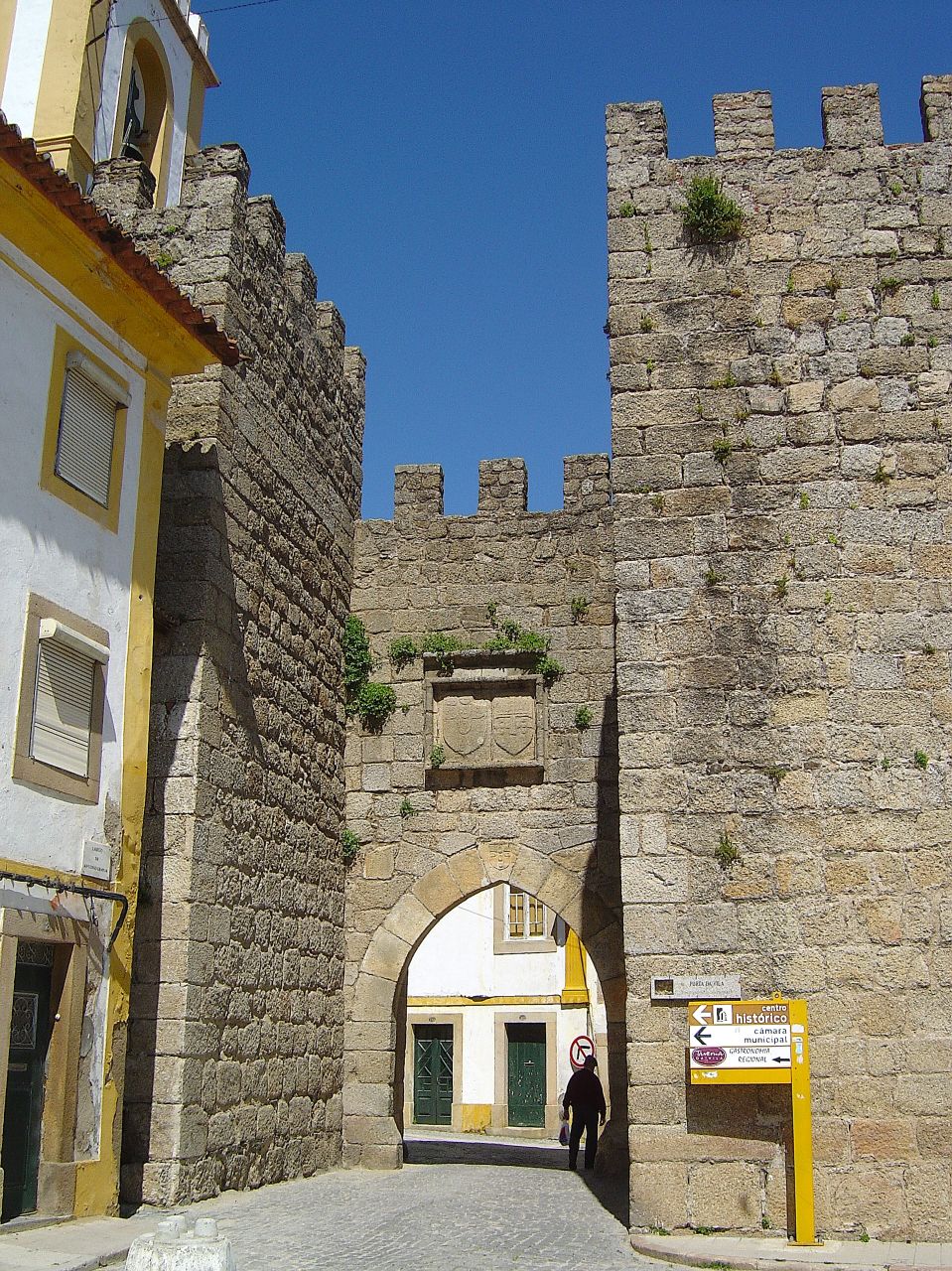
The castle's plan is approximately oval-shaped, enclosing what was once the core of the fortress. The defensive walls were primarily built from shale stone, a locally sourced material, and originally formed a continuous curtain wall without towers, as documented in the early 16th century by Duarte d’Armas, a Portuguese squire known for his detailed illustrated survey of border fortresses. The fortress was pierced by a single entrance gate, reflecting a design focused on simplicity and defensibility.
Within the enclosure, excavated cisterns carved directly into the rock highlight the castle's capacity for water storage, an essential feature for sustaining the garrison during sieges. A notable interior artifact is a rectangular stone sepulchral ark bearing carved vegetal motifs and a central cross of Christ, linking the castle to its Christian military custodians and underscoring its religious significance.
Modifications and historical role in later centuries
In the early 16th century, the castle was still recognized as a modest fortress without towers. However, during the Portuguese Restoration War beginning in 1640, the castle's defensive role was renewed amid the conflict with Castile. The main gate was rebuilt in this period, adopting classical architectural elements such as pilasters and an architrave, indicating an evolution in both defensive and representational functions.
Despite its military importance, the castle and its surrounding settlement saw decline in the centuries following the Restoration War. The municipality of Montalvão was dissolved in 1834, reflecting the diminished strategic and administrative role of the fortress.
Current condition and preservation
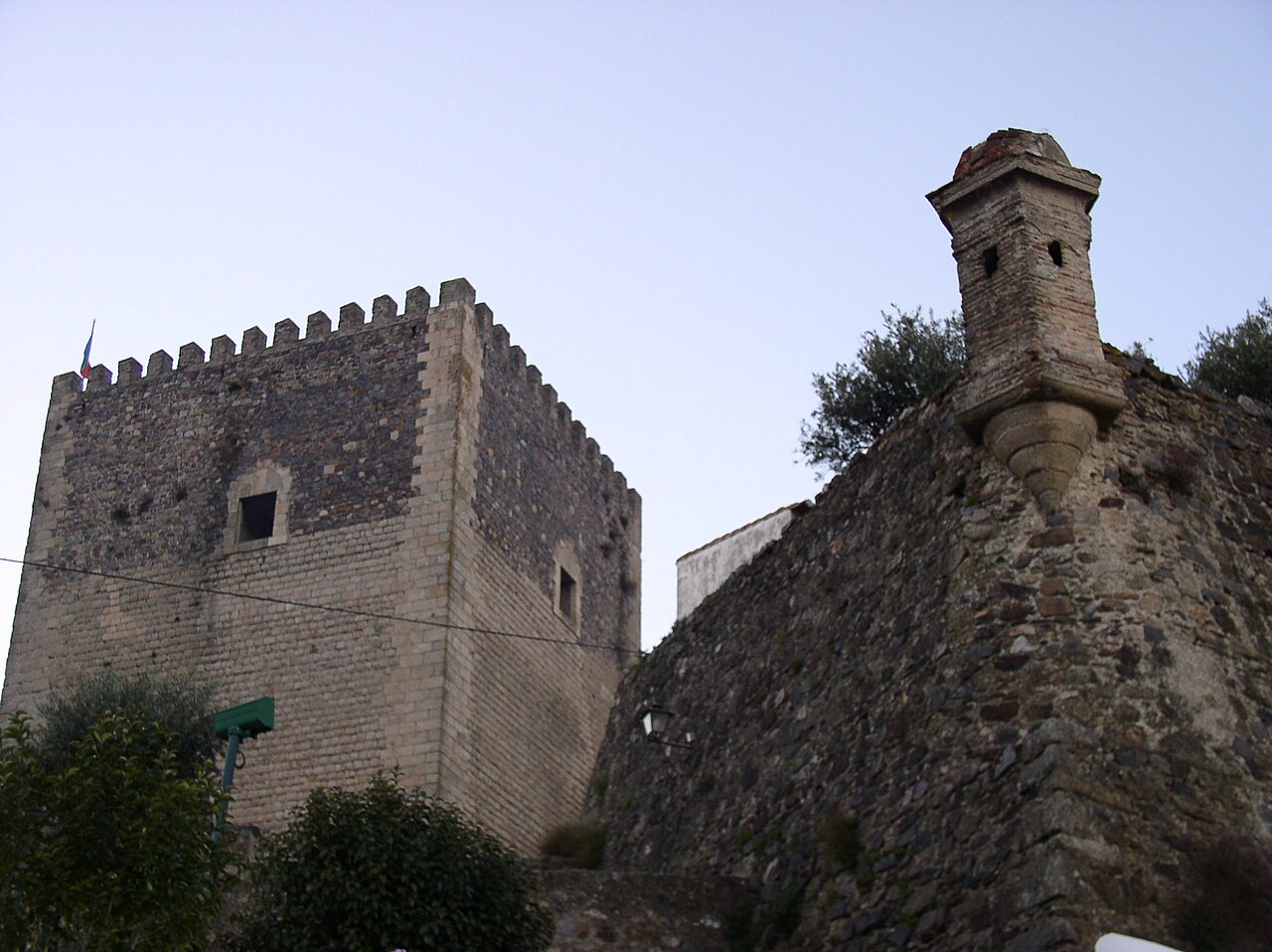
Today, the Castle of Montalvão is partially preserved, with extensive foundations and wall outlines remaining. The site is dominated by a large modern concrete structure functioning as a water tower and bunker, which significantly alters the historic silhouette of the castle. The former parade ground within the walls is deserted and has been repurposed informally for agricultural uses, including sheltering livestock.
The castle was officially designated a Monument of Public Interest in 2012, and a Special Protection Zone was established to safeguard its cultural and historical value. These protections aim to preserve the remnants of the castle and promote awareness of its role in Portugal's medieval and early modern military history.
Cultural and historical significance
The Castle of Montalvão exemplifies the evolution of frontier fortifications in Portugal, reflecting changes in military architecture from the 12th century through the 17th century. Its association with the Order of Christ and the Christian Reconquest situates it within the broader narrative of Iberian history. The castle's surviving features provide insight into medieval defensive strategies, including water management and gate design, while its later modifications reveal adaptation to shifting military and political contexts.
As a protected heritage site, the castle offers valuable opportunities for study and tourism, connecting visitors with Portugal's complex past and the enduring legacy of its border fortresses.
Frequently asked questions (FAQ)
- How do I visit the Castle of Montalvão?
- The Castle of Montalvão can be visited year-round as it is an open historic site. Visitors should prepare for uneven terrain due to its hilltop location and check local tourist information for any access restrictions or guided tour availability.
- What is the historical significance of the Castle of Montalvão?
- The castle was a key military site guarding the border with Castile during the Christian Reconquest and later conflicts, especially during the Portuguese Restoration War in the 17th century.
- Are there any notable architectural features to see at the castle?
- Visitors can observe the castle's oval-shaped curtain walls made of shale stone, rock-cut cisterns for water storage, and the 17th-century main gate rebuilt with classical pilasters and an architrave.
- Is the castle accessible for people with mobility issues?
- Due to its hilltop position and partially preserved condition, the castle may present challenges for visitors with mobility impairments. Assistance and alternative routes should be checked in advance with local authorities.
- When is the best time to visit the castle?
- Spring and autumn offer mild weather ideal for exploring the castle and surrounding landscape. Summer can be hot, and winter visits may be less comfortable due to weather conditions.
Information
Current owner
Portuguese government
Loading map...
Visitor reviews
No reviews yet. Been here? Write the first review and help other travelers!
Write the first reviewVisited this castle? Share your experience
Your review helps other travelers and adds first-hand knowledge to our encyclopedia.