Castelo de Nisa — Portugal castle

Castelo de Nisa

Castelo de Nisa: historic hilltop fortress in Portugal
Nisa, Portugal
High Medieval (11th–13th c.)
Partially Preserved

Castelo de Nisa is a prominent hill castle located in the municipality of Nisa, in the Alentejo region of Portugal. Recognized as a National Monument, this fortress has a rich history that spans several centuries, reflecting the strategic importance of the region throughout the medieval period.

Historical background and significance

The origins of Castelo de Nisa date back to the 12th century, during the High Medieval period, when it was constructed as part of the Christian Reconquista efforts to reclaim territory from Moorish control. The castle played a crucial role in the defense of the eastern frontier of the Kingdom of Portugal, guarding the border against invasions and raids.

Throughout its history, the castle underwent various modifications and reinforcements, particularly during the 14th and 15th centuries, to adapt to evolving military technologies and threats. It was a key stronghold during conflicts such as the Portuguese-Castilian wars, serving both defensive and administrative functions.

Architectural features and layout

Castelo de Nisa is strategically perched on a rocky hilltop, which provides commanding views of the surrounding landscape and natural defenses. The castle exhibits typical characteristics of a hill castle, utilizing the terrain to enhance its fortifications.

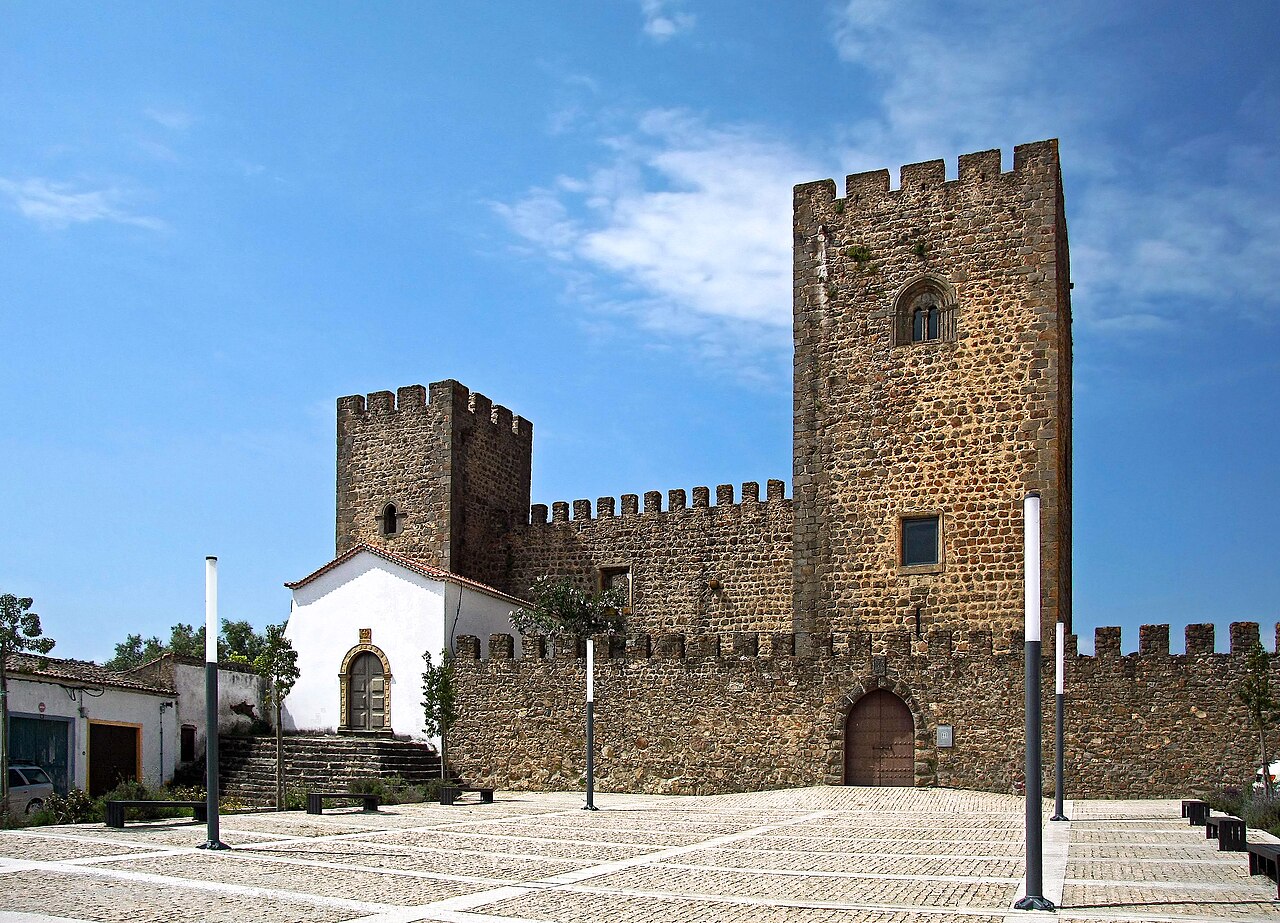
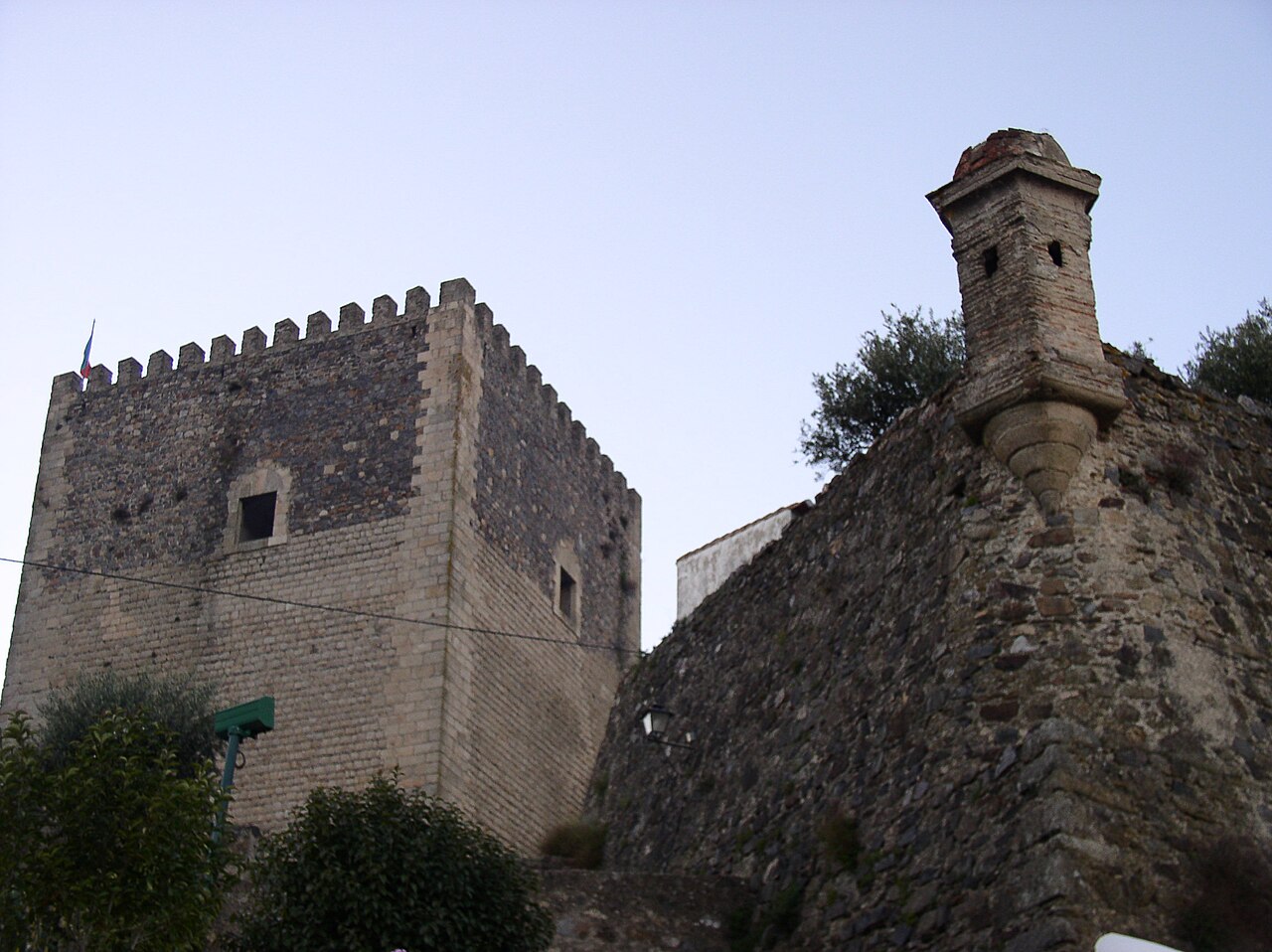
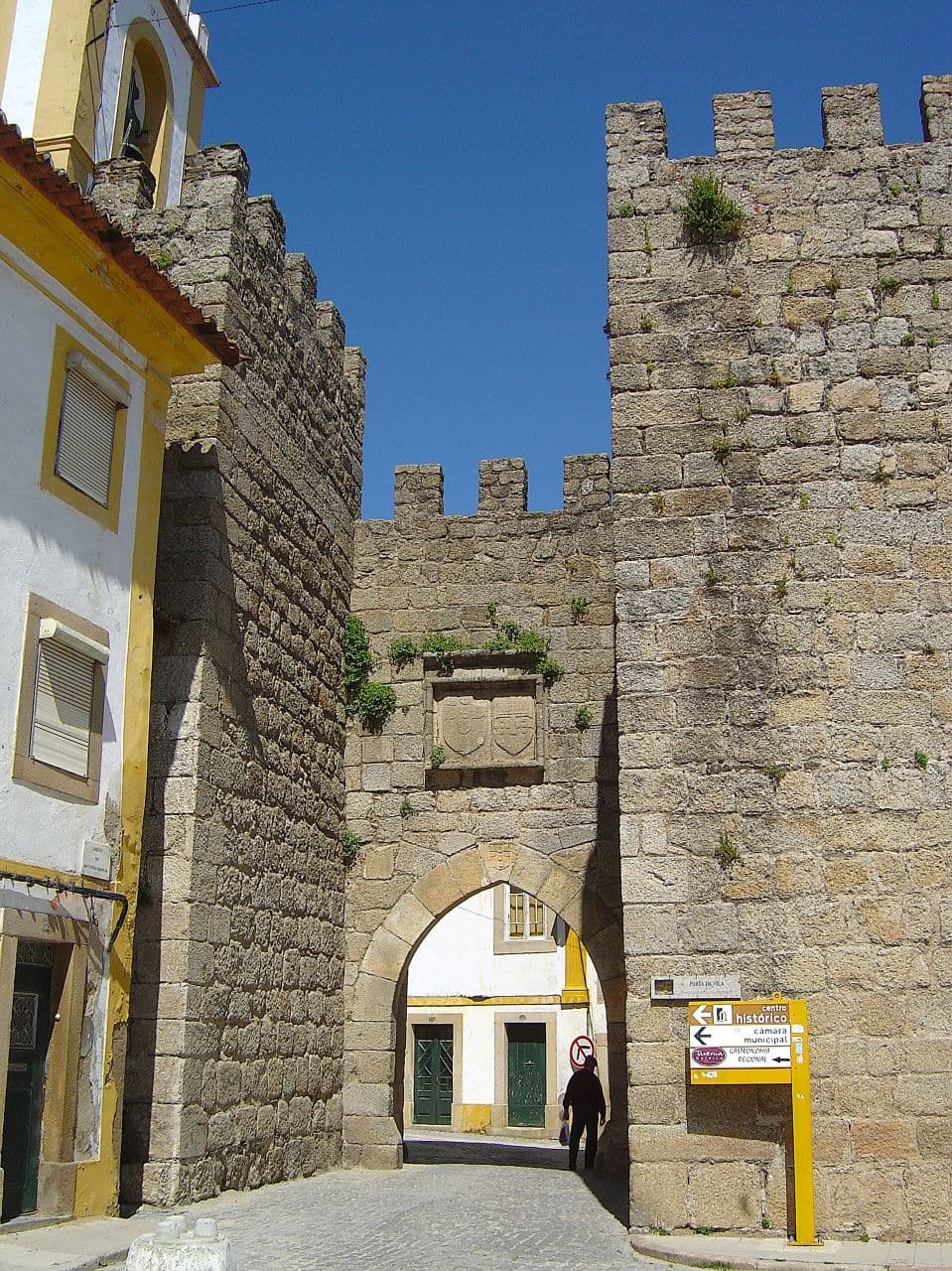
The fortress is enclosed by robust stone walls with battlements and features several towers positioned to cover key approaches. The main entrance is fortified with a gatehouse, designed to control access and withstand sieges. Inside the walls, remnants of the keep (donjon) and residential quarters can still be seen, indicating the castle's role as both a military and noble residence.

The castle's architectural style reflects a blend of Romanesque and early Gothic influences, common in Portuguese fortifications of the period. The use of thick walls, narrow windows, and defensive towers illustrates the military priorities of the time.

Preservation and current condition

Today, Castelo de Nisa is classified as partially preserved. While some sections of the walls and towers remain intact, other parts are in ruins, reflecting centuries of wear and historical conflicts. Restoration efforts have been undertaken to stabilize the structure and make it accessible to visitors interested in Portugal's medieval heritage.

The castle is open to the public, offering panoramic views of the Alentejo countryside and serving as an important cultural landmark for the region.

Visiting Castelo de Nisa

Visitors to Castelo de Nisa can explore the castle grounds and appreciate the medieval architecture and strategic location. The site provides insight into the military history of Portugal and the architectural evolution of hill castles.

The best time to visit is during the spring and autumn months when the weather is mild. Guided tours and informational panels help contextualize the site's significance. Nearby, the town of Nisa offers additional cultural attractions, including traditional crafts and regional cuisine.

Frequently asked questions (FAQ)

What is the historical significance of Castelo de Nisa?
Castelo de Nisa was built in the 12th century as a strategic fortress during the Christian Reconquista, guarding Portugal's eastern border and playing a key role in medieval military conflicts.
Can I visit Castelo de Nisa year-round?
Yes, Castelo de Nisa is open to visitors year-round, though the best times to visit are in spring and autumn when the weather is more favorable for exploring the hilltop site.
What architectural styles are visible at Castelo de Nisa?
The castle features a mix of Romanesque and early Gothic architectural elements, including thick defensive walls, battlements, and fortified towers typical of medieval hill castles.
Is Castelo de Nisa accessible for visitors with mobility issues?
Due to its hilltop location and uneven terrain, access to Castelo de Nisa may be challenging for visitors with mobility issues. It is advisable to check with local tourist information for specific accessibility details.
Are there guided tours available at Castelo de Nisa?
Guided tours are often available and provide valuable historical context about the castle's construction, military role, and architectural features. Visitors should inquire locally about tour schedules.

Photo gallery

Castelo de Nisa
Click to view

Photo by Vitor Oliveira from Torres Vedras, PORTUGAL•CC BY-SA 2.0

1 photo • Click any image to view in full screen

Information

Hill Castle

Loading map...

Visitor reviews

No reviews yet. Been here? Write the first review and help other travelers!

Write the first review

Visited this castle? Share your experience

Your review helps other travelers and adds first-hand knowledge to our encyclopedia.

Write a review

(5/5)

0/2000 characters

Your review will be visible after admin approval

Nearby castles

13.5 km

Castle of Montalvão

Nisa, Portugal

The Castle of Montalvão is a significant medieval hill castle located in the municipality of Nisa, Portugal. Constructed by Christian forces during the medieval period, it played a pivotal role in guarding the border with the Kingdom of Castile amid the Christian Reconquest of the Iberian Peninsula. The castle's strategic position atop a hill provided commanding views over the surrounding landscape, making it a vital defensive stronghold. Early history and construction The site's defensive importance dates back at least to the 12th century, when initial fortifications were established. These early defenses underscore the long-standing military significance of Montalvão in the volatile border region. Between 1279 and 1325, during the reign of King D. Dinis, the castle was either constructed anew or substantially rebuilt under the auspices of the Order of Christ, a military and religious order instrumental in the defense and expansion of Christian territories within Portugal. This phase marked the transformation of the site into a more formidable fortress. Architectural features and layout The castle's plan is approximately oval-shaped, enclosing what was once the core of the fortress. The defensive walls were primarily built from shale stone, a locally sourced material, and originally formed a continuous curtain wall without towers, as documented in the early 16th century by Duarte d’Armas, a Portuguese squire known for his detailed illustrated survey of border fortresses. The fortress was pierced by a single entrance gate, reflecting a design focused on simplicity and defensibility. Within the enclosure, excavated cisterns carved directly into the rock highlight the castle's capacity for water storage, an essential feature for sustaining the garrison during sieges. A notable interior artifact is a rectangular stone sepulchral ark bearing carved vegetal motifs and a central cross of Christ, linking the castle to its Christian military custodians and underscoring its religious significance. Modifications and historical role in later centuries In the early 16th century, the castle was still recognized as a modest fortress without towers. However, during the Portuguese Restoration War beginning in 1640, the castle's defensive role was renewed amid the conflict with Castile. The main gate was rebuilt in this period, adopting classical architectural elements such as pilasters and an architrave, indicating an evolution in both defensive and representational functions. Despite its military importance, the castle and its surrounding settlement saw decline in the centuries following the Restoration War. The municipality of Montalvão was dissolved in 1834, reflecting the diminished strategic and administrative role of the fortress. Current condition and preservation Today, the Castle of Montalvão is partially preserved, with extensive foundations and wall outlines remaining. The site is dominated by a large modern concrete structure functioning as a water tower and bunker, which significantly alters the historic silhouette of the castle. The former parade ground within the walls is deserted and has been repurposed informally for agricultural uses, including sheltering livestock. The castle was officially designated a Monument of Public Interest in 2012, and a Special Protection Zone was established to safeguard its cultural and historical value. These protections aim to preserve the remnants of the castle and promote awareness of its role in Portugal's medieval and early modern military history. Cultural and historical significance The Castle of Montalvão exemplifies the evolution of frontier fortifications in Portugal, reflecting changes in military architecture from the 12th century through the 17th century. Its association with the Order of Christ and the Christian Reconquest situates it within the broader narrative of Iberian history. The castle's surviving features provide insight into medieval defensive strategies, including water management and gate design, while its later modifications reveal adaptation to shifting military and political contexts. As a protected heritage site, the castle offers valuable opportunities for study and tourism, connecting visitors with Portugal's complex past and the enduring legacy of its border fortresses.

High Medieval (11th–13th c.)
Details
14.6 km
Amieira do Tejo Castle — Portugal castle

Amieira do Tejo Castle

Amieira do Tejo, Portugal

Amieira do Tejo Castle, locally known as Castelo da Amieira do Tejo, stands as a remarkable example of Portuguese Renaissance military architecture in the Alentejo Central region of Portugal. This historic fortress occupies a strategic position on a modest hill in the town of Amieira do Tejo, overlooking the surrounding landscape south of the Tagus River. Its origins date back to the early 13th century, when the lands were granted to the Knights Hospitaller by King Sancho II in 1232, marking the beginning of its connection to one of the most influential medieval military orders. The castle was constructed primarily between 1350 and 1370, under the guidance of notable figures such as Dom Frei Álvaro Gonçalves Pereira and later his brother Dom Pedro Pereira. Although the initial donation occurred in the early 13th century, the building of the fortress was delayed until the mid-14th century, reflecting the evolving military and political needs of the region. The castle formed a crucial part of the Tagus Line (Linha do Tejo), a defensive frontier established to protect Portugal from incursions by the Almohads and other adversaries across the river. Historical context and construction The territory of Amieira do Tejo was an important borderland during the medieval period, and its fortification was essential for securing the southern frontier of the Portuguese kingdom. The Knights Hospitaller, a powerful Christian military order, were entrusted with this responsibility. The castle's construction began around 1350, with significant progress made by 1362, although some sources suggest completion by 1370. The fortress was visited by King Peter I of Portugal during its construction, underscoring its strategic importance. During the 1383–1385 Portuguese succession crisis, the castle initially supported the claim of Dona Beatrice but later shifted allegiance under the influence of Dom Nuno Álvares Pereira, a key military leader and son of Dom Frei Álvaro Gonçalves Pereira. This period of political instability was critical in shaping the castle's role in regional defense, although it did not endure direct attacks during the crisis. Military engagements and political significance The only recorded military engagement involving Amieira do Tejo Castle occurred in 1440 during a conflict between supporters of Queen Eleanor of Aragon and Peter, Duke of Coimbra. The castle was besieged by Castilian forces allied with the Hospitallers but surrendered without resistance. This event marked the end of a brief period of insubordination in the region and led to the reassertion of royal authority. Following this episode, the castle's administration passed to Pedro Rodrigues de Castro, who became its mayor. The fortress continued to serve as a defensive stronghold and later took on additional functions, including use as a prison during the reigns of Kings John II and Manuel I in the late 15th and early 16th centuries. The castle was modernized several times in this period to adapt to changing military technologies and needs. Architectural features and layout Amieira do Tejo Castle exemplifies the Portuguese Gothic military style with a compact rectangular plan and robust defensive elements. The fortress is enclosed by thick stone walls topped with crenellated battlements, designed to protect defenders during combat. Four large towers anchor the corners, providing elevated vantage points for surveillance and defense. The most prominent feature is the quadrangular keep tower, which dominates the rear of the castle and protects the barbican gate, a fortified outpost serving as a secondary line of defense. The keep features distinctive Gothic windows, including twin openings and pointed arches with rounded moldings, highlighting the architectural sophistication of the period. The castle was originally surrounded by a moat, enhancing its defensive capabilities, although this has since been filled in. Inside, the spacious central courtyard served as a parade ground and area for troop movements, reflecting the castle’s military function. Chapel of saint john the baptist Adjacent to the castle, but outside the main walls, stands the Chapel of Saint John the Baptist, built in 1556. This religious structure features a round-arched entrance composed of finely shaped voussoirs and a richly decorated coffered vault ceiling adorned with grotesque motifs. Inside, a late Renaissance altarpiece honors the chapel’s patron saint, adding cultural and artistic significance to the site. Later history and restoration From the 17th century onward, the castle’s military importance declined, and it began to serve more domestic and civic functions. Residential buildings were constructed within the walls, although these were severely damaged by the catastrophic 1755 Lisbon earthquake. By the mid-18th century, the castle had fallen into disrepair, and its use shifted towards more utilitarian purposes. In the 19th century, the courtyard was repurposed as a graveyard following legal restrictions on burials within church grounds. This function continued until the early 20th century, when the castle was recognized as a National Monument in 1922. Subsequent restoration efforts, particularly in the 1940s, focused on preserving the keep and other key structures, ensuring that the castle remains well-preserved today. Current status and visitor information Today, Amieira do Tejo Castle stands as a testament to Portugal’s medieval military heritage. The castle is well-maintained and accessible to visitors, offering a unique glimpse into the architectural and historical legacy of the Knights Hospitaller. The surrounding gardens and parking facilities integrate the fortress into the modern village setting, making it a popular destination for tourists interested in history and architecture. Visitors can explore the castle’s imposing walls, towers, and courtyard, as well as the adjacent chapel, which offers insight into the spiritual life associated with the fortress. The castle’s location in the Alentejo Central region also provides opportunities to explore other historic sites along the Tagus River defensive line. Architectural significance The castle’s design reflects the transitional period between medieval fortifications and Renaissance military architecture, incorporating features that address evolving warfare techniques while maintaining traditional Gothic elements. Its compact layout, strong defensive towers, and integration with the surrounding landscape exemplify the strategic thinking of the Knights Hospitaller during the 14th century. Amieira do Tejo Castle remains an important cultural landmark, illustrating the complex history of Portugal’s border defenses and the role of military orders in shaping the nation’s heritage.

Renaissance (15th–17th c.)
Details
19.6 km
Castelo de Vide Castle — Portugal castle

Castelo de Vide Castle

Castelo de Vide, Portugal

Castelo de Vide Castle, located in the town of Castelo de Vide in the Alto Alentejo region of Portugal, is a remarkable example of a hill castle that has evolved through centuries of military and political history. Perched strategically atop a hill north of the Serra de São Mamede, the castle's position afforded it significant defensive advantages overlooking the surrounding landscape and controlling access near the Portuguese border. The origins of Castelo de Vide Castle are somewhat obscured by time, with no definitive evidence confirming its initial construction date. The settlement and castle are first documented in 1232, firmly under Portuguese control by then. Historical tradition suggests that King Afonso I may have conquered the site in 1148, with a municipal charter possibly granted in 1180, though these details remain unverified. The castle's early history is intertwined with the complex dynastic and territorial struggles of medieval Portugal. During the late 13th century, Castelo de Vide became a focal point in the conflict between King Denis I of Portugal and his brother, Infante Afonso Sanches. Around 1279, Infante Afonso fortified the village, prompting King Denis to lay siege to the castle in 1281. Following a mediated peace, the fortifications were dismantled, and the castle's ownership changed hands through territorial exchanges involving Castile. By the early 14th century, the castle and its domains were inherited by Afonso's descendants. Medieval fortifications and ownership In 1383, during the reign of King Ferdinand I, Castelo de Vide and its domains were donated to the Military Order of Aviz, a key military and religious order in Portugal. This transfer marked a new chapter in the castle's military significance. The Order of Aviz played a crucial role during the 1383–1385 Portuguese succession crisis, with Castelo de Vide initially supporting the heiress Beatrice before shifting allegiance to the Master of Aviz, who later became King John I. Throughout the 14th and 15th centuries, the castle underwent several phases of reinforcement. Under King Afonso IV, significant enhancements were made to the defensive walls, completed around 1327. The castle's fortifications included a fortified barbican, multiple towers, and a central keep, as documented by Duarte de Armas in 1509. These medieval structures formed the core defensive elements that would be adapted in later centuries. 17th-century modernization and artillery adaptations The mid-17th century brought substantial changes to Castelo de Vide Castle during the Portuguese Restoration War. Recognizing the need to adapt to evolving military technology, the castle's defenses were modernized to accommodate artillery. French military engineer Nicolas de Langres led the construction of new bastioned fortifications, linking the original castle to the newly built Fort of São Roque on the southern end of the town's defenses. This star-shaped fortification exemplified the era's military architectural innovations designed to resist cannon fire. By the 1660s, the fortress was a formidable stronghold with a garrison comprising 600 infantry and three cavalry companies. Despite these enhancements, the castle endured several conflicts in the 18th and early 19th centuries, including its capture during the War of the Spanish Succession in 1704 and occupation during the War of the Oranges in 1801 and the Peninsular War in 1811. A significant explosion in 1705 partially destroyed the keep's ribbed vaulted ceiling, marking a turning point in the castle's military utility. Architectural features and layout The castle's layout is an irregular quadrangle shaped by the natural topography of the hill. Its stone defensive walls are reinforced by five square towers and numerous rounded turrets, all preceded by a crenellated barbican protecting the main gateway. The primary entrance on the eastern side leads into a small inner courtyard or place d’armes, used historically as a staging ground for troops. Within the inner bailey, the square keep stands as the dominant feature, attached directly to the main gate. Despite damage from the 1705 explosion, the keep retains elements of its robust medieval construction, including ribbed vaulting and thick stone walls. The northern wall features remnants of corbels that once supported a balcony and windows overlooking the surrounding countryside. The outer town fortifications once enclosed a larger settlement area with four gates, of which two—Porta Nova and Porta de Santa Catarina—still survive. The other gates were lost to urban development over time. Inside the town, well-preserved medieval streets such as Rua Direita and historic civic buildings including the former military barracks, town hall, and prison contribute to the castle's heritage ambiance. Decline and preservation efforts Following the extensive damage sustained during the early 19th-century conflicts, Castelo de Vide Castle was decommissioned as a military fortress by 1823. The castle fell into gradual degradation, reflecting the diminished strategic importance of such fortifications in the modern era. However, its cultural and historical significance was recognized when it was declared a National Monument in 1910. Today, the castle is partially restored and well-preserved, offering visitors the opportunity to explore its imposing walls, towers, and the inner keep. The castle's museum, housed within the inner fortress, provides insights into its rich history, although access may vary. The surrounding town retains its medieval character, and on clear days, visitors can enjoy views of the nearby Marvão Castle to the south. Visiting Castelo de Vide Castle Castelo de Vide Castle is open to the public and can be visited freely. The inner castle houses a museum that showcases artifacts and exhibits related to the castle's history and the region's cultural heritage. Visitors should check opening hours in advance, as the museum may occasionally be closed for maintenance or special events. The castle's location in the picturesque town of Castelo de Vide offers additional attractions, including historic streets, traditional architecture, and local cuisine. The nearby Fort of São Roque, a star fortification from the 17th century, adds to the area's military heritage and is worth exploring on a return visit. Architectural significance Castelo de Vide Castle exemplifies the evolution of Portuguese military architecture from the medieval period through the Renaissance and into the era of gunpowder warfare. Its combination of medieval walls and towers with later bastioned fortifications reflects the adaptation to changing military technologies and strategic needs. The castle's preservation allows for the study of these architectural transitions in a border fortress context. Historical importance The castle's history is deeply connected to major events in Portuguese history, including dynastic disputes, the 1383–1385 succession crisis, the Portuguese Restoration War, and the Napoleonic invasions. Its role as a military stronghold guarding the border region underscores its strategic importance over several centuries.

Renaissance (15th–17th c.)
Details