Marvão Castle

Marvão Castle: historic border fortress in Alto Alentejo, Portugal
Marvão, Portugal
Late Medieval (14th–15th c.)
Well Preserved

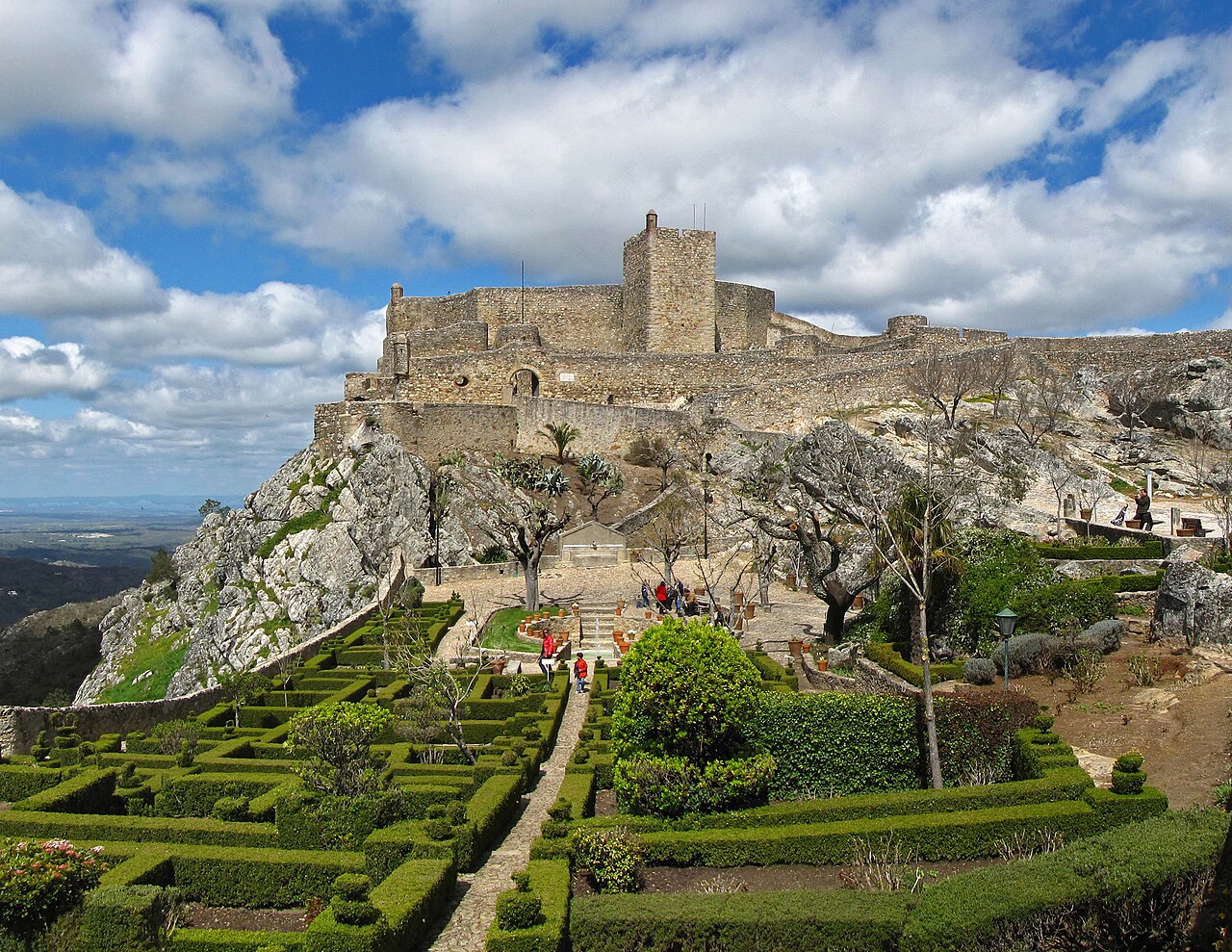
Marvão Castle, or Castelo de Marvão, is a prominent medieval fortress located in the town of Marvão, in the Alto Alentejo region of Portugal. Perched atop a steep ridge at an altitude of approximately 830 meters, the castle commands panoramic views of the surrounding landscape, including the border with Spain to the east. This strategic position has made Marvão a key defensive site throughout its history, especially during periods of conflict between Portugal and neighboring kingdoms.

The exact origins of Marvão Castle remain uncertain, but historical evidence suggests its foundation dates back to the 9th century. Some historians attribute the initial construction to Ibn Marwan al-Jilliqi, a Sufi Muslim leader who established a stronghold in the region during the 870s. This early fortress played a significant role in the Muslim presence in the Iberian Peninsula. Following the Christian reconquest, the castle was seized by the forces of Afonso I of Portugal in the 1060s, marking a turning point in the control of the territory.

Medieval development and strategic importance

Marvão was formally granted a municipal charter in 1226 to encourage settlement and fortification of this frontier town. The charter aimed to secure the border against incursions from the Kingdom of Castile, which frequently threatened Portuguese sovereignty. During the reign of King Denis of Portugal in the late 13th century, Marvão became embroiled in dynastic disputes. Denis's brother, Afonso, had been granted the castle, but Denis reclaimed it in 1299 to consolidate his rule. Following this, the castle underwent significant expansion and strengthening to enhance its defensive capabilities.

15th-century fortifications and privileges

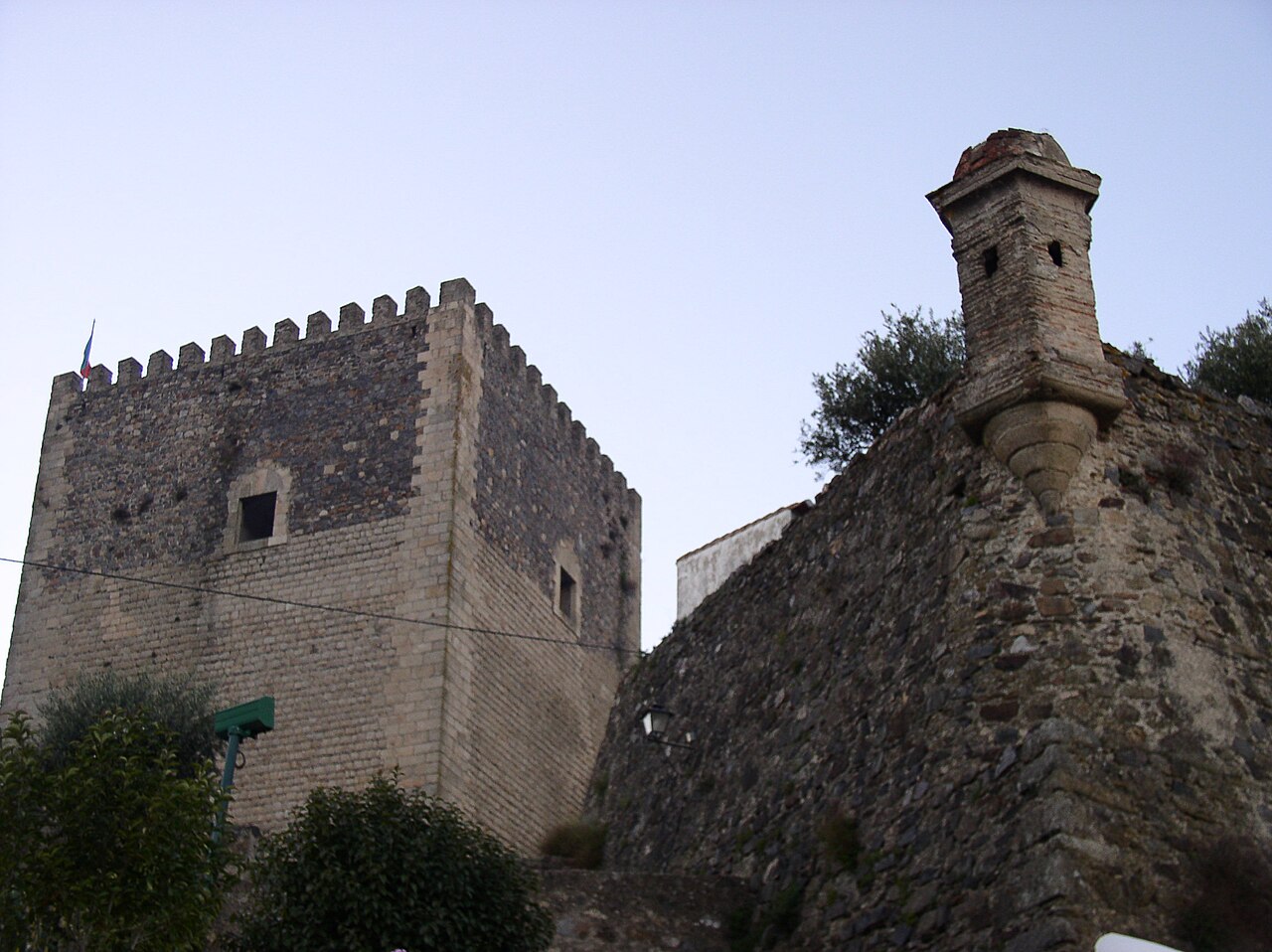
Throughout the 15th century, Marvão faced ongoing challenges including low population and the need for continuous maintenance of its fortifications. To address these issues, the town was granted several privileges designed to encourage growth and stability. Architecturally, this period saw the addition of turrets and other defensive features dating from the 15th and 16th centuries, which reinforced the castle's walls and improved its ability to withstand attacks.

Early modern military upgrades and conflicts

Following the Restoration of Portuguese Independence in 1640, Marvão Castle was modernized to adapt to the evolving nature of warfare, particularly with the increasing use of artillery. Construction work began to strengthen the walls and update the fortress's defenses. Despite these efforts, the castle endured multiple attacks by Spanish forces in 1641 and 1648. Later in the 17th century, the fortress was transformed into an elongated bastioned structure, reflecting contemporary military architectural trends designed to better resist artillery bombardment.

In 1704, during the War of the Spanish Succession, Spanish troops briefly captured Marvão Castle, only to lose it again to Portuguese forces the following year. The castle faced another Spanish assault in 1772, underscoring its continued strategic importance along the border.

19th-century conflicts and legacy

Marvão Castle's military significance persisted into the 19th century. During the Peninsular War, French and Spanish armies invaded Portugal in 1807, occupying the castle. Portuguese forces expelled the French garrison in 1808. Subsequently, the castle endured its last siege during the Liberal Wars (1828–1834), a civil conflict that shaped modern Portugal.

Architectural features and layout

The castle's location on a steep ridge provides natural defense, with sheer cliffs on several sides limiting access. The fortress includes thick curtain walls, turrets, and a series of bastions added during the 17th century to counter artillery threats. The elongated shape of the fortress follows the ridge line, enclosing the historic town below. Within the walls, visitors can find remnants of medieval towers, , and that illustrate the castle's evolution over centuries.

Visitor experience and cultural significance

Today, Marvão Castle is a well-preserved monument open to the public for a fee. It offers visitors spectacular views over the Portuguese and Spanish countryside, including sights of Castelo de Vide Castle to the north on clear days. The castle's rich history as a border fortress and its architectural adaptations through the medieval and early modern periods make it a valuable cultural heritage site. Visitors can explore the walls, towers, and surrounding town, gaining insight into the military and political history of the region.

Frequently asked questions (FAQ)

How do I get to Marvão Castle?
Marvão Castle is located in the town of Marvão in the Alto Alentejo region of Portugal. It is accessible by car via local roads leading to the castle area. Parking is available near the castle entrance.
What are the opening hours of Marvão Castle?
The castle is open daily from 09:00 to 18:00, allowing visitors ample time to explore the fortress and enjoy the panoramic views.
Is there an entrance fee to visit Marvão Castle?
Yes, visitors are required to pay an entrance fee of €3 for adults and €1.50 for children to access the castle.
What architectural styles are present in Marvão Castle?
Marvão Castle features a mix of architectural styles, including medieval fortifications and later bastioned elements added in the 17th century to withstand artillery attacks.
Can I see other castles from Marvão Castle?
On clear days, visitors can see Castelo de Vide Castle to the north from Marvão Castle, offering a glimpse of the region's fortified heritage.
Why was Marvão Castle strategically important?
Marvão Castle's location on a high ridge near the Spanish border made it a critical defensive site, guarding against invasions and controlling frontier territory.

Information

Hill Castle

Opening hours

09:00-18:00, daily

Ticket prices

€3 adult, €1.50 child

Current owner

Municipality of Marvão

Address

R. do Castelo, Marvão, Portugal

Loading map...

Visitor reviews

No reviews yet. Been here? Write the first review and help other travelers!

Write the first review

Visited this castle? Share your experience

Your review helps other travelers and adds first-hand knowledge to our encyclopedia.

Write a review

(5/5)

0/2000 characters

Your review will be visible after admin approval

Nearby castles

1.5 km

Portagem Tower

Portagem, Portugal

Portagem Tower, locally known as Torre de Portagem, is a 14th-century late medieval tower located in the village of Portagem in the Alto Alentejo region of Portugal. This tower holds significant historical importance due to its strategic position near a Roman road and a bridge over the Sever River, which is believed to be of Roman origin. The tower's proximity to these ancient infrastructures highlights its role in controlling movement and commerce across the border region between Portugal and what was then Castile. Historical context and purpose First mentioned in historical records in 1416, Portagem Tower was constructed during the 14th century, a period marked by territorial consolidation and increased border control in the Iberian Peninsula. The tower functioned primarily as a toll station, collecting fees from merchants and travelers entering Portugal from Castile. This toll collection was crucial for the kingdom's economy and border security. In the second half of the 15th century, the tower also played a role in the control and taxation of the approximately 15,000 Jews expelled from Castile and Aragon. This adds a layer of social and political significance to the tower's function beyond mere economic control. Architectural features and location The tower is strategically positioned beneath the south side of the ridge that hosts the imposing Marvão Castle, another important medieval fortress in the region. Its location near the Sever River bridge and the Roman road underscores its role as a checkpoint and defensive structure overseeing key transit routes. Architecturally, the tower is a typical example of a late medieval defensive structure designed to serve administrative and military functions rather than residential purposes. It is a compact, sturdy stone construction intended to withstand the challenges of border control and potential conflict. Current condition and accessibility Today, Portagem Tower can only be viewed externally as it is not open to the public. There is no indication that it was ever designed for public access or habitation. Its current state preserves its external form, allowing visitors and historians to appreciate its strategic placement and robust construction. While the tower itself remains a modest but significant monument, its proximity to Marvão Castle offers visitors a broader understanding of the medieval defensive network in this border region of Portugal. Significance in Portuguese medieval border defense Portagem Tower exemplifies the medieval practice of using fortified toll stations to regulate and secure border crossings. Its role in taxing merchants and controlling the movement of expelled populations reflects the complex social and economic dynamics of the Iberian Peninsula during the late Middle Ages. The tower stands as a testament to the importance of border fortifications in maintaining the sovereignty and economic interests of the Kingdom of Portugal.

Late Medieval (14th–15th c.)
Details
3.9 km
Castle of Marvao — Portugal castle

Castle of Marvao

Santa Maria de Marvao, Portugal

The Castle of Marvão is a striking example of medieval military architecture perched atop a quartzite hill in the Portalegre district of Portugal. Its origins trace back to the 8th century, credited to the Islamic commander Ibn Marwan, who established the fortress as a strategic stronghold during the early Middle Ages. Over the centuries, the castle witnessed a complex history of conquest, defense, and restoration, reflecting the turbulent dynamics between Islamic and Christian forces in the Iberian Peninsula. Constructed on a site originally fortified by the Romans, the castle occupies a commanding position overlooking key routes and the Sever River, underscoring its military significance. The Roman fortification laid the foundation for later expansions and adaptations by successive rulers. The settlement, initially known as Amaya de Ibn Marwan in the 10th century, became a vital Islamic outpost before falling under Christian control in the mid-12th century, during the reign of King Afonso I. Early history and islamic origins The castle's foundation is attributed to Ibn Marwan, a Swabian Islamic knight who settled in the region around 876–877 AD. His establishment of the fortress marked a significant phase in the area's defense against Christian reconquest efforts. The castle's early role was to secure the territory and oversee vital communication and trade routes. By the 10th century, the fortress and surrounding settlement were known as Amaia de Ibn Maruan, highlighting Ibn Marwan's influence. The castle's position on a high hill provided natural defensive advantages, which were enhanced by early fortifications. Medieval christian conquest and fortification Between 1160 and 1166, Christian forces loyal to King Afonso I captured the castle from Moorish control, marking a turning point in the region's history. Although briefly retaken by the Almohads in the 1190s, the castle was soon reclaimed by the Portuguese Christians. The 1214 Treaty of Castelo Branco formally incorporated Marvão into Portuguese territory. In 1226, King Sancho II issued a charter to encourage settlement and bolster defenses against Castilian incursions. Later, in 1271, the castle was granted to the Knights of the Order of Malta, who managed several fortresses in the region. However, by 1299, royal forces expelled the knights, and King Denis I assumed direct control, issuing a new charter and expanding the castle's fortifications. Architectural features from the crusader era The castle's structure prominently features elements typical of crusader-era fortifications. A tall central keep with a raised entrance on the first floor served as the last line of defense and residence for the lord. Surrounding this keep are multiple lower towers, some semicircular, designed to provide overlapping fields of fire. Defensive features include high-placed arrow slits for archers, bent entrances to slow attackers, and machicolated parapets for dropping projectiles on assailants. The castle's walls are battlemented with sloped parapets, enhancing protection while allowing defenders to repel sieges effectively. Later medieval and early modern military significance Throughout the late medieval period, the castle remained strategically important. During the reign of King Ferdinand I, the local church was declared a sanctuary in 1378, reflecting the castle's role as a community center as well as a military fortress. Control passed to the Order of Aviz during the 1383–1385 Portuguese interregnum, who further reinforced the castle and promoted settlement through royal privileges. From the 17th to 19th centuries, the castle played a key role in several conflicts. It was extensively repaired and upgraded during the Portuguese Restoration War (1640–1662), successfully resisting Spanish sieges in 1641 and 1648. Despite brief Spanish occupation in the early 18th century, Portuguese forces recaptured it, maintaining control through subsequent attacks. During the Peninsular Wars, the castle was occupied by French and Spanish forces but was retaken by Portuguese troops in 1808. In 1833, it endured a year-long siege by Spanish republican forces, marking the last significant military action at the fortress. Architectural layout and defensive design The castle crowns a hill 867 meters above sea level, commanding extensive views of the surrounding landscape. It consists of two walled courtyards arranged in a typical medieval fortress layout. The main courtyard to the northwest is enclosed by a ring wall featuring two towers and a large cistern carved into the rock, essential for collecting rainwater during sieges. The water system includes a reservoir above the vaulted cistern, channeling water inside through three openings. The southern corner houses a rectangular tower with vaulted ceilings and a spacious hall, containing the main gate characterized by rounded arches and drum-shaped battlements above a concave window sill. The southeastern courtyard contains buildings that historically served as a kitchen, barracks, forge, and armory, along with a second cistern. Many structures date from the late 13th century, showcasing typical crusader-era features such as the elevated keep entrance and multiple defensive towers. Defensive elements are sophisticated, including several bent entrances designed to slow attackers, narrow killing zones near triple gates, large battlemented walls, and machicolated parapets. All towers feature battlemented walls and sloped parapets, enhancing their defensive capabilities. Within the first courtyard, three single-story buildings with gun ports and tiled roofs served as bunkers and armories. The castle's internal corridors are narrow and twisting, creating complex pathways to hinder enemy movement if outer defenses were breached. A garden in front of the fortress adds to the site's character and charm. Preservation and modern management The Castle of Marvão is remarkably well preserved, retaining much of its original medieval military architecture. Restoration efforts began in 1938, focusing on walls, towers, battlements, and interiors. These efforts continued through the mid-20th century, with further work in the 1990s and early 2000s, including rebuilding the southern barbican and upgrading lighting and infrastructure. Since 2013, the castle has been managed by the Cultural Center of Marvão, which oversees its preservation and promotes its cultural heritage. The castle remains a prominent tourist attraction, celebrated for its blend of natural terrain and carefully designed fortifications, offering visitors a vivid glimpse into Portugal's defensive history.

Early Medieval (5th–10th c.)
Details
7.1 km
Castelo de Vide Castle — Portugal castle

Castelo de Vide Castle

Castelo de Vide, Portugal

Castelo de Vide Castle, located in the town of Castelo de Vide in the Alto Alentejo region of Portugal, is a remarkable example of a hill castle that has evolved through centuries of military and political history. Perched strategically atop a hill north of the Serra de São Mamede, the castle's position afforded it significant defensive advantages overlooking the surrounding landscape and controlling access near the Portuguese border. The origins of Castelo de Vide Castle are somewhat obscured by time, with no definitive evidence confirming its initial construction date. The settlement and castle are first documented in 1232, firmly under Portuguese control by then. Historical tradition suggests that King Afonso I may have conquered the site in 1148, with a municipal charter possibly granted in 1180, though these details remain unverified. The castle's early history is intertwined with the complex dynastic and territorial struggles of medieval Portugal. During the late 13th century, Castelo de Vide became a focal point in the conflict between King Denis I of Portugal and his brother, Infante Afonso Sanches. Around 1279, Infante Afonso fortified the village, prompting King Denis to lay siege to the castle in 1281. Following a mediated peace, the fortifications were dismantled, and the castle's ownership changed hands through territorial exchanges involving Castile. By the early 14th century, the castle and its domains were inherited by Afonso's descendants. Medieval fortifications and ownership In 1383, during the reign of King Ferdinand I, Castelo de Vide and its domains were donated to the Military Order of Aviz, a key military and religious order in Portugal. This transfer marked a new chapter in the castle's military significance. The Order of Aviz played a crucial role during the 1383–1385 Portuguese succession crisis, with Castelo de Vide initially supporting the heiress Beatrice before shifting allegiance to the Master of Aviz, who later became King John I. Throughout the 14th and 15th centuries, the castle underwent several phases of reinforcement. Under King Afonso IV, significant enhancements were made to the defensive walls, completed around 1327. The castle's fortifications included a fortified barbican, multiple towers, and a central keep, as documented by Duarte de Armas in 1509. These medieval structures formed the core defensive elements that would be adapted in later centuries. 17th-century modernization and artillery adaptations The mid-17th century brought substantial changes to Castelo de Vide Castle during the Portuguese Restoration War. Recognizing the need to adapt to evolving military technology, the castle's defenses were modernized to accommodate artillery. French military engineer Nicolas de Langres led the construction of new bastioned fortifications, linking the original castle to the newly built Fort of São Roque on the southern end of the town's defenses. This star-shaped fortification exemplified the era's military architectural innovations designed to resist cannon fire. By the 1660s, the fortress was a formidable stronghold with a garrison comprising 600 infantry and three cavalry companies. Despite these enhancements, the castle endured several conflicts in the 18th and early 19th centuries, including its capture during the War of the Spanish Succession in 1704 and occupation during the War of the Oranges in 1801 and the Peninsular War in 1811. A significant explosion in 1705 partially destroyed the keep's ribbed vaulted ceiling, marking a turning point in the castle's military utility. Architectural features and layout The castle's layout is an irregular quadrangle shaped by the natural topography of the hill. Its stone defensive walls are reinforced by five square towers and numerous rounded turrets, all preceded by a crenellated barbican protecting the main gateway. The primary entrance on the eastern side leads into a small inner courtyard or place d’armes, used historically as a staging ground for troops. Within the inner bailey, the square keep stands as the dominant feature, attached directly to the main gate. Despite damage from the 1705 explosion, the keep retains elements of its robust medieval construction, including ribbed vaulting and thick stone walls. The northern wall features remnants of corbels that once supported a balcony and windows overlooking the surrounding countryside. The outer town fortifications once enclosed a larger settlement area with four gates, of which two—Porta Nova and Porta de Santa Catarina—still survive. The other gates were lost to urban development over time. Inside the town, well-preserved medieval streets such as Rua Direita and historic civic buildings including the former military barracks, town hall, and prison contribute to the castle's heritage ambiance. Decline and preservation efforts Following the extensive damage sustained during the early 19th-century conflicts, Castelo de Vide Castle was decommissioned as a military fortress by 1823. The castle fell into gradual degradation, reflecting the diminished strategic importance of such fortifications in the modern era. However, its cultural and historical significance was recognized when it was declared a National Monument in 1910. Today, the castle is partially restored and well-preserved, offering visitors the opportunity to explore its imposing walls, towers, and the inner keep. The castle's museum, housed within the inner fortress, provides insights into its rich history, although access may vary. The surrounding town retains its medieval character, and on clear days, visitors can enjoy views of the nearby Marvão Castle to the south. Visiting Castelo de Vide Castle Castelo de Vide Castle is open to the public and can be visited freely. The inner castle houses a museum that showcases artifacts and exhibits related to the castle's history and the region's cultural heritage. Visitors should check opening hours in advance, as the museum may occasionally be closed for maintenance or special events. The castle's location in the picturesque town of Castelo de Vide offers additional attractions, including historic streets, traditional architecture, and local cuisine. The nearby Fort of São Roque, a star fortification from the 17th century, adds to the area's military heritage and is worth exploring on a return visit. Architectural significance Castelo de Vide Castle exemplifies the evolution of Portuguese military architecture from the medieval period through the Renaissance and into the era of gunpowder warfare. Its combination of medieval walls and towers with later bastioned fortifications reflects the adaptation to changing military technologies and strategic needs. The castle's preservation allows for the study of these architectural transitions in a border fortress context. Historical importance The castle's history is deeply connected to major events in Portuguese history, including dynastic disputes, the 1383–1385 succession crisis, the Portuguese Restoration War, and the Napoleonic invasions. Its role as a military stronghold guarding the border region underscores its strategic importance over several centuries.

Renaissance (15th–17th c.)
Details