Castelo de Vide Castle
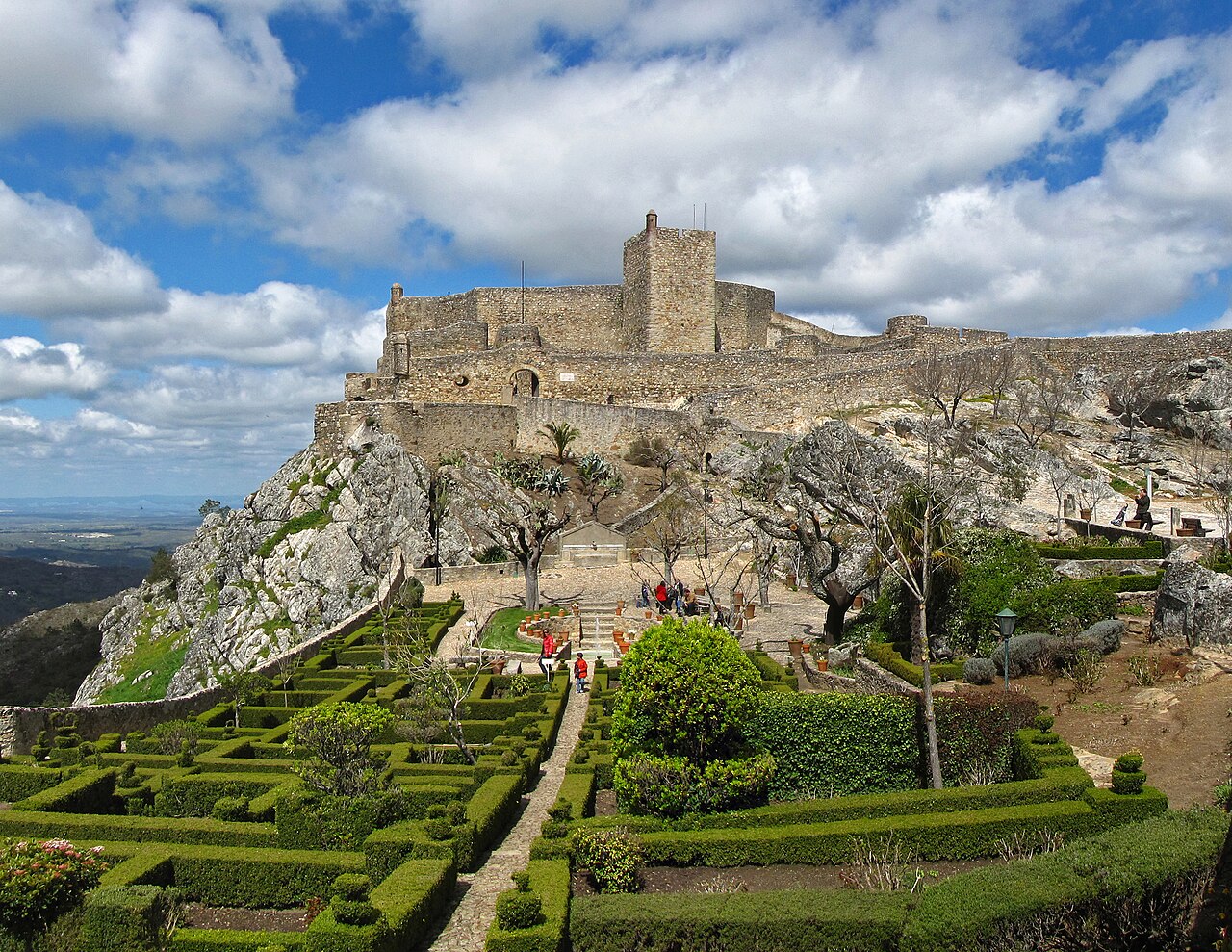
Castelo de Vide Castle, located in the town of Castelo de Vide in the Alto Alentejo region of Portugal, is a remarkable example of a hill castle that has evolved through centuries of military and political history. Perched strategically atop a hill north of the Serra de São Mamede, the castle's position afforded it significant defensive advantages overlooking the surrounding landscape and controlling access near the Portuguese border.
The origins of Castelo de Vide Castle are somewhat obscured by time, with no definitive evidence confirming its initial construction date. The settlement and castle are first documented in 1232, firmly under Portuguese control by then. Historical tradition suggests that King Afonso I may have conquered the site in 1148, with a municipal charter possibly granted in 1180, though these details remain unverified. The castle's early history is intertwined with the complex dynastic and territorial struggles of medieval Portugal.
During the late 13th century, Castelo de Vide became a focal point in the conflict between King Denis I of Portugal and his brother, Infante Afonso Sanches. Around 1279, Infante Afonso fortified the village, prompting King Denis to lay siege to the castle in 1281. Following a mediated peace, the fortifications were dismantled, and the castle's ownership changed hands through territorial exchanges involving Castile. By the early 14th century, the castle and its domains were inherited by Afonso's descendants.
Medieval fortifications and ownership
In 1383, during the reign of King Ferdinand I, Castelo de Vide and its domains were donated to the Military Order of Aviz, a key military and religious order in Portugal. This transfer marked a new chapter in the castle's military significance. The Order of Aviz played a crucial role during the 1383–1385 Portuguese succession crisis, with Castelo de Vide initially supporting the heiress Beatrice before shifting allegiance to the Master of Aviz, who later became King John I.
Throughout the 14th and 15th centuries, the castle underwent several phases of reinforcement. Under King Afonso IV, significant enhancements were made to the defensive walls, completed around 1327. The castle's fortifications included a fortified barbican, multiple towers, and a central keep, as documented by Duarte de Armas in 1509. These medieval structures formed the core defensive elements that would be adapted in later centuries.
17th-century modernization and artillery adaptations
The mid-17th century brought substantial changes to Castelo de Vide Castle during the Portuguese Restoration War. Recognizing the need to adapt to evolving military technology, the castle's defenses were modernized to accommodate artillery. French military engineer Nicolas de Langres led the construction of new bastioned fortifications, linking the original castle to the newly built Fort of São Roque on the southern end of the town's defenses. This star-shaped fortification exemplified the era's military architectural innovations designed to resist cannon fire.
By the 1660s, the fortress was a formidable stronghold with a garrison comprising 600 infantry and three cavalry companies. Despite these enhancements, the castle endured several conflicts in the 18th and early 19th centuries, including its capture during the War of the Spanish Succession in 1704 and occupation during the War of the Oranges in 1801 and the Peninsular War in 1811. A significant explosion in 1705 partially destroyed the keep's ribbed vaulted ceiling, marking a turning point in the castle's military utility.
Architectural features and layout
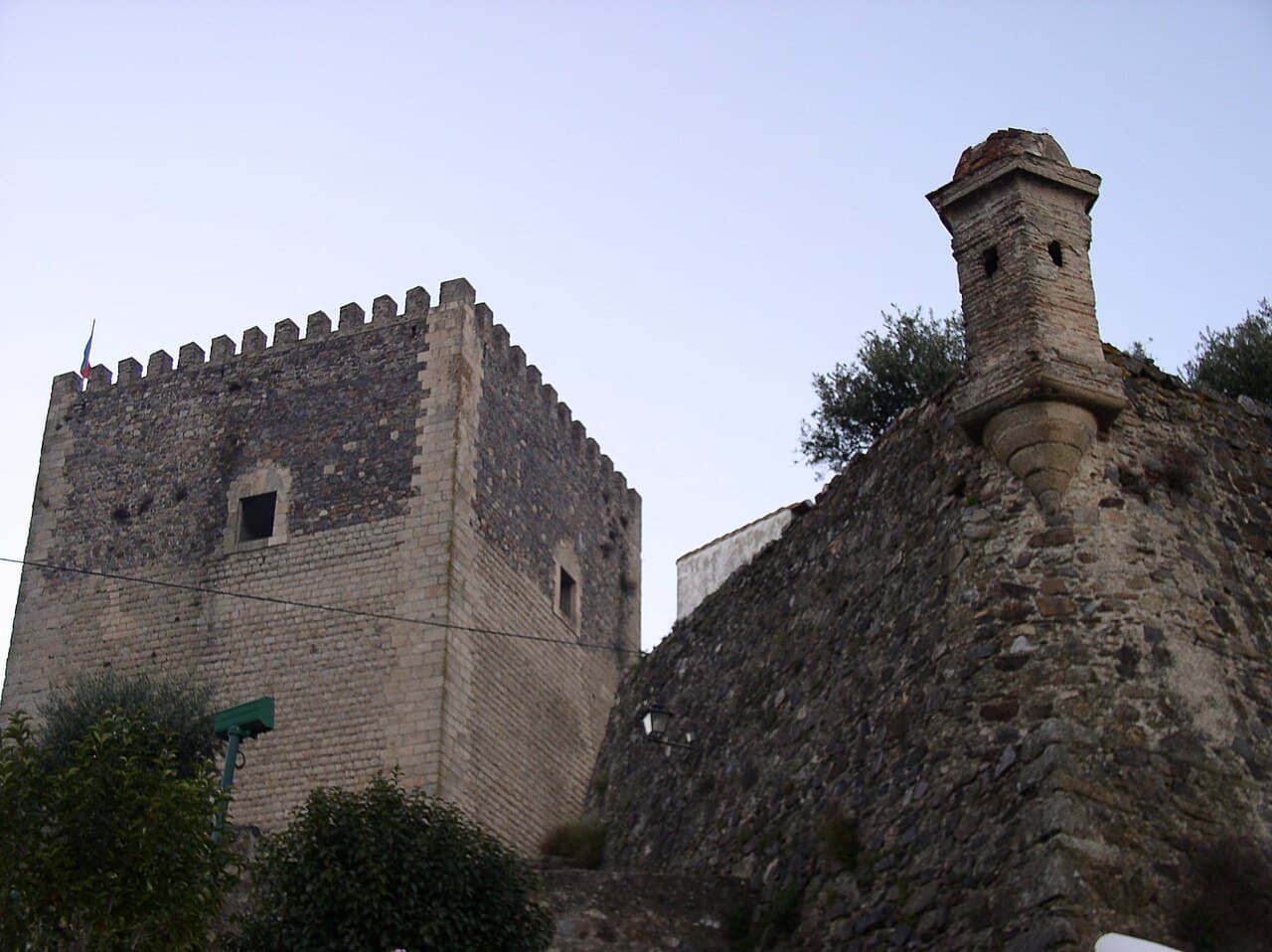
The castle's layout is an irregular quadrangle shaped by the natural topography of the hill. Its stone defensive walls are reinforced by five square towers and numerous rounded turrets, all preceded by a crenellated barbican protecting the main gateway. The primary entrance on the eastern side leads into a small inner courtyard or place d’armes, used historically as a staging ground for troops.
Within the inner bailey, the square keep stands as the dominant feature, attached directly to the main gate. Despite damage from the 1705 explosion, the keep retains elements of its robust medieval construction, including ribbed vaulting and thick stone walls. The northern wall features remnants of corbels that once supported a balcony and windows overlooking the surrounding countryside.
The outer town fortifications once enclosed a larger settlement area with four gates, of which two—Porta Nova and Porta de Santa Catarina—still survive. The other gates were lost to urban development over time. Inside the town, well-preserved medieval streets such as Rua Direita and historic civic buildings including the former military barracks, town hall, and prison contribute to the castle's heritage ambiance.
Decline and preservation efforts
Following the extensive damage sustained during the early 19th-century conflicts, Castelo de Vide Castle was decommissioned as a military fortress by 1823. The castle fell into gradual degradation, reflecting the diminished strategic importance of such fortifications in the modern era. However, its cultural and historical significance was recognized when it was declared a National Monument in 1910.
Today, the castle is partially restored and well-preserved, offering visitors the opportunity to explore its imposing walls, towers, and the inner keep. The castle's museum, housed within the inner fortress, provides insights into its rich history, although access may vary. The surrounding town retains its medieval character, and on clear days, visitors can enjoy views of the nearby Marvão Castle to the south.
Visiting Castelo de Vide Castle
Castelo de Vide Castle is open to the public and can be visited freely. The inner castle houses a museum that showcases artifacts and exhibits related to the castle's history and the region's cultural heritage. Visitors should check opening hours in advance, as the museum may occasionally be closed for maintenance or special events.
The castle's location in the picturesque town of Castelo de Vide offers additional attractions, including historic streets, traditional architecture, and local cuisine. The nearby Fort of São Roque, a star fortification from the 17th century, adds to the area's military heritage and is worth exploring on a return visit.
Architectural significance
Castelo de Vide Castle exemplifies the evolution of Portuguese military architecture from the medieval period through the Renaissance and into the era of gunpowder warfare. Its combination of medieval walls and towers with later bastioned fortifications reflects the adaptation to changing military technologies and strategic needs. The castle's preservation allows for the study of these architectural transitions in a border fortress context.
Historical importance
The castle's history is deeply connected to major events in Portuguese history, including dynastic disputes, the 1383–1385 succession crisis, the Portuguese Restoration War, and the Napoleonic invasions. Its role as a military stronghold guarding the border region underscores its strategic importance over several centuries.
Frequently asked questions (FAQ)
- How do I visit Castelo de Vide Castle?
- Castelo de Vide Castle is open to the public and can be visited freely. The inner castle houses a museum that may have variable opening hours, so it is recommended to check locally before your visit.
- What is the historical significance of Castelo de Vide Castle?
- The castle played a key role in Portuguese border defense during the medieval period, the Portuguese Restoration War, and the Napoleonic invasions, reflecting its strategic importance over centuries.
- When was Castelo de Vide Castle built?
- While the exact founding date is unknown, the castle is first documented in 1232 and underwent significant Renaissance-era modernization in the 17th century.
- Can I see other historic sites near Castelo de Vide Castle?
- Yes, nearby attractions include the well-preserved medieval town of Castelo de Vide and the impressive Marvão Castle visible on clear days to the south.
- Is Castelo de Vide Castle accessible for visitors with limited mobility?
- The castle is located on a hill with uneven terrain and stone surfaces, which may pose challenges for visitors with limited mobility. It is advisable to inquire locally about accessibility options.
Photo gallery

Information
Opening hours
Variable, check locally
Ticket prices
Free
Current owner
Municipality
Website
Visit websiteAddress
Tv. do Pé da Torre, Portugal
Sources & official resources
Verify the information above using these authoritative references.
Loading map...
Visitor reviews
No reviews yet. Been here? Write the first review and help other travelers!
Write the first reviewVisited this castle? Share your experience
Your review helps other travelers and adds first-hand knowledge to our encyclopedia.