Castle of Monforte
The Castle of Monforte, located in the municipality of Chaves in northern Portugal, is a prominent example of a medieval hill castle with a complex history extending back to prehistoric times. Originally established as a castro, a fortified settlement typical of the Iberian Peninsula, the site was later reoccupied during the Roman era due to its strategic position along the Roman road connecting Astorga and Braga. This early occupation is evidenced by archaeological finds, including altars dedicated to the household gods known as Lares, highlighting the site's religious and cultural significance in antiquity.
The castle's documented history begins in the 12th century, with records mentioning a noble lieutenant responsible for its defense. The formal organization of the jurisdiction named Rio Livre in 1267 and the granting of a charter by King Afonso III in 1273 marked the beginning of significant fortification efforts. These developments positioned Monforte as a key territorial stronghold within the northern border defense system of Portugal, alongside contemporaneous projects such as the Castle of Montalegre.
Medieval construction and fortification enhancements
Construction and expansion of the castle continued under the reign of King Denis I from 1279 to 1325, culminating in 1312 with the completion of the main defensive structures. The fortress featured a robust keep and curtain walls reinforced by three towers, forming a formidable defensive circuit. The presence of a castle governor, or alcaide, during this period reflects the castle's dual role in military command and civil administration. The surrounding urban area expanded concurrently, with town walls enclosing a growing settlement. A new charter issued by King Afonso IV further reinforced the town's status and defensive capabilities.
Defensive architecture and layout
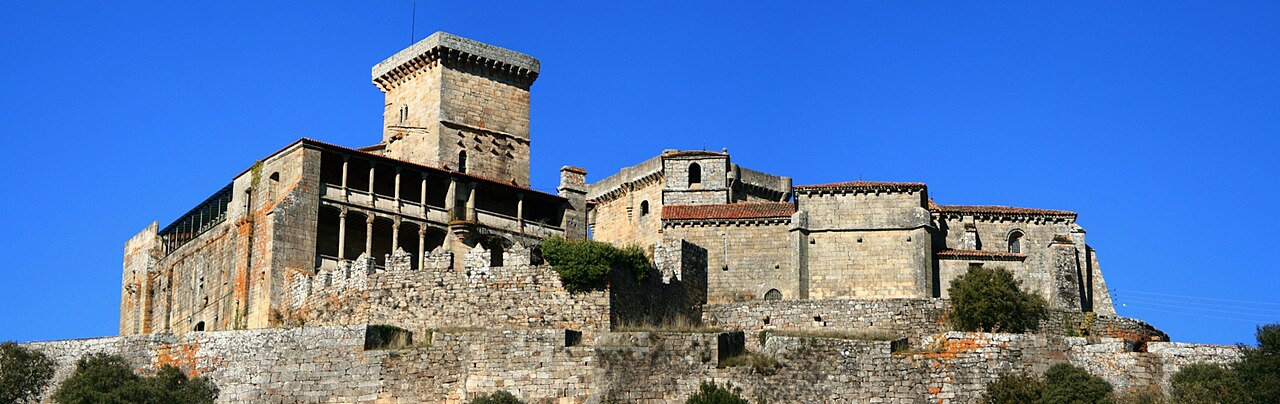
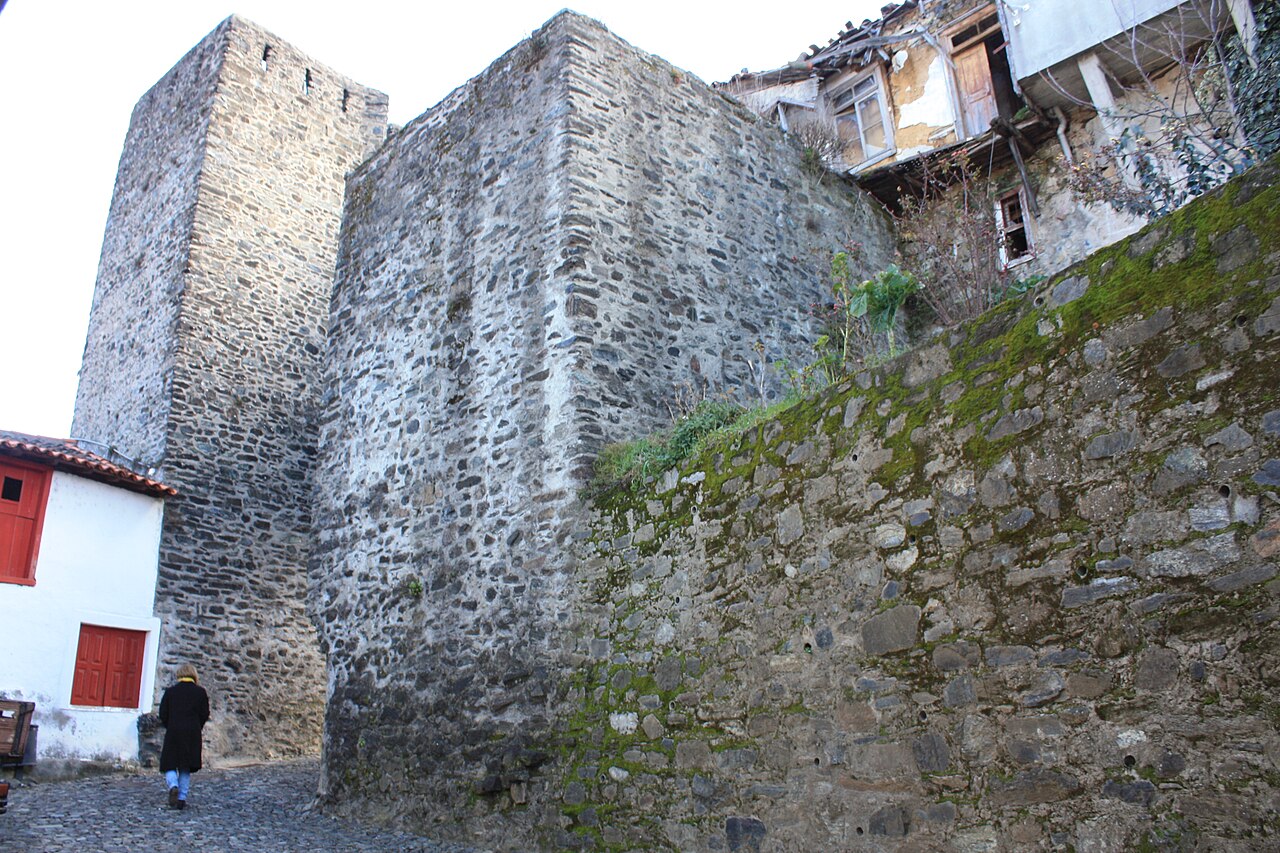
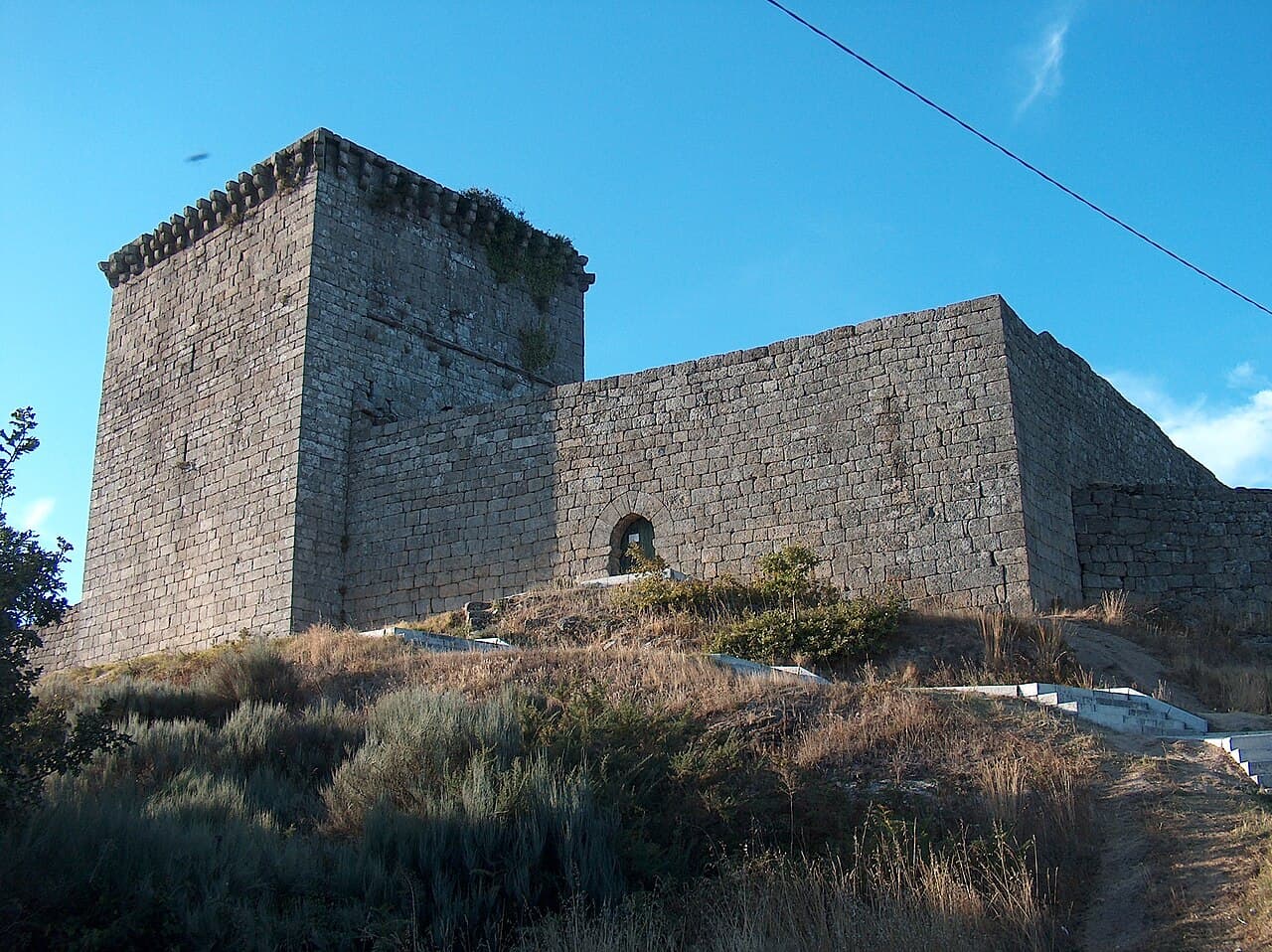
The castle's layout is characterized by thick granite walls, a common local building material, which enclosed the medieval town. Two main gates provided access: the Porta da Vila to the west, notable for its broad pointed arch, and the southern Porta da Traição or "Traitor's Gate," distinguished by a narrower round arch likely designed for controlled defense. The walls were topped with a parapet or adarve, a walkway allowing defenders to patrol and defend the perimeter. A door from the adarve leads into the inner keep, which is a solid quadrangular tower featuring tripartite corbels that once supported battlements or wooden hoardings.
The keep is arranged over three floors, each illuminated by narrow slit windows optimized for defense while allowing light. Access to the keep is through a high, rounded arch doorway on the middle floor, indicating a strategic design for security. The lowest floor contains a vaulted cistern, essential for water storage during sieges, underscoring the castle's preparedness for prolonged defense.
Historical significance and later developments
During the 1383-1385 civil conflict, the castle initially supported Beatriz, a claimant to the Portuguese throne, but later aligned with King John I during his northern campaign. In 1420, responding to local defense needs, King John I authorized the establishment of a refuge at Monforte for fifty fugitives. This initiative aimed to strengthen the population and enhance the settlement's defenses. It is during this period that the castle's barbican and surrounding moat were likely constructed, as depicted in early 16th-century sketches by Duarte de Armas.
The castle received a new charter from King Manuel I between 1495 and 1521, reflecting ongoing administrative importance. The Portuguese Restoration War (1640–1656) brought further modifications ordered by King John IV's War Council to adapt the castle for artillery warfare. These included the addition of a half-bastion and other fortifications east of the medieval keep, representing a shift toward modern military architecture.
Ownership of Monforte de Rio Livre passed to the Casa do Infantado, established by Infante Francisco, son of King Peter II and brother to King John V. By the 18th century, the castle was documented in a state of ruin, although the town still housed several hundred residents. In the early 19th century, national fortification programs equipped the castle with artillery pieces, indicating its continued albeit limited military role.
Preservation and archaeological significance
Following the abolition of the Monforte de Rio Livre municipality in 1853, the castle and village experienced significant decline and partial abandonment. Recognizing its cultural and historical value, the castle was designated a National Monument in 1950. Since then, government-led efforts have focused on stabilizing and restoring the site. Conservation work and minor archaeological excavations conducted in the 1990s have helped preserve the castle's remaining structures and revealed insights into its long history.
Today, the Castle of Monforte stands as a well-preserved example of medieval military architecture, with its granite walls, towers, and gates offering a tangible connection to Portugal's medieval past. The surviving Porta do Galeão gate from the original town enclosure further illustrates the scale and defensive planning of the settlement. The castle's evolution from a prehistoric fortified site to a medieval stronghold adapted for artillery defense provides valuable information about changing military technologies and administrative strategies over several centuries.
Visitors to the castle can explore the remains of the keep, the defensive walls with their parapets, and the historic gates that once controlled access to the medieval town. The site's archaeological layers and architectural features make it a significant heritage landmark in northern Portugal, reflecting the region's strategic importance throughout history.
Frequently asked questions (FAQ)
- What is the historical significance of the Castle of Monforte?
- The Castle of Monforte, located in Chaves, Portugal, dates back to the 12th century and played a crucial role in the defense of the region during the Reconquista. It is an important symbol of medieval architecture and showcases the military strategies of the time.
- When was the Castle of Monforte built?
- The construction of the Castle of Monforte began in the 12th century, with significant modifications occurring in the following centuries. Its structure reflects the evolution of military architecture from the medieval period to the Renaissance.
- How do I get to the Castle of Monforte?
- The Castle of Monforte is easily accessible by car or public transport from the center of Chaves. There are signposted routes, and parking is available nearby for visitors who choose to drive.
- What are the opening hours for the Castle of Monforte?
- The Castle of Monforte is open to visitors from 9 AM to 6 PM during the week and from 9 AM to 7 PM on weekends. It's advisable to check the official website for any seasonal changes or special holiday hours.
- Can I take guided tours of the Castle of Monforte?
- Yes, guided tours are available at the Castle of Monforte, providing visitors with in-depth knowledge about its history and architecture. These tours are typically conducted in both Portuguese and English, ensuring a comprehensive experience for all guests.
- Is it possible to visit the Castle of Monforte with children?
- Yes, the Castle of Monforte is family-friendly and welcomes visitors of all ages. The castle grounds provide ample space for children to explore, and educational tours can engage younger audiences in its fascinating history.
- What is the best time to visit the Castle of Monforte?
- The best time to visit the Castle of Monforte is during the spring and fall when the weather is mild and pleasant. These seasons also avoid the summer tourist crowds, allowing for a more enjoyable experience while exploring the castle.
- Are there any nearby attractions to the Castle of Monforte?
- Yes, visitors to the Castle of Monforte can also explore other attractions in Chaves, such as the Roman bridge and the historic city center. Additionally, the beautiful thermal baths in the area provide a relaxing experience after a day of sightseeing.
- What are the ticket prices for the Castle of Monforte?
- Ticket prices for the Castle of Monforte are generally affordable, with discounts available for students, seniors, and children. It's best to check the official website for current pricing and any special offers that may be available during your visit.
Photo gallery

Public domain
Information
Loading map...
Visitor reviews
No reviews yet. Been here? Write the first review and help other travelers!
Write the first reviewVisited this castle? Share your experience
Your review helps other travelers and adds first-hand knowledge to our encyclopedia.