Castle of Chaves
The Castle of Chaves stands as a monumental testament to the long and complex history of northern Portugal. Perched strategically atop a hill overlooking the Tâmega River, this fortress has witnessed the evolution of military architecture from Roman times through the medieval period and into the early modern era. Its commanding position not only provided a defensive advantage but also controlled key routes and access to the region, underscoring its historical importance.
Originally established by Roman settlers during their occupation of the Iberian Peninsula, the site of the Castle of Chaves has been inhabited since prehistoric times. Archaeological evidence indicates that before the Romans, a pre-Roman castro—a fortified settlement typical of the region—occupied the hill. The Romans founded the municipality of Aquae Flaviae in 78 AD, named for the area's renowned thermal springs. To facilitate communication and military logistics, they constructed the impressive Trajan’s Bridge over the Tâmega River and erected early fortifications around the town center, laying the groundwork for the castle's later development.
Early history and roman foundations
The strategic location of Aquae Flaviae made it a focal point for various peoples and armies. From the 3rd century onward, the settlement endured repeated assaults by Germanic tribes such as the Sueves, Alans, and Visigoths. These incursions culminated in near destruction around 411 AD. The early 8th century brought new turmoil as Muslim forces conquered the area, reinforcing its defenses amid ongoing conflicts with Christian kingdoms vying for control of the Iberian Peninsula.
During the Christian Reconquest, King Alfonso III of León (r. 866–910) recaptured Chaves and initiated repairs to its fortifications, with significant contributions attributed to Count Odoaire. Although Moorish forces briefly retook the castle in the 10th century, it ultimately returned to Christian hands. The castle's political significance grew when King Alfonso VI of León and Castile included Chaves in the dowry of Princess Theresa upon her marriage to Count Henry of Burgundy in 1093. This union integrated Chaves into the County of Portucale, the precursor to the Kingdom of Portugal.
Medieval fortifications and political shifts
Local tradition credits knights Rui and Garcia Lopes with the definitive Christian reconquest of Chaves around 1160. Their loyalty was rewarded with control over the town and castle, marking a new chapter in its history. In 1221, Alfonso IX of León briefly seized Chaves during an invasion of Portugal, securing it for his wife Theresa. However, diplomatic negotiations soon restored the castle to Portuguese sovereignty.
The most substantial medieval fortification efforts began circa 1258 under King Alfonso III of Portugal. He commissioned the rebuilding of the fortress, including the construction of the imposing keep or donjon, which remains the castle's dominant feature. Successive monarchs, including Denis I and Alfonso IV, continued enhancing the castle's defenses and reaffirmed the town's charter in 1350, reflecting its growing administrative importance.
During the 1383–1385 Portuguese crisis of succession, Chaves initially supported Beatrice and John I of Castile. Following the decisive Portuguese victory at the Battle of Aljubarrota in 1385, the castle was reclaimed by Portuguese forces in 1386. King John I subsequently granted the castle to the esteemed Constable Nuno Álvares Pereira. The castle later came into the possession of the House of Braganza through the marriage of Pereira's daughter Beatrice to Alfonso I, Duke of Braganza, giving the fortress its alternative name, Castle of the Duke of Braganza.
Renaissance to early modern transformations
Under the reign of King Manuel I (1495–1521), the castle was meticulously documented by the royal squire Duarte de Armas around 1509. The town also received a renewed charter in 1514, signaling continued royal investment. The advent of gunpowder artillery in the 17th century necessitated significant military upgrades. During the Restoration War (1640–1668), the castle's medieval walls were modernized with bastioned fortifications designed to withstand cannon fire. Between 1658 and 1662, the fortress was reinforced with star-shaped bastions and dry moats, while outlying forts such as São Francisco and São Neutel were constructed to bolster the defense of the approaches.
These enhancements reflected the evolving nature of warfare and the strategic importance of Chaves as a border fortress. The castle's defenses were once again tested during the Peninsular War in the early 19th century, when Napoleonic forces invaded the Iberian Peninsula.
Architectural features and defensive elements
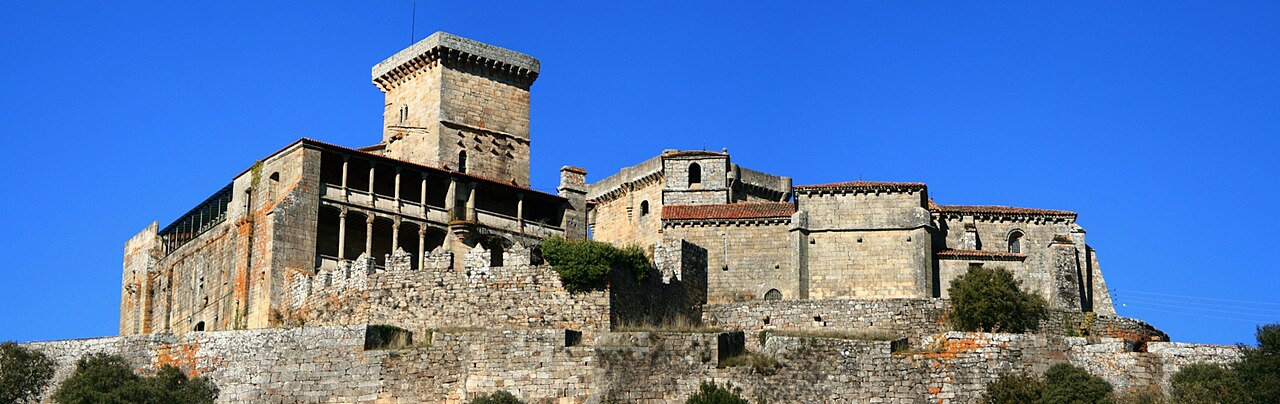
The Castle of Chaves is a remarkable example of layered military architecture, combining elements from Roman, medieval, and early modern periods. The fortress occupies a roughly rectangular plan on a hilltop, commanding views over the city and river below.
The keep
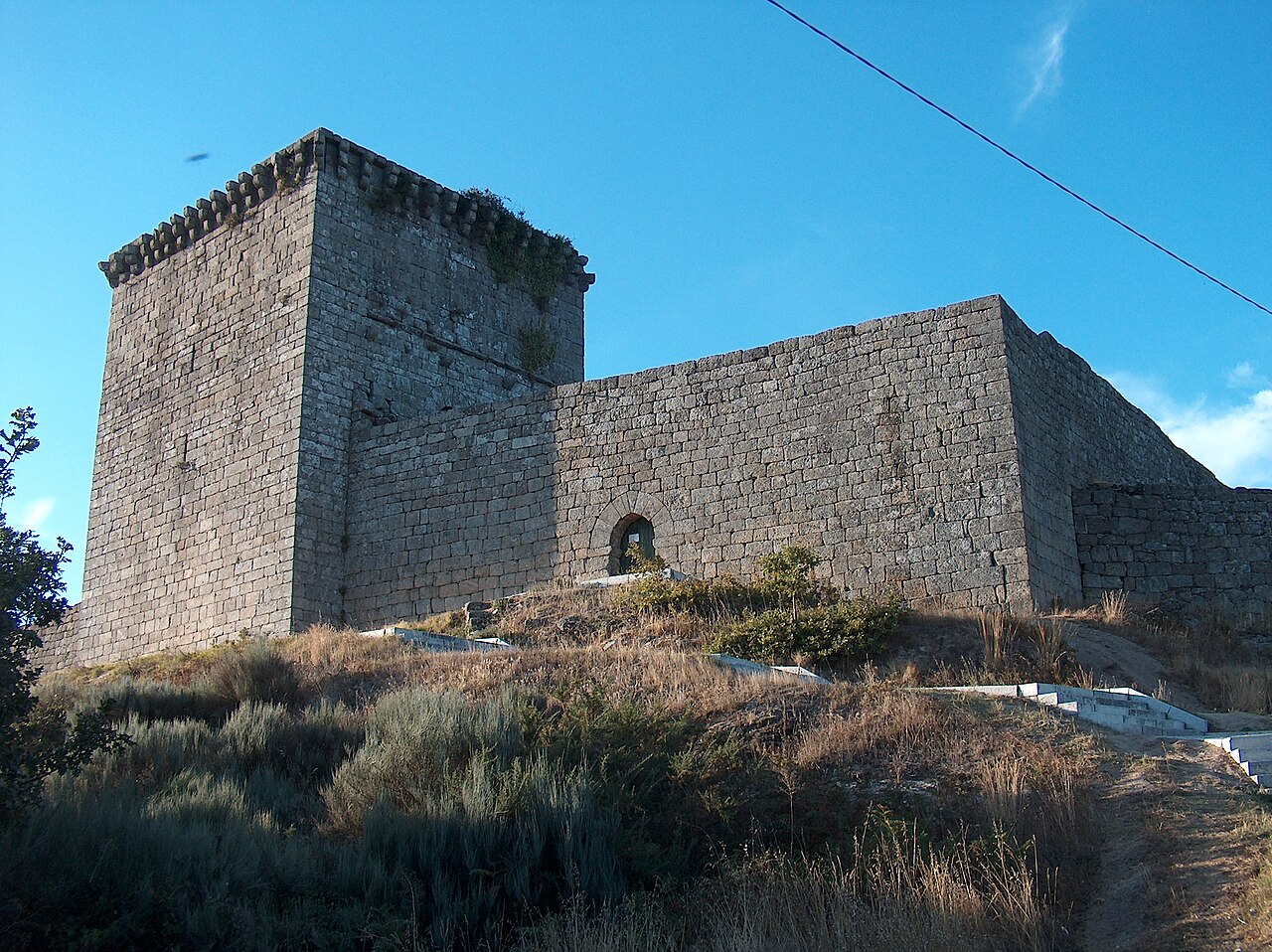
At the heart of the castle stands the imposing keep, measuring approximately 12 meters in width and rising to about 28 meters in height. This stone tower served as the final refuge during sieges and a symbol of feudal authority. Its robust granite walls contain narrow arrow slits for archers and are topped with crenellated battlements for protection. The keep's interior includes a cistern on the ground floor, essential for water storage during prolonged attacks, and three upper floors with barrel-vaulted ceilings that provide fireproof chambers.
Access to the keep begins at the first floor via a stone staircase leading through a round-arched doorway adorned with a distinctive twisted stone motif. Above this entrance, a royal coat of arms featuring nineteen castles symbolizes the fortress's connection to the Portuguese crown. The eastern facade is enhanced by wooden balconies, which offered vantage points for surveillance and defense. At the corners of the tower, semicircular balconies with machicolations allowed defenders to drop projectiles or boiling liquids on attackers below, an advanced defensive feature for its time.
Outer defenses and bastions
The castle's outer defenses include a barbican on the southwest side, a fortified gateway with a parapet and a round-arched door. This entrance is further protected by a projecting rectangular balcony equipped with machicolations. Similar balconies reinforce the northwest facade and the angles between the walls, all connected by elevated walkways accessible from the upper floors.
Surrounding the medieval core are the 17th-century bastioned fortifications characterized by star-shaped walls and low-angled bastions. These were specifically designed to absorb and deflect artillery fire, marking a significant evolution from earlier medieval curtain walls. The bastions are complemented by dry moats, enhancing the fortress's defensive depth without relying on water.
Nearby, the forts of São Francisco and São Neutel serve as separate outworks guarding the approaches to the main castle, further strengthening the defensive network.
Gardens and urban integration
Parts of the castle complex are bordered by artistic gardens enclosed within walls, blending aesthetic considerations with defensive utility. Over time, the expansion of the town has incorporated sections of the castle's footprint, integrating this historic fortress into the urban fabric of modern Chaves.
Modern preservation and cultural significance
In the 20th century, the city of Chaves was officially elevated to city status in 1929, reflecting its growing importance. The castle was declared a National Monument in 1938, recognizing its cultural and historical value. Restoration efforts from the 1950s through the 1970s focused on preserving the keep and other key structures, culminating in the conversion of the keep into a military history museum in 1978.
Archaeological investigations and preservation work have continued into the late 20th and early 21st centuries. In 2001, parts of the castle walls suffered collapse due to weather damage, highlighting the challenges of maintaining ancient stone fortifications. Reconstruction efforts, completed by 2007, have stabilized the structure and ensured its continued presence as a landmark of Portuguese heritage.
Today, the Castle of Chaves stands as a vivid reminder of the region's layered history, from its Roman origins through medieval conflicts and early modern military innovation. Its architectural features and strategic location continue to attract visitors interested in the rich military and cultural history of northern Portugal.
Frequently asked questions (FAQ)
- What is the historical significance of the Castle of Chaves?
- The Castle of Chaves, dating back to the 12th century, played a crucial role in the defense of Portugal against invasions. It is a symbol of the historical conflicts in the region and showcases the architectural style of the medieval period, making it a key site for those interested in Portuguese history.
- When was the Castle of Chaves built?
- The construction of the Castle of Chaves began in the 12th century, with significant modifications and expansions occurring in the following centuries. Its strategic location and robust architecture reflect the military needs of the time, making it an important fortification in the region.
- Can I visit the Castle of Chaves?
- Yes, the Castle of Chaves is open to visitors year-round. Guests can explore the castle grounds, learn about its history through informative displays, and enjoy stunning views of the surrounding area.
- What are the opening hours for the Castle of Chaves?
- The Castle of Chaves is typically open from 9 AM to 7 PM during the summer months and from 9 AM to 5 PM in the winter months. It is advisable to check the official website or local information for any updates on holiday hours or special events.
- Is it possible to access the Castle of Chaves with a wheelchair?
- The Castle of Chaves has some accessible areas; however, due to its historic structure, not all parts may be wheelchair-friendly. It's recommended to contact the castle management in advance to inquire about specific accessibility options and assistance.
- What are the ticket prices for the Castle of Chaves?
- Ticket prices for the Castle of Chaves are generally affordable, with discounts available for children, students, and seniors. Prices can vary, so check the castle's official website for the most current information and any special promotions.
- When is the best time to visit the Castle of Chaves?
- The best time to visit the Castle of Chaves is during the spring and fall when the weather is mild and pleasant for exploring. Additionally, visiting during these seasons allows you to enjoy fewer crowds compared to the summer months.
- Are there any nearby attractions to the Castle of Chaves?
- Yes, near the Castle of Chaves, you can find several attractions including the Roman Bridge, the Chaves Museum, and beautiful natural parks. These sites offer a rich cultural experience and complement your visit to the castle.
Information
Website
Visit websiteSources & official resources
Verify the information above using these authoritative references.
Loading map...
Visitor reviews
No reviews yet. Been here? Write the first review and help other travelers!
Write the first reviewVisited this castle? Share your experience
Your review helps other travelers and adds first-hand knowledge to our encyclopedia.