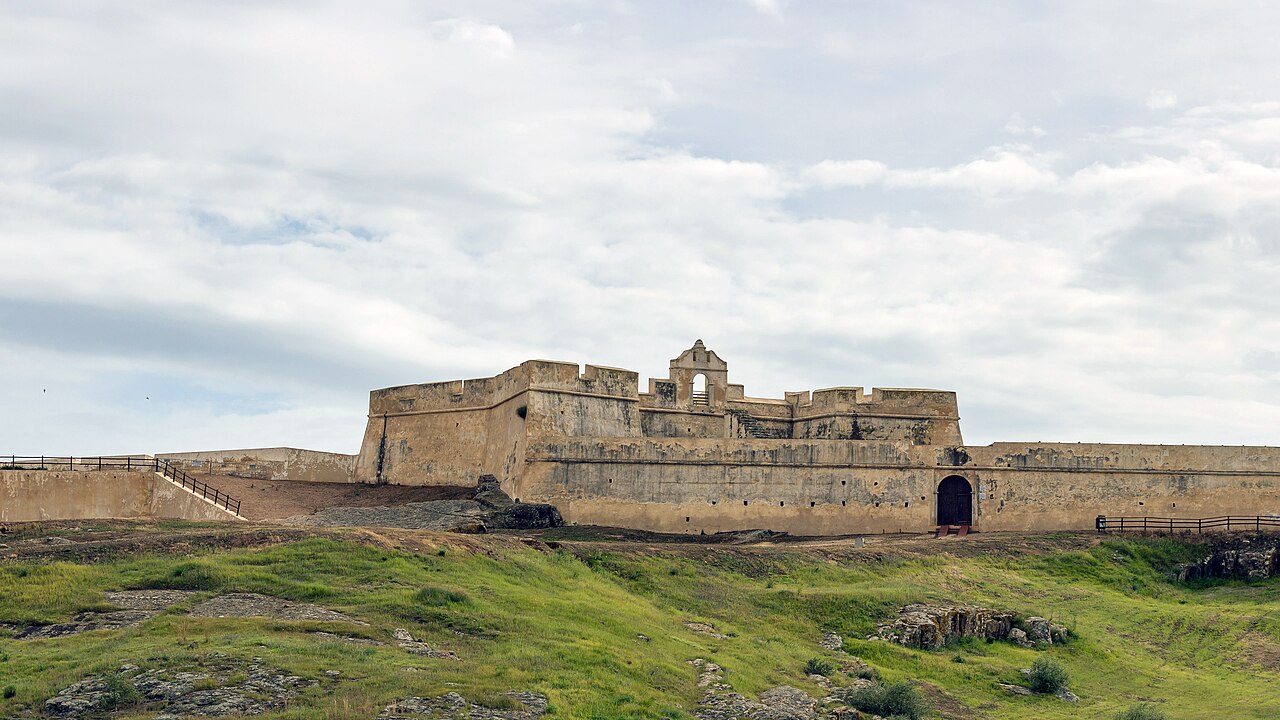
Castle of Los Zúñiga
The Castle of Los Zúñiga is a 15th-century hill castle located in Cartaya, Spain, constructed by Don Pedro de Zúñiga during the early 1400s. Its primary purpose was to defend the passage of Barca del Río Piedras, a strategic river crossing essential for controlling movement and trade in the region. The castle's rectangular layout is enclosed by a circuit of walls punctuated by seven square towers, including the prominent bell tower and the homage tower, which served as key defensive and symbolic structures. Originally, a second outer low wall provided additional fortification but has since disappeared.
Construction and architectural features
Construction of the castle began between 1417 and 1420, reflecting the need for fortified protection against frequent raids by Berber and Norman pirates along Spain's southern coast. The castle's design is a classic example of late medieval military architecture, emphasizing strong defensive capabilities. The high surrounding walls, rising more than eight meters, were designed to withstand sieges and provide vantage points for surveillance.
The castle's entrance features a Mudéjar-style gate, showcasing the cultural blend of Christian and Islamic artistic influences prevalent on the Iberian Peninsula during the period. This gate was both a defensive structure and a symbol of the region's diverse heritage.
The seven original towers were strategically placed at the corners and along the walls to allow defenders to cover all approaches. The homage tower served as the main keep, symbolizing the lord's power and providing a last refuge during attacks. The bell tower likely functioned for communication and signaling purposes within the castle and to surrounding areas.
Historical significance and military role
The castle was built by the House of Zúñiga to secure the borderlands between the lordships of Lepe and Gibraleón. Its strategic position allowed control over the Piedras River crossing, a vital point for regional movement and defense. This control was legally established following a victory by Pedro de Zúñiga y Manrique de Lara, who obtained rights to operate a ferry at this crossing, enhancing the castle's importance as a military and administrative center.
In the 16th century, the castle underwent significant refortification, including the addition of a barbican, which was specially adapted to improve the fortress's defensive capabilities. This outer defensive work provided an extra layer of protection against attacks, particularly during the frequent Portuguese incursions in the 17th century. The castle served as a refuge for local citizens during these conflicts, contributing to the consolidation of the surrounding town.
Later uses and decline
By the 18th century, the castle's military function diminished, and plans were made to convert it into barracks for a guard corps. However, this project was abandoned, and the fortress fell into disuse by 1812. In 1815, the property was transferred from the Duke of Béjar to the local municipality.
In 1817, the castle was disarmed and repurposed as a cemetery, leading to the dismantling of the barbican and the construction of vaulted barracks attached to the inner walls. This use continued until 1872. Following desacralization, the castle was used to store coal and wood.
Due to its deteriorated state, a demolition order was issued in 1880 because the structure was considered at risk of collapse. However, the demolition was never fully carried out due to logistical difficulties. Instead, efforts focused on consolidating the most dangerous sections to preserve what remained of the fortress.
Current condition and preservation
Today, the Castle of Los Zúñiga stands as a partially preserved monument reflecting its medieval origins and subsequent historical transformations. The castle's walls and towers have been restored, particularly in the late 20th century, to maintain their imposing presence and to allow visitors to appreciate the fortress's architectural and historical significance.
The castle's spacious courtyard (patio de armas) remains a central feature, surrounded by the high defensive walls. The site's accessibility through the distinctive Mudéjar gate provides a tangible connection to the cultural and military history of southern Spain.
Architectural and cultural importance
The castle exemplifies the late medieval military architecture of the Iberian Peninsula, combining practical defensive elements with stylistic influences from the region's diverse cultural history. Its rectangular layout, fortified towers, and layered defenses illustrate the strategic thinking of the period.
As a historical monument, the Castle of Los Zúñiga offers insight into the social and political dynamics of 15th-century Spain, particularly the role of noble families like the Zúñigas in territorial defense and administration. The castle's evolution from a military fortress to a civic refuge and later to a cemetery reflects the changing needs and priorities of the local community over several centuries.
Frequently asked questions (FAQ)
- How do I get to the Castle of Los Zúñiga?
- The Castle of Los Zúñiga is located in Cartaya, Spain, easily accessible by car or public transportation. If you are driving, you can follow the signs from the N-431 road. For public transport, local buses connect Cartaya with major cities in the region.
- What is the historical significance of the Castle of Los Zúñiga?
- The Castle of Los Zúñiga dates back to the 15th century and played a crucial role in the defense of the region against invasions. It is a testament to the military architecture of the time and reflects the noble lineage of the Zúñiga family. The castle has witnessed various historical events, contributing to its rich heritage.
- When was the Castle of Los Zúñiga built?
- Construction of the Castle of Los Zúñiga began in the late 15th century, specifically around 1480. It was strategically built to protect the area and has since served various purposes throughout its history. The castle's architecture showcases the transition from medieval to early Renaissance styles.
- Can I visit the Castle of Los Zúñiga?
- Yes, the Castle of Los Zúñiga is open to visitors. Guided tours are available to help explore its historical significance and architectural features. It's recommended to check the official website for any updates on visiting hours or special events.
- Why is the Castle of Los Zúñiga a popular tourist attraction?
- The Castle of Los Zúñiga is popular for its stunning architecture and rich history that captivates visitors. It offers picturesque views of the surrounding landscape and serves as a perfect spot for photography. Additionally, its well-preserved structure allows visitors to step back in time and experience the medieval era.
- Is it possible to host events at the Castle of Los Zúñiga?
- Yes, the Castle of Los Zúñiga is available for private events and functions. Its historical ambiance and scenic location make it a unique venue for weddings, corporate meetings, and cultural events. It's advisable to contact the administration for booking details and arrangements.
- What are the opening hours for the Castle of Los Zúñiga?
- The Castle of Los Zúñiga is typically open to visitors from 10 AM to 6 PM, with extended hours during the summer months. However, hours may vary on holidays and special occasions. It's best to check the official website for the most current information before planning your visit.
- What are the ticket prices for the Castle of Los Zúñiga?
- Ticket prices for the Castle of Los Zúñiga are generally affordable, with discounts available for students and seniors. Children under a certain age may enter free of charge. For the latest pricing details and any special promotions, please refer to the official website or visitor information center.
- What are some nearby attractions to the Castle of Los Zúñiga?
- Nearby attractions include the charming town of Cartaya, with its local shops and cafes, as well as beautiful beaches along the Costa de la Luz. Additionally, visitors can explore other historical sites in the area, such as the ancient village of El Rompido. These attractions complement a visit to the castle, providing a full day of exploration.
Information
Loading map...
Visitor reviews
No reviews yet. Been here? Write the first review and help other travelers!
Write the first reviewVisited this castle? Share your experience
Your review helps other travelers and adds first-hand knowledge to our encyclopedia.