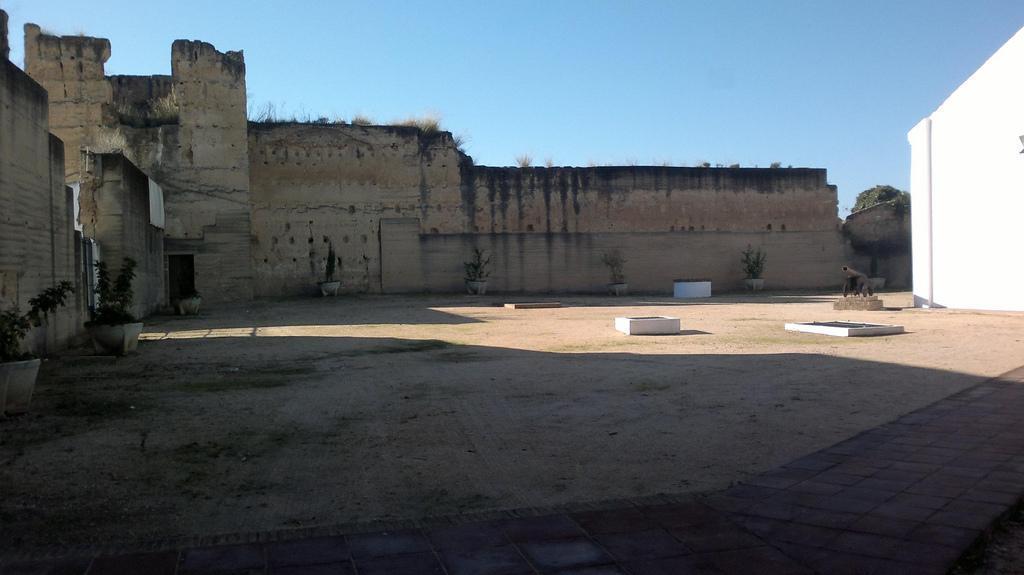
Castillo de San Pedro de Huelva
Castillo de San Pedro de Huelva is a significant medieval fortress located in the historic city of Huelva, Spain. This hill castle stands on the Cabezo de San Pedro, a strategic elevation within the city's center, adjacent to the main parish church and central plaza. Its origins trace back to the period of Muslim influence in the Iberian Peninsula, reflecting the complex cultural and military history of Andalusia during the High and Late Medieval periods.
Historical background and strategic importance
The castle was originally constructed during the era of Arabic military architecture, serving as a defensive stronghold controlling access to the western Andalusian coast. Following the Reconquista, the fortress transitioned to Christian hands, becoming a key bastion under the Kingdom of Castile. In 1293, King Sancho IV of Castile granted the lordship of Huelva to Juan Mathè de Luna, marking the castle's role as a noble seat and military fortress. After Juan's death, King Fernando IV transferred ownership to Don Diego de Haro in 1299, emphasizing the castle's significance in coastal defense against maritime threats.
The castle's defensive role was complemented by its symbolic importance to the city. Huelva's historic coat of arms bears the motto "Portus Maris et Terrae Custodia" ("Guardian of the Sea and Land"), highlighting the fortress's dual function as protector of both maritime and terrestrial domains.
Architectural features and design
The fortress was constructed primarily with materials and techniques characteristic of Andalusian Arabic military architecture, incorporating elements adapted to withstand the evolving nature of warfare, including artillery. The castle featured four substantial corner towers, each designed to provide overlapping fields of fire and comprehensive defensive coverage. These towers were connected by robust curtain walls forming a fortified perimeter.
Descriptions from 1762 by Juan Agustín de Mora portray the castle as a magnificent structure with extensive fortifications engineered to resist artillery bombardment, a testament to its strategic military design. Archaeological excavations have uncovered two additional defensive structures near the site, suggesting a layered system of outer fortifications that extended the castle's protective reach beyond its main walls.
The castle in the early modern period
During the early 17th century, the castle served as a noble residence. It was home to Manuel Pérez de Guzmán y Gómez de Silva, XI Count of Niebla. Notably, Luisa Francisca de Guzmán, born in the castle in 1613, later became Queen of Portugal, cementing the fortress's connection to significant historical figures.
The castle's proximity to the Church of San Pedro and the central plaza reinforced its role at the cultural and religious heart of Huelva. However, the fortress suffered extensive damage in the 1755 Lisbon earthquake, which nearly destroyed it. The decline continued when French troops bombarded the ruins in 1808 during the Napoleonic Wars, further compromising its structure.
Later developments and current state
Following the castle's ruin, the Dukes of Medina Sidonia constructed a new palace on Calle Palacio, in a flatter area of the expanding city. This palace remains today and features the stone coat of arms of the House of Niebla above its entrance, preserving the noble heritage associated with the castle.
The original castle site remains on private property with limited public access. Recent archaeological work has provided insights into the castle's defensive layout and historical significance. Additionally, a digital reconstruction developed by students from the University of Huelva offers a visual interpretation of the castle's former appearance, aiding in the preservation of its memory.
Photographic records document surviving elements of the ruins, including parts of the towers and walls, maintaining a tangible link to the fortress's medieval past. The castle's location beside the Church of San Pedro Apóstol continues to reflect its historical integration within the urban fabric of Huelva.
Architectural synthesis and cultural significance
The castle exemplifies the synthesis of Muslim and Christian architectural influences characteristic of Andalusian fortifications. Its design reflects adaptations to changing military technologies, including the transition from traditional medieval defenses to fortifications capable of resisting artillery.
As a historical monument, Castillo de San Pedro de Huelva offers valuable insights into the region's complex history of conquest, defense, and noble residence. Its enduring presence in the city's landscape underscores its role as a cultural and historical landmark.
Frequently asked questions (FAQ)
- What is the historical significance of Castillo de San Pedro de Huelva?
- Castillo de San Pedro de Huelva is a medieval fortress of Arabic origin that played a key role in coastal defense during the Muslim and Christian periods in Andalusia. It also served as a noble residence and is linked to notable historical figures such as Luisa Francisca de Guzmán.
- Can I visit the castle today?
- The castle is currently on private property and has limited public access. Visitors should check with local authorities or tourism offices in Huelva for any special visiting arrangements or future rehabilitation plans.
- What architectural features are notable in the castle?
- The castle features four substantial corner towers and extensive curtain walls designed to resist artillery attacks. Archaeological studies have revealed additional outer defensive structures, highlighting a complex layered fortification system.
- How did the 1755 Lisbon earthquake affect the castle?
- The 1755 Lisbon earthquake caused severe damage to Castillo de San Pedro de Huelva, nearly destroying the fortress. Subsequent military actions further damaged the structure, leading to its decline and eventual ruin.
- Is there any way to visualize the castle's original appearance?
- Yes, a digital reconstruction created by students from the University of Huelva provides a visualization of the castle's former structure, helping to understand its historical layout and architectural design.
Information
Current owner
Private owner
Loading map...
Visitor reviews
No reviews yet. Been here? Write the first review and help other travelers!
Write the first reviewVisited this castle? Share your experience
Your review helps other travelers and adds first-hand knowledge to our encyclopedia.