Castle of Lochstädt
The Castle of Lochstädt stands as a significant medieval fortress originally established by the Teutonic Order near the village of Lochstädt, now part of the municipality of Baltiysk in Russia. This hill castle was strategically positioned to oversee the entrance to the Vistula Lagoon (historically known as the Frisches Haff), a critical waterway for trade and military movements in the Samland region. Its construction and evolution reflect the military, economic, and administrative ambitions of the Teutonic Knights during the High Medieval period.
The castle's origins date back to around 1270, when the Teutonic Order initially built a wooden fortification. This early structure was intended to secure the Order's expanding influence and control over the region's vital amber trade routes. Within a decade, between 1275 and 1285, the wooden fort was replaced by a robust stone fortress, marking a significant upgrade in defensive capability and permanence. This rebuilding phase was supported by military aid from King Ottokar II Prémysl, a notable figure whose assistance helped solidify the Order's presence in the area.
Historical significance and role in the teutonic order
The Castle of Lochstädt quickly became a central hub for the administration of amber resources, housing the Bernsteinamt (amber administration) from 1265 to 1581. This role underscored the castle's economic importance, as amber was a highly valued commodity in medieval Europe. Additionally, it served as the residence of the Komtur (commander) of the Teutonic Order between 1291 and 1305, highlighting its strategic and administrative prominence.
However, the castle's strategic importance diminished after the Lochstädter Tief, a crucial waterway providing access to the lagoon, began to silt up around 1311. This natural change reduced the fortress's defensive advantage and accessibility, leading to its downgrade to the seat of a Pfleger, an official overseeing local affairs subordinate to the larger commandery in Königsberg.
Military conflicts and shifting control
Throughout its history, the castle was involved in several military conflicts reflecting the turbulent politics of the Baltic region. In the early 16th century, it endured sieges by Polish forces during 1520 and 1521. The fortress later served as a strategic military base for Swedish troops during the Polish-Swedish War (1626–1635) and the broader Thirty Years' War, underscoring its continued military relevance.
During the Seven Years' War in the mid-18th century, the castle was occupied by Russian forces, further demonstrating its ongoing strategic importance despite its gradual decline. By the early 18th century, however, the fortress had fallen into significant disrepair.
Decline and partial demolition
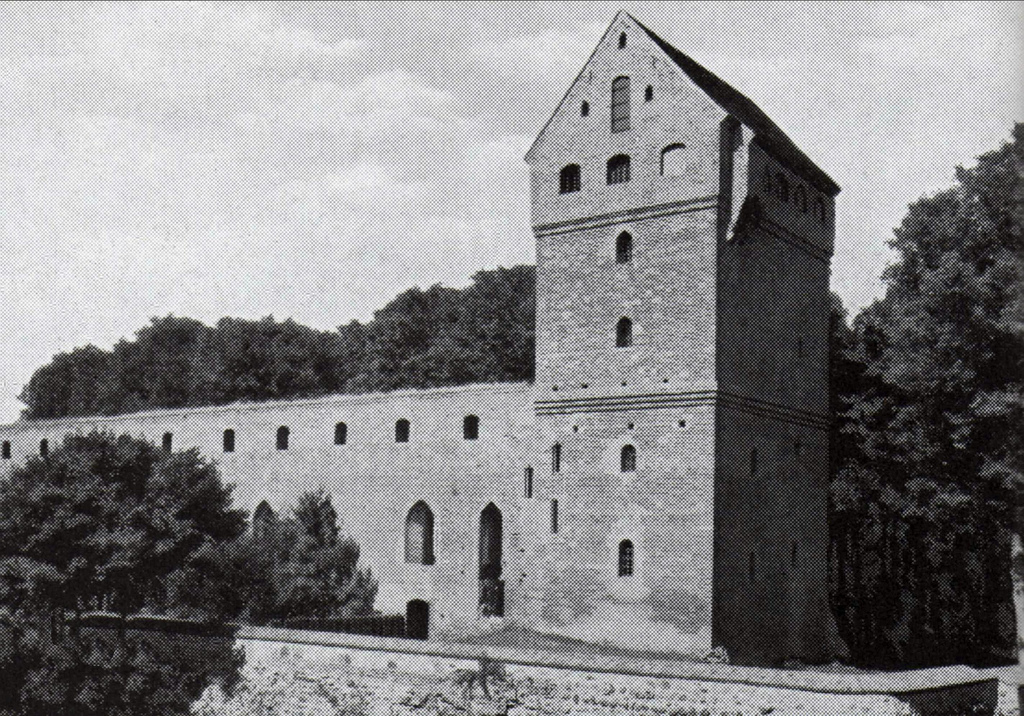
In 1705, King Frederick I of Prussia ordered the demolition of major parts of the castle, including the north and east wings, the main tower, and defensive walls. The materials salvaged from this dismantling were repurposed to reinforce the nearby fortress of Pillau, reflecting a practical reuse of resources during a period of military modernization.
Despite the demolitions, some parts of the castle remained in use during the 19th century. The surviving buildings served various civilian functions, including as a residence for a royal forestry official, a local school, and a regional museum. These adaptive reuses illustrate the castle's integration into the community even as its military role faded.
Architectural features and artistic heritage
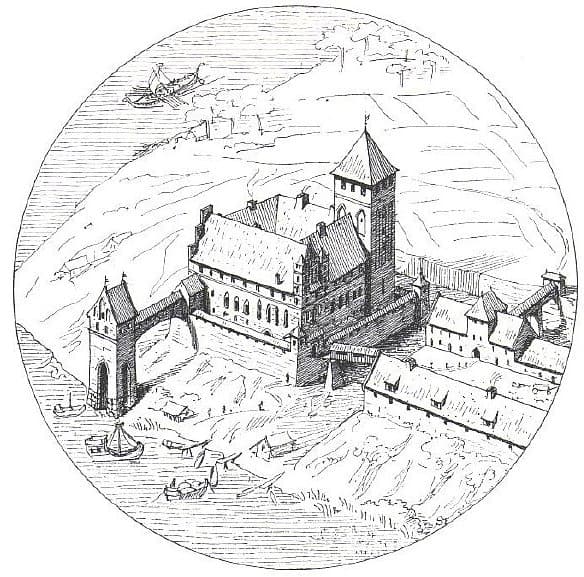
The castle was constructed on a four-winged design primarily rebuilt in stone during the late 13th century. The south wing contains the oldest surviving parts, including the castle chapel. This chapel was connected to the refectory, or communal dining hall, by a narrow antechamber. The west wing housed smaller chambers notable for their late Gothic vaulted ceilings, reflecting architectural developments in the later medieval period.
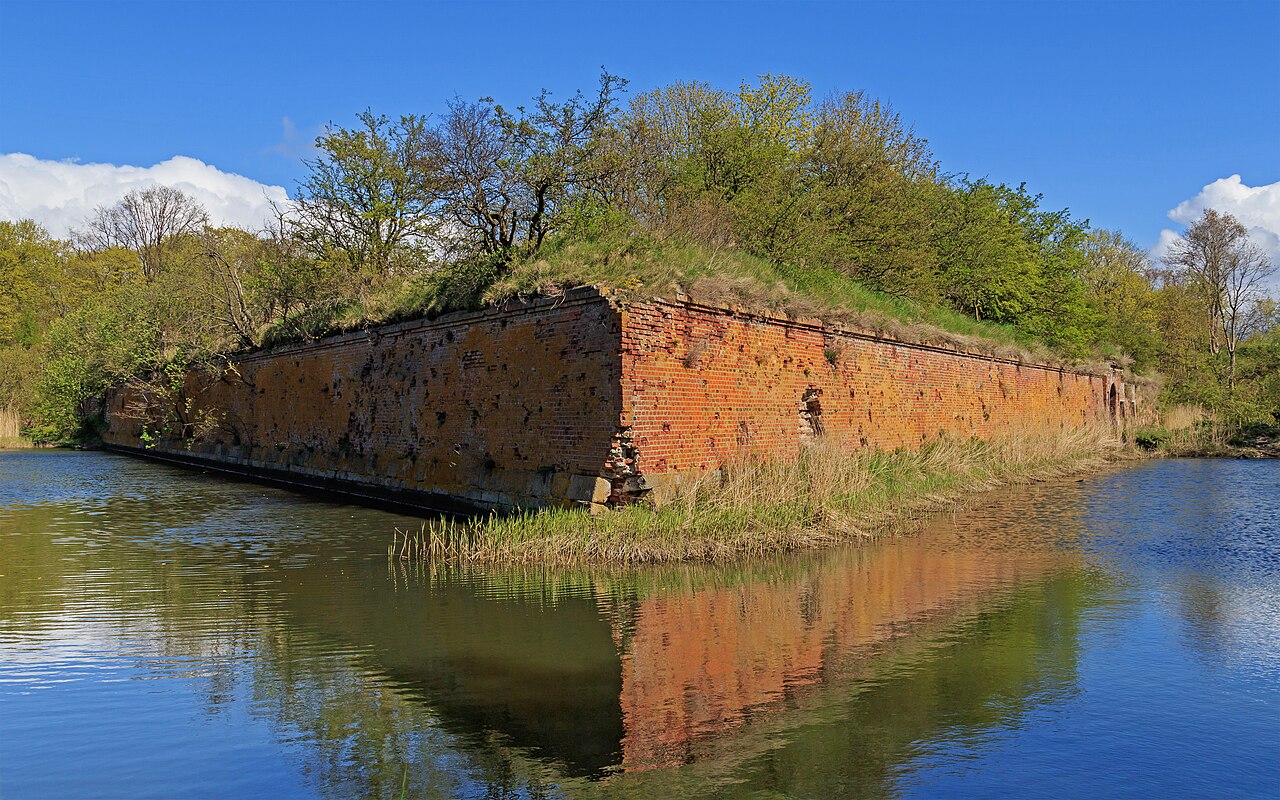
Natural defenses included steep slopes on the west and south sides, rising up to 20 meters and descending directly to the waters of the Vistula Lagoon. On the north and east sides, the castle was protected by a carefully shaped moat, adding an artificial defensive barrier.
A distinctive architectural highlight was the gate passage, featuring a pointed arch constructed from multicolored bricks. The entrance was adorned with decorative half quatrefoil motifs on finely carved brackets, adding ornamental detail to the fortress's otherwise martial appearance. The courtyard-facing walls of the chapel wing were richly decorated with portals having rounded profiles and glazed bricks in vibrant colors.
Inside the chapel, a remarkable fresco cycle depicted biblical and saintly scenes such as the Archangel Michael defeating a dragon, the Annunciation to the Virgin Mary, the Resurrection, the Crucifixion, and the Adoration of the Magi. Rediscovered beneath layers of lime plaster in 1895 and restored in 1937, these frescoes highlight the castle's religious and artistic significance.
Later history and preservation efforts
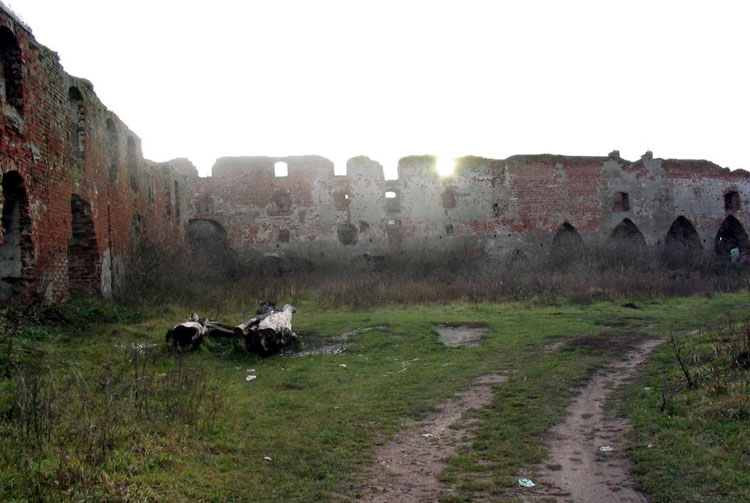
Photographs from 1948 show that remnants of the south wing, including the gate passage and sacristy, were still standing, along with parts of the west wing preserved up to half their original height. However, the north and east wings, the main tower, defensive walls, and the outer ward known as the zwinger had been dismantled during the early 18th century. The forecourt area, or Vorburg, was destroyed by fires in the 19th century.
Archaeological excavations in the 20th century uncovered structural remains and artifacts, although some damage occurred during modern digs, including destruction of basement levels and cellars in 2000. Architectural elements such as brickwork and carved capitals have been preserved and are housed in institutions like the Germanisches Nationalmuseum in Nuremberg and the lapidarium at Marienburg.
Nearby the ruins was a former parish cemetery, historically linked to the castle's community and clergy, though it has since been destroyed. The castle is also known as the place where Heinrich von Plauen, a former Grand Master of the Teutonic Order, was imprisoned from 1422 until his death in 1429.
Manuscripts recovered from the site, dating between the 16th and 18th centuries, include works by the Lithuanian poet Kristijonas Donelaitis, adding a cultural dimension to the castle's legacy. These documents were found shortly after World War II and again in 1967, underscoring the site's historical richness beyond its physical remains.
Frequently asked questions (FAQ)
- How do I get to the Castle of Lochstädt?
- The Castle of Lochstädt is located near Baltiysk in the Kaliningrad Oblast of Russia. Visitors can reach Baltiysk by road from Kaliningrad city, and local transport or taxis can take you to the castle ruins.
- What is the historical significance of the Castle of Lochstädt?
- The castle was a key fortress of the Teutonic Order in the Samland region, serving as a military, administrative, and economic center, especially for amber trade from the 13th to 16th centuries.
- Can I visit the interior of the castle ruins?
- As the Castle of Lochstädt is mostly in ruins, access to the interior is limited and may be unsafe. Visitors are advised to explore the site with caution and respect any local restrictions.
- When is the best time to visit the Castle of Lochstädt?
- The best time to visit the castle ruins is during late spring to early autumn when weather conditions are favorable for outdoor exploration.
- Are there any guided tours available at the Castle of Lochstädt?
- Currently, there are no regular guided tours at the Castle of Lochstädt. Visitors interested in detailed historical information should consider hiring local guides or researching in advance.
Photo gallery

Photo by Conrad Steinbrecht (1849-1923)•Public domain
Information
Loading map...
Visitor reviews
No reviews yet. Been here? Write the first review and help other travelers!
Write the first reviewVisited this castle? Share your experience
Your review helps other travelers and adds first-hand knowledge to our encyclopedia.