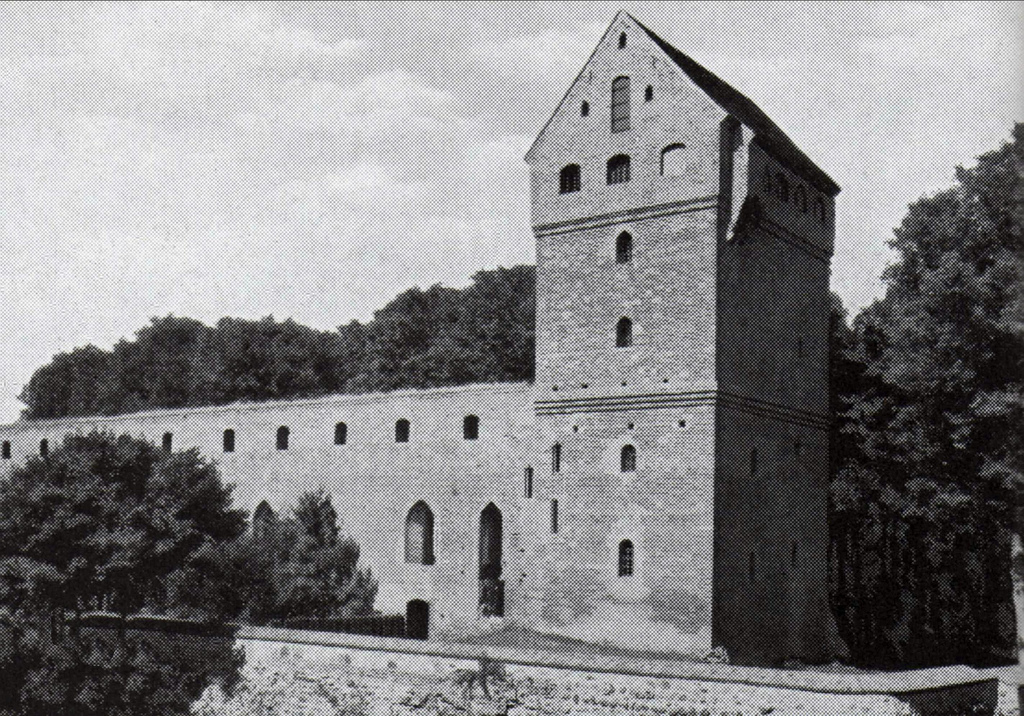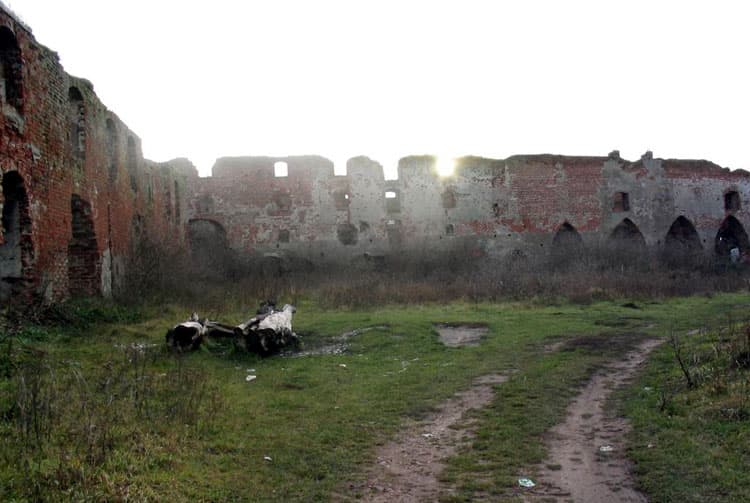
Brandenburg Castle Ruins
The Brandenburg Castle Ruins stand as a significant historical site near Ushakovo in the Russian Federation. These ruins mark the location of a fortress built in 1266 by the Teutonic Knights during their campaigns in the Baltic region, specifically the Prussian Crusade. The castle was established to honor Otto III, Margrave of Brandenburg, who was a notable supporter of the order's military efforts against the pagan Prussians.
The site is closely associated with the Battle of Pokarwis in 1261, a significant conflict between the pagan Prussians and the Teutonic Knights that took place nearby. This battle was part of the broader struggle during the High Medieval period when the Teutonic Knights sought to expand their influence and Christianize the Baltic tribes. The castle, strategically located, served as a military stronghold and administrative center for the order in this contested region.
Historical context and significance
The founding of the village of Brandenburg and its castle was a direct result of the Teutonic Knights' efforts to consolidate their power in Prussia. The castle not only symbolized the military presence of the order but also functioned as a base for further campaigns and colonization efforts. Its construction in 1266 places it firmly in the High Medieval era, a time characterized by the expansion of crusading orders and the establishment of fortified sites throughout Eastern Europe.
The castle's dedication to Otto III, Margrave of Brandenburg, reflects the political alliances and patronage networks crucial to the Teutonic Knights' success. Otto III's support was instrumental in securing resources and legitimacy for the order's activities in the region. The village and castle of Brandenburg thus represent a fusion of military, political, and religious ambitions during this period.
Architectural features and castle layout
While now in ruins, the remains of Brandenburg Castle provide insight into the typical High Medieval fortress design employed by the Teutonic Knights. The castle was likely constructed using local stone and timber, featuring defensive walls, towers, and a central keep or donjon. The layout would have included a courtyard surrounded by curtain walls, with fortified gates controlling access.
The design focused on defense against both siege warfare and raids by local tribes. The castle's position near the village allowed it to oversee and protect the surrounding territory. Although much of the structure has deteriorated over the centuries, archaeological studies have revealed foundational walls and remnants of fortifications that illustrate the castle's strategic importance.
Defensive structures
Typical of Teutonic castles of this era, Brandenburg Castle would have incorporated thick stone walls and possibly a moat or ditch to hinder attackers. Towers placed at intervals along the walls provided vantage points for archers and lookouts. The main gate was likely heavily fortified with a gatehouse and portcullis to control entry.
Living and administrative quarters
Within the castle, there would have been residential chambers for the knights and commanders, as well as administrative buildings for managing the order's affairs. A chapel or small church was often included to serve the spiritual needs of the garrison and local inhabitants.
The decline and preservation of the ruins
Following the decline of the Teutonic Order's power in the region, Brandenburg Castle fell into disuse and gradual decay. The shifting political boundaries and military technologies rendered many such fortresses obsolete. Over time, the castle was abandoned, and natural forces contributed to its ruination.
Today, the site is classified as archaeological ruins, with visible remains that attract historians and visitors interested in medieval military architecture and the history of the Baltic crusades. Preservation efforts focus on stabilizing the ruins and conducting archaeological excavations to better understand the castle's original form and function.
Cultural and historical legacy
The Brandenburg Castle Ruins serve as a tangible connection to the High Medieval period and the complex history of the Teutonic Knights in Eastern Europe. They provide valuable insights into the military strategies, architectural practices, and political dynamics of the time.
As a heritage site, the ruins contribute to the understanding of the Prussian Crusade and the broader Christianization efforts in the Baltic region. They also highlight the role of influential figures like Otto III, Margrave of Brandenburg, in shaping medieval European history.
Visiting information
The Brandenburg Castle Ruins are accessible to visitors interested in exploring medieval history and archaeology. While the site is primarily in ruins, it offers a unique opportunity to witness the remnants of a 13th-century Teutonic fortress. Visitors should prepare for uneven terrain and limited facilities, as the site is maintained mainly for its historical and educational value.
Guided tours and informational signage may be available seasonally, providing context about the castle's history and architectural features. The best time to visit is during the warmer months when weather conditions are favorable for outdoor exploration.
Frequently asked questions (FAQ)
- How do I get to Brandenburg Castle Ruins?
- Brandenburg Castle Ruins is located in Ushakovo, Russian Federation. You can reach the site by car or public transport from nearby cities, with the closest major town being Kaliningrad. Local signage and maps can assist you in finding your way to this historical site.
- What is the historical significance of Brandenburg Castle Ruins?
- Brandenburg Castle was originally built in the 13th century and played a crucial role in the region's history during the Teutonic Knights' rule. The ruins are a testament to medieval architecture and offer insights into the area's past conflicts and settlements. Today, they serve as a reminder of the cultural heritage of the region.
- When was Brandenburg Castle constructed?
- Construction of Brandenburg Castle began in the early 13th century, specifically around the year 1255. It was established by the Teutonic Knights and served various purposes throughout the centuries, including military defense and administrative functions. The castle's design reflects the architectural styles of its time, making it an interesting study for history enthusiasts.
- Can I enter the ruins of Brandenburg Castle?
- Yes, visitors are welcome to explore the ruins of Brandenburg Castle. While some sections may be restricted for safety reasons, there are ample areas to walk around and appreciate the historical architecture. Be sure to wear comfortable shoes and take care while navigating the uneven terrain.
- Why is Brandenburg Castle Ruins a popular tourist attraction?
- Brandenburg Castle Ruins attracts visitors due to its rich history and stunning views of the surrounding landscape. The combination of historical significance, architectural beauty, and the opportunity to immerse oneself in nature makes it an appealing destination. It's also a great spot for photography enthusiasts looking to capture the essence of medieval ruins.
- Is it possible to visit Brandenburg Castle Ruins year-round?
- Yes, Brandenburg Castle Ruins can be visited year-round, although the best time to explore is during the spring and summer months when the weather is mild. In the winter, access may be limited due to snow or ice, and the surrounding area may be less accessible. Always check local conditions before planning your visit.
- What are the opening hours for Brandenburg Castle Ruins?
- Brandenburg Castle Ruins are generally open to visitors from dawn until dusk. However, it's advisable to check local resources for any seasonal changes in opening hours or special events that may affect accessibility. Planning your visit during daylight hours will enhance your experience of the ruins.
- Are there any nearby attractions to visit while at Brandenburg Castle?
- Yes, several attractions are located near Brandenburg Castle, including picturesque parks and local museums that showcase the area's history. Visitors can also enjoy hiking trails that lead through the scenic landscapes surrounding the castle. Taking a day trip to explore these nearby sites can enrich your visit.
- What are the ticket prices for visiting Brandenburg Castle Ruins?
- Entry to Brandenburg Castle Ruins is typically free, allowing visitors to enjoy the historical site without any cost. However, there may be fees for guided tours or special events that take place at the site. It's a good idea to inquire about any such options when planning your visit.
Photo gallery

Photo by No machine-readable author provided. Dmitriy Gadasyuk assumed (based on copyright claims).•Public domain
Information
Loading map...
Visitor reviews
No reviews yet. Been here? Write the first review and help other travelers!
Write the first reviewVisited this castle? Share your experience
Your review helps other travelers and adds first-hand knowledge to our encyclopedia.