Castle of Lindoso
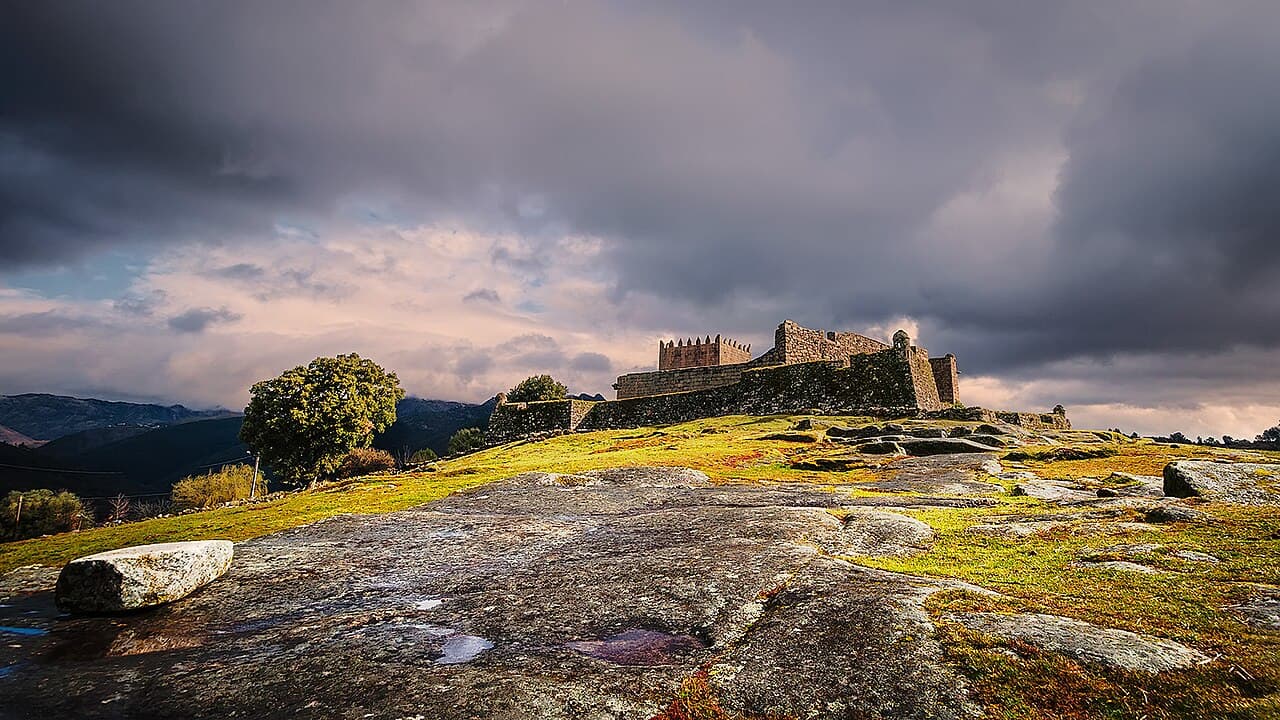
The Castle of Lindoso is a remarkable example of medieval military architecture situated in Lindoso, within the municipality of Ponte da Barca, in the Viana do Castelo region of northern Portugal. Constructed primarily in the 13th century during the high medieval period, this hill castle was strategically positioned atop the Serra Amarela to oversee the left bank of the Lima River, directly facing the border with Spain. Its location underscores its historical function as a critical frontier defense post, guarding the boundary between Portugal and its neighbor.
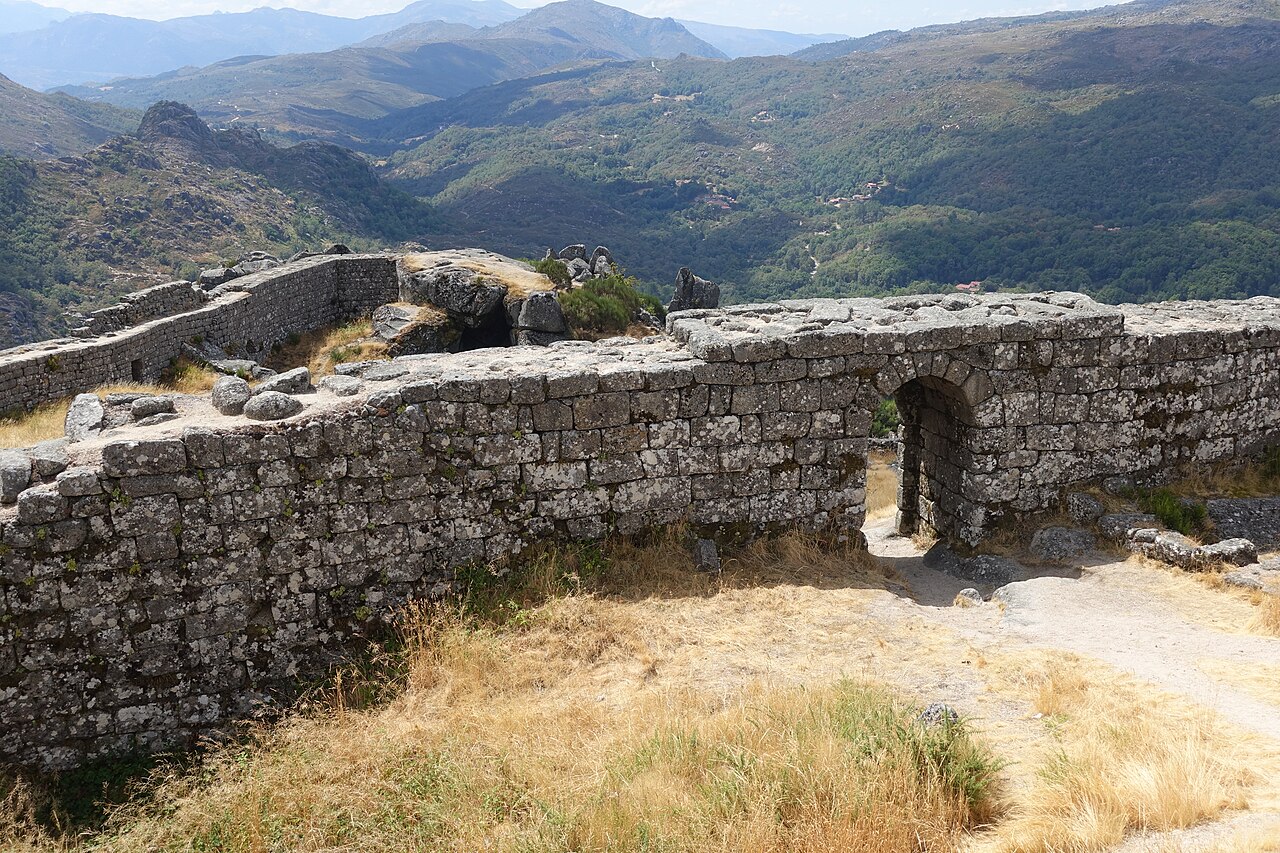
The castle's robust stone masonry walls are crowned by a battlemented parapet, providing defenders with protected walkways known as adarves. The fortification features two primary gates: the northern gate, situated near the main tower, and the southern gate, which is accessed via a wooden drawbridge. This southern entrance is architecturally notable for its internal rounded arch and external pointed arch, flanked by rectangular turrets that enhanced its defensive capabilities.
Historical background and strategic importance
The castle was originally commissioned by King Afonso III of Portugal as part of a broader initiative to fortify the kingdom's borders during the 13th century. The name "Lindoso" is believed to derive from the Latin "Limitosum," meaning boundary or border, reflecting the castle's role as a frontier outpost. Construction began in earnest in the mid-1200s, with significant expansions and reinforcements carried out under King Dinis I starting in 1278, which enhanced the castle's defensive structures within the expanding medieval frontier network.
Throughout its history, the Castle of Lindoso played a vital role in regional conflicts. During the Portuguese Restoration War (1640–1668), it served as a key bastion along the border. In September 1641, it was used as a base for Portuguese military operations into Galicia. The castle was briefly captured by Spanish forces but was soon retaken by the Portuguese. This turbulent period prompted modernization efforts, including the construction of new fortifications completed around 1666, as commemorated by an inscription on one of the door lintels.
Further defensive enhancements were made in the early 18th century, including the completion of a main ravelin by 1720, an outer triangular fortification designed to protect the main gate. During the Napoleonic Wars in 1809, the castle's garrison remained vigilant as French troops threatened the region, although no direct combat occurred at Lindoso. After this period, the castle lost its military significance and gradually fell into disuse and decay.
Architectural features and layout
Medieval core and keep
The castle's core is typical of northern Portuguese medieval fortifications, sharing similarities with contemporaneous castles such as Lanhoso and Arnóia. The quadrangular keep stands prominently on the northern side of the main courtyard, known as the Praça de Armas. The keep's entrance is elevated above ground level to impede attackers, and inside it is divided into two floors. The battlements atop the keep are distinctive, featuring truncated pyramidal merlons, which are the solid uprights of the crenellated parapet, providing both protection and a vantage point for defenders.
Defensive walls and gates
The stone masonry walls encircle the castle, topped by battlemented walkways that allowed defenders to move safely along the ramparts. The northern gate is positioned near the keep, while the southern gate is accessed by a wooden drawbridge crossing defensive moats and embankments. The southern gate's defensive design is enhanced by rectangular turrets and a combination of rounded and pointed arches, which are both functional and stylistic elements typical of medieval military architecture.
17th-century bastioned fortifications
Responding to advances in military technology, notably the use of artillery, the castle underwent significant modifications in the 17th century. A star-shaped bastioned wall was constructed around the medieval core, equipped with cannon openings positioned to cover all approaches. The bastions are marked by cylindrical guardhouses topped with hemispherical domes, which provided protected observation and firing positions for sentries.
Access to the fortified complex is through a gate crowned with machicolations, openings in the parapet that allowed defenders to drop projectiles onto attackers below. The gate is further protected by a ravelin, an external triangular fortification designed to shield the entrance from direct assault.
Ancillary structures and daily life
Within the castle walls, remnants of several ancillary buildings provide insight into the daily operations and life of its inhabitants. These include the remains of the governor's residence, garrison quarters, a chapel, a cistern for water storage, and an oven. While the precise dates of these structures are not definitively established, their presence reflects the multifunctional nature of the fortress, serving both military and domestic purposes over the centuries.
Restoration and preservation efforts
After falling into neglect following its military obsolescence, the Castle of Lindoso was declared a National Monument in 1910, recognizing its cultural and historical significance. Restoration efforts began in the 1940s under the Directorate-General for Buildings and National Monuments, focusing on consolidating the structure, rebuilding sections of walls and battlements, and removing later courtyard constructions that detracted from the original medieval layout.
More recent archaeological investigations have enhanced understanding of the castle's historical context and architectural evolution. These studies have helped preserve the castle's silhouette and maintain its status as an important heritage site, attracting visitors interested in Portugal's medieval and early modern military history.
Today, the Castle of Lindoso stands as a well-preserved example of a high medieval hill castle adapted for artillery defense, embodying centuries of Portuguese border defense history. Its blend of medieval and 17th-century fortifications offers a unique glimpse into the evolution of military architecture in response to changing warfare technologies.
Frequently asked questions (FAQ)
- How do I get to the Castle of Lindoso?
- The Castle of Lindoso is located in the northern region of Portugal, easily accessible by car or local public transport. If you're driving, take the A3 motorway and follow signs to Lindoso. Public buses also run from nearby towns, making it convenient for visitors.
- What is the historical significance of the Castle of Lindoso?
- The Castle of Lindoso dates back to the 12th century and was built as a defensive stronghold against invasions. It played a crucial role in the region's history, particularly during the Reconquista period. Today, it stands as a testament to medieval military architecture and Portuguese heritage.
- When was the Castle of Lindoso built?
- Construction of the Castle of Lindoso began in the late 12th century, with significant modifications made over the following centuries. It was strategically placed to oversee the surrounding landscape and safeguard the region. Its historical layers reflect the various architectural styles that evolved over time.
- Can I take guided tours of the Castle of Lindoso?
- Yes, guided tours are available for visitors who wish to learn more about the history and architecture of the castle. These tours typically include access to key areas, along with informative commentary from knowledgeable guides. It's recommended to check the schedule and book in advance during peak tourist seasons.
- Why is the Castle of Lindoso a popular tourist attraction?
- The Castle of Lindoso is popular due to its rich history, stunning views, and well-preserved architecture. It offers visitors an immersive experience into Portugal's past, with picturesque landscapes surrounding the castle. Additionally, its location near the Peneda-Gerês National Park makes it an ideal stop for nature lovers.
- Is it possible to visit the Castle of Lindoso year-round?
- Yes, the Castle of Lindoso is open to visitors throughout the year, though opening hours may vary by season. It's best to check the official website or local tourism information for the most current hours and any holiday closures. Be prepared for varying weather conditions, especially during the winter months.
- What are the ticket prices for the Castle of Lindoso?
- Ticket prices for the Castle of Lindoso are generally affordable, making it accessible for all visitors. Discounts may be available for students, seniors, and children. It's advisable to check the official site for the latest pricing information and any special offers.
- What are the best times to visit the Castle of Lindoso?
- The best times to visit the Castle of Lindoso are during the spring and fall months when the weather is mild and the scenery is beautiful. Summer can be crowded due to tourism, while winter may offer a quieter experience but with cooler temperatures. Planning your visit during weekdays can also help avoid the crowds.
- Are there nearby attractions to explore after visiting the Castle of Lindoso?
- Yes, there are several nearby attractions, including the scenic Peneda-Gerês National Park, which offers breathtaking landscapes and outdoor activities. The charming village of Lindoso itself features traditional architecture and local cuisine worth exploring. Additionally, the nearby Lindoso Dam provides opportunities for hiking and leisure activities.
Photo gallery

Information
Website
Visit websiteSources & official resources
Verify the information above using these authoritative references.
Loading map...
Visitor reviews
No reviews yet. Been here? Write the first review and help other travelers!
Write the first reviewVisited this castle? Share your experience
Your review helps other travelers and adds first-hand knowledge to our encyclopedia.