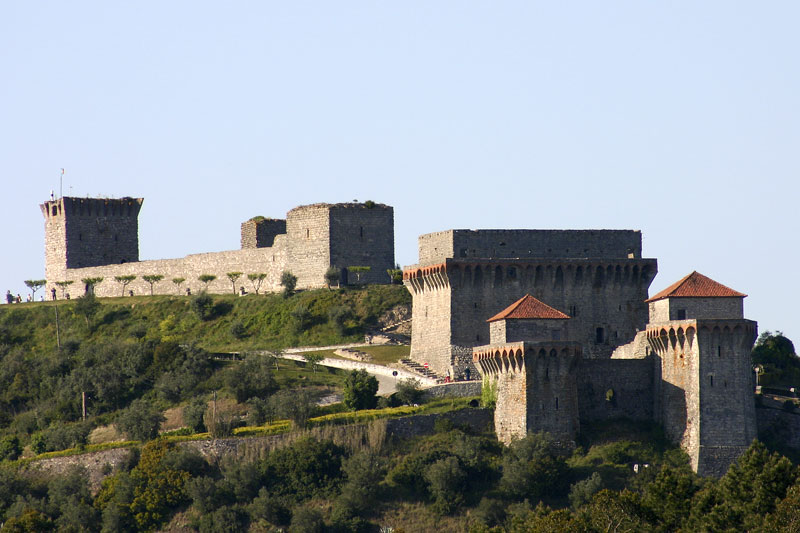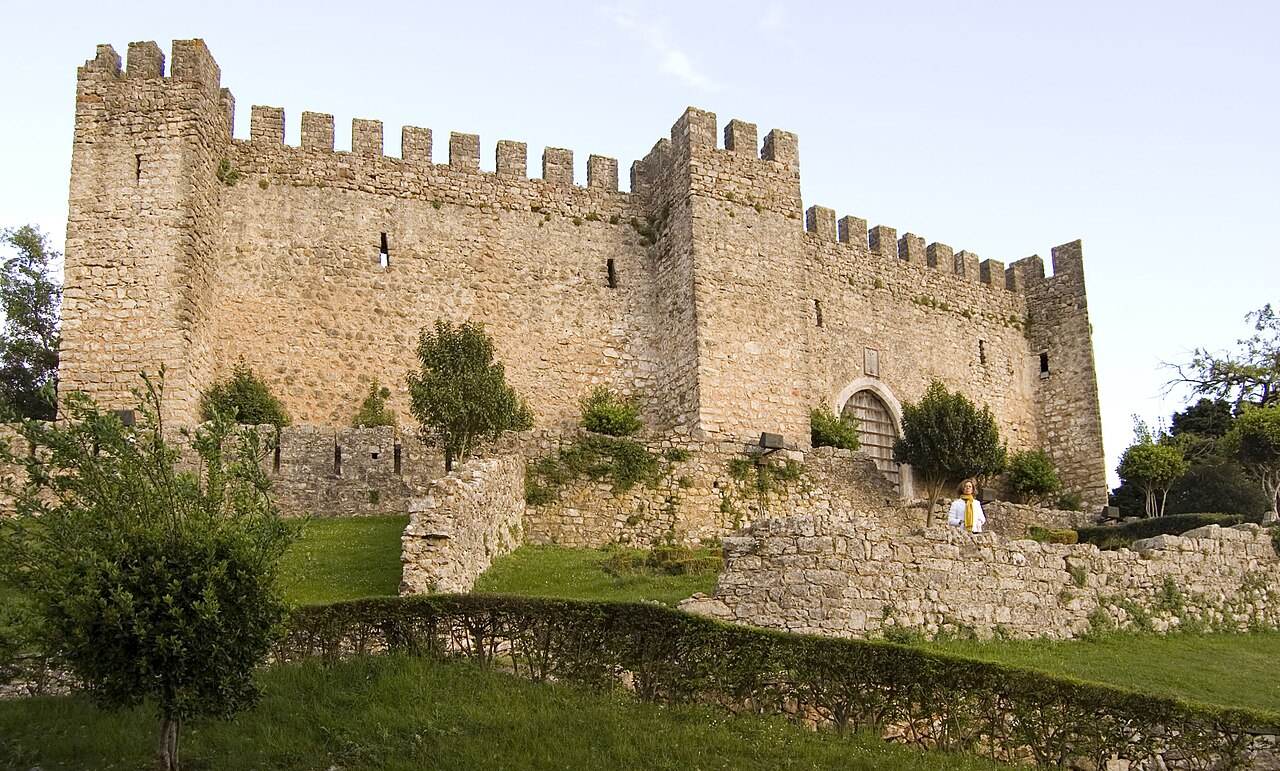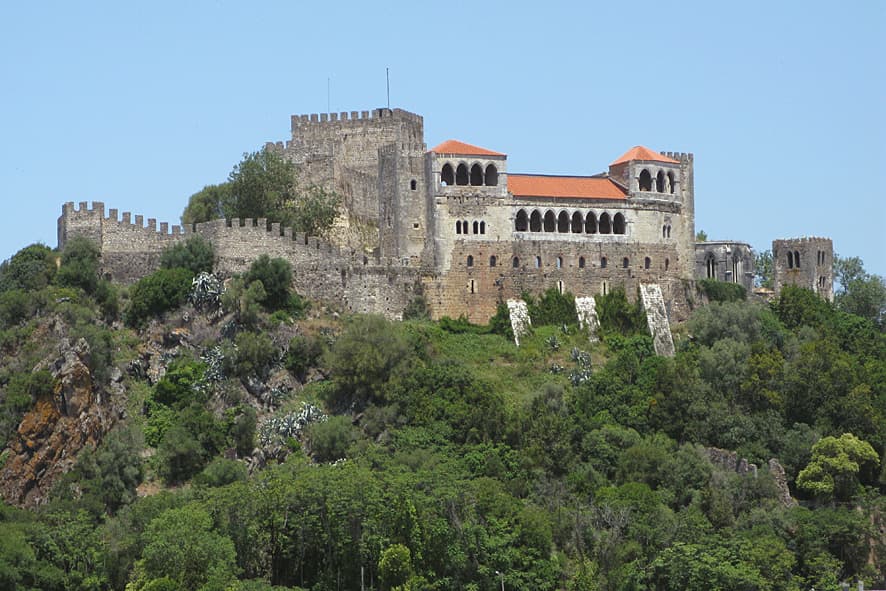
The Castle of Leiria, located in the municipality of Leiria, Portugal, stands as a remarkable example of medieval military architecture and royal heritage. Founded in 1135 by Dom Afonso Henriques, the first King of Portugal, this hill castle was strategically built atop a rocky rise near the confluence of the Lis and Lena rivers to secure the southern frontier of the County of Portugal during the Christian Reconquest of the Iberian Peninsula. Its commanding position enabled control over the surrounding territory and defense against incursions by Muslim forces.
The castle's early history is marked by turbulent conflicts, including its capture by the Almohad Caliphate in 1137 and again in 1139, before its permanent reconquest by King Afonso Henriques in 1142. Following this, the king granted Leiria a foral (municipal charter) and initiated the strengthening of the fortress’s defenses. Between 1144 and 1147, the construction of the chapel of Nossa Senhora da Pena (Our Lady of the Rock) within the castle walls established a religious presence that underscored the castle’s dual military and spiritual roles.
Medieval fortifications and royal developments
Throughout the 12th and 13th centuries, successive monarchs enhanced the castle and its associated town. King Sancho I (1185–1211) ordered the erection of defensive walls around the growing settlement in 1195, further securing the area. Later, King Dinis (1279–1325) adapted parts of the fortress for residential use, reconstructed the chapel, and commissioned the construction of the Tower of Menagem (keep) in 1324. This tower, completed under King Afonso IV, became a dominant feature of the castle, serving as a symbol of royal authority and a secure refuge.
The castle's function extended beyond military defense; it was a royal residence and political center. It hosted the Cortes (parliamentary assemblies) in 1254 and 1372, and was the site of significant royal events such as the 1401 marriage of Prince Afonso, son of King João I. The castle also served as the residence of Queen Saint Isabel and was notable for hosting the first Cortes that included representatives from the nobility, clergy, and common people, marking a critical moment in Portuguese political development.
Decline and restoration efforts
Following Portugal’s restoration of independence in 1640, the castle’s military importance waned. It sustained damage during the French invasions in the early 19th century and gradually fell into disrepair by the late 1800s. Restoration efforts began in 1915, led by the Liga dos Amigos do Castelo and architect Ernesto Korrodi. Throughout the 20th century, the National Buildings and Monuments Directorate (DGEMN) undertook extensive work to consolidate the walls, restore the keep tower, chapel, and royal palace, and preserve the castle’s heritage. The castle was formally declared a National Monument in 1910. Recent rehabilitation between 2020 and 2021 improved accessibility, including the installation of elevators, and enhanced its role as a cultural institution.
Architectural features and layout
The Castle of Leiria is characterized by an irregular polygonal layout defined by robust defensive walls and multiple towers. The walls are topped with square merlons, providing protective battlements for defenders. A barbican guards the main gate, adding an additional layer of defense. Quadrangular turrets are evenly spaced along the curtain walls to reinforce vulnerable points, while an outer wall protects the more exposed sides of the fortress.
Gates and defensive structures
The castle features several main entrances from different periods. The southern gate, historically known as Porta do Sol, now serves as the base for the Torre da Sé bell tower. The northern gate, Porta dos Castelinhos, is flanked by two defensive towers and bears one of the oldest municipal coats of arms, depicting a castle flanked by pine trees and ravens—a symbol linked to the founding legend of Leiria. The principal entrance, Porta da Albacara, is a Romanesque bent entrance with rounded arches and merloned towers designed to slow and expose attackers.
The keep and royal residence
The Tower of Menagem, the castle’s keep, stands approximately 17 meters tall and is prism-shaped with three internal floors and a terrace crowned by square merlons. Built on earlier foundations by King Dinis in the early 14th century, it features a Gothic plaque with royal coats of arms. Historically, it served as a royal prison from the 14th to 18th centuries and now houses a museum displaying archaeological finds and medieval weaponry.
The Paços Novos (New Palace) is a large quadrangular building approximately 33 by 21 meters, with lateral towers rising four floors and a central section of three floors. The ground floor includes the Salão dos Arcos (Hall of the Arches), a spacious hall supported by three Gothic arches. The upper floors contain domestic rooms, private royal chambers, and a Mediterranean Gothic loggia offering panoramic views of Leiria. The palace also features advanced sanitary facilities on the fourth floor, highlighting the comfort of its royal occupants.
Religious and auxiliary buildings
The Church of Nossa Senhora da Pena, documented from the mid-12th century, was rebuilt in the Gothic style during the reigns of Kings João I and Manuel I. It features a single rectangular nave and a polygonal apse with ribbed vaulting, ogival portals with multiple archivolts, and decorative quadrifoliate window motifs. The church’s masonry incorporates Roman stones, including an inscription dedicated to Emperor Antoninus Pius, reflecting the site's layered historical significance.
Additional structures include medieval vaulted barns from the 13th century, the ruins of a former collegiate complex with audience halls and a cistern, and the 20th-century Casa da Guarda, which incorporates late Gothic architectural elements salvaged from the Convent of Santa Ana.
Bell towers and symbolic elements
The Torre dos Sinos (Bell Tower) originated as a pentagonal Romanesque gate tower with cruciform and Templar symbols, adapted in the 13th century to serve as the bell tower for the Church of Nossa Senhora da Pena. The Torre Sineira da Sé, a Baroque bell tower built atop the medieval Porta do Sol, was modified in the 16th and 18th centuries and features a pyramid-shaped roof with an angel-shaped weather vane and six bells cast in 1800.
Throughout the castle, Roman stones with inscriptions from the ancient settlement of Collipo were reused, underscoring the site's continuous occupation and historical layering. Some 20th-century restoration work included the creation of "false ruins" to evoke a sense of antiquity and enhance the visitor experience.
Cultural significance and visitor experience
Today, the Castle of Leiria stands as a well-preserved monument reflecting centuries of Portuguese history, from the High Medieval period through the Renaissance and into modern times. It offers visitors a comprehensive glimpse into medieval military architecture, royal life, and religious practices. The castle’s museum, exhibitions, and restored structures provide rich educational opportunities, while its elevated position affords panoramic views of the city and surrounding landscape.
Recent accessibility improvements ensure that a wide range of visitors can explore the site comfortably. The castle hosts cultural events and serves as a symbol of Leiria’s historical identity and Portugal’s enduring heritage.
Frequently asked questions (FAQ)
- How do I get to the Castle of Leiria?
- The Castle of Leiria is easily accessible by car, with parking available nearby. If you prefer public transport, you can take a train or bus to Leiria, followed by a short walk to the castle.
- What is the historical significance of the Castle of Leiria?
- The Castle of Leiria, built in the 12th century, played a crucial role in the defense and consolidation of Portugal during the Reconquista. It served as a royal residence and was a strategic military stronghold throughout its history.
- When was the Castle of Leiria constructed?
- The construction of the Castle of Leiria began in the 12th century, specifically around the year 1135, under the orders of King Afonso I of Portugal. Its architectural evolution continued over the centuries, reflecting various historical styles.
- Can I visit the Castle of Leiria year-round?
- Yes, the Castle of Leiria is open to visitors throughout the year, although specific opening hours may vary by season. It is advisable to check the official website for the most current visiting hours before your trip.
- Why is the architecture of the Castle of Leiria unique?
- The Castle of Leiria features a blend of Romanesque and Gothic architectural styles, showcasing its historical significance and the evolution of Portuguese military architecture. Its impressive walls and towers offer stunning views of the city and surrounding landscape.
- Is it possible to access all areas of the castle?
- While many areas of the Castle of Leiria are accessible to visitors, certain sections may have restricted access for safety reasons. However, the main attractions, including the keep and battlements, are open for exploration.
- What is the best time to visit the Castle of Leiria?
- The best time to visit the Castle of Leiria is during the spring and fall when the weather is mild and ideal for exploring outdoor sites. Summer can be quite hot, while winter may bring chilly temperatures and rain.
- Are there any nearby attractions to the Castle of Leiria?
- Yes, nearby attractions include the historic city center of Leiria, the beautiful Batalha Monastery, and the stunning beaches of the Silver Coast. These sites provide a perfect complement to your visit to the castle.
- What are the ticket prices for the Castle of Leiria?
- Ticket prices for the Castle of Leiria are generally affordable, with discounts available for students, seniors, and children. It's best to check the official website for the latest pricing information and any special offers.
- What are the opening hours of the Castle of Leiria?
- The opening hours of the Castle of Leiria typically range from 9 AM to 6 PM, but these hours can change seasonally. Always verify the current hours on the official website before your visit to ensure a smooth experience.
Photo gallery

Information
Website
Visit websiteSources & official resources
Verify the information above using these authoritative references.
Loading map...
Visitor reviews
No reviews yet. Been here? Write the first review and help other travelers!
Write the first reviewVisited this castle? Share your experience
Your review helps other travelers and adds first-hand knowledge to our encyclopedia.