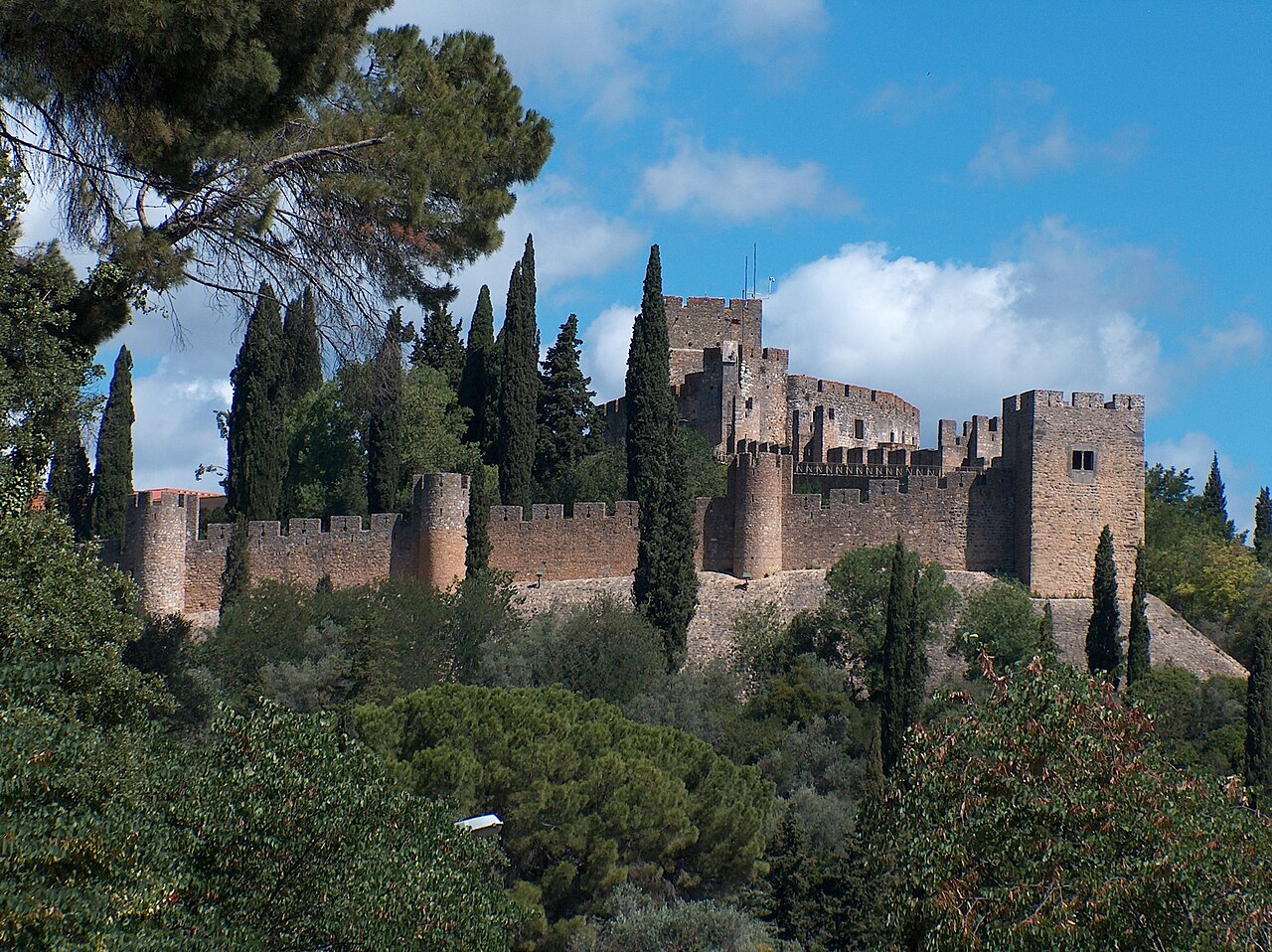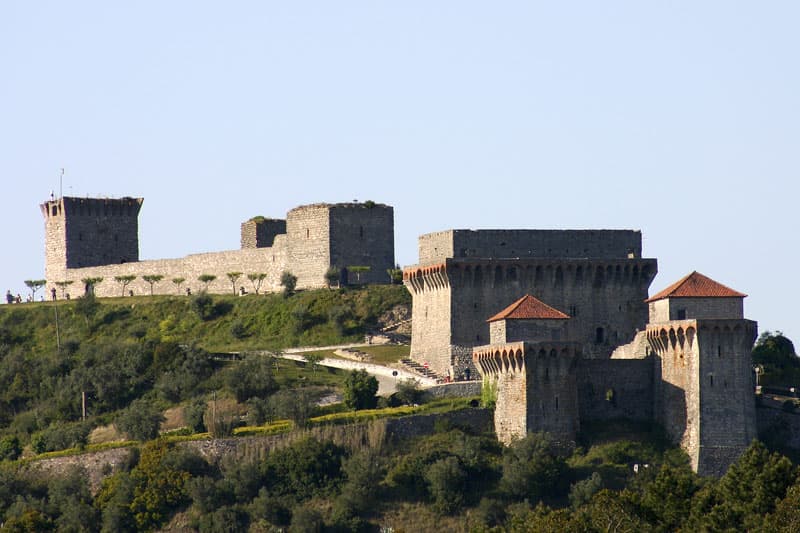
Ourém Castle — Portugal castle

Ourém Castle

Ourém Castle: historic hilltop fortress in Portugal's Médio Tejo region
Ourém, Portugal
Late Medieval (14th–15th c.)
Restored

Ourém Castle, known locally as Castelo de Ourém, is a prominent hill castle located in the town of Ourém within Portugal's Médio Tejo region. Perched atop a strategic hill overlooking the Seiça Stream, this fortress commands expansive views of the surrounding valley and has served as a significant military and administrative center since the late medieval period.

The site of Ourém Castle has a rich history of continuous human occupation, with archaeological evidence revealing prehistoric, Roman, and Visigothic settlements prior to its medieval fortification. Originally, during the Moorish occupation of the Iberian Peninsula, the hilltop was home to a Muslim settlement called Abdegas, centered around a vital spring and guarded by a watchtower. This early fortification was captured by Christian forces during the Reconquista in 1136, marking the beginning of its transformation into a Christian stronghold.

Medieval origins and early history

The first documented mention of a castle with a triangular plan at Ourém dates to 1178, shortly after the territory was integrated into the nascent Portuguese kingdom. At this time, the settlement was known as Portus de Auren or Portum Ourens, and it was involved in territorial disputes and associations with the Knights Templar during the 12th century. The castle and its lands were granted by King Afonso Henriques to his daughter, Infanta Teresa, before the town received its first charter in 1180.

Throughout the 13th century, Ourém Castle played a role in regional political struggles. In 1245, a conflict arose between King Sancho II and his brother Afonso, following papal intervention that favored Afonso's claim to the throne. During this period, Queen Mécia Lopes de Haro, Sancho II's wife, was held captive within the castle walls amid a siege in 1246. The castle's defenses successfully resisted the king's forces, highlighting its strategic importance. Subsequently, Sancho II abdicated in favor of Afonso III, who ascended the throne.

Due to sparse population, the castle and town were donated in 1299 to Martim Lourenço da Cerveira with the obligation to repopulate and develop the area. In the late 14th century, during the 1383-1385 Portuguese interregnum, the castle was seized by forces loyal to the Master of Aviz, the future King John I, after initially supporting the claim of Beatrice.

15th-century expansions and architectural features

The 15th century marked a period of significant architectural development under the 4th Count of Ourém, Afonso of Braganza. He commissioned the construction of a rectangular fortified palace known as the Paço dos Condes, situated just below the original castle. This palace featured a fortified entrance flanked by two towers and was connected to the old castle by a covered walkway and a round tower, emphasizing both defense and residential comfort.

The palace's design exhibits Venetian influences, particularly visible in the distinctive brick cornices and refined masonry. Entrance towers dating from around 1450 guard the approach, underscoring the defensive priorities of the era. The castle complex also includes a central courtyard or praça de armas, which contains a cistern with ogival arches that supplied water during sieges, fed by a natural spring.

Collegiate church and religious architecture

Adjacent to the castle stands the Collegiate Church of Nossa Senhora da Misericórdia, originally founded under King Afonso Henriques and remodeled in 1445 during Count Afonso's tenure. The church was established as a collegiate chapter, reflecting the growing religious and cultural significance of the site.

The church suffered severe damage in the 1755 Lisbon earthquake, with only the rear apse and a vaulted crypt surviving. The crypt is architecturally notable for its six columns with capitals carved in vegetal and geometric motifs, resembling the earlier Synagogue of Tomar. It houses the tomb of Count Afonso, sculpted by the renowned 15th-century artist Diogo Pires-o-Velho, featuring a finely carved recumbent effigy and elaborated sculptural details.

Damage, decline, and restoration

The castle and palace complex endured significant damage during the 1755 earthquake, which devastated much of Portugal. Further destruction occurred in 1810 during the Peninsular War, when Napoleonic troops occupied the site, causing it to fall into ruin.

Restoration efforts began in the 20th century, notably supported by the Fundação da Casa de Bragança. These efforts focused on structural stabilization and preservation of historical features. A major rehabilitation was completed in 2021, transforming the former palace into a cultural and museological center. Restoration included the installation of new chestnut wood flooring supported by original stone corbels, repairs to entrance elements with brass and glass window frames, and a zinc roof designed for insulation and waterproofing. Innovative rainwater drainage systems featuring bronze gargoyles were also installed.

The interior now houses a modular exhibition system that allows for flexible display arrangements, supporting both temporary and permanent exhibitions. The northern side of the castle opens onto the Terreiro de Santiago, where a statue commemorates the Constable Nuno Álvares Pereira, a key figure in Portuguese medieval history.

Architectural layout and defensive features

The castle's irregular triangular plan is marked by towers at each vertex, including the notable Tower of Queen Mécia on the northwest corner, traditionally associated with her captivity during the 1246 siege. The walls incorporate battlements and defensive structures typical of late medieval fortifications, adapted over centuries to evolving military technologies.

The central courtyard served as a gathering and operational space within the fortress, while the cistern ensured a reliable water supply under siege conditions. The connection between the old castle and the Counts’ Palace via a covered passage and round tower illustrates the blend of military and residential functions in the castle complex.

Cultural significance and tourism

Today, Ourém Castle stands as a well-preserved example of Portuguese medieval military architecture, enriched by Renaissance-period residential expansions and religious structures. Its restoration has made it accessible to visitors interested in history, architecture, and cultural heritage. The castle offers guided tours, exhibitions, and cultural events, contributing to the local tourism economy and educational outreach.

The castle's location in the scenic Médio Tejo region, combined with its historical depth and architectural diversity, makes it a compelling destination for those seeking to explore Portugal's medieval past and the evolution of its fortifications.

Frequently asked questions (FAQ)

How do I visit Ourém Castle?
Ourém Castle is open to visitors for a fee. It offers guided tours and cultural exhibitions, with visiting hours typically available during daytime. Check the local tourism office for current opening times and ticket prices.
What is the historical significance of Ourém Castle?
Ourém Castle played a key role during the Reconquista, the Portuguese interregnum, and the Peninsular War. It was a strategic military fortress and noble residence, reflecting centuries of Portuguese history.
When was Ourém Castle built?
The castle's origins date back to a Muslim fortification before 1136. The current medieval structures mainly date from the 15th century, including the Counts’ Palace and defensive walls.
Can I see the Collegiate Church of Nossa Senhora da Misericórdia at the castle?
Yes, the Collegiate Church is part of the castle complex. Though damaged in the 1755 earthquake, its crypt and apse remain accessible and showcase remarkable medieval architectural features.
Is Ourém Castle wheelchair accessible?
Due to its hilltop location and historic structures, accessibility may be limited. Visitors with mobility concerns should contact the site in advance for assistance and information on accessible areas.

Photo gallery

Ourém Castle
Click to view

Photo by pfig [2]•CC BY-SA 2.0

1 photo • Click any image to view in full screen

Information

Hill Castle

Address

R. de São João, Portugal

Sources & official resources

Verify the information above using these authoritative references.

Loading map...

Visitor reviews

No reviews yet. Been here? Write the first review and help other travelers!

Write the first review

Visited this castle? Share your experience

Your review helps other travelers and adds first-hand knowledge to our encyclopedia.

Write a review

(5/5)

0/2000 characters

Your review will be visible after admin approval

Nearby castles

15.3 km

The medieval castle of Tomar

Tomar, Portugal

The medieval castle of Tomar stands majestically overlooking the serene river Nabão in the Santarém region of Portugal. Originally constructed in 1160, this fortress served as the fortified headquarters for the Knights Templar, the powerful Catholic military order that operated under the direct authority of the Pope. This castle is often referred to as a convent due to its later religious functions, but its origins are deeply rooted in military and strategic purposes during the High Medieval period. The castle's location was carefully chosen for its defensive advantages, perched on a hill that allowed commanding views of the surrounding landscape and the river below. Its robust walls, imposing towers, and fortified gates exemplify the Romanesque and early Gothic architectural styles prevalent during the 12th century. The fortress was designed not only to protect the knights and their treasures but also to serve as a symbol of their spiritual and military power in the Iberian Peninsula. The knights templar and the castle's origins The Knights Templar were established in the early 12th century to protect Christian pilgrims traveling to the Holy Land. Their presence in Portugal was strategic, and the castle at Tomar became one of their most important strongholds. The fortress was both a military base and a religious center, reflecting the dual nature of the order's mission. However, the fortunes of the Knights Templar changed dramatically in the early 14th century. When European monarchs grew wary of the order's growing wealth and influence, Pope Clement V, under pressure from King Philip IV of France, officially disbanded the Knights Templar in 1312. In France, many Templars faced brutal persecution, including executions by burning at the stake. Transition to the order of christ In Portugal, the fate of the Templars was markedly different. King Denis I sympathized with the knights and sought to preserve their legacy. Instead of persecuting them, he transformed the order into the Order of Christ, which answered directly to the Portuguese crown rather than the papacy. This move allowed the knights to maintain their properties and influence while shifting their allegiance to the monarchy. Over the subsequent centuries, the Order of Christ gradually evolved from a military organization into a primarily religious institution. Its members played a significant role in the Portuguese Age of Discoveries, financing expeditions and contributing to the expansion of Portugal's maritime empire. Architectural evolution and additions The castle complex expanded and transformed over the centuries, reflecting the changing needs and tastes of its occupants. The original fortress was augmented with cloisters, connecting corridors, and an impressive aqueduct that supplied water to the castle and the adjacent town. The chapel within the castle was also enlarged and richly decorated, becoming a focal point of religious life. The architectural styles of these additions span several periods, from Romanesque and Gothic to the Renaissance. The most remarkable feature is the Manueline chapel, an ornate style unique to Portugal that flourished during the reign of King Manuel I in the early 16th century. This style incorporates maritime motifs, intricate stone carvings, and symbolic elements celebrating Portugal's global explorations. The manueline chapel The Manueline chapel is widely regarded as the architectural jewel of the castle. Its elaborate stonework includes twisted ropes, armillary spheres, crosses of the Order of Christ, and other nautical symbols that reflect Portugal's seafaring achievements. The chapel's interior is equally stunning, adorned with decadent ironworks, paintings, and tapestries that showcase the wealth and artistic patronage of the order. Cultural and historical significance The castle of Tomar is not only a monument to medieval military architecture but also a symbol of Portugal's unique historical trajectory. It embodies the transition from crusading military orders to royal religious institutions and highlights Portugal's role in the Age of Discoveries. Today, the castle is a well-preserved heritage site that attracts scholars, tourists, and architecture enthusiasts from around the world. Its preservation allows visitors to explore the layers of history embedded in its walls, from the austere fortifications of the 12th century to the ornate Renaissance decorations. The castle complex also hosts cultural events, exhibitions, and guided tours that deepen public understanding of its historical and architectural importance. Visiting the castle Visitors to the castle can explore its extensive grounds, including the keep, battlements, cloisters, and the renowned Manueline chapel. The site offers panoramic views of Tomar and the Nabão valley, providing both historical insight and scenic beauty. The castle is a testament to the enduring legacy of the Knights Templar and the Order of Christ in Portuguese history. Overall, the castle of Tomar stands as a magnificent example of medieval and Renaissance architecture, rich in history and cultural significance, making it an essential destination for anyone interested in the heritage of Portugal and the legacy of the Knights Templar.

High Medieval (11th–13th c.)
Details
15.5 km
Tomar Castle — Portugal castle

Tomar Castle

Tomar, Portugal

Tomar Castle, also known as Castelo de Tomar, is a remarkable medieval fortress located in the town of Tomar, in the Médio Tejo region of Portugal. Founded in the 12th century by the Knights Templar, the castle played a pivotal role in the military and religious history of Portugal during the High Medieval period. It stands as a testament to the strategic and architectural ingenuity of the Templars and later the Order of Christ, reflecting centuries of Portuguese history and culture. The castle's origins trace back to the early efforts of the Knights Templar in the Iberian Peninsula, where they initially held the castles of Soure and Longrovia. After Soure Castle was destroyed in 1144 during a Muslim offensive, the Templars contributed to the capture of Santarém in 1147. As a reward, they were granted the ruined castle of Ceras in 1159, with the mission to rebuild and repopulate the area. However, the Templar Master in Portugal, Gualdim Pais, opted to construct a new fortress on a more strategically advantageous hill near the Nabão River, close to the ancient Roman settlement of Sellium. Construction began in March 1160, marking the establishment of Tomar Castle. Architectural design and defensive innovations Tomar Castle was designed with an irregular polygonal ground plan, featuring an inner castle with a keep and outer walls that enclosed the early intramural town and a parade ground. This layout was innovative for Portugal at the time, introducing defensive elements such as the battered base talus on the outer walls, which helped deflect projectiles and resist undermining, and the keep within the inner castle, a feature uncommon in Portuguese fortifications before this period. The castle's position on a hill overlooking the Nabão River provided a commanding view of the surrounding plain, enhancing its defensive capabilities. The fortification was part of the Tagus Line, a series of castles including Abrantes, Almourol, Belver, and Torres Novas, established to defend against incursions by the Almohad Caliphate. The blood gate and the 1190 siege One of the castle's most dramatic historical episodes occurred in 1190 when the Almohad caliph Yaqub al-Mansur launched a major offensive during the Reconquista. After retaking the Algarve and advancing northward, the Almohads crossed the Tagus Line, besieging Santarém and capturing Abrantes and Torres Novas. They then laid siege to Tomar Castle for six days. Despite breaching one of the outer gates, fierce resistance from the Templar defenders prevented the castle's capture. The breached gate became known as the Blood Gate in memory of the intense fighting that took place there. The convent of christ and later history During the 13th century, the castle's defensive oratory and the round church in the northwest corner evolved into the Convent of Christ, a significant religious complex that expanded over the centuries. Following the dissolution of the Knights Templar in 1312, the castle and its lands were transferred to the Portuguese Crown. King Denis of Portugal founded the Order of Christ in 1319, which inherited the Templars' properties and made Tomar Castle its headquarters. Subsequent monarchs, including King Manuel I and King John III, commissioned restorations and expansions of the castle and convent, particularly in the 16th century. These works led to the relocation of the intramural population to the town near the river. Over time, the castle's military significance waned, and it gradually fell into disuse, while the convent remained active until the 19th century and served as a military hospital in the 20th century. Architectural features of the convent and castle The Convent of Christ is renowned for its unique blend of architectural styles, including Romanesque, Gothic, Manueline, and Renaissance elements. The original round church, or Charola, is a rare example of Templar ecclesiastical architecture, inspired by the Church of the Holy Sepulchre in Jerusalem. The castle's walls, towers, and gates exhibit typical medieval military architecture, with later modifications reflecting Renaissance influences. Preservation and visitor information Today, Tomar Castle is classified as a National Monument and forms part of the UNESCO World Heritage Site that includes the Convent of Christ. The castle is well preserved, though the inner castle with the keep is not accessible to visitors. The surrounding town of Tomar offers additional historical attractions and amenities for tourists. The castle grounds are open to the public during daytime hours, providing visitors with the opportunity to explore its imposing walls, gates, and courtyards. The Convent of Christ can be visited for a fee, offering access to its richly decorated chapels, cloisters, and museums. Together, the castle and convent offer a comprehensive glimpse into Portugal's medieval military and religious history. Restoration efforts and historical significance Restoration work has been carried out periodically, including significant projects in the 20th century to preserve the walls and structural integrity of the castle. These efforts have ensured that Tomar Castle remains a vital cultural and historical landmark, illustrating the legacy of the Knights Templar and the evolution of Portuguese fortifications.

High Medieval (11th–13th c.)
Details
15.9 km

Castle of Tomar

Tomar, Portugal

The Castle of Tomar stands as a remarkable testament to the military and architectural prowess of the Knights Templar in medieval Portugal. Located in the historic city of Tomar, within the Santarém region, this fortress is an integral part of the Convent of Christ complex, a UNESCO World Heritage site since 1983. The castle's strategic hilltop position overlooking the Nabão River provided a formidable defense point during the turbulent period of the Reconquista. Founded in the early 12th century, the castle was constructed under the direction of Gualdim Pais, the Grand Master of the Templar Order in Portugal. Its design reflects the military innovations brought by the Templars from their experiences in Normandy and Brittany, notably the introduction of the keep tower and round towers in the outer walls, which enhanced defensive capabilities against siege warfare. The castle's architecture reveals a blend of Romanesque, Gothic, Manueline, and Renaissance styles, reflecting its continuous evolution over several centuries. Historical significance and foundation The Castle of Tomar was established on March 1, 1160, replacing the earlier Castle of Cera as the headquarters of the Knights Templar in Portugal. Its location on a hill near the Nabão River was chosen for its defensive advantages and control over the surrounding region. The castle played a crucial role in the Reconquista, serving as a key fortress in the defensive "Linha do Tejo" or Line of the Tagus, a network of fortifications protecting Christian territories from Muslim forces. In 1190, the castle famously endured a six-day siege by the Almohad forces. Despite the southern gate, later known as the Porta do Sangue or "Gate of Blood," being breached, the defenders successfully repelled the attackers, underscoring the castle's strategic importance and robust fortifications. Architectural features and military innovations Keep tower and defensive walls The castle's centerpiece is the Torre de Menagem or keep tower, the oldest example of this architectural feature in Portugal, introduced by the Templars. This rectangular tower served both residential and defensive functions and is divided into three floors. A Latin inscription on the second floor commemorates the commencement of construction in 1160, highlighting its historical significance. Surrounding the keep is a complex system of double defensive walls forming irregular polygonal shapes. The walls incorporate a sloped base known as an alambor, designed to thwart siege towers and mining attempts. The outer walls are reinforced by a series of semi-circular and quadrangular towers, a design inspired by Eastern fortifications such as those at Saphyum and the Hospitaller fortress in Hom. This combination of defensive elements made the castle highly resilient during sieges. Gates and access points The castle features several gates, each with historical and defensive significance. The main entrance, Porta de Santiago, provided controlled access to the fortress. Other notable gates include the Porta do Sol, Porta do Sangue (Gate of Blood), and Porta de São Martinho. These gates were strategically positioned to manage entry and exit while maximizing defensive capabilities. The convent of christ and later developments Adjacent to the castle is the Convent of Christ, founded by the Templars and expanded over several centuries. The convent's architectural styles range from Romanesque and Gothic to the ornate Manueline and Renaissance, reflecting its evolving religious and cultural significance. After the suppression of the Templar Order in 1312 by Pope Clement V, King Dinis of Portugal established the Order of Christ in 1321, which inherited the Templar properties including the castle. By around 1338, the castle became the residence of Prince Henry the Navigator, linking it to Portugal's era of maritime exploration and expansion. In the 16th century, restoration and expansion works were undertaken under Kings Manuel I and João III, including enlarging the convent and relocating the population from the castle walls to the riverside town in 1499. The northwest tower was demolished in 1618 to widen the entrance, adapting the fortress to changing military and urban needs. Preservation and cultural heritage The Castle of Tomar was declared a National Monument in Portugal in 1910, recognizing its historical and architectural importance. Restoration efforts throughout the 20th century, notably in 1973 and 1986, have helped preserve the castle's fabric and maintain its status as one of Portugal's most authentic medieval fortresses. Embedded within the castle walls are decorative plaques with Visigothic or Mozarabic motifs, likely sourced from the nearby Santa Maria dos Olivais site. These elements hint at earlier Roman and Islamic military influences in the region, enriching the castle's historical narrative. Today, the castle and the Convent of Christ attract visitors worldwide, offering insight into medieval military architecture, the legacy of the Templar Order, and Portugal's rich cultural heritage. Its well-preserved structures and complex layout continue to fascinate historians, architects, and tourists alike.

High Medieval (11th–13th c.)
Details