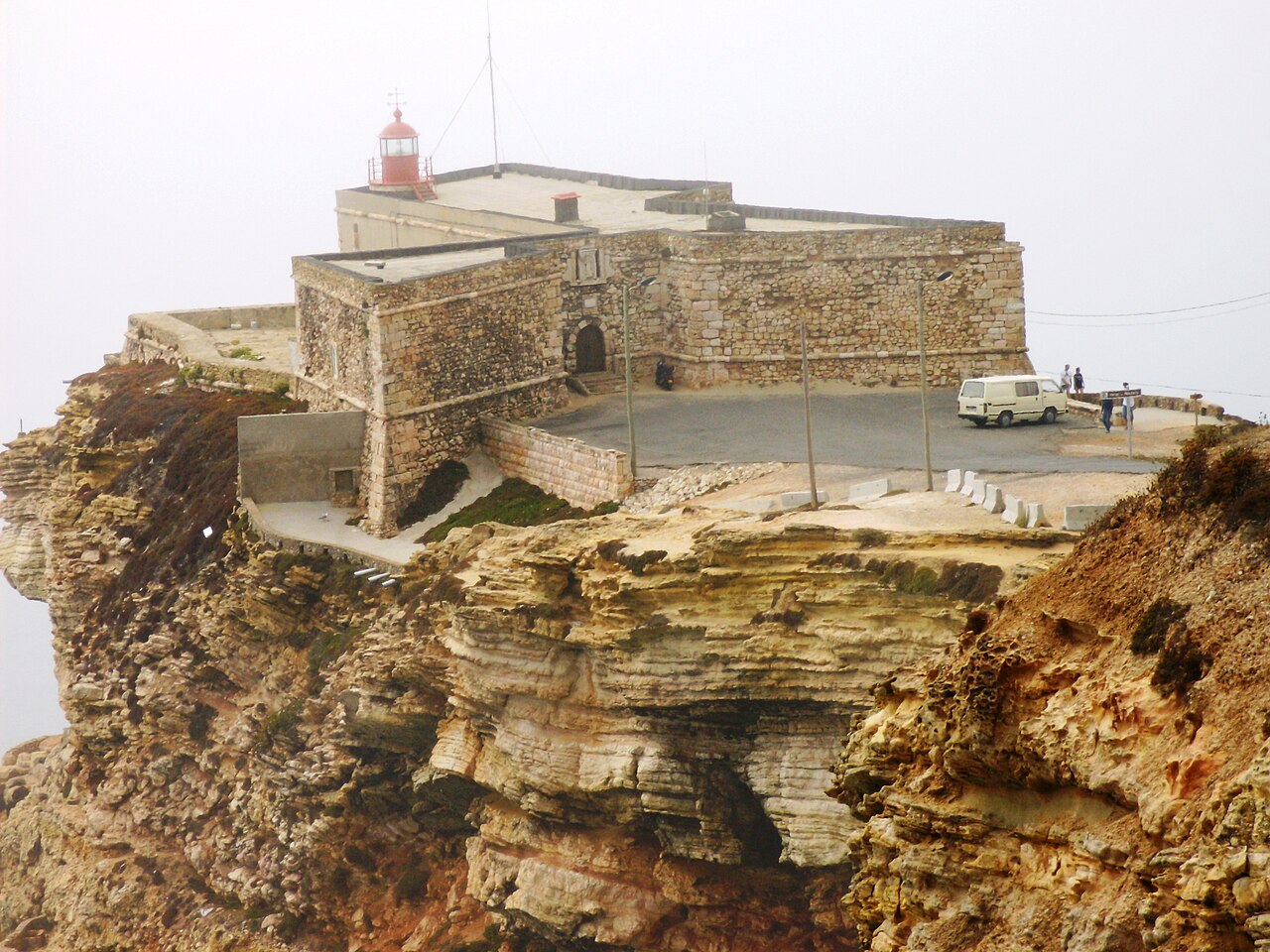
The Castle of Alcobaça stands prominently above the town of Alcobaça in Portugal, overlooking the fertile Baça River valley. Its origins are a subject of scholarly debate, with evidence suggesting that the site may have initially been fortified either by the Visigoths or by Muslim settlers during the early medieval period. The name "Alcácer-bem-el Abbaci" reflects a Moorish influence, possibly linked to a city gate in Morocco, indicating the castle's strategic importance in controlling the surrounding territory.
During the Christian Reconquista, the castle was captured by forces under King Afonso Henriques around 1148. Shortly thereafter, in 1153, the king granted the surrounding lands to the Cistercian monks, who founded the nearby Monastery of Santa Maria de Alcobaça. The monks were responsible for both cultivating the land and defending it, a dual role that was common in frontier regions during this period. Despite their efforts, the castle and region suffered from repeated Moorish raids in the 1190s, which led to the fortress falling into ruin.
Medieval reconstruction and fortification
King Sancho I later reclaimed the territory, restoring control to the monks. Under their stewardship, the castle was rebuilt as part of a comprehensive defensive network designed to protect the approaches to Lisbon. This network included other important fortifications such as Leiria, Pombal, and Óbidos. The castle's reconstruction incorporated both Romanesque and early Gothic architectural elements, reflecting the styles prevalent during the 12th and 13th centuries.
In the later 14th century, significant enhancements were made under the direction of Abbot Frei João de Ornelas. Around 1369, he financed the addition of a barbican—a fortified outer gateway—and undertook the reconstruction of collapsed towers and curtain walls. These improvements were funded through local taxation, underscoring the castle's continued strategic and administrative importance.
Damage, repairs, and later modifications
The castle sustained heavy damage during the earthquake of 1422, necessitating repairs completed by 1424. The keep, or Menagem Tower, was fully rebuilt in 1450 under the guidance of Abbot Frei Gonçalo Ferreira. This tower, situated on the western side facing the monastery, served as the stronghold's central defensive and residential structure.
During the 17th century, under the Philippine Dynasty when Spain ruled Portugal, the castle underwent further maintenance, including works carried out in 1627. The eastern tower was repurposed as a prison until it collapsed in the devastating 1755 Lisbon earthquake. Throughout its history, the castle's governors, known as alcaides, were appointed by the abbots of Alcobaça. Notably, Geraldo Pereira Coutinho, a university professor and canon, held this position in the early 18th century.
Decline and preservation efforts
By the 19th century, the castle's military role had diminished significantly, especially under Queen Maria II. Following the dissolution of the monastery in 1834, control of the castle passed to local authorities. In 1838, a demolition order led to the castle being largely dismantled, with its stones repurposed for construction within the town. The castle was officially declared extinct by 1854 and remained in ruins for over a century.
Preservation efforts began in the mid-20th century, focusing on stabilizing and partially reconstructing the remaining walls, particularly those facing the monastery. Archaeological investigations initiated in 2002, led by researchers Jorge António and Manuela Pereira, aimed to clarify the castle's origins and historical development through a combination of historical documentation and physical evidence.
Architectural features and surviving remains
The castle is situated on a hill approximately 70 meters above sea level, featuring an irregular layout that blends Romanesque and Gothic stonework. The surviving ruins primarily consist of limestone masonry walls forming the outer enclosure, which was originally reinforced by seven square towers. The western side hosts the detached keep (Menagem Tower), a key defensive structure oriented toward the monastery.
On the eastern side, an albarrana tower—a detached defensive tower typically positioned outside the main walls—is located between an inner wall and an oval-shaped barbican. The barbican, constructed in the 14th century during the enhancements by Abbot Frei João de Ornelas, is further fortified on its western flank by four turrets, two of which have a distinctive semicircular design.
The eastern tower, which served as a prison until its collapse in 1755, remains partially visible as a testament to its former use. A cistern originally designed to collect and store rainwater was adapted in the 20th century for potable water storage, reflecting the site's ongoing functional adaptations.
Restoration work in the 1950s concentrated on the wall facing the monastery, reconstructing sections based on historical records to stabilize the ruins. Cleaning and access improvements in 1956 enhanced the site's accessibility and understanding, followed by minor repairs in 1965 aimed at maintaining the remaining structures. Since 1978, the ruins have been protected as a Property of Public Interest, highlighting their cultural and historical value within the region.
Frequently asked questions (FAQ)
- What is the historical significance of the Castle of Alcobaça?
- The Castle of Alcobaça, built in the 12th century, is a symbol of the establishment of the Cistercian order in Portugal. It played a crucial role in the country's history, particularly during the Reconquista, serving as a stronghold that helped shape the region's cultural and religious landscape.
- When was the Castle of Alcobaça constructed?
- Construction of the Castle of Alcobaça began in the late 12th century and was completed in the early 13th century. The castle has since undergone various renovations, reflecting the architectural styles of different periods, but it retains much of its original medieval charm.
- Can I visit the Castle of Alcobaça?
- Yes, the Castle of Alcobaça is open to visitors year-round, allowing you to explore its rich history and stunning architecture. Guided tours are available, providing insights into the castle's significance and the stories behind its walls.
- What are the opening hours for the Castle of Alcobaça?
- The Castle of Alcobaça is typically open from 9 AM to 6 PM during the summer months and from 9 AM to 5 PM in winter. It is advisable to check the official website for any seasonal changes or public holiday schedules.
- Is it possible to access the Castle of Alcobaça with mobility issues?
- The Castle of Alcobaça has made efforts to improve accessibility for visitors with mobility challenges. However, due to its historical nature, some areas may still present difficulties, so it is recommended to contact the site in advance for specific accessibility information.
- What are the ticket prices for visiting the Castle of Alcobaça?
- Ticket prices for the Castle of Alcobaça are generally affordable, with discounts available for students, seniors, and children. It is best to check the official website for the most current pricing and any special offers.
- When is the best time to visit the Castle of Alcobaça?
- The best time to visit the Castle of Alcobaça is during the spring and early autumn when the weather is mild and the tourist crowds are smaller. Visiting during these seasons allows for a more enjoyable exploration of the castle and its surrounding gardens.
- What nearby attractions can I explore after visiting the Castle of Alcobaça?
- After visiting the Castle of Alcobaça, you can explore the nearby Monastery of Alcobaça, a UNESCO World Heritage site, renowned for its stunning Gothic architecture. Additionally, the picturesque town of Alcobaça offers charming cafes and shops that enhance the overall experience.
Information
Loading map...
Visitor reviews
No reviews yet. Been here? Write the first review and help other travelers!
Write the first reviewVisited this castle? Share your experience
Your review helps other travelers and adds first-hand knowledge to our encyclopedia.