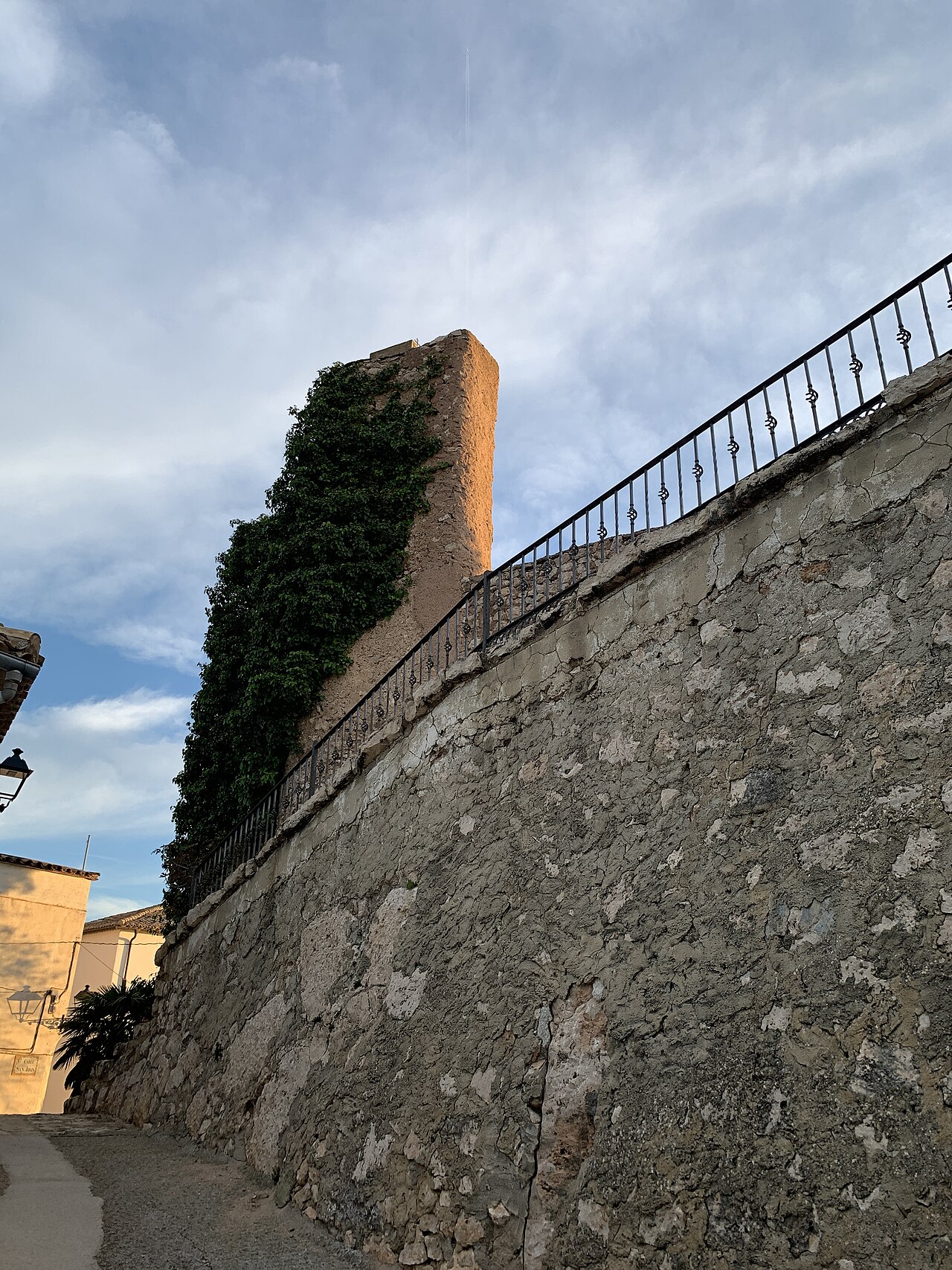
Ayora Castle
The Castle of Ayora stands as a remarkable example of medieval military architecture in the Valencia region of Spain. Built primarily in the 13th century after the Christian Reconquista, the castle occupies a strategic hilltop at 552 meters above sea level, commanding views over the surrounding valley. Its origins lie in an earlier Muslim fortress, reflecting the complex cultural and political transitions of the Iberian Peninsula during the Middle Ages.
The castle's location atop a prominent hill classifies it as a hill castle, designed to maximize natural defensive advantages. Its extensive defensive walls, towers, and a large central keep illustrate the military priorities of the era, while the presence of a multi-story palace residence and gardens reveal the dual role of the site as both fortress and noble dwelling.
Historical background and political context
The site of the Castle of Ayora was originally occupied by an Arabian fortification, noted by the 12th-century geographer Muhammad al-Idrisi. This early Muslim fortress underscored the strategic importance of controlling the Ayora Valley. Following the Reconquista, the castle was reconstructed by the Aragonese between 1239 and 1243 after they reclaimed the territory from Muslim rule.
Throughout the 13th and early 14th centuries, the castle and its valley were subject to shifting control between the kingdoms of Castile and Aragon. Notable treaties, including the Treaty of Almizra (1244), Treaty of Campillo (1281), and Treaty of Elche (1305), ultimately integrated the castle into the Kingdom of Valencia. These political changes reflect the broader contest for dominance in medieval Spain and the castle's role as a frontier stronghold.
Feudal lordship and ownership
During the 14th and 15th centuries, the castle functioned as a feudal lordship. It was under the possession of notable figures such as Admiral Bernardo de Sarriá before passing to Don Rodrigo Díaz de Vivar y Mendoza, the first Marquis of Cenete, in 1492. The fortress underwent significant renovations under his daughter, Mencía de Mendoza, in the 16th century, including the construction of the distinctive southern gate known as the Puerta Falsa.
Demographic changes and conflict
The early 17th century brought turmoil related to the Moriscos, Muslim converts to Christianity. Their rebellion and subsequent expulsion in 1609 led to the near depopulation of the Ayora Valley, impacting the castle's surrounding community. The fortress itself suffered damage in later conflicts, notably during the War of the Spanish Succession in 1707 when troops loyal to Philip V burned it, and again during the Napoleonic Wars in 1812 under French occupation.
Architectural features and layout
The Castle of Ayora exhibits a complex architectural ensemble shaped by its hilltop site. The castle's elongated plan follows the contours of the terrain, enclosing a variety of functional spaces.
The keep and defensive structures
At the heart of the fortress stands a large square keep, or tower of homage, constructed from a combination of masonry and finely cut ashlar stone blocks. This central tower incorporates remnants of Muslim rammed earth techniques, highlighting the layered history of construction. The keep served as the last line of defense and the lord's residence during sieges.
The castle is surrounded by approximately 900 meters of defensive walls reaching about six meters in height. These walls are reinforced by numerous towers, mostly square except for one semicircular tower, which provided flanking fire and increased defensive coverage. Moats and water defenses further enhanced the castle's protection, making direct assaults difficult.
Residential and auxiliary spaces
The fortress includes a four-story palace residence, which accommodated the noble family. Two fortified courtyards lie within the castle grounds: the larger Plaza de Armas features a geometric pebble pavement, serving as a central gathering and military assembly area, while the smaller southern courtyard functioned as the patio of the palace-fortress inhabited by the Marchioness of Cenete.
Additional buildings housed soldiers and servants, alongside practical installations such as aljibes—cisterns designed to collect and store rainwater, essential for sustaining the castle during sieges. The presence of gardens within the complex indicates attention to comfort and aesthetics alongside military utility.
Gates and decorative elements
The castle's access was controlled through two main gates. The northern gate connected the fortress to the town's upper neighborhood, Barrio Alto. The southern gate, Puerta Falsa, built in the 16th century under Mencía de Mendoza's patronage, is notable for its semicircular arch crafted from reddish limestone ashlar stones. It is framed by an alfiz, a rectangular border characteristic of Islamic architectural influence.
Above the Puerta Falsa once hung the coat of arms of the Marquisate of Cenete, now lost. Decorative elements near this gate include a carved baseboard mimicking a column attached to the wall, complete with a capital and base, and two corbels that originally supported a machicolation—a defensive feature allowing defenders to drop projectiles on attackers.
Today, the Puerta Falsa is no longer in use due to a quarry obstructing access, but its architectural details remain a testament to the castle's Renaissance-era modifications.
Decline, damage, and cultural significance
The castle's military importance declined after the 18th century, particularly following its partial destruction during the War of the Spanish Succession and later damage during the Napoleonic Wars. Despite being reduced to ruins, the castle's imposing profile and extensive remains continue to dominate the landscape.
In recognition of its historical and architectural value, the Castle of Ayora was declared a Bien de Interés Cultural in 2006, granting it protected status as a cultural heritage site. Conservation efforts aim to preserve its remains and promote understanding of its layered history, from Muslim origins through medieval Christian reconstruction and Renaissance adaptations.
The castle today offers visitors a tangible connection to the turbulent history of medieval Spain, illustrating the interplay of military necessity, noble residence, and cultural exchange. Its blend of Islamic and Christian architectural elements encapsulates centuries of Iberian history, making it a significant site for both historians and tourists alike.
Frequently asked questions (FAQ)
- How do I get to Ayora Castle?
- Ayora Castle is located in the municipality of Ayora in Spain. You can reach it by car or public transport from nearby cities, with well-marked roads leading to the castle. It is advisable to check local bus schedules if you plan to use public transportation.
- What is the historical significance of Ayora Castle?
- Ayora Castle dates back to the 11th century and was built during the period of Islamic rule in Spain. It played a crucial role in the Reconquista, serving as a military stronghold. The castle's rich history reflects the cultural and architectural influences of both Muslim and Christian eras.
- When was Ayora Castle last renovated?
- Ayora Castle has undergone several renovations throughout its history, with significant restoration efforts occurring in the late 20th century. These renovations aimed to preserve the castle's structure while making it accessible to visitors. The ongoing maintenance ensures that the castle remains a key historical site in the region.
- Can I explore the interior of Ayora Castle?
- Yes, visitors are welcome to explore both the interior and exterior of Ayora Castle. Guided tours are available, providing insights into the castle's history, architecture, and significance. Make sure to check the schedule for tours, as they may vary throughout the year.
- Why is Ayora Castle an important architectural site?
- Ayora Castle is a remarkable example of medieval military architecture, showcasing a blend of Islamic and Christian styles. Its well-preserved walls and towers offer a glimpse into the construction techniques of the era. The castle's architecture not only serves historical purposes but also captivates visitors with its scenic views of the surrounding landscape.
- Is it possible to visit Ayora Castle with children?
- Absolutely! Ayora Castle is family-friendly and can be enjoyed by visitors of all ages. The site offers open spaces for children to explore, and the historical context can be both educational and entertaining for young visitors.
- What are the opening hours of Ayora Castle?
- Ayora Castle is typically open to visitors from 10 AM to 6 PM, but hours may vary depending on the season and holidays. It's recommended to check the castle's official website or contact local tourism offices for the most current information on opening hours before your visit.
- What are the ticket prices for entering Ayora Castle?
- Admission to Ayora Castle is generally affordable, with tickets priced at around €4 for adults and discounted rates for children and seniors. Special family rates may also be available. Check the official site for any promotional offers or changes in pricing.
- What is the best time to visit Ayora Castle?
- The best time to visit Ayora Castle is during the spring and fall when the weather is mild and pleasant. These seasons offer comfortable temperatures for exploring the castle grounds and enjoying the surrounding scenery. Summer can be hot, while winter months may be chilly, so plan your visit accordingly.
- Are there any nearby attractions to Ayora Castle?
- Yes, there are several attractions near Ayora Castle, including local museums, scenic hiking trails, and other historical sites in the region. The picturesque town of Ayora itself offers charming streets, shops, and restaurants that make for a delightful visit. Exploring the surrounding countryside can also enhance your experience.
Information
Website
Visit websiteSources & official resources
Verify the information above using these authoritative references.
Loading map...
Visitor reviews
No reviews yet. Been here? Write the first review and help other travelers!
Write the first reviewVisited this castle? Share your experience
Your review helps other travelers and adds first-hand knowledge to our encyclopedia.