The Castle of Huete is a significant historical fortress located near the town of Huete in Spain. This hill castle occupies a strategic position atop Cerro Álvar Fáñez, a prominent hill that has served as a fortified site since ancient times. The castle's history spans multiple civilizations, starting from the Bronze Age through to the medieval period, reflecting the complex cultural and military developments of the region.
Archaeological evidence indicates that the site was originally settled during the Bronze Age, making it one of the oldest known fortified locations in the area. It is widely believed to correspond to the ancient Celtiberian town of Istonium, referenced by the geographer Claudius Ptolemy. This early settlement laid the foundation for later urban and defensive structures.
During the 6th century BCE, the Romans established a fortified town named Julia Opta on this hilltop. The Romans capitalized on the local gypsum deposits, which were economically valuable, and their presence influenced the site's early fortifications and urban layout. Roman construction techniques and materials were later repurposed in subsequent building phases, demonstrating continuity across eras.
Medieval origins and muslim fortification
Following the decline of Roman authority, the area came under Visigothic control in the late 5th century CE, although few architectural remains from this period survive. The 8th century saw the arrival of Berber groups, who played a key role in the region's Islamic history. By the 9th century, the Muslim Taifa king of Seville, Al-Mutamid, established the settlement of Wabda on the ruins of Julia Opta. He constructed an alcazaba, a type of fortress typical of Andalusian military architecture, on the hill. This fortress served as a defensive and administrative center, consolidating Muslim power in the area.
Christian conquest and later medieval history
In 1150, King Alfonso VII of Castile led Christian forces to capture the town of Wabda, marking the foundation of the modern town of Huete. Subsequently, the castle became a contested site among prominent noble families, especially the Castro and Lara families. By around 1164, the Lara family secured control and undertook extensive remodeling of the fortress. During this period, the castle became known as Castillo de Luna.
The castle's defensive capabilities were tested in 1174 during a siege by Almohad forces. The fortress successfully resisted the attack, maintaining Christian dominance in the region. However, as the Christian-Muslim frontier moved southward over the following centuries, the castle's strategic importance diminished, leading to gradual decline and disuse.
Architectural features and remains
The Castle of Huete is characterized by its elongated layout, which follows the natural contours of the hilltop. The fortress is primarily constructed from roughly shaped stone blocks using the sillarejo technique. Many stones were likely recycled from the earlier Roman settlement of Julia Opta, illustrating the site's layered history.
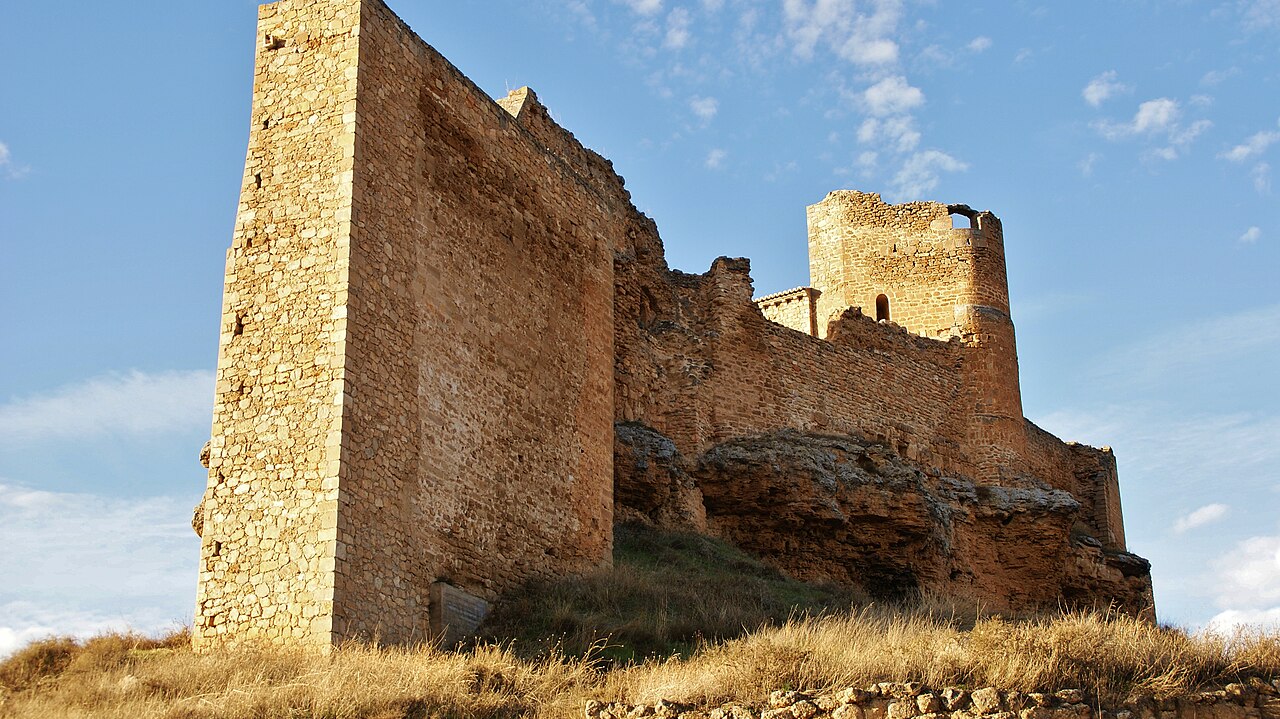
Originally, the castle was fortified by fifteen towers along its perimeter, with an additional tower inside the walls. The most prominent tower, located at the southeast corner, measures approximately 12 meters in height and 22 meters in width. This tower underwent partial restoration in the 20th century, preserving some of its imposing presence.
Extending from the main southeastern tower are sections of outer walls that include smaller towers dating back to earlier periods. Some towers originate from the 9th century with Berber emiral influences, while others date to the 10th-century Caliphal period of Muslim rule. These smaller towers feature characteristic stepped talus bases, constructed from brick, which enhanced their defensive strength against siege tactics.
To the north, a tower connects with a series of five additional towers lining a defensive wall that once enclosed the adjacent settlement. This arrangement created a fortified link between the southern and northern ends of the castle complex.
Within the castle walls, there are five storage silos used for grain and supplies, alongside a large cistern or aljibe covering approximately 25 square meters. The cistern is divided into two chambers and was essential for water storage, ensuring the fortress could withstand sieges and droughts. Complementary water channels and conduits form a sophisticated hydraulic system.
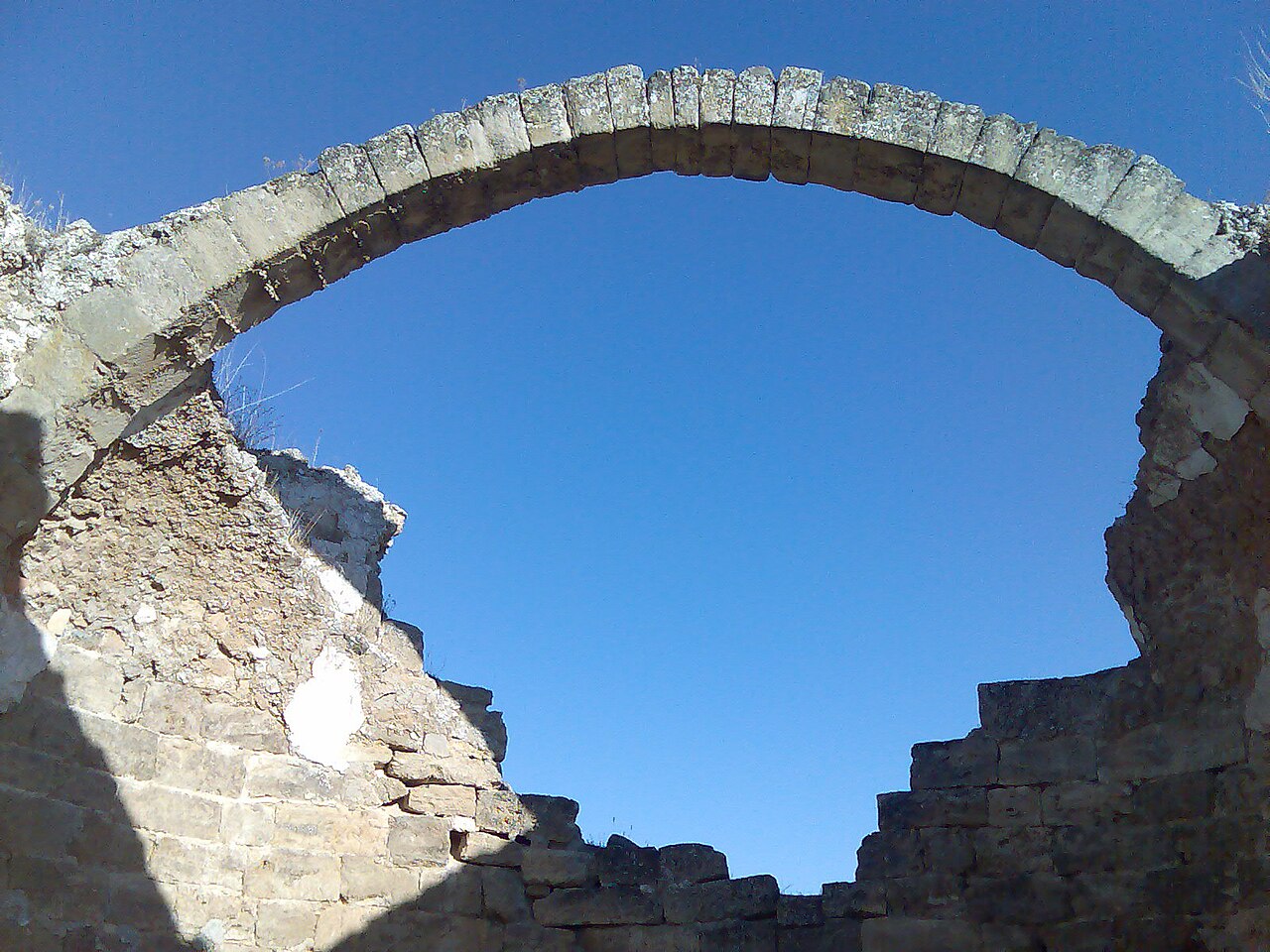
Today, the castle remains largely in ruins, but key elements such as the restored southeastern tower, parts of the enclosing walls, and internal storage features survive. A notable modern addition at the hilltop is a large stone pillar constructed from castle stones, supporting a monument dedicated to the Sacred Heart of Jesus. This monument reflects a later symbolic use of the site rather than its original military function.
Historical significance and cultural heritage
The Castle of Huete stands as a testament to the region's layered history, encompassing Bronze Age settlements, Roman urban development, Visigothic presence, and Islamic military architecture through to the Christian Reconquista. Its strategic location allowed control over key communication routes and surrounding territories, making it a focal point in medieval military and political conflicts.
The castle's evolution from a Roman fortified town to a Muslim alcazaba and later a Christian stronghold illustrates the dynamic cultural and architectural influences that shaped Spain's historical landscape. Despite its current ruined state, the site offers valuable insights into construction techniques, defensive strategies, and settlement patterns over more than two millennia.
Frequently asked questions (FAQ)
- When was the Castle of Huete originally built?
- The Castle of Huete was originally constructed during the medieval period by Muslim forces, with earlier settlements dating back to the Bronze Age and Roman times.
- What architectural features are notable at the Castle of Huete?
- Notable features include the large southeastern tower, multiple smaller towers with stepped talus bases, storage silos, and a cistern (aljibe) for water storage.
- Can visitors see the Castle of Huete today?
- Yes, visitors can explore the ruins of the Castle of Huete, including the restored southeastern tower and remaining defensive walls.
- What historical periods are represented at the Castle of Huete?
- The site reflects a range of periods including Bronze Age settlements, Roman Julia Opta, Visigothic control, Islamic rule with the alcazaba, and Christian medieval fortifications.
Information
Loading map...
Visitor reviews
No reviews yet. Been here? Write the first review and help other travelers!
Write the first reviewVisited this castle? Share your experience
Your review helps other travelers and adds first-hand knowledge to our encyclopedia.