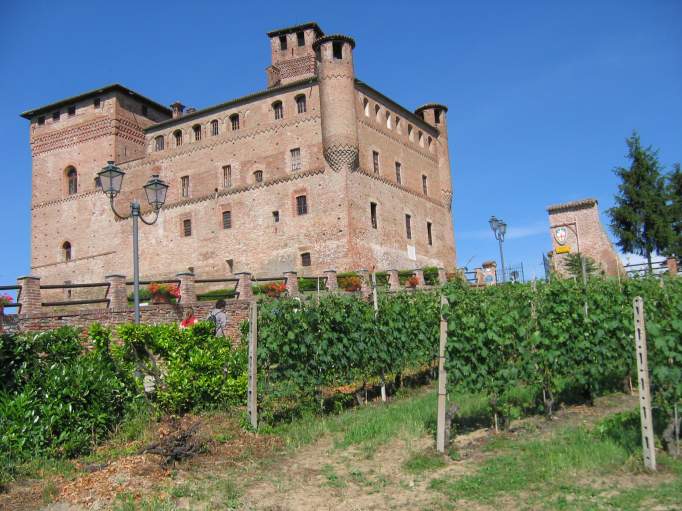
Barolo Wine Museum
Barolo Wine Museum, also known as WiMu, is a unique multimedia museum dedicated to the history and culture of wine, housed within the historic Falletti Castle in Barolo, Italy. This castle, dating back to the 10th century, offers visitors a fascinating journey through the evolution of viticulture and the profound impact of wine on human civilization across millennia. The museum spans 25 rooms over four floors, blending immersive exhibits with the castle's rich architectural heritage.
The castle’s medieval origins and early history
Falletti Castle was originally constructed during the early medieval period, authorized by Berengar I of Italy as a defensive stronghold against frequent incursions by Hungarian and Saracen forces. The earliest surviving parts of the castle include the keep or mastio, a large square tower, and the base of the eastern tower, both dating from the 10th and 11th centuries. These elements exemplify the military architecture of the time, designed for defense and control over the surrounding hilltop landscape.
In the 13th century, the castle came under the control of the communal authorities of Alba before passing to the noble Falletti family by 1325. The Fallettis undertook extensive renovations, expanding and adapting the castle to serve both as a fortified residence and a symbol of their status within the region.
Renaissance and early modern transformations
The castle endured significant turmoil in the 16th century, including a notable looting in 1544 by the French governor of Cherasco. Following this, the Falletti family, particularly Giacomo and Manfredo Falletti, led restoration efforts that preserved the castle's defensive features while enhancing its residential qualities. The castle's architecture from this period reflects a blend of military necessity and Renaissance artistic influences.
19th-century noble residence and cultural hub
By the early 19th century, the Falletti family shifted their primary residence to Palazzo Barolo in Turin, and the castle transitioned into a rural estate. The last noble occupant, Marchioness Juliette Colbert Falletti, was a notable patron of the arts and culture. The castle also became home to the Italian writer and patriot Silvio Pellico, who managed the extensive library and contributed to the intellectual life of the estate.
The interior of the castle features richly decorated rooms such as the Salone delle Quattro Stagioni (Hall of the Four Seasons) with its early 19th-century Empire style furnishings and paintings, and the Sala degli Stemmi (Hall of Coats of Arms), adorned with heraldic emblems and a 16th-century stucco fireplace. The Marchioness’s chamber contains one of Italy’s rare surviving Empire-style beds, while Pellico’s room is painted to simulate luxurious fabric hangings.
20th-century educational use and modern restoration
After the death of Marchioness Juliette Colbert Falletti in 1864, the castle was acquired by the Opera Pia Barolo and converted into Collegio Barolo, a school for disadvantaged youth, which operated until 1958. This period saw significant internal modifications to accommodate educational functions.
In 1970, the castle was purchased by the municipality of Barolo following a public fundraising campaign. Since then, it has undergone careful restoration and has been repurposed as a cultural center. It now houses the Regional Enoteca del Barolo, an ethnographic and enological museum, and exhibition spaces for art and photography, linking the historic structure to the vibrant cultural life of the Piedmont region.
Architectural features and castle layout
Falletti Castle is a prominent hilltop fortress characterized by its heavy, blocklike design typical of medieval military architecture. Its irregular layout reflects the complex history of construction phases and renovations over the centuries. The thick curtain walls and massive structure convey its original defensive purpose.
The castle’s central feature is the large square keep, one of the oldest surviving parts, complemented by two substantial cylindrical turrets integrated into the curtain walls. These rounded towers enhance the castle’s defensive capabilities and contribute to its distinctive silhouette.
Inside, the noble floor contains several historically significant rooms, including the Hall of the Four Seasons and the Hall of Coats of Arms, both showcasing artistic and heraldic decorations from different periods. The castle also preserves a historic library of approximately 3,000 volumes dating from the 15th to 19th centuries.
Below the castle, the restored ancient cellars serve as the location of the Regional Enoteca del Barolo, offering visitors a chance to taste wines from each of the 11 Barolo-producing towns, thus connecting the medieval heritage of the castle with the region’s renowned wine culture.
Cultural significance and visitor experience
The Barolo Wine Museum offers an immersive experience that begins with the Garden of Eden exhibit, symbolizing the grape as the forbidden fruit, and proceeds through the history of wine from ancient Mesopotamia to modern times. The museum highlights wine’s influence on religion, art, music, literature, and mythology, featuring interactive installations such as a kitchen and a small movie theater.
Designed by Swiss museum exhibit designer François Confino and opened in 2010, the museum also explores how Barolo wine became a favorite among 19th-century European rulers. Visitors can enjoy tastings in the castle’s historic wine cellar, enhancing the educational and sensory experience.
Falletti Castle is part of the Castelli Doc network, connecting eight castles in Piedmont, and participates in the Castelli Aperti program, which promotes access to historic castles in the region, underscoring its importance as a cultural landmark.
Frequently asked questions (FAQ)
- How do I get to the Barolo Wine Museum?
- The Barolo Wine Museum is easily accessible by car and public transport. If you are traveling by train, the nearest station is in Alba, from which you can take a bus or taxi to Barolo.
- What is the historical significance of the Barolo Wine Museum?
- The Barolo Wine Museum is dedicated to the history and culture of wine production in the Barolo region, known for its exceptional Nebbiolo grapes. It showcases the evolution of winemaking techniques and the importance of wine in local heritage.
- When was the Barolo Wine Museum established?
- The Barolo Wine Museum was established in 2010, located within the historic castle of Barolo. It was created to promote and preserve the rich winemaking traditions of the area.
- Can I take a guided tour of the museum?
- Yes, guided tours are available and provide an in-depth look at the exhibits and the history of Barolo wine. It's recommended to book in advance, especially during peak tourist seasons.
- Why is the architecture of the Barolo Wine Museum notable?
- The museum is housed in the 10th-century Barolo Castle, which features stunning medieval architecture and panoramic views of the surrounding vineyards. This blend of history and design enhances the visitor experience.
- Is it possible to visit the museum year-round?
- The Barolo Wine Museum is open year-round, though hours may vary seasonally. It's best to check the official website for the most current opening hours and any holiday closures.
- What are the ticket prices for the Barolo Wine Museum?
- Ticket prices for the Barolo Wine Museum are generally reasonable, with discounts available for students and seniors. Family packages and group rates can also be arranged, making it accessible for all visitors.
- What is the best time to visit the Barolo Wine Museum?
- The best time to visit the Barolo Wine Museum is during the spring and fall when the weather is mild and the vineyards are particularly beautiful. Additionally, these seasons often feature local wine festivals and events that enhance the experience.
- Are there any nearby attractions to visit after the museum?
- Yes, after visiting the Barolo Wine Museum, you can explore nearby attractions such as the Barolo Castle itself, local wineries, and the picturesque village of Barolo. Alba, known for its truffles and historical sites, is also just a short drive away.
Information
Website
Visit websiteSources & official resources
Verify the information above using these authoritative references.
Loading map...
Visitor reviews
No reviews yet. Been here? Write the first review and help other travelers!
Write the first reviewVisited this castle? Share your experience
Your review helps other travelers and adds first-hand knowledge to our encyclopedia.