Castle of Galve de Sorbe
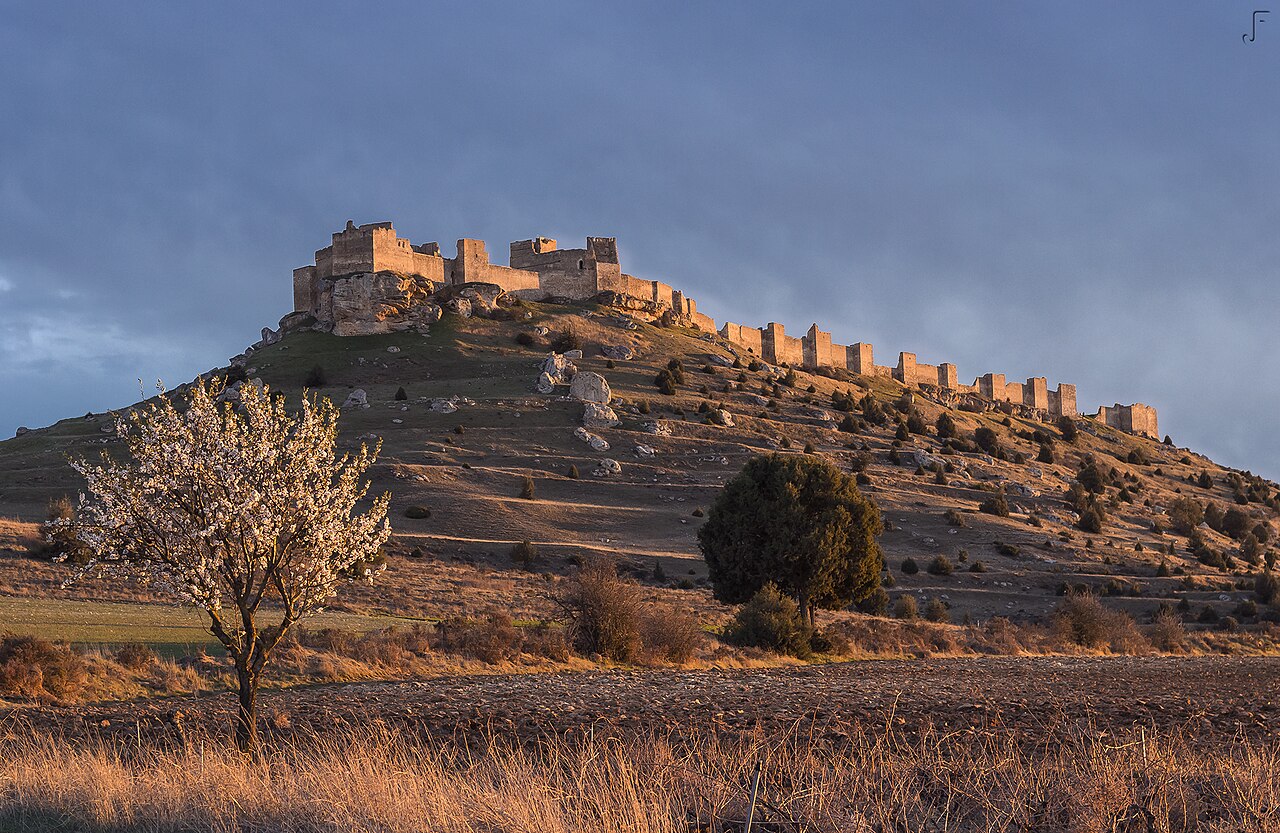
The Castle of Galve de Sorbe is a historic hill castle located northwest of the village of Galve de Sorbe in Spain. This mountain fortress stands on a strategic elevation, reflecting its longstanding military and residential significance. Its origins date back to an earlier Andalusian fortress that marked the frontier between the Caliphate of Córdoba and the Kingdom of Castile, highlighting its role in the complex medieval border dynamics of the Iberian Peninsula.
Following the Christian reconquest in the 11th century, the territory of Galve was incorporated into the villa and tierra of Atienza. This transition marked a shift in control and the beginning of Castilian influence over the region. By the 13th century, the castle underwent significant reconstruction under the direction of Infante Don Juan Manuel, a notable medieval nobleman and writer, who reinforced the castle’s defensive and residential functions in accordance with the evolving political landscape.
Medieval reconstruction and noble ownership
During the 14th century, the castle’s history was marked by political conflict and changes in ownership. After disputes with King Alfonso XI of Castile, the castle was dismantled by royal decree, and the surrounding population was placed under direct crown control. In 1354, King Pedro I granted the lordship of Galve to Íñigo López de Orozco. Following López de Orozco’s assassination, the castle passed through various hands until Diego López de Zúñiga acquired it in 1405.
Significant expansion occurred in 1468 when Diego López de Zúñiga, grandson of the earlier lord, initiated the construction of a new palatial castle on the site. This phase marked a transformation from purely military fortress to a residence reflecting Renaissance influences and noble status. Over subsequent centuries, the castle was held by several prominent noble families, including the Zúñiga Avellaneda, de la Cerda, Silva, and Mendoza lineages, before ultimately becoming part of the House of Alba estates in the 18th century.
Architectural features and defensive structures
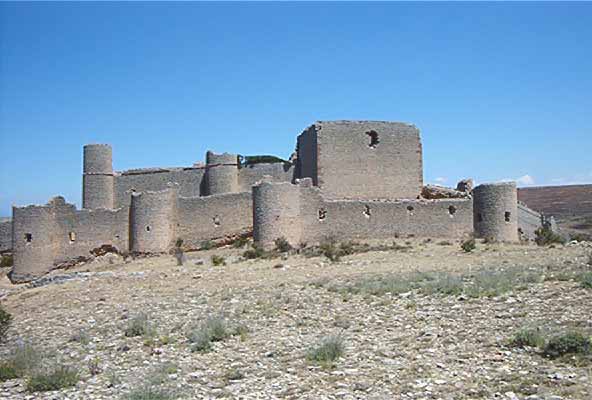
The castle occupies an irregular quadrilateral enclosure fortified by a robust perimeter wall approximately two meters thick. This wall is topped with battlements and features four square towers at each corner, which served as key defensive strongpoints. Additional rounded towers are situated along the eastern and southern walls, enhancing the castle’s defensive coverage.
One of the most notable architectural elements is the semicircular tower on the southern side, distinguished by its hemispherical vaulted ceiling. This tower contains carved coats of arms of the castle’s historic patrons, including prominently displayed heraldic shields of the House of Zúñiga, which provide valuable insight into the castle’s noble affiliations.
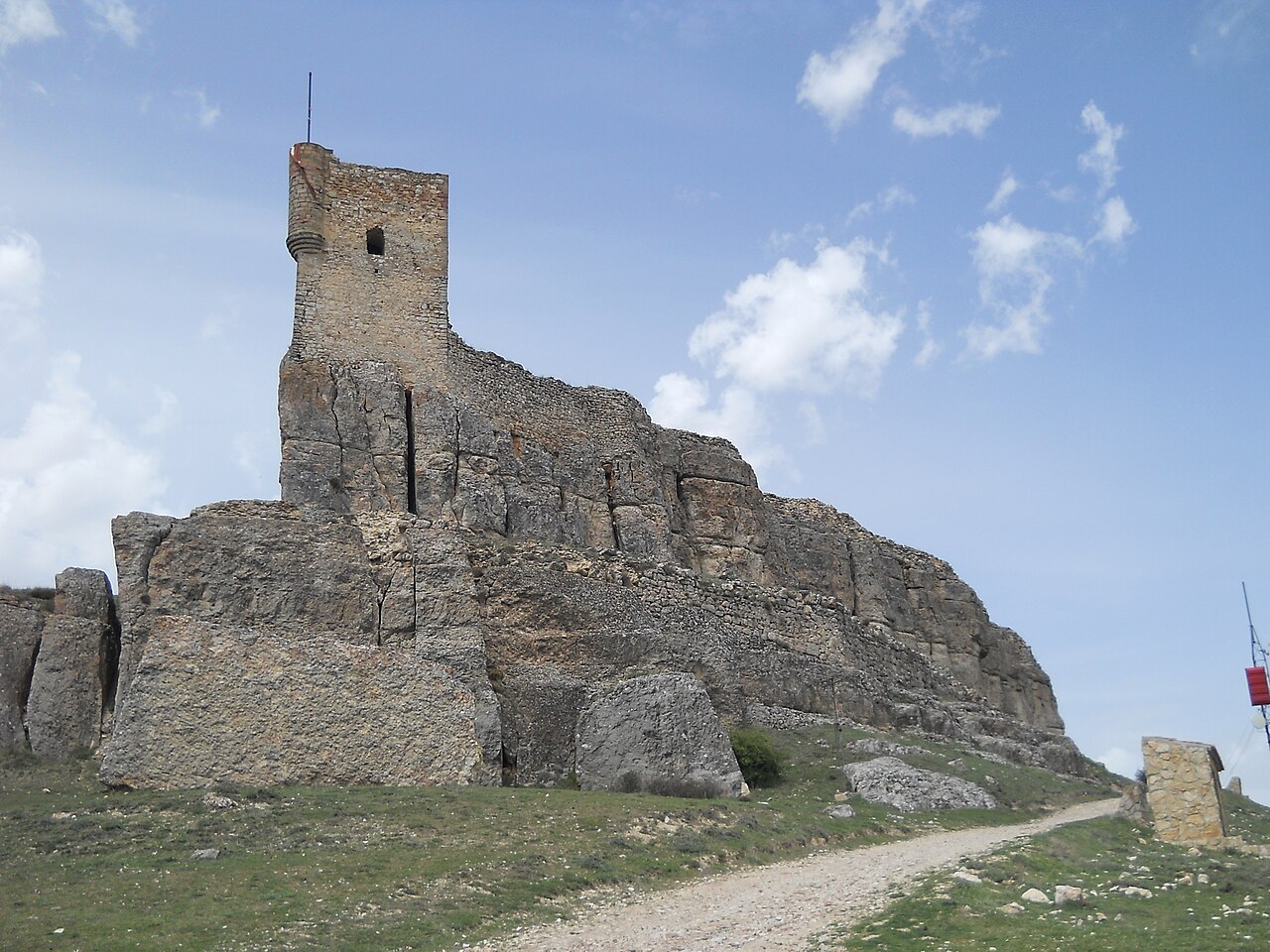
The keep, or tower of homage, is the dominant feature of the northern enclosure. This imposing square tower measures roughly 10 meters per side and rises to about 20 meters over five stories. The upper floor houses a large stone fireplace beneath a broad, flattened arch, with multiple windows providing light and ventilation. Surrounding this chamber is a terrace supported by modillions—decorative stone brackets carved with triple moldings—that uphold a projecting parapet.
One wall of the keep bears the coat of arms of the House of Arellano, linked through marriage to the Avellaneda family, underscoring the intertwined noble connections represented in the castle’s iconography.
Residential quarters and water supply
Inside the walls lies a spacious courtyard bordered by various residential chambers and halls arranged as palace quarters. These spaces reflect the castle’s dual function as both a defensive stronghold and a noble residence. Archaeological conservation efforts have focused on uncovering the medieval cistern, or aljibe, a vital water reservoir that ensured the castle’s self-sufficiency during sieges. This feature has been carefully cleaned and stabilized, demonstrating the importance of water management in medieval fortifications.
Modern history and preservation efforts
The castle endured significant damage during the Third Carlist War in 1873, which led to its abandonment. Subsequently, the House of Alba transferred the remains to the Spanish State, which auctioned the property in 1971. Since then, private owners have undertaken partial reconstruction and ongoing conservation work to preserve the castle’s structural integrity and historical significance.
Restoration efforts in the late 20th century recovered substantial sections of the enclosing walls and adapted some rooms for habitation, although some renovations were later dismantled to better respect the original medieval fabric. Current projects emphasize clearing debris, structural consolidation, and recovering original architectural elements, maintaining the castle’s enduring presence as a well-preserved example of a hill castle with deep historical roots.
The Castle of Galve de Sorbe remains a significant monument reflecting the complex history of frontier defense, noble residence, and architectural evolution in medieval and early modern Spain. Its combination of military fortification and palatial elements illustrates the shifting priorities of castle construction over centuries, from martial necessity to noble prestige.
Frequently asked questions (FAQ)
- How do I visit the castle of Galve de Sorbe?
- The castle is privately owned and may have limited public access. Visitors should check local tourism resources or contact the owner for visiting opportunities and guided tours.
- What is the historical significance of the castle of Galve de Sorbe?
- The castle served as a frontier fortress between the Caliphate of Córdoba and the Kingdom of Castile, later becoming a noble residence reflecting various historical periods and families.
- When was the castle of Galve de Sorbe built?
- The castle's origins date to an earlier Andalusian fortress, with major reconstruction in the 13th century and significant expansion in the 15th century.
- Can I see coats of arms at the castle?
- Yes, several heraldic shields, including those of the House of Zúñiga and House of Arellano, are carved into towers and walls, showcasing the castle’s noble heritage.
- Is the castle accessible year-round?
- Access depends on private ownership and local conditions. It is advisable to verify opening times in advance, as the castle may not be open year-round to the public.
Information
Sources & official resources
Verify the information above using these authoritative references.
Loading map...
Visitor reviews
No reviews yet. Been here? Write the first review and help other travelers!
Write the first reviewVisited this castle? Share your experience
Your review helps other travelers and adds first-hand knowledge to our encyclopedia.