Caracena Castle
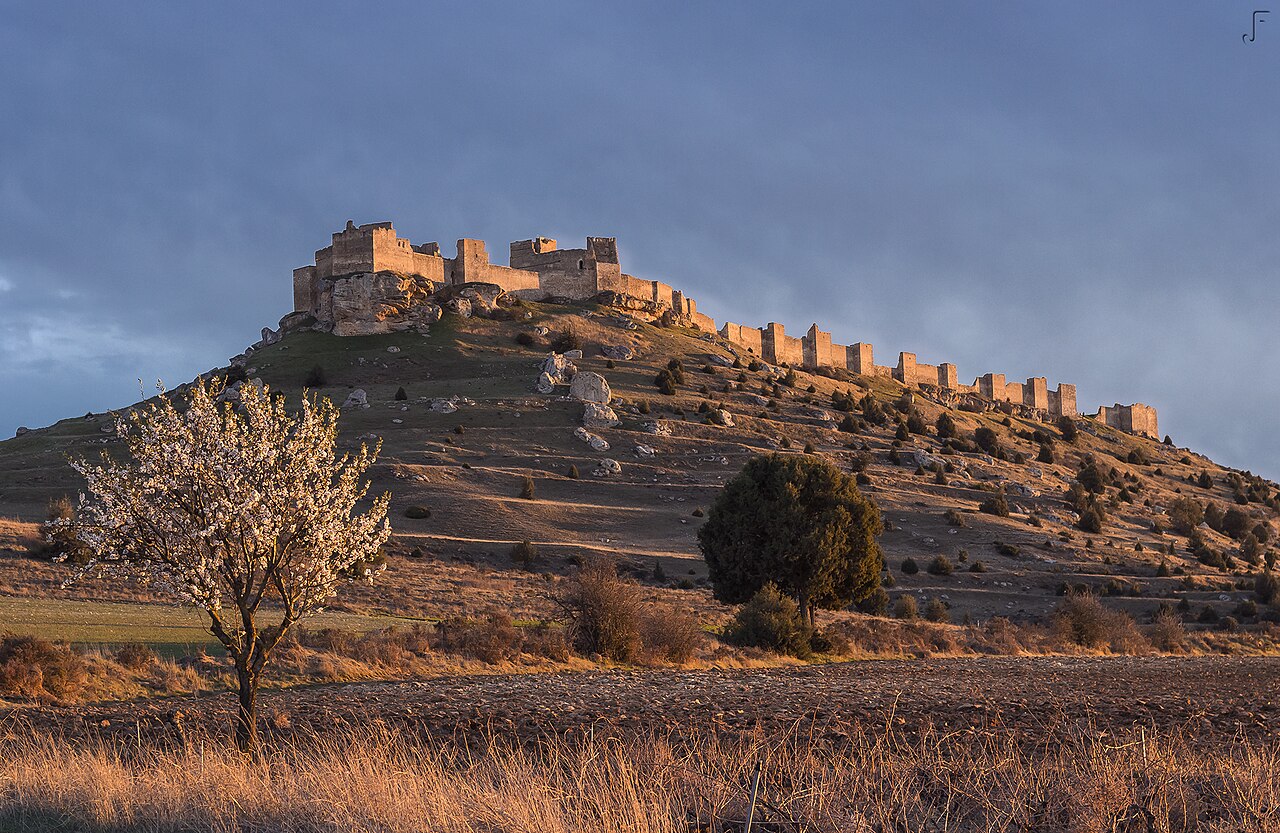
Caracena Castle stands as a significant example of a late medieval hill castle in Spain, located near the village of Caracena. Its strategic position atop a hill rising 1150 meters above sea level, flanked by two ravines, highlights its military and territorial importance. The castle's history spans several centuries, with origins that predate the 12th century, making it a valuable monument reflecting the evolution of medieval fortifications in the Iberian Peninsula.
The earliest known mention of the castle dates from 1136, during a territorial dispute between the dioceses of Osma and Sigüenza. A sentence issued by Cardinal Guido, representing Pope Innocent II, confirms the castle's existence as a notable stronghold by the early 12th century. This ecclesiastical involvement underscores the castle's role not just as a military fortress but as a symbol of regional power and influence within the church and secular authorities.
Throughout the Middle Ages, Caracena Castle was an active defensive site, witnessing various conflicts tied to the shifting political landscape of Spain. In the 15th century, it became a focal point in the struggles surrounding the consolidation of royal authority under the Catholic Monarchs. The castle was held by the noble family of the Tovars, with Juan de Tovar and his successor Francisco de Tovar as notable lords. Rival factions, led by Don Pedro de Acuña, the Count of Buendía and a royal supporter, contested the fortress. After its capture by Acuña's forces, Francisco de Tovar was forced to partially dismantle the castle, marking a turning point in its military relevance.
Reconstruction and architectural evolution in the late 15th century
In 1491, Alfonso Carrillo de Acuña, nephew of the Archbishop of Toledo, acquired the lordship of Caracena and initiated a comprehensive rebuilding program. This reconstruction, spanning approximately five years, transformed the castle into a modern fortress adapted to the emerging challenges of gunpowder warfare. The design incorporated innovative military architecture, including artillery bastions, gunports, and reinforced walls capable of withstanding cannon fire.
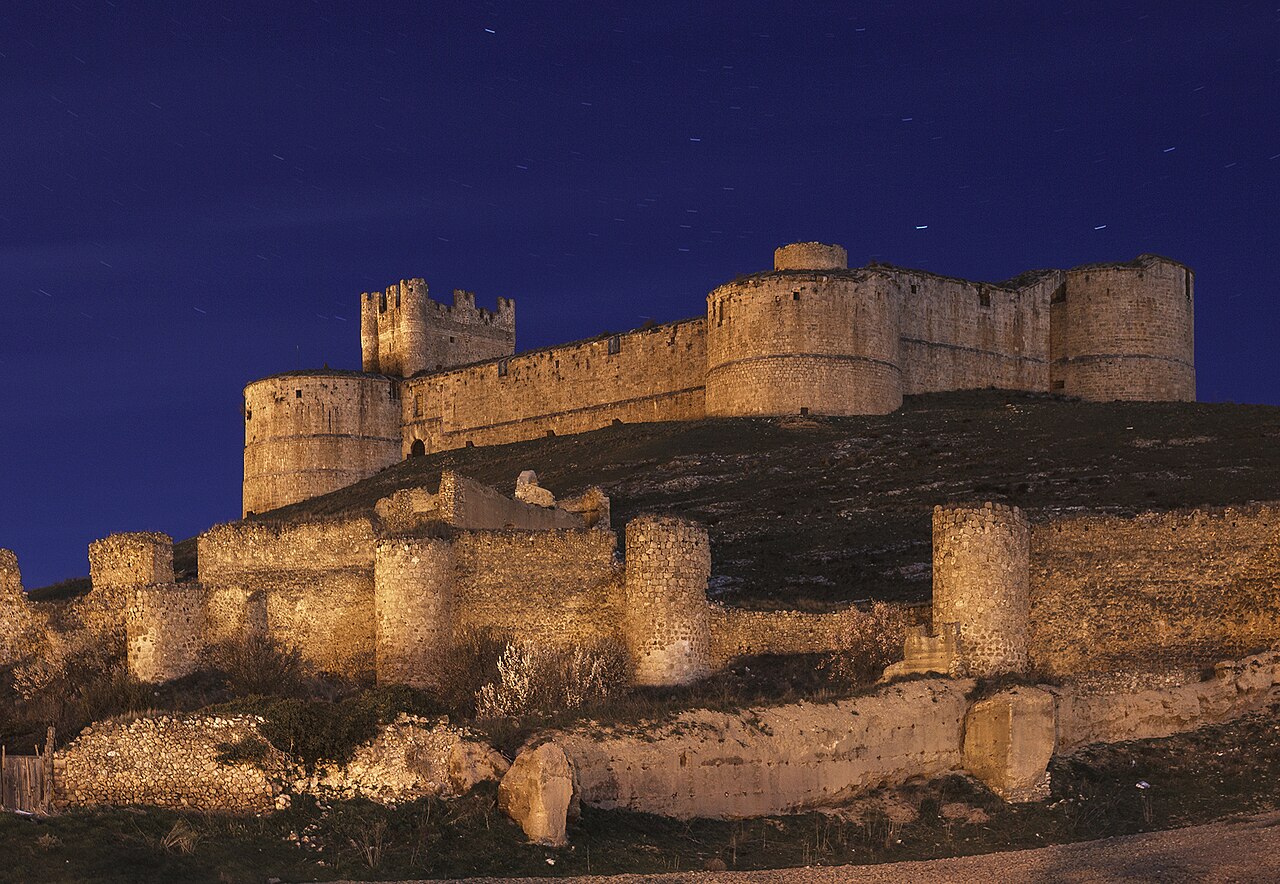
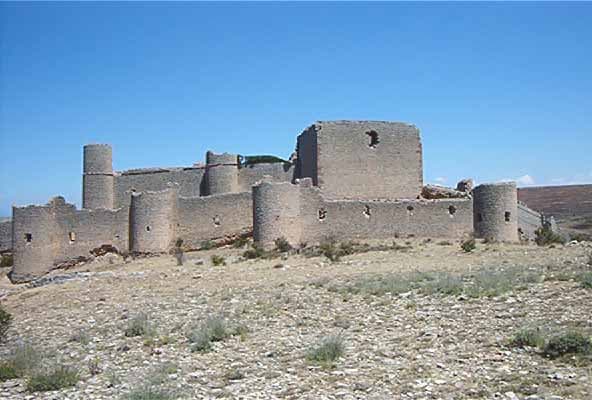
The castle's layout features a trapezoidal inner ward anchored by a prominent rectangular keep tower with a strong prism-like form, rebuilt during this period. Surrounding the inner ward are five bastions (cubelos), projecting defensive platforms that allowed defenders to cover the curtain walls with crossfire. The entire complex is protected by a double enclosure system separated by an artificial moat, enhancing its defensive depth.
Access to the fortress was carefully controlled through a zig-zag path designed to slow and expose attackers. The outer ward, encircling the inner defenses, is fortified by a second parallel wall featuring ten hollow bastions specifically constructed for artillery use. This adaptation reflects the castle's role as a transitional fortress bridging medieval and early modern military architecture.
Architectural features and defensive elements
The castle's surviving structures offer insight into late medieval military engineering. The vaulted rooms and cisterns within the castle highlight the importance of water storage and secure living quarters during sieges. Projecting guard posts or turrets provided sentries with vantage points to monitor the surrounding landscape and defend the walls effectively.
The walls are pierced with multiple gunports, cleverly designed to protect defenders while allowing the use of firearms and small artillery. These openings illustrate the adaptation of traditional castle defenses to the new realities of warfare dominated by gunpowder weapons.
Historical significance and decline
Caracena Castle's history is marked by its role in regional power struggles and the broader military transformations of late medieval Spain. Its reconstruction under Alfonso Carrillo de Acuña symbolizes the shift from feudal fortresses to artillery-capable strongholds, reflecting the changing nature of warfare during the late 15th century.
Despite its formidable design, the castle eventually fell into decline. By the early 21st century, the fortress was in a state of serious decay, with partial collapses of walls and the keep tower documented in 2016. The site is currently listed on the Red List of Heritage at Risk by Hispania Nostra, emphasizing the urgent need for preservation to prevent further deterioration of this culturally and architecturally significant monument.
Location and strategic importance
Perched atop a hill overlooking the surrounding landscape, Caracena Castle commanded key routes and natural defenses provided by the adjacent ravines and river. This location allowed control over regional movement and served as a deterrent against invading forces. The castle's position exemplifies the strategic considerations typical of hill castles in medieval Spain, where elevation and natural terrain were integral to defense.
Current condition and preservation efforts
Today, Caracena Castle remains a partially preserved ruin, with significant sections of its walls and towers still standing. The structural integrity of the keep and bastions is compromised, and ongoing erosion threatens the remaining fabric. Preservation efforts face challenges due to the castle's remote location and the extent of damage suffered over centuries.
Its inclusion on the Red List of Heritage at Risk highlights the cultural value of Caracena Castle and the necessity for conservation initiatives. These efforts aim to stabilize the ruins, prevent further collapse, and promote awareness of the castle's historical and architectural importance within Spain's medieval heritage.
Visitor experience and cultural heritage
While the castle is not fully restored, visitors can explore the evocative ruins that tell the story of a fortress adapting to the seismic shifts in military technology and political power during the late Middle Ages. The site offers panoramic views of the surrounding landscape, connecting visitors with the natural and historical context of the fortress.
Caracena Castle stands as a testament to the resilience and transformation of medieval fortifications in Spain, bridging the gap between traditional castle architecture and the demands of early modern warfare. Its ruins continue to inspire interest among historians, architects, and tourists alike, underscoring its enduring legacy in the cultural landscape of the region.
Frequently asked questions (FAQ)
- When was Caracena Castle originally built?
- Caracena Castle was first mentioned in 1136, indicating its origins date back to at least the early 12th century.
- What architectural features make Caracena Castle unique?
- The castle features a trapezoidal inner ward with a rectangular keep tower, five bastions, a double enclosure with an artificial moat, and gunports adapted for artillery use.
- Is Caracena Castle accessible to visitors today?
- As a ruin in a state of decay, Caracena Castle is accessible but lacks full restoration, so visitors should exercise caution when exploring the site.
- Why is Caracena Castle listed on the Red List of Heritage at Risk?
- The castle is listed due to serious structural decay and partial collapses, which threaten its preservation and historical integrity.
- What historical events influenced the castle's reconstruction in 1491?
- The castle was rebuilt by Alfonso Carrillo de Acuña after being dismantled during local conflicts tied to the consolidation of royal authority under the Catholic Monarchs.

Information
Loading map...
Visitor reviews
No reviews yet. Been here? Write the first review and help other travelers!
Write the first reviewVisited this castle? Share your experience
Your review helps other travelers and adds first-hand knowledge to our encyclopedia.