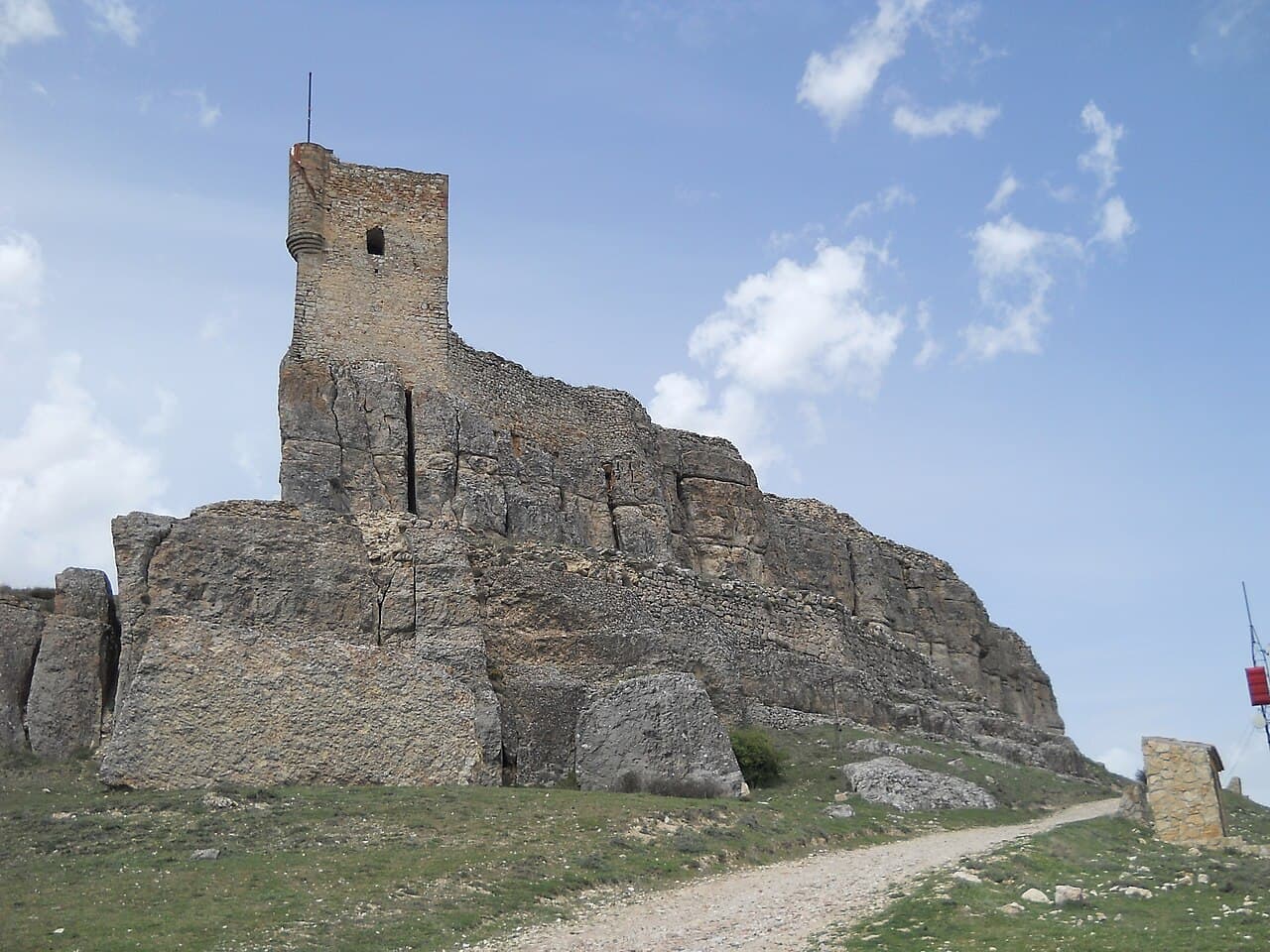
Castle of Atienza
The Castle of Atienza stands as a monumental testament to the complex history of medieval Spain, situated in the town of Atienza. This hill castle occupies a commanding position atop a narrow, rocky promontory, a site chosen for its natural defensive advantages and strategic visibility over the surrounding landscape. Its origins date back to the Muslim period between the 11th and 12th centuries, though the site itself had been fortified since antiquity by Roman and Visigothic civilizations, and even earlier by Celtiberian inhabitants known as Thytia.
Throughout its extensive history, the castle has witnessed a succession of cultural influences and military conflicts that shaped its architecture and significance. Initially serving as a stronghold for the Celtiberians against Roman expansion, it later became a Visigothic defensive site before the Muslim rulers constructed the fortress that forms the core of the present ruins. The castle's location made it a focal point during the Reconquista, the Christian campaign to reclaim Iberian territories from Muslim control. The fortress changed hands multiple times during this period until Alfonso VI secured it in 1085, establishing a lasting Christian presence.
Historical significance and medieval expansions
In the mid-12th century, Alfonso VII granted Atienza a broad communal territory, reflecting the town's growing importance. The castle underwent significant enlargement during the reign of Alfonso VIII, who expanded the fortifications to include a second, outer wall. This extension enclosed newly developed neighborhoods such as Puertacaballos and the Jewish quarter, illustrating the town’s demographic and urban growth. Alfonso VIII’s personal connection to Atienza is commemorated by the Caballada de Atienza festival, celebrating his childhood rescue by the town's inhabitants.
The 15th century brought renewed conflict, notably during the civil strife involving Navarrese forces and the supporters of John II of Castile. The castle endured sieges and damage but remained a key military and administrative center. The appointment of Garcí Bravo de Medrano as the perpetual alcaide in 1487 underscores the fortress's continued strategic importance.
Architectural features and fortifications
The castle's design reflects its layered history, with the Muslim alcazaba forming the inner citadel, surrounded by later Christian expansions. The fortifications follow the irregular rocky terrain, creating a double enclosure system: an inner wall protecting the original medieval settlement and an outer wall from the 12th and 13th centuries that encompassed the expanded town area.
A notable feature is the presence of two large cisterns carved into the rock, engineered to collect and store rainwater, a critical resource during sieges. The main defensive structure is the keep tower at the southern end, characterized by its simple square plan and thick walls housing a concealed staircase ascending to upper floors and a terrace. The keep features a rare projecting bartizan turret at its southern corner, an uncommon element in regional fortifications.
The principal entrance is flanked by two square towers and accessed via a chemin de ronde or wall walk, allowing defenders to patrol the battlements effectively. The walls are constructed from robust ashlar masonry, using carefully dressed stone blocks that provide durability and strength. Multiple gates punctuate the fortifications, with the Arco Arrebatacapas or San Juan gate standing out as a significant architectural and urban feature, linking the town hall square to the medieval market square, Plaza del Trigo.
Inner enclosure and keep details
The inner enclosure measures approximately 130 by 30 meters, housing the main tower which originally rose to four storeys. Archaeological evidence suggests the existence of tunnels connecting the castle to nearby churches, indicating sophisticated communication or escape routes. The keep’s upper floor includes a fireplace, highlighting its dual role as a military stronghold and a habitable residence.
Later history and current condition
Following its medieval military prominence, the castle adapted to changing roles, serving as a prison for nobles and a residence for King Philip V. However, by the early 19th century, specifically around 1811, the fortress began to decline. It suffered further damage during the Peninsular War and the Spanish Civil War, contributing to its current ruined state.
Despite its deterioration, the Castle of Atienza was recognized for its cultural and historical value with its designation as a National Monument in 1931. Today, the ruins remain a prominent feature of Atienza’s skyline, owned by the local municipality. While large sections of the outer walls and towers are still visible, the site is largely unused due to its condition, yet it continues to offer valuable insights into the region’s layered past and medieval fortification architecture.
Cultural legacy and visitor experience
The Castle of Atienza is not only a symbol of military and architectural history but also a cultural landmark celebrated through local traditions such as the Caballada de Atienza. Visitors to the site can explore the extensive ruins, appreciating the castle’s strategic design, the impressive stone masonry, and the remnants of its complex fortifications. The castle’s elevated position provides panoramic views of the surrounding Castilian landscape, enhancing its appeal as a historical destination.
Frequently asked questions (FAQ)
- How do I get to the Castle of Atienza?
- The Castle of Atienza is located in the town of Atienza, Castilla-La Mancha, Spain. It is accessible by road, with parking available nearby. Visitors can reach the castle on foot from the town center, following marked paths up the rocky promontory.
- What is the historical significance of the Castle of Atienza?
- The Castle of Atienza has a rich history dating back to the Muslim period in the 11th-12th centuries, built atop earlier Roman and Visigoth fortifications. It played a key role during the Reconquista and was expanded under Alfonso VIII, reflecting its military and administrative importance.
- Can I visit the interior of the castle?
- While the castle is in a state of ruin, visitors can explore the visible remains of the walls, towers, and cisterns. However, access to certain areas may be restricted for safety reasons. It is advisable to check with local authorities for guided tours or visitor information.
- When is the best time to visit the Castle of Atienza?
- The best time to visit is during the spring and autumn months when the weather is mild and suitable for walking. The castle is also central to the annual Caballada de Atienza festival, usually held in May, which offers a unique cultural experience.
- Is the Castle of Atienza wheelchair accessible?
- Due to the castle's rugged terrain and ruinous condition, it is not fully wheelchair accessible. Visitors with mobility challenges should plan accordingly and may wish to contact local tourist offices for assistance or alternative arrangements.
Photo gallery

Information
Sources & official resources
Verify the information above using these authoritative references.
Loading map...
Visitor reviews
No reviews yet. Been here? Write the first review and help other travelers!
Write the first reviewVisited this castle? Share your experience
Your review helps other travelers and adds first-hand knowledge to our encyclopedia.



