Gormaz Castle
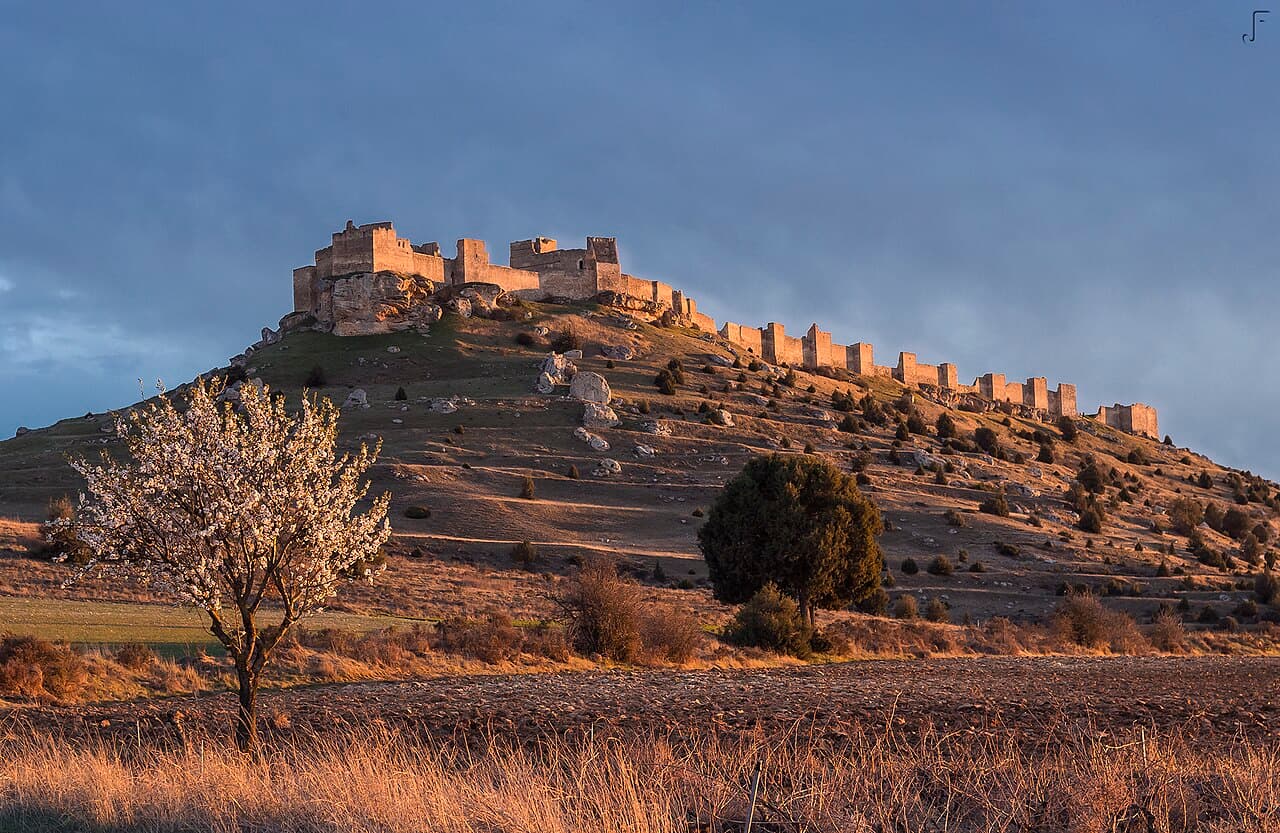
Gormaz Castle stands as a monumental testament to medieval military architecture in Soria, Spain. Originally constructed in the mid-8th century, this fortress evolved into the largest of its kind in Europe by the 10th century, showcasing the strategic and architectural prowess of the Islamic rulers of Al-Andalus. Its imposing walls, numerous towers, and extensive fortifications reflect centuries of military significance and cultural interchange along the volatile frontier between Muslim and Christian territories.
Early construction and strategic importance
The origins of Gormaz Castle trace back to around 756 AD, when it was initially built under the orders of Emir Abd ar-Rahman I of Córdoba. This early fortress was part of a broader policy aimed at consolidating control over the Central Marches in the Douro Valley, a key frontier zone against the expanding Christian kingdoms to the north. The castle's location atop a hill approximately 100 meters above the Duero River provided commanding views and control over critical river crossings and trade routes, making it an essential military and administrative center.
The fortress was constructed as a defensive stronghold to monitor and manage the surrounding fertile lands and to exert authority over local landowners and peasants. Its position allowed for rapid military response and surveillance, underscoring its role in the defense of Al-Andalus during a period marked by frequent conflict and shifting borders.
Expansion and architectural features under the caliphate
The castle underwent significant expansion and reconstruction during the reign of Caliph al-Hakam II in 965-966 AD. This phase transformed Gormaz into the largest fortress in Western Europe, extending its walls to cover the entire plateau on which it stands. An inscription over one of the gates attests to this major rebuilding effort, led by the Muslim general Ghalib ibn Abd al-Rahman.
The fortress stretches more than 390 meters in length, with a width varying from 10 to 40 meters, encompassing a perimeter of approximately 1,200 meters. Its walls rise up to 10 meters high and are reinforced by 28 towers that project slightly outward, enhancing defensive capabilities. The northern wall is characterized by large, rough stone blocks and a straighter alignment, while the southern wall is more curved and constructed of finely carved stones, though it has suffered more erosion over time.
Architectural highlights include a monumental main gate featuring a large horseshoe arch framed by an alfiz, a rectangular decorative frame typical of Islamic architecture. The gate retains traces of red and white painted voussoirs, adding to its visual impact. Two posterns provide additional access points, one with a smaller horseshoe arch. Inside the fortress, the presence of three mihrabs indicates a musalla, or open-air prayer space, reflecting the religious practices of its Muslim occupants.
The castle also incorporates spoliae—reused Roman materials—embedded within its masonry, demonstrating a continuity of building traditions and resourcefulness. Near the main gate, remains of a water pool suggest provisions for water storage or ritual use. The eastern end of the fortress houses a heavily fortified citadel or keep, separated by a moat and accessed through a bent entrance within a defensive tower, underscoring the layered defensive design.
Medieval military and political history
Throughout the 10th and 11th centuries, Gormaz Castle was a focal point of military confrontations between Muslim and Christian forces. It was besieged in 974-75 and reportedly changed hands several times, falling to Christian control in 978 and again in 983. Despite these incursions, Muslim forces conducted repairs and maintained the fortress into the 1060s, highlighting its enduring strategic importance.
Following the final Christian conquest, the castle was granted by King Alfonso VI in 1087 to the legendary Castilian nobleman and military leader El Cid. The fortress continued to play a significant role in regional conflicts, notably during the 14th century disputes between King Pedro I of Castile and King Pedro IV of Aragon. During this period, the castle saw restorations and supported a small urban settlement within its walls, indicating a shift from purely military use to a more complex social and administrative function.
After these turbulent centuries, the castle gradually fell into disuse and was abandoned sometime after the 14th century, eventually becoming a ruin. Its decline mirrors the broader political and military changes in the region as centralized kingdoms consolidated power and frontier fortresses lost their primary defensive roles.
Architectural remains and archaeological significance
Today, Gormaz Castle remains one of the most impressive examples of Islamic military architecture in Spain. Its extensive masonry walls, towers, and gates are remarkably well preserved considering their age. The fortress's length and defensive design make it unique among European medieval castles.
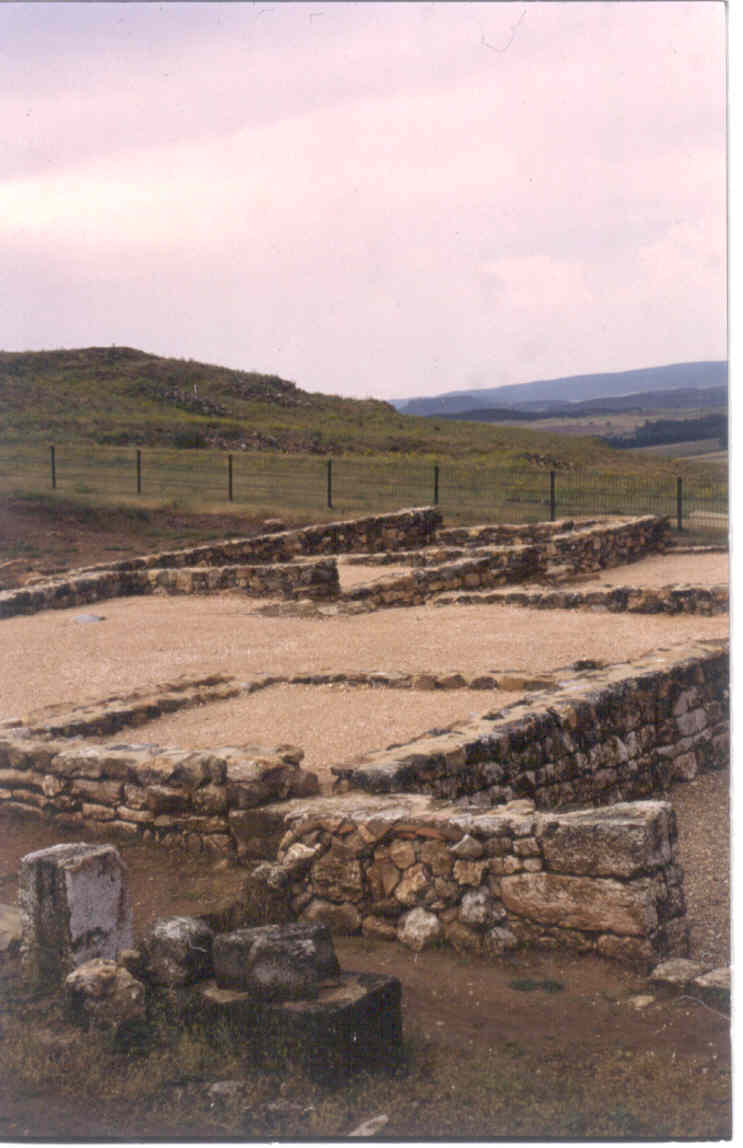
Archaeological excavations initiated in the early 20th century, notably from 1922 and later led by scholars such as Juan Zozaya, have uncovered significant details about the castle's construction phases, usage, and cultural significance. These studies revealed the presence of a musalla within the enclosure, identifiable by a white mortar surface, and confirmed the castle's role as both a military and religious site.
The fortress also contains cisterns within both the main enclosure and the citadel, ensuring a reliable water supply during sieges. The incorporation of Roman and Islamic carved stelae into the walls, believed to have apotropaic purposes, adds to the site's cultural depth.
Nearby, the Hermitage of San Miguel de Gormaz stands as a historical companion to the castle. A foundation stone from this chapel, inscribed with a reference to Caliph al-Hakam II, is preserved in the Burgo de Osma Cathedral, linking the religious and military heritage of the area.
Visitor experience and cultural legacy
Visitors to Gormaz Castle can appreciate its vast scale and commanding position overlooking the Duero River. The approach to the fortress, whether by hiking up the hill or driving, offers dramatic views of the castle's imposing walls and towers. The grounds are scattered with medieval pottery fragments, providing tangible connections to the daily life of its past inhabitants.
The castle’s historical significance has been recognized by the Spanish government, which declared it a National Monument in 1931. It has also served as a cultural icon, featuring as a backdrop in the 1961 film "El Cid," further cementing its place in Spanish heritage.
Exploring the castle reveals layers of history, from its early Islamic origins through its medieval Christian occupation and eventual decline. The site offers valuable insights into the military, religious, and social dynamics of medieval Spain, making it an essential destination for those interested in castle architecture and Iberian history.
Frequently asked questions (FAQ)
- How do I get to Gormaz Castle?
- Gormaz Castle is located in the province of Soria, Castilla y Leon, Spain. Visitors typically reach it by car, with parking available near the site. Hiking up to the castle from the base offers a scenic approach and rewarding views.
- What is the historical significance of Gormaz Castle?
- Gormaz Castle was the largest fortress in Europe during the 10th century and played a crucial role in the military frontier between Muslim and Christian territories in medieval Spain.
- Can I explore the interior of Gormaz Castle?
- Yes, visitors can walk along the extensive walls and explore the remains of towers, gates, and the citadel. While some areas are ruins, much of the structure is accessible for exploration.
- When is the best time to visit Gormaz Castle?
- The best time to visit is during spring and autumn when the weather is mild and the landscape surrounding the castle is particularly beautiful.
- Is there an entrance fee to visit Gormaz Castle?
- Currently, there is no entrance fee to visit Gormaz Castle, making it accessible to all visitors interested in its history and architecture.
Photo gallery

Information
Loading map...
Visitor reviews
No reviews yet. Been here? Write the first review and help other travelers!
Write the first reviewVisited this castle? Share your experience
Your review helps other travelers and adds first-hand knowledge to our encyclopedia.