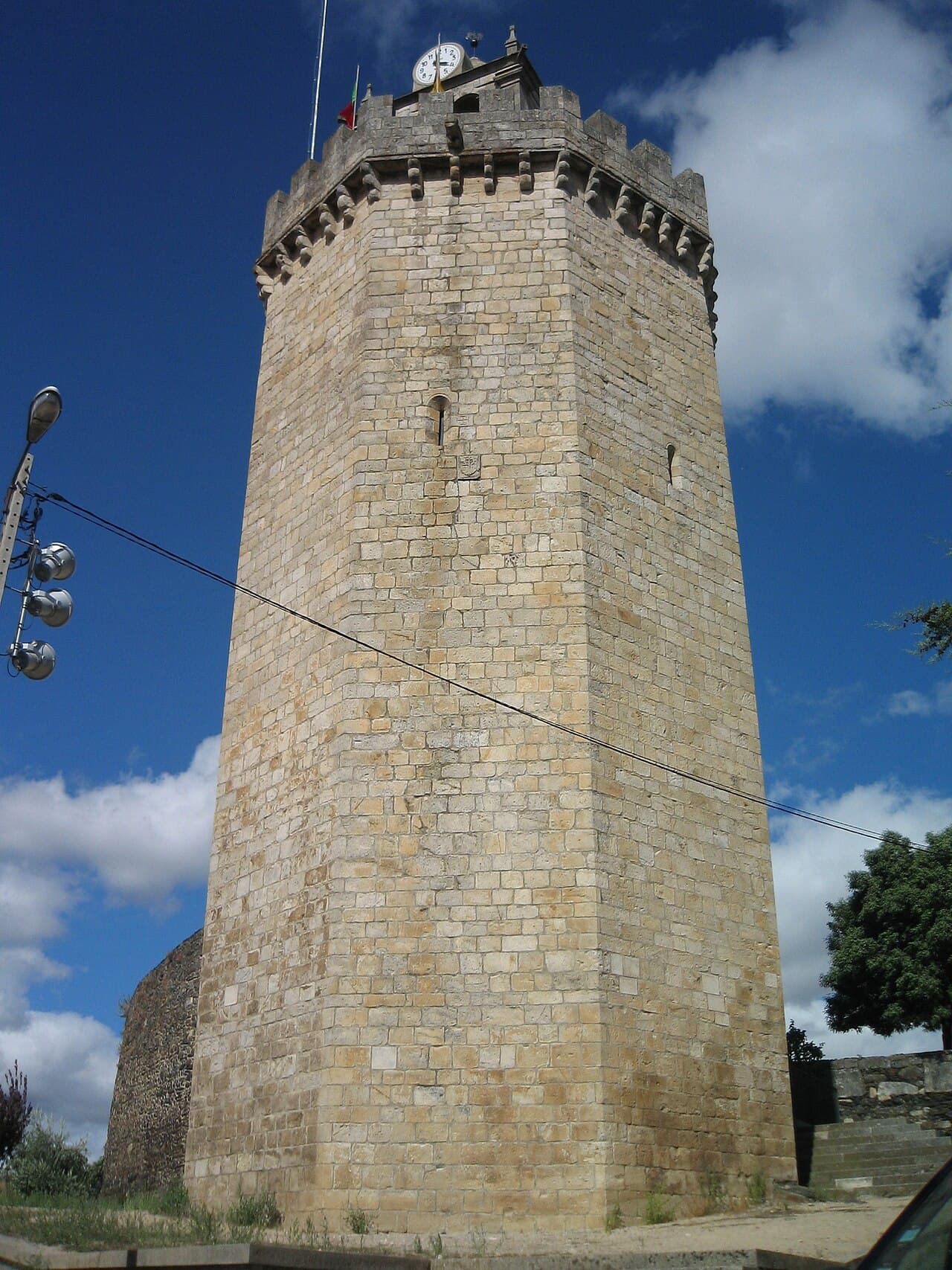
Castle of Freixo de Espada-à-Cinta
The Castle of Freixo de Espada-à-Cinta stands as a prominent medieval fortress in northern Portugal, deeply rooted in the early history of the Portuguese kingdom. This hill castle occupies a commanding elevated position in the municipality of Freixo de Espada à Cinta, overlooking the surrounding landscape and serving as a testament to the strategic military and administrative efforts to secure Portugal’s northeastern frontier. Its long documented history and architectural evolution reflect the shifting political and military dynamics from the 12th century onward.
Early history and foundation
The origins of the castle trace back to the 12th century, shortly after the granting of a foral (charter) in 1152 by King Afonso Henriques, the first monarch of Portugal. At this time, the settlement was known as "Fresno," marking its formal recognition under Portuguese sovereignty. The charter established legal and administrative frameworks that encouraged settlement and defense of this frontier region. Initial fortifications were likely modest, aimed at protecting the nascent community and asserting control over the contested borderlands adjoining the Kingdom of León.
Medieval conflicts and royal interventions
During the early 13th century, between 1212 and 1213, the castle and its lands briefly fell under the control of Leonese forces during the reign of King Afonso II of Portugal. This occupation disrupted Portuguese authority, but following the reconquest, King Sancho II took decisive measures to reassert control by removing settlers who had arrived during the Leonese occupation. In 1246, he issued a renewed foral to reinforce the town’s status and promote repopulation efforts, emphasizing the castle’s role as a border stronghold.
Fortification enhancements under kings afonso iii and dinis
The latter half of the 13th century saw significant fortification efforts under Kings Afonso III and Dinis. King Dinis, in particular, was instrumental in repopulating the area and strengthening the castle’s defenses. His reign marked the construction of the castle’s distinctive heptagonal tower, a unique architectural feature that remains the most visible and iconic element of the fortress today. These enhancements reflected the strategic necessity of securing the border and fostering a stable and defensible community.
Development during the 14th and 15th centuries
Throughout the 14th century, the castle complex was further expanded and adapted. Under King Fernando I, royal apartments were added, indicating the castle’s dual function as both a military fortress and a royal residence. The nearby towns were granted relief from certain taxes to contribute to communal infrastructure, underscoring the castle’s central role in the region’s governance and defense.
The castle and town demonstrated loyalty during the 1383–1385 Portuguese interregnum, a period of civil strife and succession crisis. In recognition, King João I granted privileges to the town in 1406, reinforcing its importance within the kingdom’s political landscape.
Architectural features and military significance
The castle’s layout, documented in detail by Duarte D’Armas around 1509-1510, reveals a complex defensive system. It included a circular barbican protecting the main entrance, multiple towers of various geometric shapes—hexagonal, pentagonal, rectangular, and octagonal—and fortifications such as machicolations and battlements. The presence of these features highlights the castle’s advanced military architecture for its time.
The most prominent surviving structure is the heptagonal tower, known locally as the Torre do Galo or Torre do Relógio. This tower rises approximately 25 meters and features a pointed arch entrance, vaulted ceilings connecting its three floors, narrow vertical windows for defense, and a balcony supported by stone corbels. Its upper section includes a square bell tower with a steep pointed roof and ornamental pinnacles, combining both functional and decorative elements.
The outer walls, constructed from durable granite and schist, incorporate decorative merlons and crenellations, providing both protection and aesthetic appeal. Inside the courtyard, two cisterns ensured a reliable water supply during sieges, while the transformation of the courtyard into a municipal cemetery in the 19th century reflects the castle’s evolving role in the community.
Later history and preservation efforts
The castle remained militarily active until the 19th century, with records from 1758 noting a small garrison. However, by 1836, the fortress’s role had shifted from defense to civic use, exemplified by the adaptation of its courtyard for burial purposes. In the 20th century, archaeological investigations sought to clarify the internal organization of the castle, including explorations beneath the tower floors that found no evidence of dungeons.
Restoration and conservation efforts began in the 1970s and have continued intermittently. These works focused on masonry repairs, structural stabilization, and the removal of adjacent buildings to restore the castle’s prominence within the urban landscape. Landscaping improvements and the discreet installation of electrical systems have enhanced visitor safety and preservation conditions.
The castle’s designation as a National Monument in 1910 underscores its cultural and historical value. It forms part of cultural routes highlighting the heritage of the Trás-os-Montes region, attracting visitors interested in medieval military architecture and Portuguese history.
Strategic location and cultural significance
Situated near fertile lands extending toward the Douro River and close to the Castilian fortress of Vilibestre, the Castle of Freixo de Espada-à-Cinta historically guarded a vital frontier zone between Portugal and Castile. Its position allowed control over trade routes and military movements, playing a key role in border defense and regional stability.
Today, the castle stands as a well-preserved symbol of medieval fortification adapted through centuries of political change. Its unique architectural features, especially the heptagonal tower, and its rich historical narrative make it a significant monument within Portugal’s cultural heritage landscape.
Frequently asked questions (FAQ)
- How do I get to the Castle of Freixo de Espada-à-Cinta?
- The castle is located in the town center of Freixo de Espada à Cinta in northern Portugal. It is accessible by car and local roads connecting to the main highways. Parking is available nearby, and the town is also served by regional bus routes.
- What is the best time to visit the castle?
- The best time to visit is during the spring and autumn months when the weather is mild and the crowds are smaller. The castle is open daily from 10:00 to 17:00, allowing ample time for exploration.
- Is the castle suitable for visitors with limited mobility?
- The castle’s hilltop location and some uneven surfaces may present challenges for visitors with limited mobility. However, efforts have been made to improve access to key areas, but some parts remain difficult to reach.
- What architectural styles are represented in the castle?
- The castle primarily features Gothic architectural elements, including pointed arches, vaulted ceilings, and machicolations. The distinctive heptagonal tower is a notable example of medieval military architecture.
- Are there guided tours available at the castle?
- Guided tours are occasionally offered by the local tourism office, especially during peak tourist seasons. Visitors can also explore the castle independently with informational panels available on site.
- Can I visit the castle for free?
- Yes, admission to the Castle of Freixo de Espada-à-Cinta is free of charge, making it accessible to all visitors interested in Portuguese medieval heritage.
Photo gallery

Information
Opening hours
10:00-17:00, daily
Ticket prices
Free
Current owner
Portuguese government
Website
Visit websiteSources & official resources
Verify the information above using these authoritative references.
Loading map...
Visitor reviews
No reviews yet. Been here? Write the first review and help other travelers!
Write the first reviewVisited this castle? Share your experience
Your review helps other travelers and adds first-hand knowledge to our encyclopedia.



