Castillo de Sobradillo
The Castillo de Sobradillo stands as a significant hill castle located in the municipality of Sobradillo, Spain, near the natural boundary formed by the Águeda River. This fortress was built during the early 15th century by the Castilian kingdom as a strategic defensive stronghold on the volatile border with Portugal, reflecting the turbulent political and military dynamics of the period.
The castle's origins trace back to a 12th-century watchtower, known as an atalaya, which was originally constructed to monitor movements along the border. This watchtower was situated on a naturally defensible hilltop overlooking the river, providing a vantage point for early warning against incursions. The decision to build the castle atop this earlier structure was commissioned by Alfonso de Ocampo, a prominent noble who sought to fortify the frontier and protect Castilian interests.
Medieval origins and political significance
The first documentary reference to the castle dates from the reign of Enrique II of Castile in the mid-14th century. At this time, the castle was owned by his brother, Count Sancho, and his wife Beatriz of Portugal. This familial connection between Castilian and Portuguese nobility highlights the castle's role not only as a military bastion but also as a symbol of the complex alliances and rivalries that characterized the Iberian Peninsula during the late Middle Ages.
Ownership remained within this noble family until 1508, when Pedro Ocampo, lord of Sobradillo, seized control of the castle through force, illustrating the local power struggles that often accompanied broader geopolitical conflicts. Despite its age, the castle maintained military relevance well into the 17th century. Records from 1643 indicate a garrison of 120 men was stationed there, although the fortress was described as old and lacking in modern defensive capabilities, signaling a decline in its strategic importance as warfare evolved.
Decline and restoration efforts
During the 18th century, the castle came under the ownership of the Marquisate of Cardeñosa. This period saw the fortress suffer damage from Portuguese attacks, contributing to its gradual deterioration. After the mid-19th century, specifically in 1851, the Spanish state assumed control of the castle ruins. For many decades, the site remained neglected until the regional government, the Junta de Castilla y León, took over in 1985 with the goal of restoring and preserving the historic remains.
Since then, the castle has been protected under Spanish heritage laws established in 1948 and reinforced in 1985. Restoration and cleaning efforts conducted between 1995 and 2000 focused on stabilizing the structure and preserving its key architectural elements, ensuring that the castle remains a valuable cultural and historical monument.
Architectural features and layout
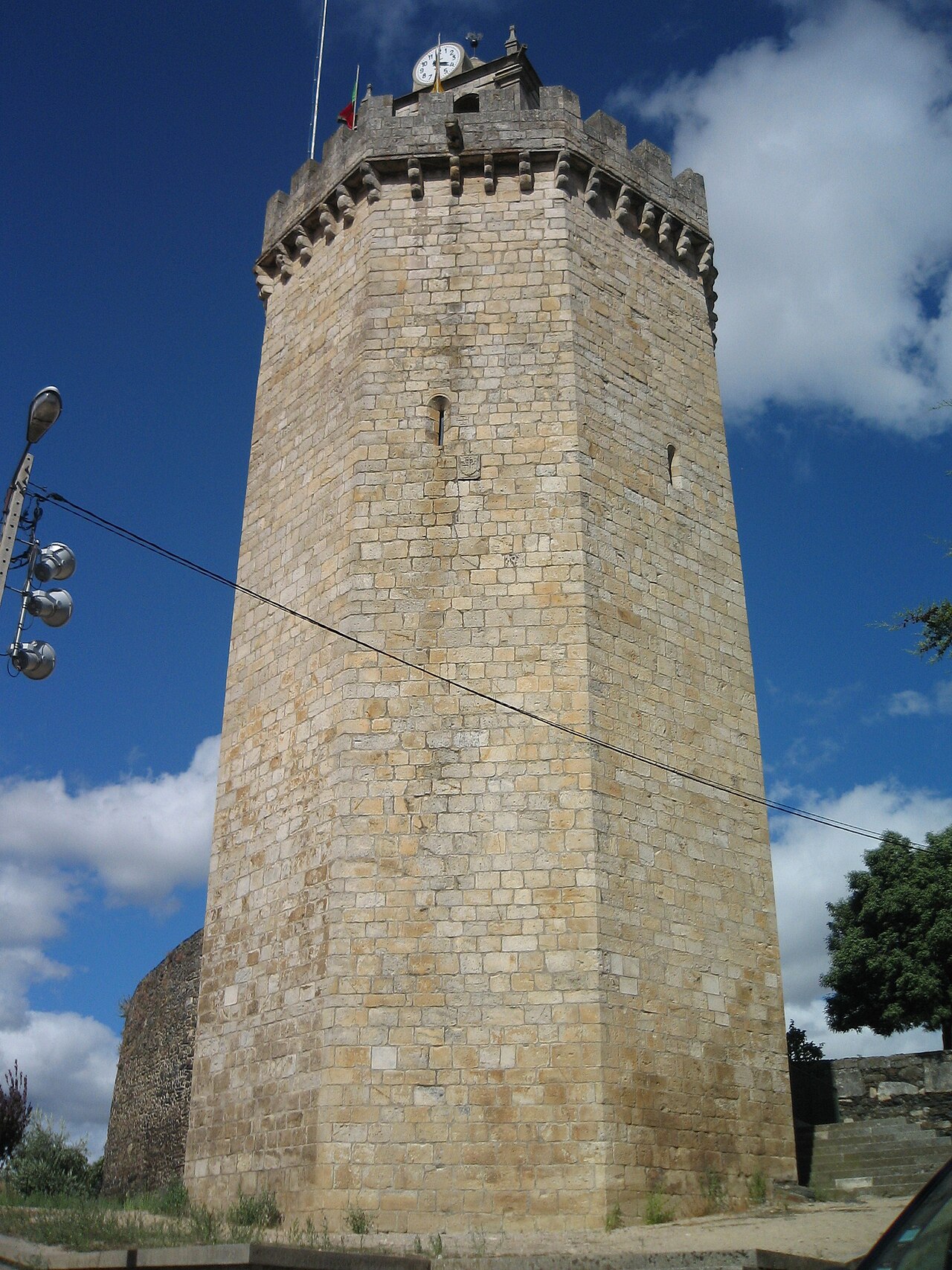
The Castillo de Sobradillo is characterized by its tower-shaped fortress design, organized into three levels separated by wooden floors. The construction primarily utilizes masonry with ashlar stones, finely cut blocks that fit together to form strong, durable walls. The corners of the tower are reinforced to enhance structural integrity, and the presence of bartizans—small overhanging turrets—provided defenders with vantage points for surveillance and archery.
The remains today mainly consist of the original watchtower (atalaya) and fragments of a medieval palace where the noble occupants resided. The castle's original courtyard has been transformed into a plaza, reflecting changes in the site's function following its military decline.
Inside the fortress, the second floor contains vestiges of a large fireplace, indicating the residential use of the space and the need for heating in the living quarters. The surviving stonework exemplifies early 15th-century architectural methods, combining solid defensive construction with domestic accommodations.
Strategic location and defensive role
Situated on a naturally defensible hill near the Águeda River, the castle's location was crucial for controlling the border region between Castile and Portugal. The river itself served as a natural barrier against enemy forces, while the elevated position of the fortress allowed for early detection of approaching threats. This strategic placement was integral to the castle's role as a military outpost and noble residence.
Historical legacy and cultural importance
Throughout its history, Castillo de Sobradillo functioned both as a fortified military position guarding a contested frontier and as a residence for the noble lords who governed the surrounding territory. Its layered history reflects the broader narrative of medieval and early modern Iberian conflicts, noble power struggles, and evolving military architecture.
Today, the castle stands as a protected heritage site under Spanish law, offering valuable insights into medieval fortification techniques, noble domestic life, and the geopolitical history of the Castilian-Portuguese border. The preservation efforts have ensured that visitors can explore the remains and appreciate the castle's historical and architectural significance.
Frequently asked questions (FAQ)
- How do I get to Castillo de Sobradillo?
- Castillo de Sobradillo is located in the municipality of Sobradillo in Castile and León, Spain. It is accessible by local roads, and visitors can reach the site by car or regional transport services.
- What is the historical significance of Castillo de Sobradillo?
- The castle was a strategic military fortress on the Castilian-Portuguese border from the 15th century, playing a key role in regional defense and noble power struggles.
- Can I visit the interior of the castle?
- Visitors can explore the castle ruins, including the watchtower and fragments of the medieval palace. However, access may be limited in some areas due to preservation efforts.
- When is the best time to visit Castillo de Sobradillo?
- The castle is best visited during spring and autumn when the weather is mild, allowing comfortable exploration of the outdoor ruins and surrounding landscape.
- Is there an entrance fee to visit Castillo de Sobradillo?
- There is no entrance fee to visit Castillo de Sobradillo, making it an accessible cultural site for all visitors.
Information
Opening hours
Variable, check local listings
Ticket prices
Free
Current owner
Junta de Castilla y León
Loading map...
Visitor reviews
No reviews yet. Been here? Write the first review and help other travelers!
Write the first reviewVisited this castle? Share your experience
Your review helps other travelers and adds first-hand knowledge to our encyclopedia.