Castillo de Autol
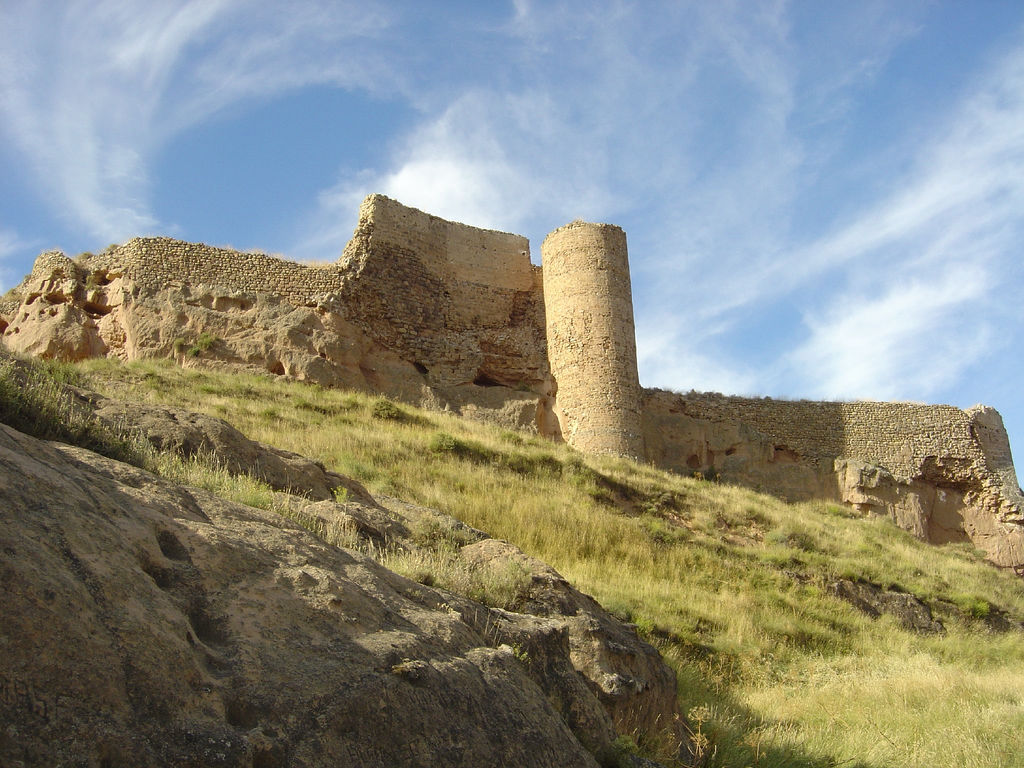
The Castillo de Autol is a historic fortress located in the municipality of Autol in the La Rioja region of Spain. This hill castle is perched on a rocky outcrop, offering commanding views of the surrounding landscape, including the nearby landmarks of El Picuezo and La Picueza. The site holds a remarkable stratigraphy of human occupation, beginning with an ancient Celtiberian settlement dating back to around the 6th century BCE, as evidenced by ceramic remains found beneath the castle’s foundations. This early habitation laid the groundwork for the eventual establishment of the town of Autol itself.
The existing fortress structure dates primarily from the 10th or 11th century, attributed to Muslim builders during the period of Islamic presence in the Iberian Peninsula. The castle’s strategic position atop a rocky promontory classifies it as a castillo roquero, or rock castle, a type of fortification that exploits natural geological features for defense. Constructed mainly from stones sourced from the nearby Cidacos River, the castle’s walls were built using the traditional rammed earth (tapial) technique, which involves compacting layers of earth within wooden forms to create solid, resilient walls. This method was common in medieval Spanish fortifications and contributed to the castle’s durability.
Medieval history and ownership
The Castillo de Autol first appears in historical records in 1036, when it was owned by Lope Fortuniones, marking the beginning of documented noble possession. Throughout the 12th century, the castle changed hands among prominent figures, including Fortún Garzeiz and Sancho Garzeiz. In 1162, Sancho Garzeiz donated the fortress to King Sancho the Wise of Navarre, indicating the castle’s political significance during the Reconquista period.
Subsequently, Alfonso VIII of Castile took control of the castle in 1179, reflecting the shifting power dynamics between Christian kingdoms on the Iberian Peninsula. By 1262, the fortress was under the possession of King Jaime I of Aragón, further illustrating its strategic importance. In the late 14th century, ownership passed to Pedro Ximénez de Arnedo, a notable nobleman of the region.
Siege and treachery in 1445
One of the most dramatic episodes in the castle’s history occurred in 1445 during the rule of Diego López de Fuelles. Three men serving him were bribed by the council of Calahorra to seize the castle by treachery. These conspirators murdered Diego López and his wife during the coup. The fortress was later reclaimed after a month-long siege led by Diego Goíez Manrique, who restored order and executed the traitors. This event underscores the castle’s continued military and political relevance in late medieval Spain.
Architectural features and construction
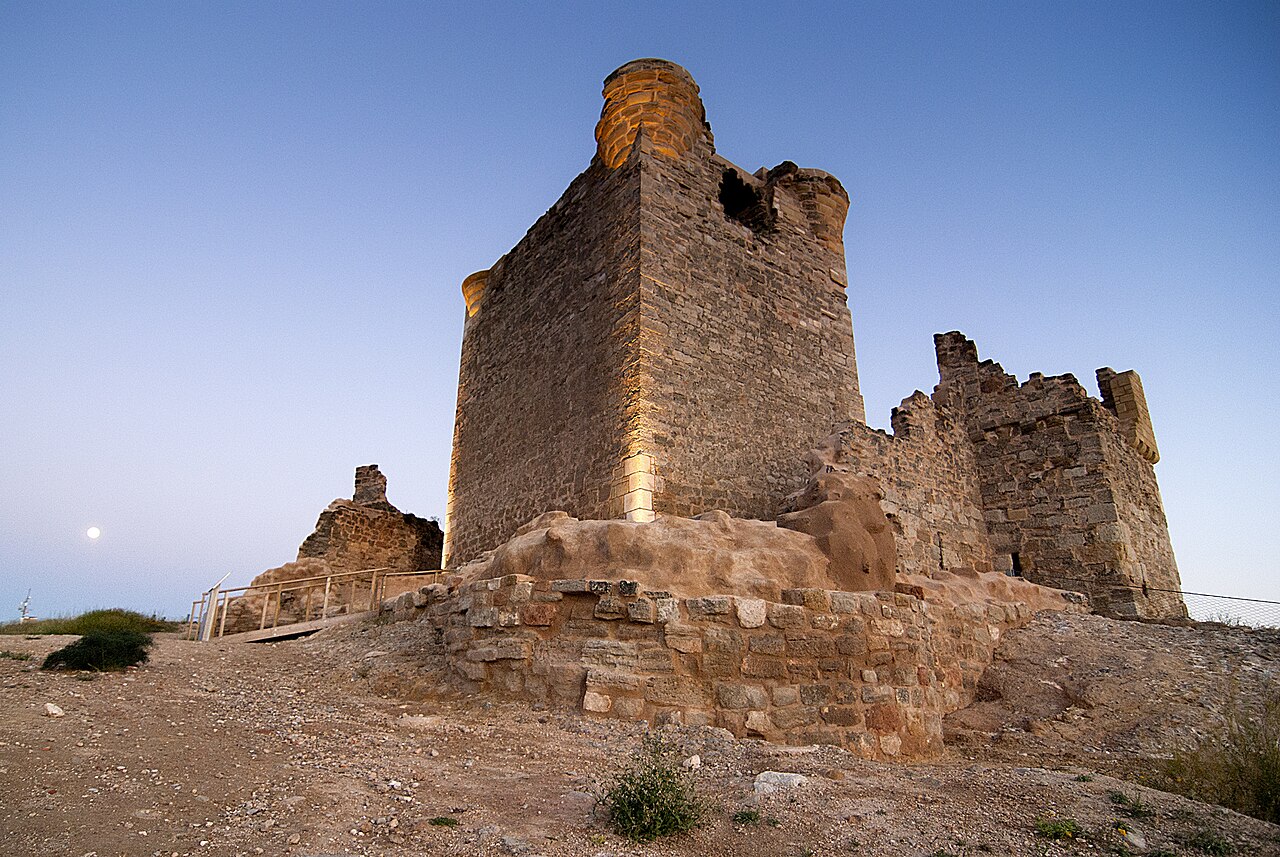
The castle’s layout centers on an irregular rectangular keep, also known as the tower of homage, which served as the main defensive and residential structure. Adjacent to the keep is a long wall running parallel, likely designed to protect the tower and provide an additional defensive barrier. The keep features several putlog holes, which were used to support wooden beams or scaffolding during construction and suggest that the interior was arranged over three floors, topped by a terrace.
The walls, primarily built using the rammed earth technique, remain the most visible elements today, although much of the original stonework and internal structures have deteriorated over time. The use of local stone from the Cidacos River at the base of the rock provided essential building material, integrating the castle into its natural environment.
Despite restoration efforts in 2013, the castle remains in a state of decay, with some walls at risk of collapse. The ruins offer valuable insights into medieval military architecture and the adaptation of construction methods to the rugged terrain.
Cultural significance and preservation
The Castillo de Autol is recognized for its cultural and historical importance, protected under Spanish heritage laws established in the 20th century. It stands as a testament to the layered history of the region, from ancient Celtiberian times through Muslim occupation and Christian reconquest, reflecting the complex socio-political transformations of northern Spain.
Today, the castle is an archaeological site that attracts historians, archaeologists, and visitors interested in medieval fortifications and early Iberian history. Its location atop a rocky hill and the remnants of its defensive structures provide a tangible connection to the past, despite the challenges posed by ongoing structural degradation.
Visitor information and accessibility
While the castle is accessible to visitors, there are no extensive facilities or guided tours on site. The rugged terrain and partial ruinous condition require caution when exploring the remains. The best time to visit is during the warmer months when the weather is favorable for outdoor exploration.
Frequently asked questions (FAQ)
- When was Castillo de Autol originally built?
- Castillo de Autol was primarily constructed in the 10th or 11th century by Muslim builders during the Islamic period in Spain.
- What is the architectural style of Castillo de Autol?
- The castle was built using traditional medieval techniques including rammed earth (tapial) walls and local stone, typical of hill castles in northern Spain.
- Can visitors explore Castillo de Autol today?
- Yes, visitors can explore the ruins of Castillo de Autol, but should exercise caution due to its partially ruined condition and lack of extensive visitor facilities.
- What historical events are notable at Castillo de Autol?
- A significant event occurred in 1445 when the castle was seized through treachery, leading to a siege and the execution of the traitors.
- What makes Castillo de Autol historically significant?
- The castle sits on an ancient Celtiberian settlement and reflects the complex history of Muslim and Christian control in medieval Spain.
Information
Loading map...
Visitor reviews
No reviews yet. Been here? Write the first review and help other travelers!
Write the first reviewVisited this castle? Share your experience
Your review helps other travelers and adds first-hand knowledge to our encyclopedia.