Castle of Arnedo
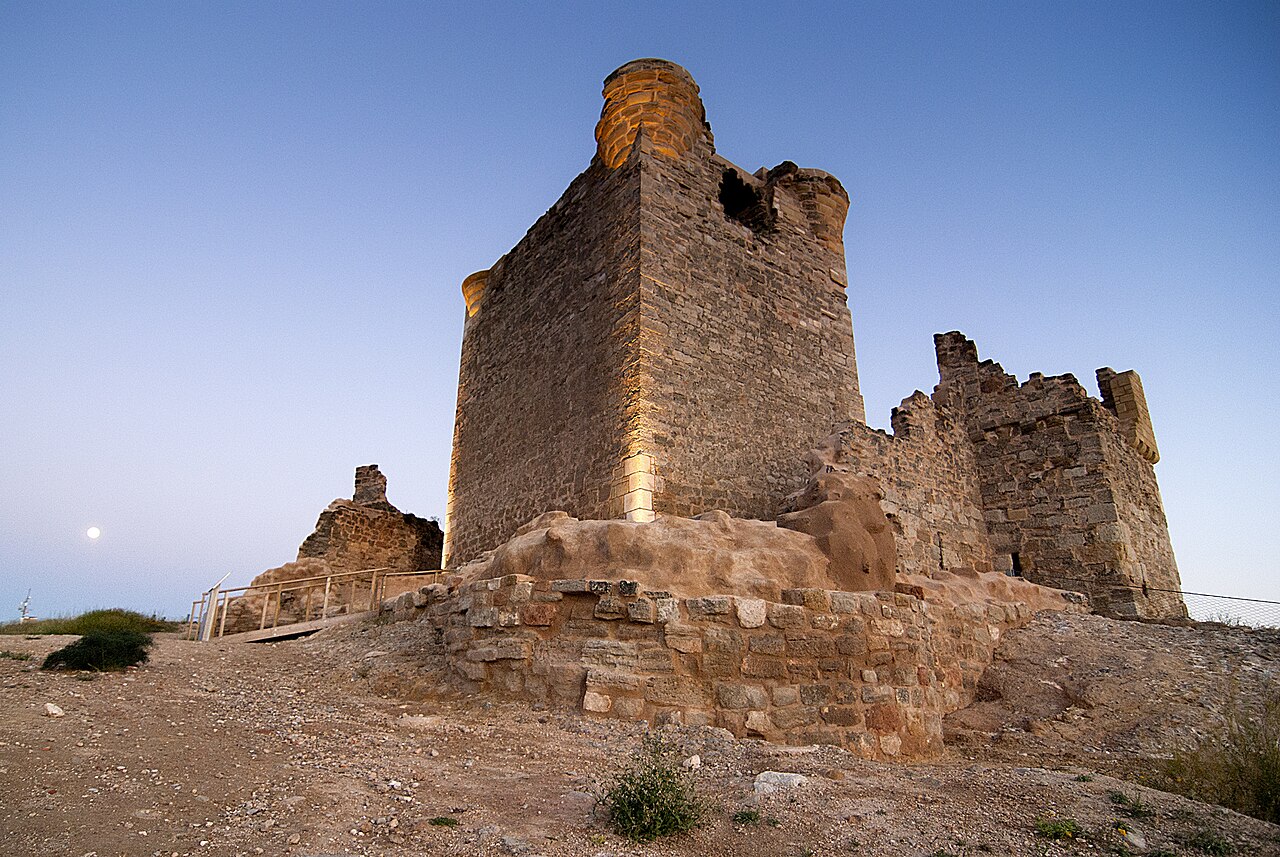
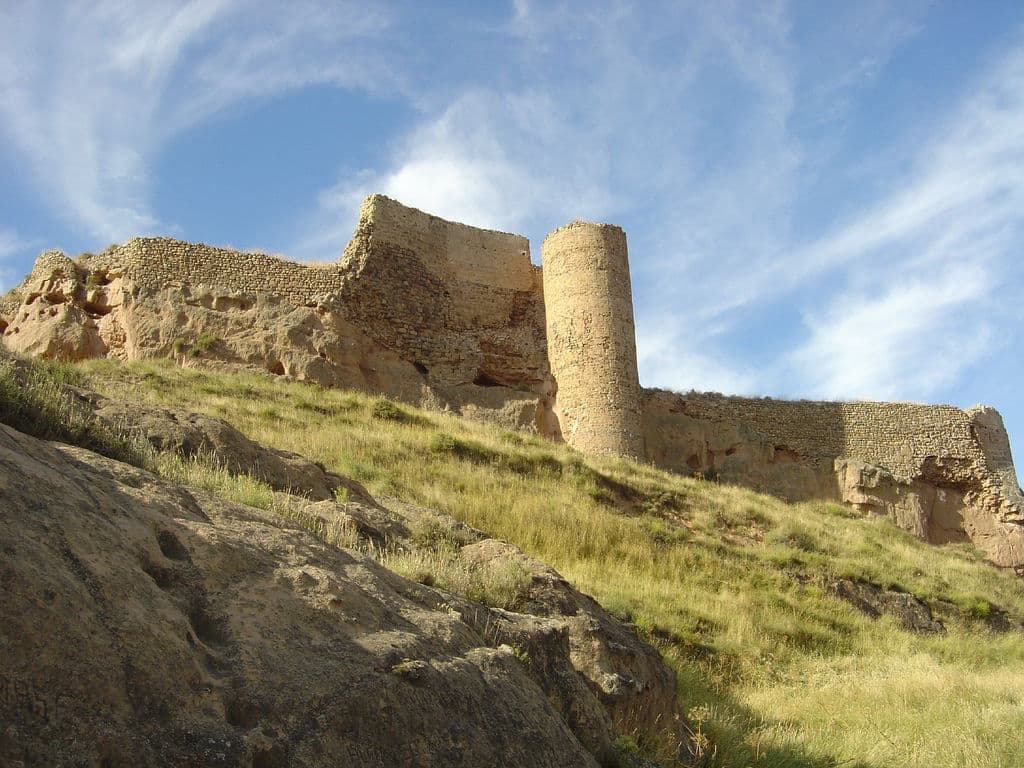
The Castle of Arnedo is a striking hill castle located in the city of Arnedo, within the autonomous community of La Rioja, Spain. Perched atop a rocky outcrop approximately 60 meters above the surrounding terrain, the castle commands panoramic views of the landscape, reflecting its strategic military importance throughout history. Its origins trace back to the Roman period, with archaeological evidence confirming the site's use as a defensive position long before the medieval fortress was constructed.
The castle as it stands today was primarily established during the 9th century under Muslim rule, built by the Arabs atop the earlier Roman foundations. This era marked the castle's rise as a significant political and military center in the Iberian Peninsula. It served as the residence of Musa ibn Musa of the Banu Qasi family, a powerful figure who governed the province during the Early Medieval period. The castle's prominence continued as it became a focal point in the turbulent dynamics of the Reconquista, the centuries-long Christian effort to reclaim territory from Islamic control.
Historical significance and medieval conflicts
In 908 or 909, the castle was captured by King Sancho I Garcés of the Kingdom of Pamplona, marking a pivotal moment in the Christian reconquest of the region. Over the subsequent centuries, the castle was contested among the Christian kingdoms of Navarre, Castile, and Aragon, underscoring its strategic value as a border fortress. Control of the castle shifted multiple times, reflecting the complex political landscape of medieval Spain.
By the 14th century, the castle came under the ownership of the Fernández de Velasco family, the Counts of Haro. This noble family undertook significant renovations to strengthen the fortress, adapting it to the evolving military technologies and needs of the time. However, as the family established a more comfortable palace within the town of Arnedo itself, the castle gradually lost its status as a primary residence and began to fall into neglect.
Architectural features and layout
The castle's design is characterized by its adaptation to the natural red sandstone rock on which it is built, occupying roughly 1,400 square meters across two levels on uneven ground. Its irregular, roughly triangular plan follows the contours of the hill, maximizing defensive capabilities while conforming to the terrain.
Defensive structures include a polygonal tower on the northwest side and a prominent circular keep on the northern side. The central keep, known as the "homenaje" tower in Spanish castles, forms the fortress's core, connected to the curtain walls and providing access to elevated platforms for surveillance and defense. These features exemplify typical medieval military architecture aimed at fortification and control.
The main entrance is located on the southeast side, leading into the castle's initial courtyard. Within this courtyard lies a rectangular cistern, an essential element designed to collect and store water, ensuring the castle's inhabitants could withstand sieges without succumbing to thirst. This practical feature highlights the castle's preparedness for prolonged defensive situations.
Later history and decline
During the 19th century, the castle experienced renewed military use during the First Carlist War. It was fortified with additional defensive works, including the construction of a barracks. Despite these efforts, the castle was never occupied by Carlist forces. A significant structural event occurred in 1870 when the southern wall collapsed, initiating a period of decline.
Following the collapse, many stones from the castle were repurposed for local construction projects, accelerating the fortress's deterioration. Today, the castle remains partially preserved, with substantial portions of its walls and towers still visible, offering valuable insight into its layered history.
Archaeological discoveries and cultural heritage
Excavations at the site have revealed fragments of Roman terra sigillata ceramics, fine glossy pottery that confirms the area's occupation during Roman times and underscores the castle's long-standing strategic importance. These findings enrich our understanding of the castle's continuous use from antiquity through the medieval period.
The Castle of Arnedo stands as a testament to the complex history of the Iberian Peninsula, embodying layers of cultural and military heritage from Roman fortifications to Islamic governance and Christian reconquest. Its ruins continue to attract historians, archaeologists, and visitors interested in the architectural evolution and historical narratives of medieval Spain.
Frequently asked questions (FAQ)
- When was the Castle of Arnedo originally built?
- The Castle of Arnedo was originally built in the 9th century by the Arabs atop earlier Roman foundations.
- What is the architectural layout of the Castle of Arnedo?
- The castle has an irregular, roughly triangular layout adapted to the red sandstone rock, featuring a polygonal tower, a circular keep, and a rectangular cistern in the courtyard.
- What historical events is the Castle of Arnedo known for?
- The castle was a key military and political center during the Muslim period and the Reconquista, changing hands between Muslim and Christian rulers, including its capture by King Sancho I Garcés in 908 or 909.
- Is the Castle of Arnedo open to visitors?
- Visiting hours and ticket prices are not specified, so it is advisable to check locally before planning a visit.
- What remains can be seen at the Castle of Arnedo today?
- Today, visitors can see substantial portions of the castle's walls, towers, and the central keep, despite damage from a wall collapse in 1870 and stone removal for local building.
Photo gallery

Information
Website
Visit websiteSources & official resources
Verify the information above using these authoritative references.
Loading map...
Visitor reviews
No reviews yet. Been here? Write the first review and help other travelers!
Write the first reviewVisited this castle? Share your experience
Your review helps other travelers and adds first-hand knowledge to our encyclopedia.