The Castle of Castelo Mendo stands as a remarkable example of medieval military architecture perched on a rocky hilltop in the municipality of Castelo Mendo, Portugal. Its strategic location at an elevation of 762 meters overlooks the Côa River and the Cadelos stream, providing commanding views essential for defense and surveillance. This hill castle embodies a rich history of continuous human occupation, beginning with an early proto-historic castro settlement and later adapted during the Roman period, highlighting the site's long-standing importance in regional control and habitation.
Initial medieval construction of the castle dates back to the late 12th or early 13th century, likely commissioned under the reign of King Sancho I of Portugal (1185–1211). By 1229, during the rule of King Sancho II, the settlement received a Foral Charter from Vila do Touro, establishing it as a recognized administrative and economic center. This charter notably instituted the first official fair in the kingdom, held thrice annually, and included references to the castle and its governor, alcaide Mendo Mendes.
Medieval fortifications and strategic significance
Throughout the late medieval period, Castelo Mendo was part of the contested Ribacôa border region. The 1297 Treaty of Alcanices definitively incorporated the territory into Portugal under King Dinis (1279–1325). Recognizing the castle's strategic importance, King Dinis reaffirmed the village's Foral in 1281 and introduced a tax-free fair to stimulate economic growth. This prosperity financed significant fortification efforts, including the construction of a second defensive wall and the imposing keep tower (Torre de Menagem), which became the castle's central stronghold.
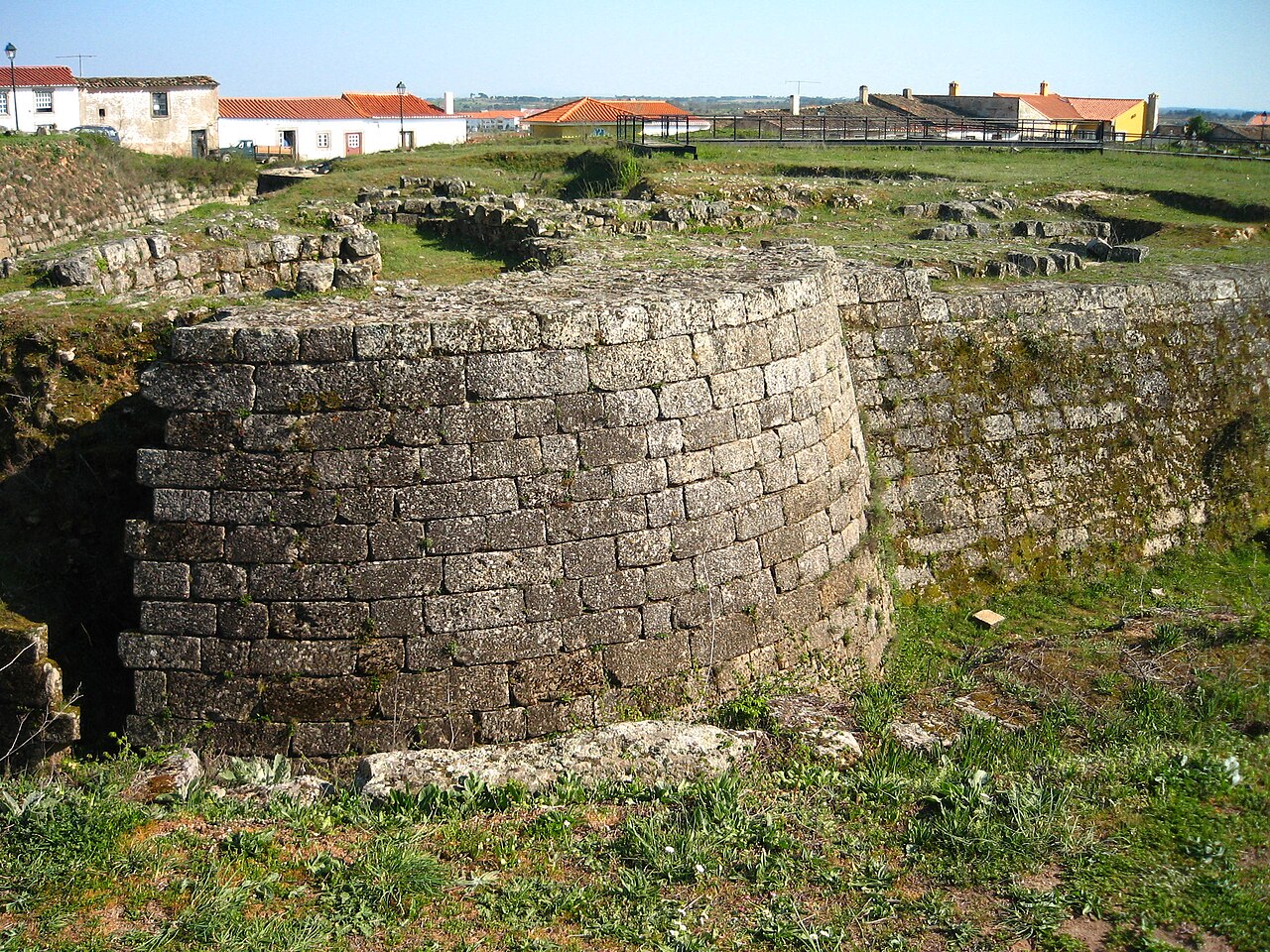
The castle's fortifications reflect typical Gothic military architecture of the period, utilizing local stone and featuring robust defensive walls, towers, and gates designed to withstand sieges. The castle's layout is an irregular oval encompassing two main sections: an eastern inner citadel and a larger outer village enclosure. The citadel houses the keep tower, the main western gate, a quadrangular cistern, the Church of Santa Maria do Castelo, and the former Town Hall, now a museum.
The village enclosure and gates
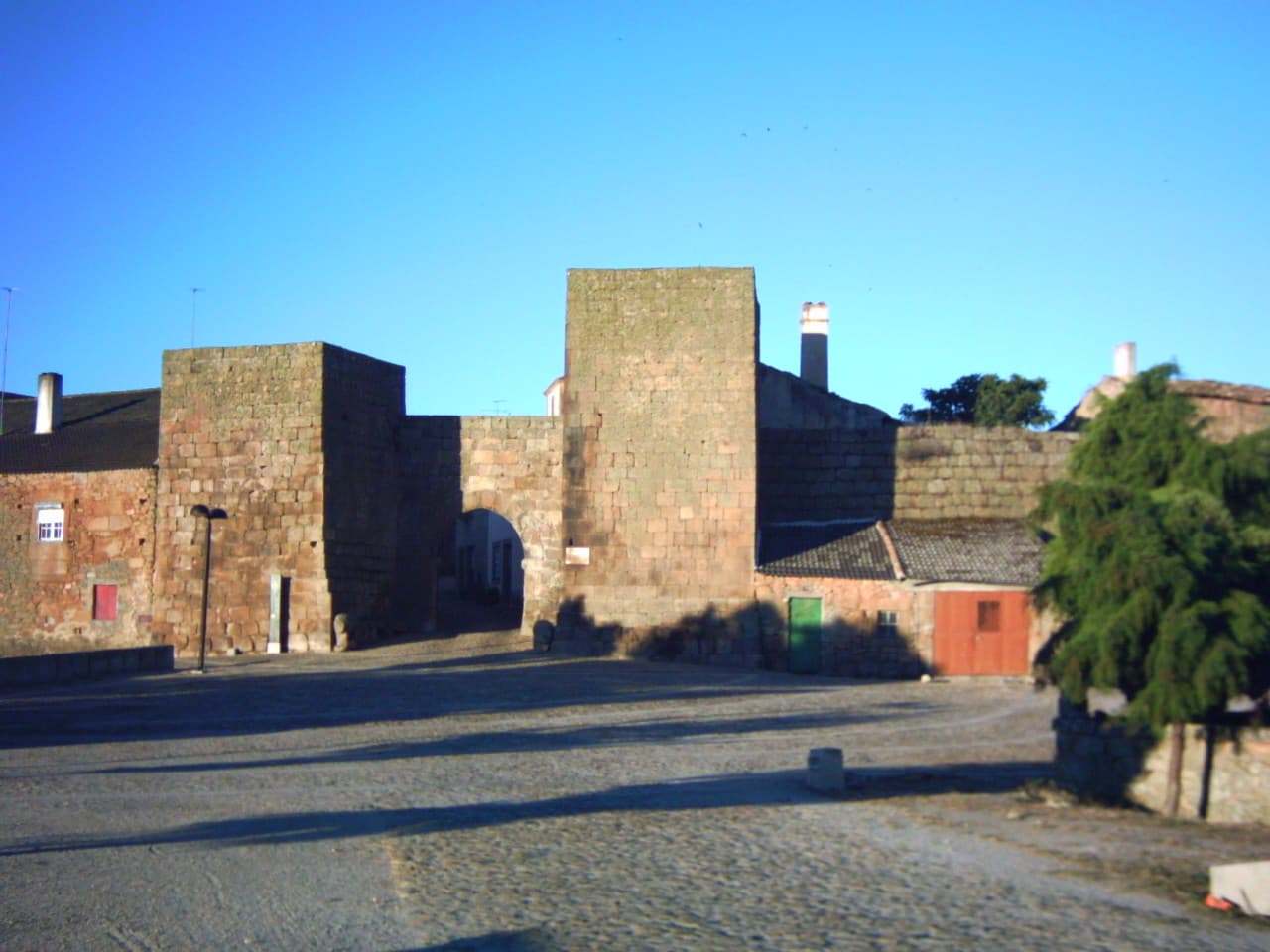
The outer enclosure, dating mainly from King Dinis's reign, is fortified with multiple towers and originally included three principal gates. Two surviving gates, the Porta do Sol and the Porta dos Berrões, each adjoin towers that controlled access to the village. Within this enclosure stood important religious structures such as the Churches of São Pedro and São Vicente, which served both spiritual and communal functions.
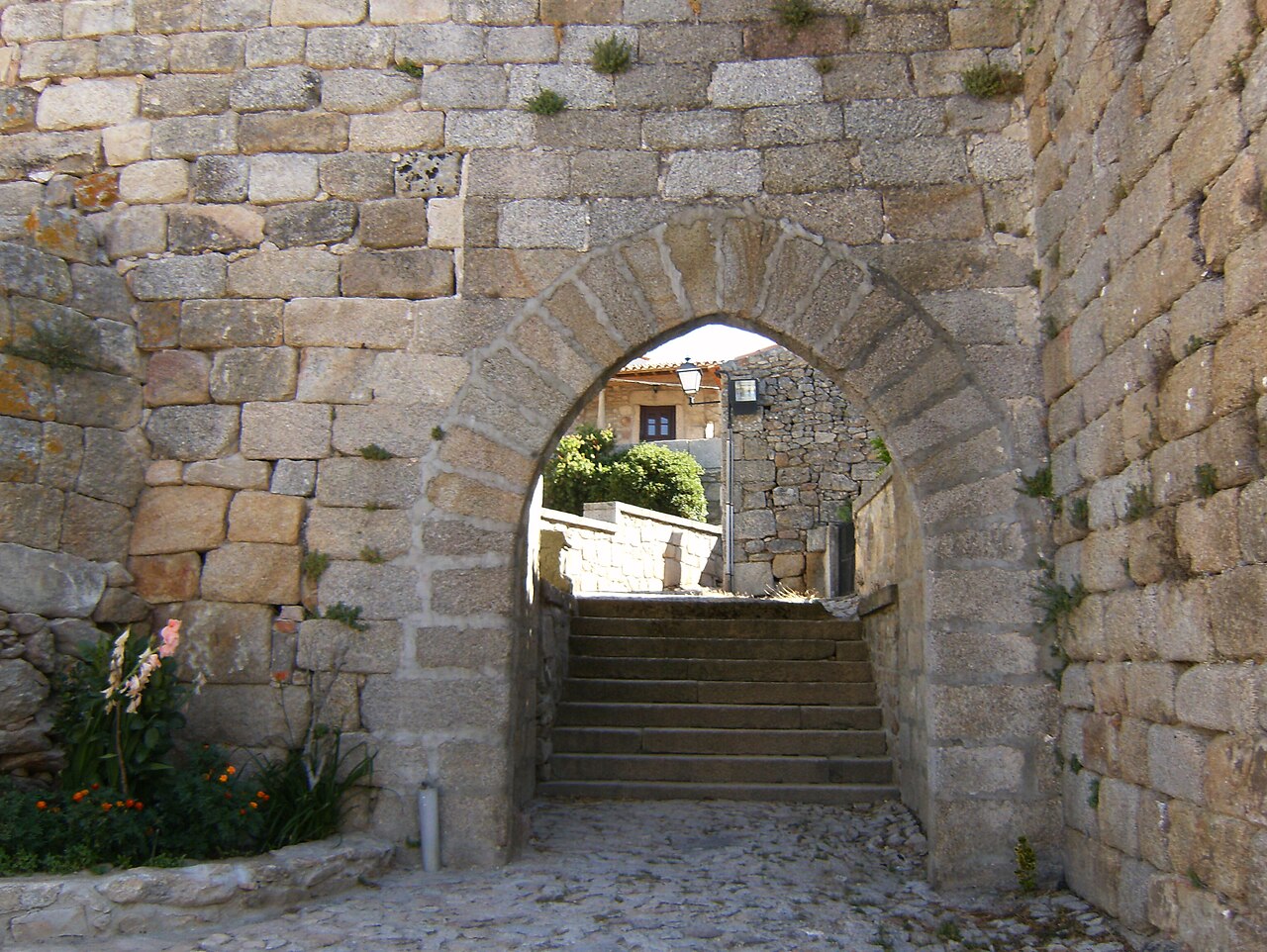
Connecting the citadel and village is the monumental Porta da Vila, a gate featuring a pointed arch flanked by two square towers. This gate proudly displays the coat of arms of King Dinis, symbolizing his influence on the castle's fortifications. Notably, two granite sculptures shaped like boars or wild pigs guard the gate. These zoomorphic figures date back to the 4th century BCE, from the proto-historic period, and their snouts were deliberately damaged, possibly to deter animals from seeking shelter near the gate.
Historical challenges and decline
Despite its strong fortifications and strategic location, the castle and village experienced economic and demographic decline after a period of peace. By the reign of King João I (1385–1433), the area had become a refuge for outlaws, indicating a loss of centralized control. The castle's deterioration was documented in the early 16th century by Duarte de Armas in his Livro das Fortalezas (Book of Fortresses), around 1509, which recorded its declining condition.
During the Peninsular War, the castle played a defensive role when a small garrison of nineteen soldiers resisted French troops led by Marshal André Masséna. However, the village eventually lost its municipal status in 1855, accelerating its decline further.
Modern restoration and cultural significance
In 1946, the castle was designated a National Monument, prompting restoration and consolidation efforts overseen by the Directorate-General for National Buildings and Monuments (DGEMN). These interventions included rebuilding sections of walls, gates, and towers, although some modifications altered the castle's original medieval appearance. The former Town Hall and Jail building was repurposed as a museum, exhibiting artifacts from the Roman period and showcasing the site's extensive history.
Today, the castle remains a well-preserved example of medieval military architecture with significant Gothic features. The preservation efforts have stabilized the walls, gates, and towers, maintaining the site's integrity and allowing visitors to explore its layered history. The museum provides valuable insights into the castle's continuous occupation from proto-historic times through the Roman era and into the medieval period.
Architectural features and layout
The keep tower and citadel
The keep tower (Torre de Menagem) is the castle's dominant feature, constructed during King Dinis's reign as a symbol of royal authority and military strength. This tower is attached directly to the defensive walls of the citadel, reinforcing the inner sanctum's security. The citadel also contains a quadrangular cistern, essential for water storage during sieges, and the Church of Santa Maria do Castelo, which served religious needs within the fortified enclosure.
Defensive walls and towers
The castle's defensive walls are built from local stone and exhibit Gothic architectural elements, including battlements and arrow slits designed for archers. Multiple towers punctuate the walls, providing vantage points for surveillance and defense. The irregular oval shape of the walls adapts to the rocky terrain, maximizing natural defenses.
Gates and sculptures
The Porta da Vila gate, with its pointed arch and flanking square towers, is a notable architectural highlight. The granite boar sculptures guarding this gate are unique relics from the proto-historic period, representing an unusual blend of ancient symbolism within a medieval fortress context.
Frequently asked questions (FAQ)
- What is the historical significance of the Castle of Castelo Mendo?
- The Castle of Castelo Mendo is a remarkable example of medieval military architecture in Portugal, dating back to the 12th century. It played a crucial role in the defense against the Moors and later became a strategic stronghold during the Reconquista. Its ruins tell the story of the region's turbulent past and offer insights into the architectural styles of the time.
- When was the Castle of Castelo Mendo built?
- Construction of the Castle of Castelo Mendo began in the late 12th century and continued into the 13th century. The castle was primarily built during the reign of King Afonso I, who is known for his efforts in consolidating Christian control in the region. The structure has undergone various modifications over the centuries, reflecting different historical eras.
- Can I visit the Castle of Castelo Mendo?
- Yes, visitors are welcome to explore the Castle of Castelo Mendo and its surrounding grounds. The site offers a unique opportunity to walk through history, with extensive ruins and breathtaking views of the surrounding landscape. Guided tours are available, providing deeper insights into the castle's history and architecture.
- What are the opening hours for the Castle of Castelo Mendo?
- The Castle of Castelo Mendo is typically open to visitors from 9:00 AM to 6:00 PM, but it is advisable to check the local schedule before your visit, as hours may vary seasonally. During peak tourist seasons, extended hours may be available to accommodate more visitors. Always verify current hours on official tourism websites or local guides.
- Is it possible to access the Castle of Castelo Mendo with mobility issues?
- The Castle of Castelo Mendo has uneven terrain and steep paths, which may pose challenges for visitors with mobility issues. However, the site does offer some accessible areas where visitors can enjoy the historical atmosphere. It is recommended to contact local authorities for specific accessibility information before planning your visit.
- What is the best time to visit the Castle of Castelo Mendo?
- The best time to visit the Castle of Castelo Mendo is during the spring (April to June) and autumn (September to October) months when the weather is mild and pleasant. These seasons also offer fewer crowds, allowing for a more enjoyable experience while exploring the castle and its surroundings. Summer can be quite hot, and winter may bring rain, so plan accordingly.
- Are there any nearby attractions to visit when I go to the Castle of Castelo Mendo?
- Yes, the area surrounding the Castle of Castelo Mendo boasts several nearby attractions, including the picturesque village of Castelo Mendo itself, with its charming streets and traditional architecture. Additionally, the region is rich in natural beauty, with various hiking trails and scenic viewpoints nearby that are perfect for outdoor enthusiasts.
- What are the ticket prices for the Castle of Castelo Mendo?
- Entry to the Castle of Castelo Mendo is typically free, making it an accessible destination for all visitors. However, guided tours or special events may have associated costs. It's advisable to check for any updates on ticketing policies before your visit to ensure an enjoyable experience.
Photo gallery

Photo by France64160•Public domain
Information
Loading map...
Visitor reviews
No reviews yet. Been here? Write the first review and help other travelers!
Write the first reviewVisited this castle? Share your experience
Your review helps other travelers and adds first-hand knowledge to our encyclopedia.