Castle of Castelo Bom
The Castle of Castelo Bom is a remarkable example of a hill castle with a history that spans several millennia, located in the municipality of Castelo Bom, Portugal. Its strategic position atop a rocky hill approximately 725 meters above sea level commands sweeping views over the Rio Côa valley, emphasizing its importance in controlling frontier movements. The castle's origins trace back to the Bronze Age when the site was first occupied by a fortified settlement known as a castro, a type of ancient hillfort typical in the Iberian Peninsula. Archaeological finds, including a pistiliform bronze sword now preserved in the Museum of Guarda, attest to this early occupation and underscore the site's long-standing defensive significance.
Medieval origins and strategic importance
During the 12th and 13th centuries, Castelo Bom was situated on a highly contested border zone between the Kingdom of Portugal and the Kingdom of León. Initially under León's control, the castle was captured by Portuguese King D. Dinis in 1282, marking a pivotal moment in the region's history. Recognizing the fortress's strategic value, D. Dinis promptly ordered its fortification and granted it a foral (charter) in 1296 to establish legal and administrative structures that would consolidate Portuguese sovereignty. The following year, the Treaty of Alcañices (1297) officially incorporated Castelo Bom and its surrounding lands into the Kingdom of Portugal, securing the border for the burgeoning nation.
Fortification enhancements in the late medieval period
Between the late 13th and early 14th centuries, extensive construction reinforced the castle and the surrounding town walls, reflecting the evolving military architecture of the time. These fortifications were designed to defend against both siege warfare and incursions from neighboring kingdoms. In the 16th century, further modernization efforts were undertaken under the guidance of military engineers Francisco de Anzinho and Garcia Fernandes, as documented in Duarte de Armas's Book of Fortresses (1509). This period saw the renewal of the foral by King Manuel I in 1510 and the commencement of repair works in 1512, supervised by João Ortega and mason Pero Fernandes. These works aimed to adapt the castle's defenses to the advent of gunpowder weaponry and artillery, ensuring its continued military relevance.
Role during the restoration wars and later conflicts
In the 17th century, during the Portuguese Restoration Wars (1640-1668), Castelo Bom was a vital frontier defense against Spanish forces. The castle was equipped with artillery, and a bastion tower served multiple purposes, including as a jail and a refuge for provincial governors of the Beira region. Despite these fortifications, the castle was besieged and captured in 1762 during the Seven Years' War, highlighting its continued strategic importance in European conflicts.
Destruction and decline in the 19th century
The Napoleonic invasions of the early 19th century brought significant destruction to Castelo Bom, leading to the ruin of many of its defensive structures. The dissolution of the municipality of Castelo Bom in 1834 further contributed to the castle's decline. Notably, the keep tower, once a prominent feature of the fortress, survived into the mid-20th century but was ultimately demolished by a private owner who repurposed the site for agricultural use, marking a significant loss to the castle's architectural heritage.
Architectural features and layout
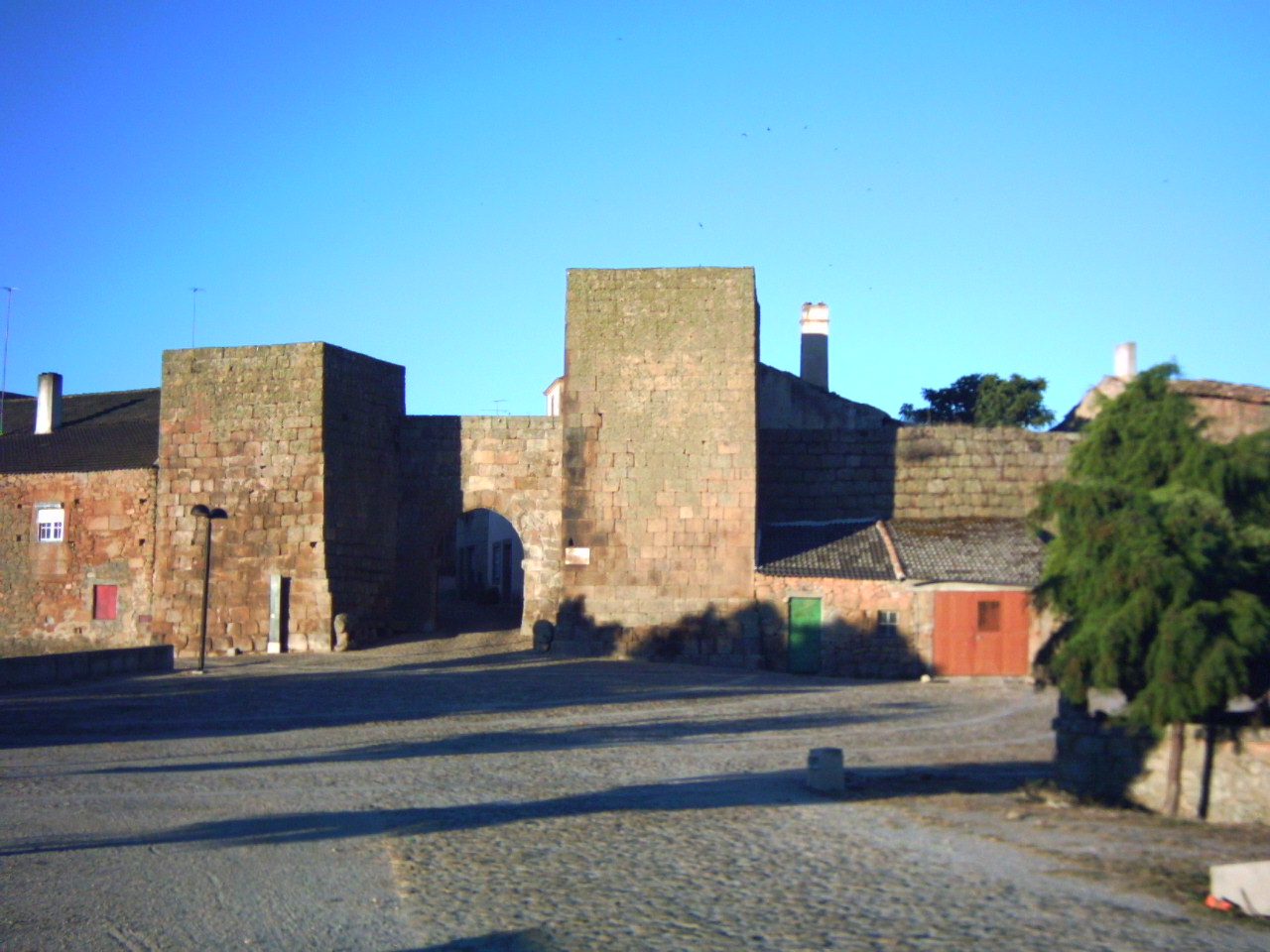
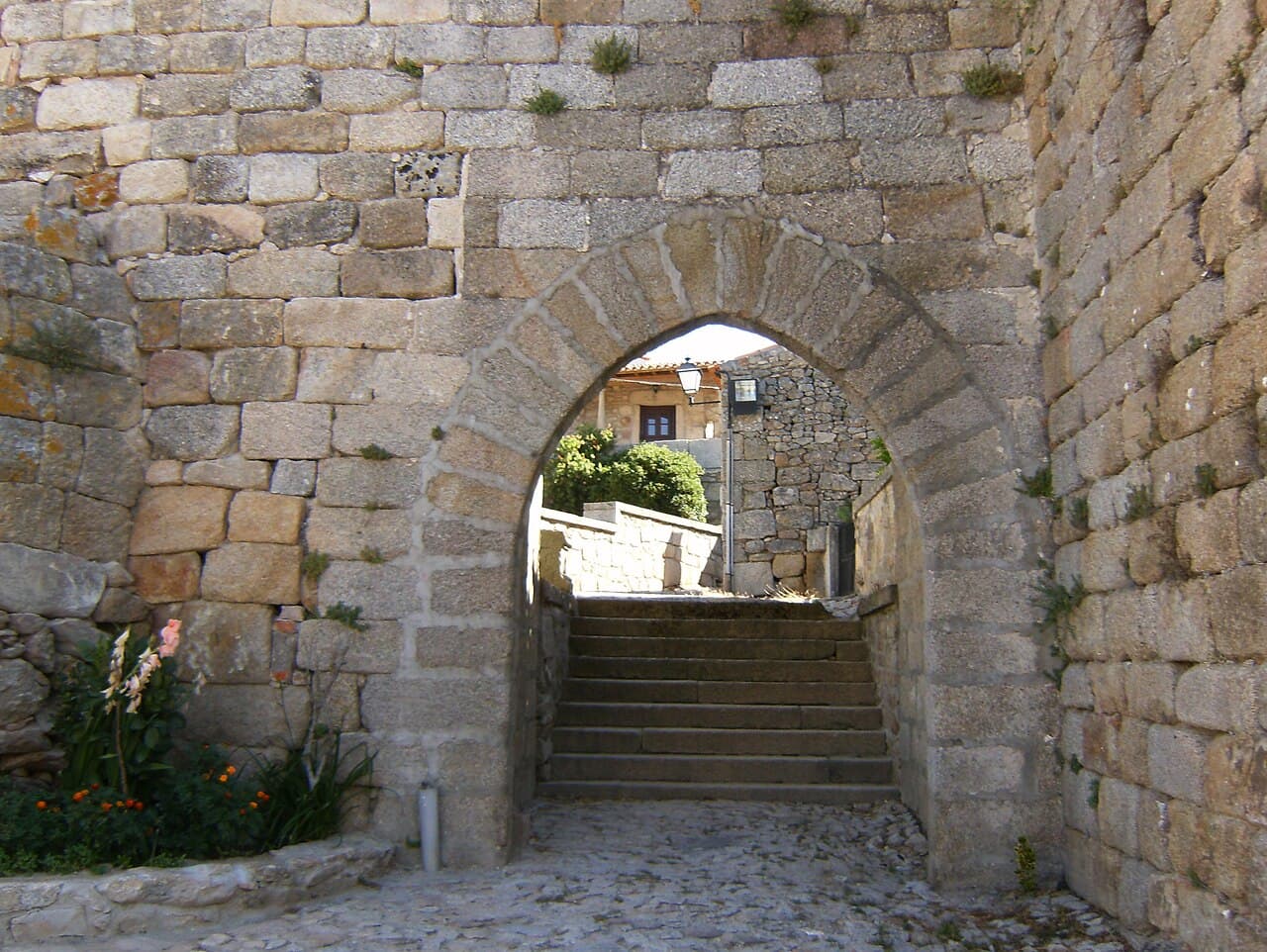
The castle's layout follows an irregular, nearly rectangular plan adapted to the rocky hilltop terrain. It is enclosed by double defensive walls with a barbican—a fortified outwork with a curved façade—that protected the perimeter of the settlement, although much of this structure is now incomplete. Access to the fortress was controlled through the Porta da Vila (town gate) on the east side, which features a curving outer face and a pointed arch characteristic of medieval military architecture. The gate's vaulted passage is paved with uneven stone, and remnants of metal hinges indicate the presence of robust wooden doors in the past.
Towers and defensive elements
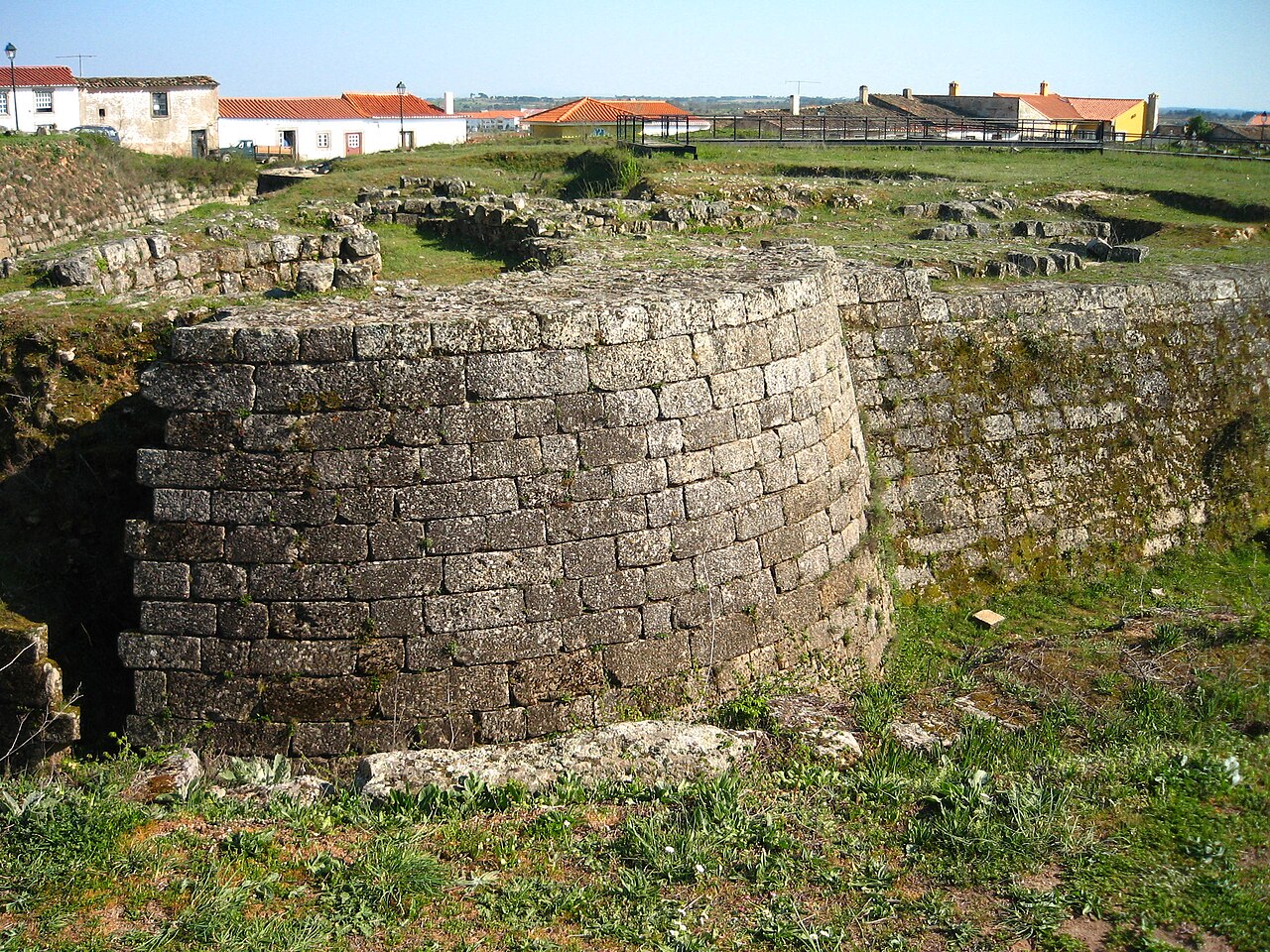
Within the walls, a stone staircase provides access to the adarve (wall walk), allowing defenders to patrol the battlements. The castle includes several towers: two main rectangular towers, one serving as the keep with a tiled roof, a circular tower to the south, and a smaller rectangular tower guarding the barbican's gate to the north. By the early 16th century, some of these towers were already in ruins, reflecting the castle's long and turbulent history.
Walls and battlements
The defensive walls are notable for their double-layered construction, with steps and doorways between the layers. Exterior doors are rectangular, while interior doors have rounded tops crowned by covered balconies featuring machicolations, openings through which defenders could drop projectiles on attackers below. The parapets are lined with merlons of varying shapes, including parallelepiped and pyramidal forms, providing cover for archers and artillerymen.
Urban and religious structures within the enclosure
Inside the castle walls, the urban area housed single-family homes alongside several religious buildings. A church with a bell tower occupied the southern sector, accompanied by smaller chapels to the southwest and southeast. This integration of spiritual life within the fortified community highlights the castle's role not only as a military stronghold but also as a center of local governance and daily life.
Water supply and storage facilities
To sustain long sieges and daily life, the castle featured several important water installations. The Poço do Rei is a rectangular cistern with a tiled covering and a vaulted interior supported by two archways, accessible through a single entrance. Nearby stands a circular powder magazine constructed of stone and masonry, known locally by various names such as revelim, rebolim, rebolinho, or polvorim, featuring a west-facing doorway for safety and ventilation.
Additional water sources include the Poço da Escada, an irregular quadrangular masonry well with a stone staircase descending nine steps to the water, and the Poço d’El Rei, a large rectangular stone reservoir covered by a terrace pierced with two square openings for light and vaulted on the inside. These installations were critical for the castle's resilience during sieges and daily operations.
Preservation and cultural significance
Today, the remains of Castelo Bom include sections of the curtain wall, the town gate, a ruined tower, the coat-of-arms stone, the cistern, the powder magazine, a small guardhouse known as an échauguette, and the two wells that once supplied the fortress. Despite the loss of the keep tower and other structures, the castle remains a significant cultural and historical monument.
Classified as a National Monument in 1946, Castelo Bom has undergone restoration and conservation efforts, notably between 1987 and 1988 by the Direcção Geral dos Edifícios e Monumentos Nacionais (DGEMN). In 1999, a viewpoint was constructed to enhance visitors' appreciation of the castle's strategic location and historical importance.
Traditionally, Castelo Bom is believed to be one of the seven castles represented in the Portuguese national coat of arms and flag, underscoring its enduring role in the defense and identity of Portugal's borderlands. Its rich history, architectural features, and cultural legacy make it a compelling destination for those interested in medieval fortifications and Portuguese heritage.
Frequently asked questions (FAQ)
- How do I get to the Castle of Castelo Bom?
- The Castle of Castelo Bom is located in the municipality of Castelo Bom in the Guarda district of Portugal. It is accessible by car via local roads, and there is parking available nearby for visitors.
- What is the best time to visit Castelo Bom castle?
- The best time to visit Castelo Bom castle is during the spring and autumn months when the weather is mild and the landscape is particularly scenic. The castle is open daily from 10:00 to 16:00.
- Is there an entrance fee to visit the Castle of Castelo Bom?
- Visiting the Castle of Castelo Bom is free of charge, allowing visitors to explore its historic ruins and enjoy panoramic views without an entrance fee.
- What architectural styles are represented in Castelo Bom castle?
- Castelo Bom castle features a mix of architectural styles, including medieval military architecture with elements from the High Medieval period and later modifications reflecting Renaissance influences.
- Can I explore the interior of the castle?
- Visitors can explore the castle's exterior walls, gate, towers, and some interior areas such as the cistern and wells. However, some parts are in ruins and access may be restricted for safety reasons.
- Why is Castelo Bom castle historically significant?
- Castelo Bom castle played a crucial role in the defense of Portugal's border with the Kingdom of León and later Spain. It was a key military site during the Portuguese Restoration Wars and is traditionally considered one of the seven castles on the Portuguese coat of arms.
Photo gallery

Photo by João Pedro Ribeiro•Public domain
Information
Opening hours
10:00-16:00, daily
Ticket prices
Free
Current owner
State
Loading map...
Visitor reviews
No reviews yet. Been here? Write the first review and help other travelers!
Write the first reviewVisited this castle? Share your experience
Your review helps other travelers and adds first-hand knowledge to our encyclopedia.