Castle of Caldaloba
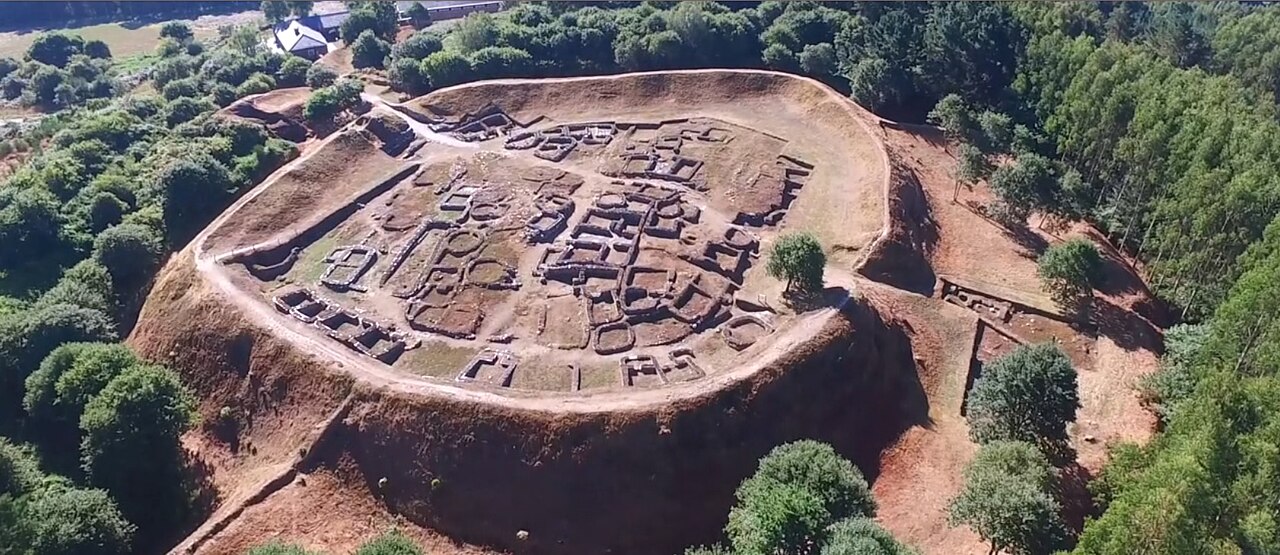
The Castle of Caldaloba stands prominently on the Coto de Mato hilltop in the municipality of Cospeito, within the historic region of Galicia, Spain. This hill castle occupies a strategic position overlooking the natural routes connecting the Terra Chá territory with the valleys of the Támoga and Miño rivers. Its location atop an ancient fortified settlement, or castro, highlights the long-standing military and territorial significance of this site, dating back to prehistoric times when local inhabitants first established defensive works here.
Constructed during the medieval period, the castle evolved from earlier fortifications, incorporating advanced defensive features that reflect the turbulent regional history. The fortress played a critical role in local conflicts, most notably during an eleven-month siege led by the noblewoman Costanza de Castro and her husband Fernán Ares de Saavedra. They successfully defended the stronghold against the forces commanded by Diego López de Haro, demonstrating the castle's formidable defensive capabilities and its importance in the power struggles of the time.
Architectural features and defensive design
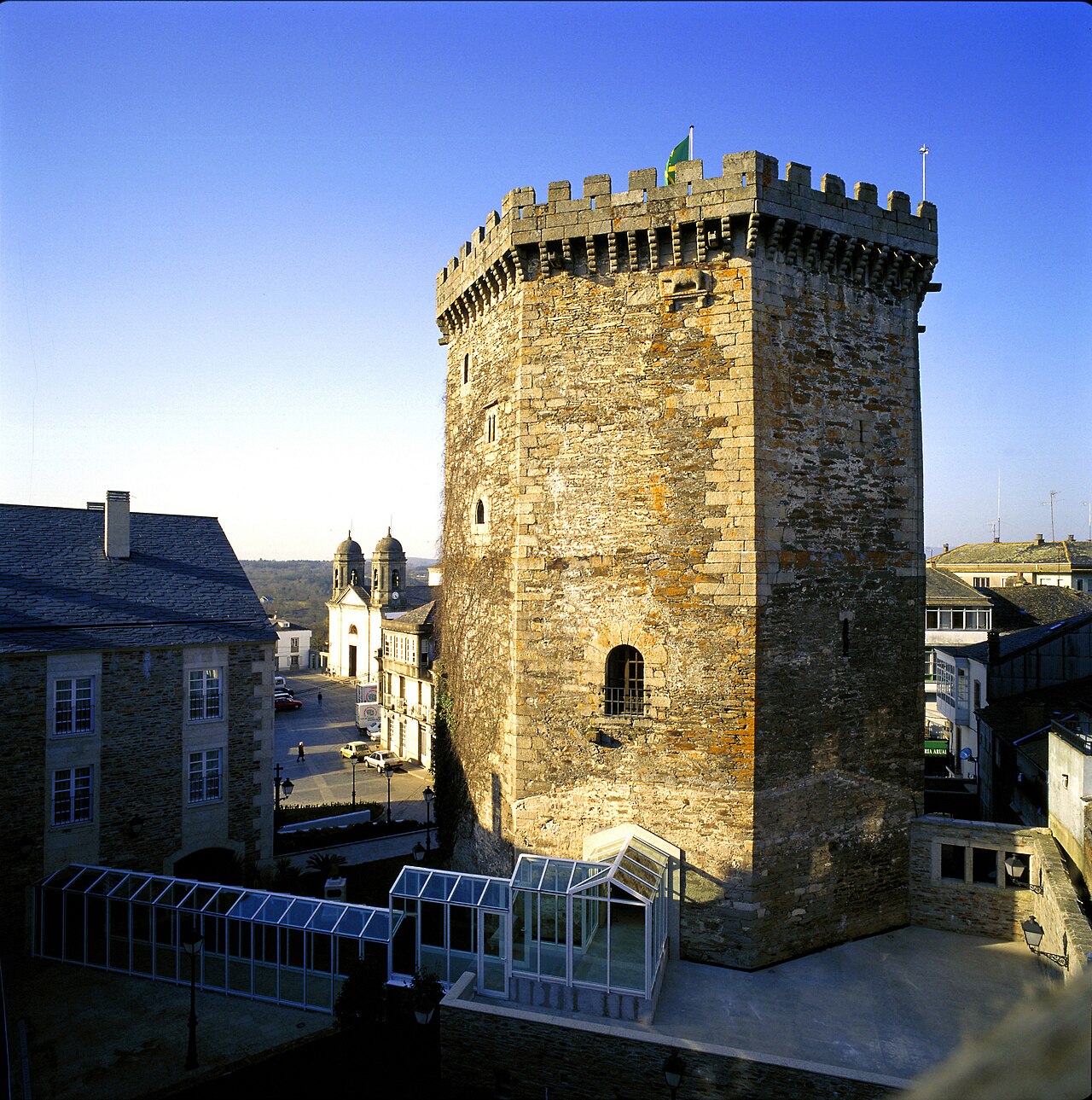
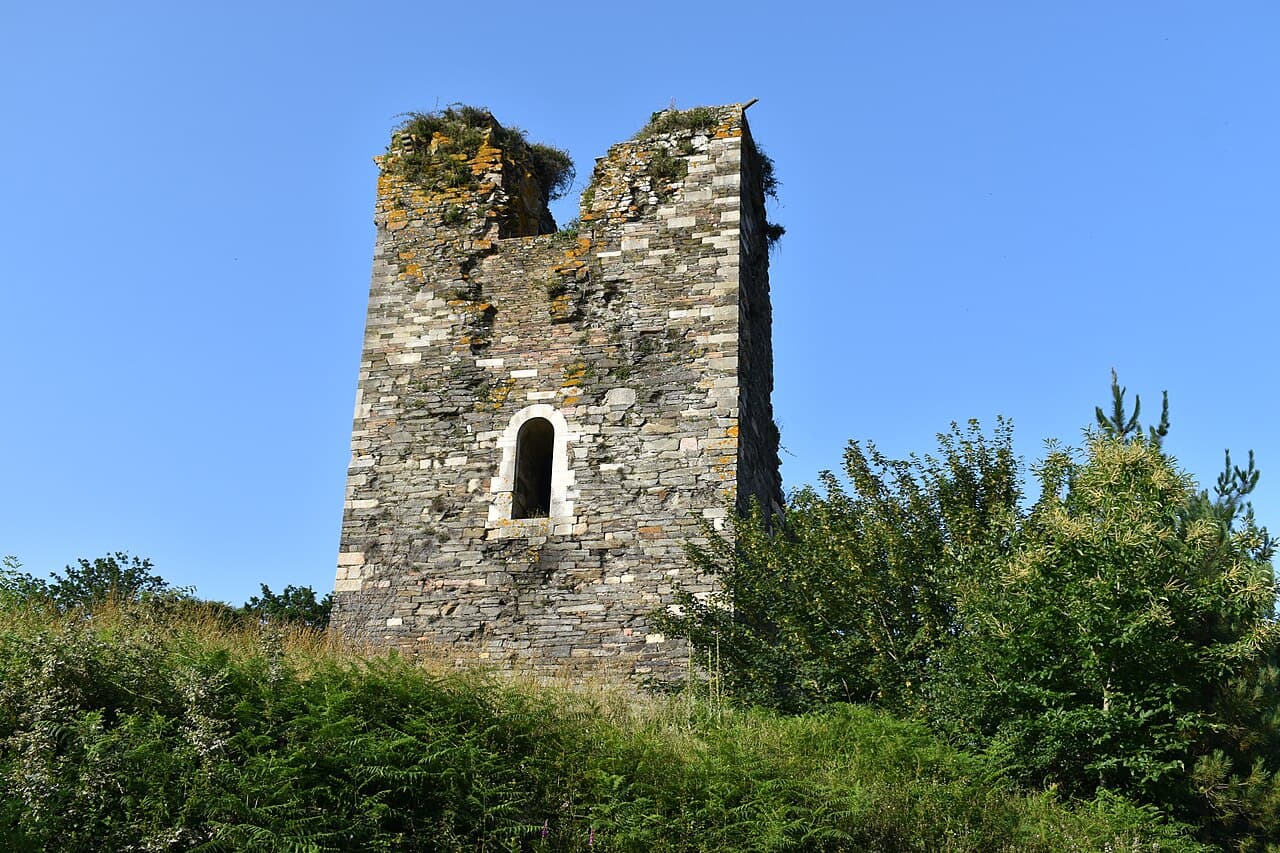
The castle's most prominent surviving structure is a tall keep tower directly built on a natural rock formation with a steep drop on its eastern side, enhancing its natural defenses. The tower's walls, constructed primarily of small slate stones laid in precise masonry, are reinforced at corners and openings with carefully worked granite blocks. This combination of materials not only provided strength but also reflected skilled local craftsmanship.
Encircling the keep are four large defensive ditches carved into the terrain on the southwest and northwest sides. These trenches, measuring between eight to ten meters deep and up to six meters wide, served as formidable obstacles to attackers, significantly slowing any assault and protecting the tower. The castle walls themselves reach up to twenty-five meters in height and average about three meters thick, underscoring the fortress's role as a durable military bastion designed to withstand prolonged sieges.
Construction techniques and materials
The masonry work of the keep demonstrates a practical yet robust architectural approach. The use of locally sourced slate for the main wall surfaces provided a durable and weather-resistant exterior, while the granite reinforcements at structural stress points enhanced stability and longevity. This blend of materials is typical of Galician medieval fortifications, combining availability with functional strength.
Historical context and significance
The castle's origins on a prehistoric castro site indicate a continuous use of this hilltop for defensive purposes over many centuries. The medieval fortress itself became a key stronghold in the region, controlling critical routes and serving as a symbol of noble power.
During the Middle Ages, the castle was a focal point in regional conflicts. The prolonged siege involving Costanza de Castro and Fernán Ares de Saavedra against Diego López de Haro's forces is one of the most documented episodes, illustrating the castle's strategic importance and robust defenses. This event reflects the broader context of Galician noble rivalries and territorial disputes in the late medieval period.
In the early 17th century, the military role of the castle diminished as political and social structures evolved. In 1621, Rodrigo Díaz Sanjurjo y Montenegro built the nearby Pazo de Caldaloba, a manor house that signaled a shift from fortified defense to aristocratic residence, marking the transition from medieval military architecture to Renaissance-era noble estates.
Preservation and cultural heritage
Recognizing its historical and cultural value, the Castle of Caldaloba was declared an Asset of Cultural Interest (Bien de Interés Cultural) in 1994. This designation has helped protect the site and promote conservation efforts.
In recent years, the provincial government of Lugo took significant steps to safeguard the fortress by acquiring key sections of the land in July 2022. These measures aim to preserve the castle's best-preserved elements, including the keep tower and defensive ditches, ensuring their protection against natural decay and human impact.
Today, the castle remains a ruin but retains its essential defensive structures, allowing visitors and scholars to appreciate its architectural ingenuity and historical importance. The site offers valuable insight into medieval military construction techniques and the geopolitical dynamics of Galicia throughout history.
Visitor experience and accessibility
The castle's hilltop location provides panoramic views of the surrounding Galician landscape, including the valleys and natural routes it once controlled. While the site is in ruins, the remains of the keep and ditches are accessible for exploration, offering a tangible connection to its medieval past.
Visitors interested in military architecture and Galician history will find the Castle of Caldaloba a significant example of regional fortification. The combination of natural terrain and human engineering illustrates how medieval builders maximized defensive advantages in challenging landscapes.
Frequently asked questions (FAQ)
- What is the historical significance of the Castle of Caldaloba?
- The Castle of Caldaloba is a remarkable example of medieval military architecture in Spain, dating back to the 11th century. It played a crucial role during the Reconquista, serving as a strategic stronghold for various kingdoms throughout its history. Its well-preserved structure offers visitors insight into the military and political dynamics of the time.
- When was the Castle of Caldaloba built?
- The Castle of Caldaloba was constructed in the early 11th century, around the year 1020. It was built during a period of territorial conflict and power struggles in the Iberian Peninsula, reflecting the architectural styles and defensive needs of that era.
- Is it possible to visit the Castle of Caldaloba year-round?
- Yes, the Castle of Caldaloba is open to visitors throughout the year, although specific opening hours may vary seasonally. It is advisable to check the official website or local tourist information for the most current visiting times and any potential restrictions.
- Can I take guided tours at the Castle of Caldaloba?
- Yes, guided tours are available at the Castle of Caldaloba, providing deeper insights into its history and architecture. These tours are led by knowledgeable guides who can answer questions and enhance your visit with interesting anecdotes about the castle's past.
- What are the ticket prices for the Castle of Caldaloba?
- Ticket prices for the Castle of Caldaloba are generally affordable, with discounts available for children, seniors, and groups. It’s best to check the official website for current pricing and any special offers that may be available during your visit.
- When is the best time to visit the Castle of Caldaloba?
- The best time to visit the Castle of Caldaloba is during the spring and fall months, when the weather is mild and pleasant for exploring the site. Additionally, these seasons tend to have fewer crowds, allowing for a more enjoyable experience.
- What nearby attractions can I explore after visiting the Castle of Caldaloba?
- After visiting the Castle of Caldaloba, you can explore several nearby attractions, including the charming town of Caldaloba with its quaint streets and local eateries. Additionally, the surrounding countryside offers beautiful hiking trails and scenic views, perfect for a day of outdoor adventure.
- How accessible is the Castle of Caldaloba for visitors with disabilities?
- The Castle of Caldaloba strives to be accessible to all visitors, although some areas may present challenges due to the historical structure. It is recommended to contact the castle administration in advance to inquire about specific accessibility options and accommodations available during your visit.
- What architectural features should I look for at the Castle of Caldaloba?
- Visitors to the Castle of Caldaloba should pay attention to its impressive stone walls, towers, and battlements, which showcase the defensive architecture of the medieval period. Additionally, the castle features a unique blend of Romanesque and Gothic styles, evident in its arches and intricate stone carvings.
Photo gallery

Information
Website
Visit websiteSources & official resources
Verify the information above using these authoritative references.
Loading map...
Visitor reviews
No reviews yet. Been here? Write the first review and help other travelers!
Write the first reviewVisited this castle? Share your experience
Your review helps other travelers and adds first-hand knowledge to our encyclopedia.